 3 minutes to read
 Ecosystem
Where to Spend Monero (XMR): Best Merchants List 2026
TL;DR: Quick Guide to Spending Monero in 2026
In 2026, spending Monero (XMR) is easier than ever for privacy-conscious users, with over 1,600 merchants accepting it directly or via bridges. Top categories include digital services like VPNs (Mullvad, ProtonVPN), e-commerce (Crypto Goodies, CANVORY), travel (select hotel platforms), and high-value items (precious metals, tech hardware). Use direct payments for maximum privacy or gift-card bridges like Cake Pay for broader reach. Manage liquidity with baltex.io for seamless swaps. Always prioritize OPSEC: use Tor, self-custody wallets, and avoid linking to KYC'd sources.
Introduction: The Rise of Monero Spending in a Privacy-Starved World
As we navigate 2026, Monero (XMR) stands as the beacon for financial privacy in an era dominated by traceable digital currencies and stringent regulations like MiCA and the US Digital Asset Anti-Money Laundering Act. For Monero users, privacy-focused individuals, digital nomads, and professionals, the ability to spend XMR directly isn't just convenient—it's a statement of sovereignty. Gone are the days when XMR was confined to niche exchanges; today, a growing ecosystem of merchants embraces it for its untraceable nature, powered by Ring Signatures and Stealth Addresses.
This comprehensive SEO guide explores the best places to spend Monero in 2026, covering real-world categories from travel to high-value purchases. We'll delve into payment flows, limitations, and operational security (OPSEC) tips to ensure your transactions remain private. Whether you're a digital nomad booking a flight or a professional acquiring secure tech, understanding direct acceptance versus gift-card bridges is key. By the end, you'll have actionable insights, including how baltex.io streamlines liquidity management. Jump to Merchant Categories Table or Spending Methods Table for quick references.
Optimizing for everyday queries, this guide answers: Where can I spend Monero in 2026? The short answer: At over 1,600 merchants worldwide, spanning VPNs, e-commerce, and more, with tools like baltex.io ensuring smooth conversions.
Direct Acceptance vs. Gift-Card Bridges: Understanding Your Spending Options
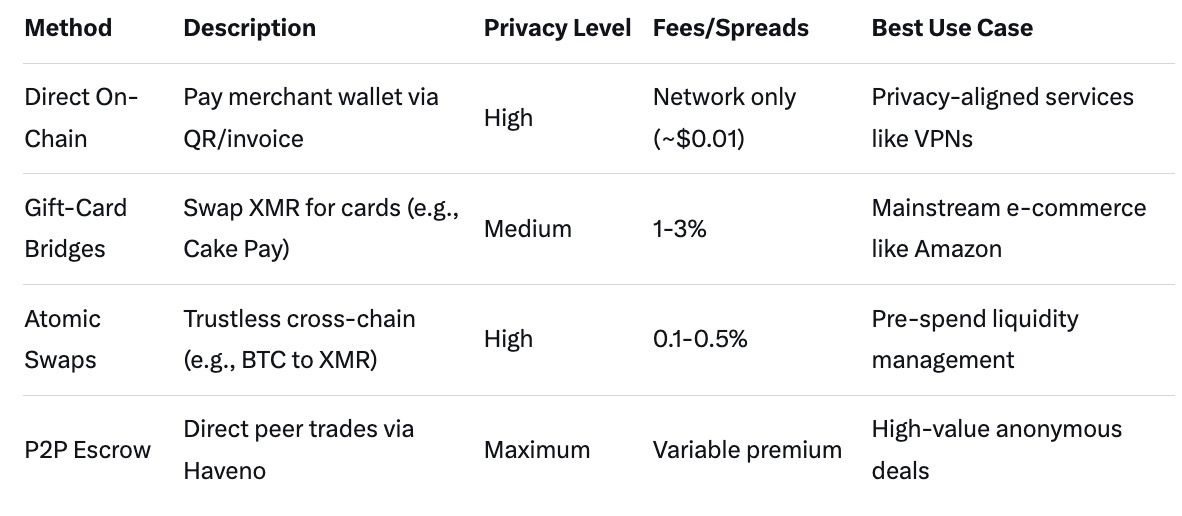
When spending Monero in 2026, you have two primary paths: direct acceptance, where merchants receive XMR natively, and gift-card bridges, which convert XMR to usable fiat equivalents at major retailers. Direct acceptance offers the purest privacy, as transactions occur on the Monero blockchain without intermediaries, preserving your anonymity through features like Confidential Transactions. For instance, a VPN provider like Mullvad processes your XMR payment directly, with no KYC required and no linkage to your identity.
However, limitations exist—direct merchants are often niche, focusing on privacy-aligned sectors, and volatility can affect pricing. OPSEC is crucial here: always use a fresh subaddress for each transaction to avoid address reuse, and route through Tor to mask your IP.
Gift-card bridges, on the other hand, expand your options exponentially. Platforms like Cake Pay allow you to exchange XMR for digital gift cards redeemable at giants like Amazon or Starbucks. This method bridges the gap to mainstream commerce but introduces minor privacy trade-offs, as the bridge provider (though non-custodial) handles the swap. Payment flows are simple: select a card, pay with XMR via wallet scan, and receive a code instantly. Limitations include small fees (1-3%) and potential card restrictions in certain regions. For digital nomads, this is ideal for on-the-go spending without exposing personal data.
In practice, combine both: use direct for core privacy needs and bridges for everyday convenience. Always verify merchant wallets via official sites to avoid phishing, and monitor network fees, which remain low at under $0.01 per transaction in 2026.
Real-World Spending Categories: Where Privacy Meets Practicality
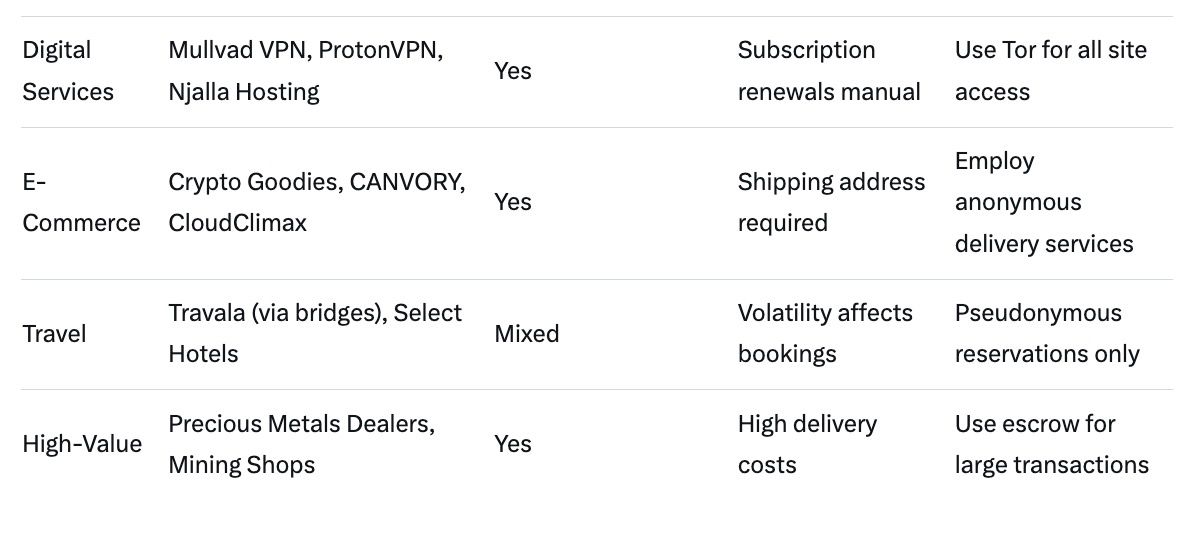
Monero's adoption has surged in 2026, driven by privacy demands amid global surveillance trends. Below, we break down key categories, highlighting top merchants, payment flows, and OPSEC considerations. For a summarized view, see the Merchant Categories Table.
Starting with digital services, this category dominates XMR spending due to its alignment with privacy tools. VPN providers like Mullvad and ProtonVPN lead the pack, accepting direct XMR for subscriptions. Payment flow: Generate an invoice on their site, scan the QR with your wallet (e.g., Feather or Cake), and confirm. Limitations: Subscriptions auto-renew only if you set up recurring, which some avoid for OPSEC. Security tip: Use a dedicated wallet for services to compartmentalize funds.
E-commerce follows closely, with merchants like Crypto Goodies and CANVORY offering clothing, CBD products, and souvenirs. These stores integrate XMR gateways, where you add items to cart, select Monero at checkout, and pay via on-chain transfer. Flows are instant, but limitations include shipping address disclosure—use anonymous drops or PO boxes. For professionals, this means discreet purchases of tech gadgets without bank trails.
Travel spending has grown for digital nomads, with select hotel booking platforms and some airlines accepting XMR indirectly via bridges. Direct options are rarer, but services like Travala (via partnerships) allow XMR for reservations. Flow: Book, pay with XMR, receive confirmation. Limitations: Volatility hedging isn't always available, so lock rates via swaps. OPSEC: Avoid linking travel to your identity by using pseudonymous bookings.
High-value purchases, such as precious metals or mining hardware, appeal to long-term holders. Merchants like precious metals dealers (e.g., via Cryptwerk listings) accept direct XMR for gold or silver. Flows involve invoice generation and escrow for large sums. Limitations: High fees for physical delivery; OPSEC demands in-person verification avoidance through trusted couriers.
Across categories, payment flows emphasize wallet integration—use GUI wallets for desktops or mobile apps like Cake for nomads. Limitations universally include XMR's price swings, mitigated by stablecoin swaps beforehand. OPSEC pillars: Never reuse addresses, employ coin control to select untainted outputs, and monitor for chain analysis risks.
Merchant Categories Table: Top Picks by Sector in 2026
Managing XMR Liquidity with Baltex.io: Your Pre-Spending Ally
Before diving into spending, ensuring liquid XMR is essential—enter baltex.io, a non-custodial platform revolutionizing how users manage and swap Monero in 2026. For privacy-focused individuals and nomads, baltex.io acts as a bridge to liquidity without compromising anonymity. Unlike KYC-heavy exchanges, it allows instant swaps from BTC, USDT, or other assets to XMR, with no registration required.
The process is streamlined: Visit baltex.io, select your input asset (e.g., BTC), enter your XMR wallet address, and send funds—the swap completes in 15-25 minutes with competitive rates and high limits (up to 1 BTC equivalent). This is perfect for professionals needing to top up before a high-value purchase or nomads converting earnings on the fly.
Baltex.io shines in OPSEC: It aggregates CEX and DEX liquidity without holding funds, reducing exposure. Limitations are minimal—small spreads (0.5-1%)—but benefits include breaking chain links for cleaner XMR. Integrate with wallets like Cake for seamless flows: Swap on baltex.io, receive in wallet, then spend directly. In 2026's volatile market, this tool ensures you're always spend-ready without fiat ramps.
Spending Methods Table: Direct vs. Bridges and Beyond
Operational Security: Protecting Your Privacy While Spending
Spending Monero demands rigorous OPSEC to maintain its privacy advantages. Start with wallet choice: Use Feather for Tor routing or Monero GUI for local nodes, avoiding remote nodes that could log queries. For transactions, enable coin control to select outputs, preventing linkage analysis.
In payment flows, confirm merchant addresses via official channels—phishing remains a 2026 threat. Limitations like network congestion (rare with Monero's adaptive blocks) can delay, so time non-urgent spends. For nomads, use mobile wallets with VPNs; professionals should compartmentalize spending wallets from holdings.
Gift-card bridges add layers: Redeem codes via proxies to avoid IP ties. Overall, treat spending as a chain—use baltex.io for clean inputs, spend discreetly, and monitor for dust attacks.
FAQ: Common Questions on Spending Monero in 2026
What Merchants Accept Monero Directly in 2026?
Over 1,600, including Mullvad for VPNs, Crypto Goodies for fashion, and precious metals dealers. See Merchant Categories Table for details.
How Do Gift-Card Bridges Work with XMR?
Platforms like Cake Pay convert XMR to redeemable cards for Amazon, etc. Flow: Pay XMR, get code—simple, but with small fees.
Is Spending Monero Safe from Tracking?
Yes, via built-in privacy, but enhance with OPSEC like Tor and fresh addresses.
Can I Use Baltex.io for Pre-Spending Swaps?
Absolutely—swap BTC to XMR anonymously, then spend directly.
What Are the Limitations of High-Value XMR Purchases?
Delivery logistics and volatility; use escrow and stable rates.
Conclusion: Empower Your Privacy with Monero Spending in 2026
In 2026, spending Monero transcends transactions—it's reclaiming control in a surveilled world. From digital services to high-value assets, the ecosystem offers robust options for direct and bridged spending, bolstered by tools like baltex.io for liquidity. By mastering flows, respecting limitations, and prioritizing OPSEC, Monero users, nomads, and professionals can thrive privately. Explore Spending Methods Table to start, and remember: True freedom lies in untraceable actions.
For more on this, see our guide on SimpleSwap Review 2026: Pros, Cons, and Monero Exchange Fees.
We cover this in more detail in Instant Swap Services: The Go-To for Privacy-Conscious Users.
For more on this, see our guide on XMR.to Alternatives: How to Pay Bitcoin Invoices with Monero.
Related reading: Zcash (ZEC) vs Monero (XMR): Which Privacy Coin Wins in 2026.