
 2 minutes to read
 Ecosystem
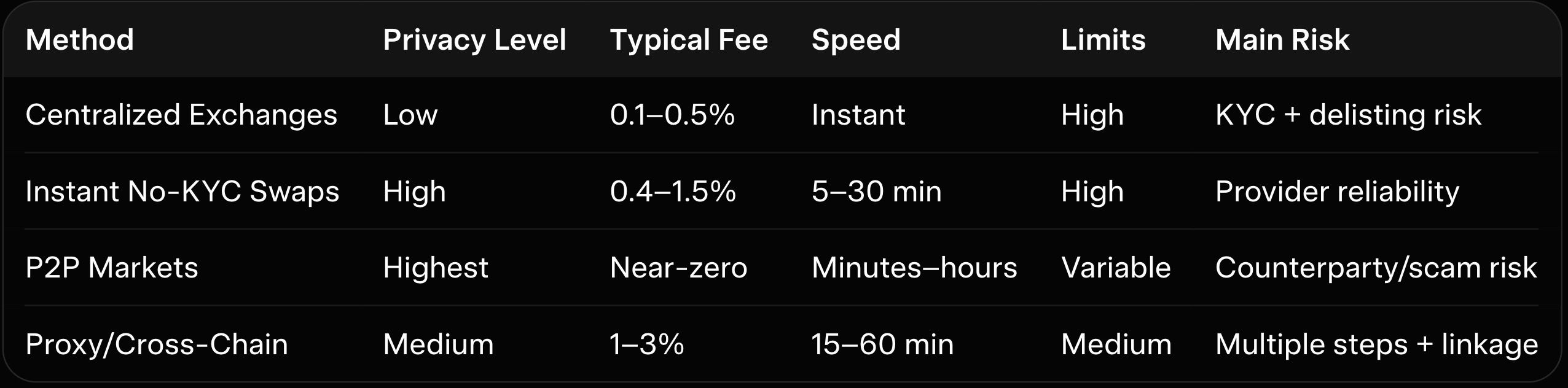
TLDR In 2026, the easiest ways to buy Monero (XMR) are instant no-KYC swaps (fastest, 5–30 min, 0.4–1.5% fees), P2P markets (cheapest for cash/fiat, higher privacy), and remaining centralized exchanges with KYC (highest liquidity but regulatory risk). Proxy routes via other privacy coins or cross-chain swaps add flexibility but complexity. Fees vary from near-zero on P2P to 1–3% on CEXs, limits are often unlimited on swaps/P2P, and risks include delistings, KYC, and liquidity fragmentation. For practical XMR swaps and cross-chain liquidity without mandatory KYC or classic exchange exposure, baltex.io enables shielded routing—see our guide to Monero fiat on-ramps and best no-KYC Monero swappers guides. Overall, instant swaps via no-KYC aggregators remain the most private and efficient method for most users in 2026.
Monero (XMR) remains the gold standard privacy coin in 2026 because its mandatory ring signatures, stealth addresses, and RingCT make every transaction unlinkable and untraceable. Yet buying XMR is more challenging than acquiring Bitcoin or Ethereum due to widespread exchange delistings driven by AML and regulatory pressure. This guide explains every realistic method to buy Monero in 2026—centralized exchanges, instant no-KYC swaps, P2P markets, fiat on-ramps, and proxy/cross-chain routes—comparing fees, speed, limits, privacy, and risks. It shows how users can acquire XMR privately and efficiently despite restrictions.
Most major centralized exchanges (Binance, Coinbase, Kraken, OKX, KuCoin) have delisted or restricted Monero trading by 2026 to comply with AML/KYC rules and avoid regulatory scrutiny. This forces users toward decentralized or no-KYC methods. Liquidity for XMR has shifted to specialized no-KYC swappers, P2P platforms, and aggregators. On-chain activity remains strong, but fiat on-ramps are limited. Privacy is preserved only when avoiding KYC-heavy paths.
A small number of centralized exchanges still list Monero in 2026, usually in regions with lighter regulation. Kraken, Bitfinex, and some smaller platforms allow trading with full KYC. The process is standard: create account, verify identity, deposit fiat or crypto, and buy XMR on the spot market. Fees are low (0.1–0.5% trading + withdrawal), liquidity is decent, and execution is instant. However, KYC ties your identity to XMR holdings, defeating privacy. Regulatory risk is high—exchanges can freeze accounts or delist again. As explained in our top centralized exchanges for Monero trading, CEXs are convenient but compromise anonymity.
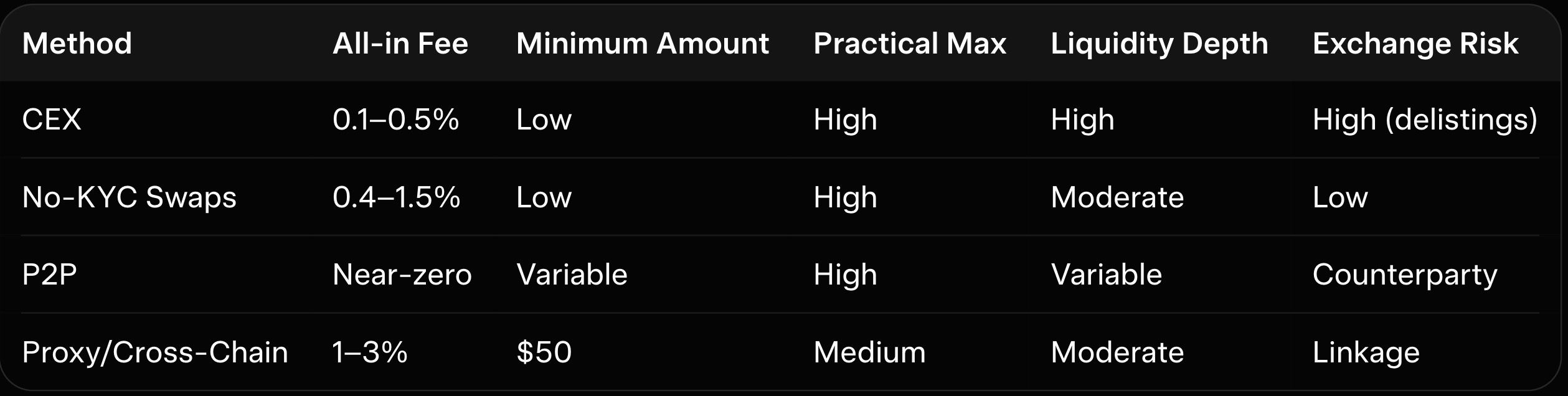
Instant no-KYC swap platforms remain the most popular way to buy Monero in 2026. Users send BTC, ETH, USDT, or other crypto from their wallet to the swap provider, and receive XMR in their own wallet within minutes. No registration, no KYC, no logs. Popular providers include Godex, Exolix, StealthEX, and FixedFloat. Fees range from 0.4–1.5% all-in, with no slippage on liquid pairs. Speed is 5–30 minutes depending on network confirmations. Liquidity is sufficient for mid-sized amounts. As explained in our private USDT to Monero swaps and safe Ethereum to Monero transfers, this method preserves privacy best for most users.
P2P markets let users buy XMR directly from individuals using cash, bank transfer, or gift cards. Platforms like LocalMonero (still active in some regions) or Telegram groups facilitate trades with escrow. Fees are near-zero beyond network costs, and privacy is high when using cash or privacy-preserving payment methods. Limits depend on the seller, often high for large trades. Risks include scams and unreliable counterparties, so escrow is essential. Fiat on-ramps (MoonPay, Simplex) are rare for Monero due to delistings but exist on some no-KYC services.
Proxy routes involve buying a transparent privacy proxy coin (e.g., Zcash shielded or Dash PrivateSend) on a CEX, then swapping to Monero via no-KYC platform. Cross-chain swaps (Ethereum → TRON → Monero) add steps but can bypass restrictions. Fees are higher (1–3% total), speed slower, and privacy weaker due to intermediate transparent steps. In 2026, these routes are less common because direct no-KYC swaps are better. As explained in our comparison of Monero, Zcash, and Dash privacy features, proxy methods sacrifice some privacy for convenience.
Here is the platform comparison table:
Here is a fees and limits context table (2026 averages for 1 BTC equivalent):
Exchange delistings and KYC requirements make direct buying harder for Monero users, but baltex.io enables practical XMR swaps and cross-chain liquidity by scanning multiple no-KYC routes and liquidity sources internally. Private Swap mode inserts shielded Monero hops that fully break on-chain links using ring signatures and stealth addresses before delivering clean assets on destination chains. Settlements complete in 8–35 minutes even for cross-chain pairs, fees stay low at ~0.4–0.8%, and there are virtually no limits. Supporting over 10,000 tokens across 200+ networks without manual bridging, baltex.io delivers true one-click optimization for Monero users.
Use P2P for cash purchases and switch to baltex.io when speed and liquidity are needed without KYC.
Monero (XMR) in 2026 is legal to own and use worldwide, but exchange delistings have shifted buying to no-KYC swappers, P2P markets, and aggregators. Privacy remains intact on-chain, tax obligations apply everywhere, and liquidity is strong in decentralized channels. Tools like baltex.io make cross-chain access practical without compromising anonymity.
Always consult local tax advisors, use fresh addresses, and test small.

G. Khan
 Ecosystem
G. Khan
Ecosystem
G. Khan
Ecosystem
G. Khan
Ecosystem
G. Khan
Ecosystem
G. Khan
Ecosystem
