 2 minutes to read
 Ecosystem
How to Mine Monero (XMR): Complete Guide for Beginners in 2026
TLDR Monero (XMR) mining in 2026 uses the RandomX algorithm, which is designed to be CPU-friendly and resistant to large-scale GPU or ASIC farms, making it accessible for home miners and privacy advocates. The process involves downloading a wallet, choosing a mining pool or solo setup, running CPU software like XMRig, and earning the tail emission reward of 0.6 XMR per block plus fees. Profitability depends on electricity costs, hashrate, and XMR price, with realistic daily earnings of $0.50–$5 for mid-range CPUs after power costs. Unlike Bitcoin, Monero’s tail emission keeps miner incentives stable forever. For practical ways to swap mined XMR and access cross-chain liquidity without KYC, baltex.io enables shielded routing—see our ultimate Monero privacy guide and top no-KYC Monero swap services. Overall, Monero mining remains one of the most decentralized and beginner-friendly options in 2026 for anyone with a modern CPU.
Monero (XMR) mining is one of the few remaining truly decentralized and CPU-accessible mining opportunities in 2026. While Bitcoin and Ethereum have become dominated by specialized hardware, Monero’s RandomX algorithm deliberately favors ordinary CPUs and resists large-scale GPU or ASIC farms. This design keeps mining accessible to individuals and supports the network’s strong privacy ethos. In 2026, with tail emission still paying 0.6 XMR per block forever, miners receive steady rewards even as transaction fees stay low. This guide walks beginners through every step of mining Monero, explains the economics, hardware requirements, pool choices, profitability factors, and risks, and shows how to turn mined XMR into usable liquidity.
RandomX Mining Basics: Why Monero Is CPU-Friendly
RandomX is Monero’s proof-of-work algorithm, specifically engineered to be memory-hard and resistant to specialized hardware. It uses random code execution and large memory requirements (2 GB per thread) to make GPU and ASIC mining inefficient. In 2026, this keeps mining power distributed among thousands of home users rather than concentrated in giant farms. Each block is solved roughly every 2 minutes, and the reward is fixed at 0.6 XMR plus any transaction fees attached to the block.
The tail emission ensures that miners never lose their baseline income, unlike coins with a hard supply cap that eventually rely only on volatile fees.
Hardware Requirements and Setup for Beginners
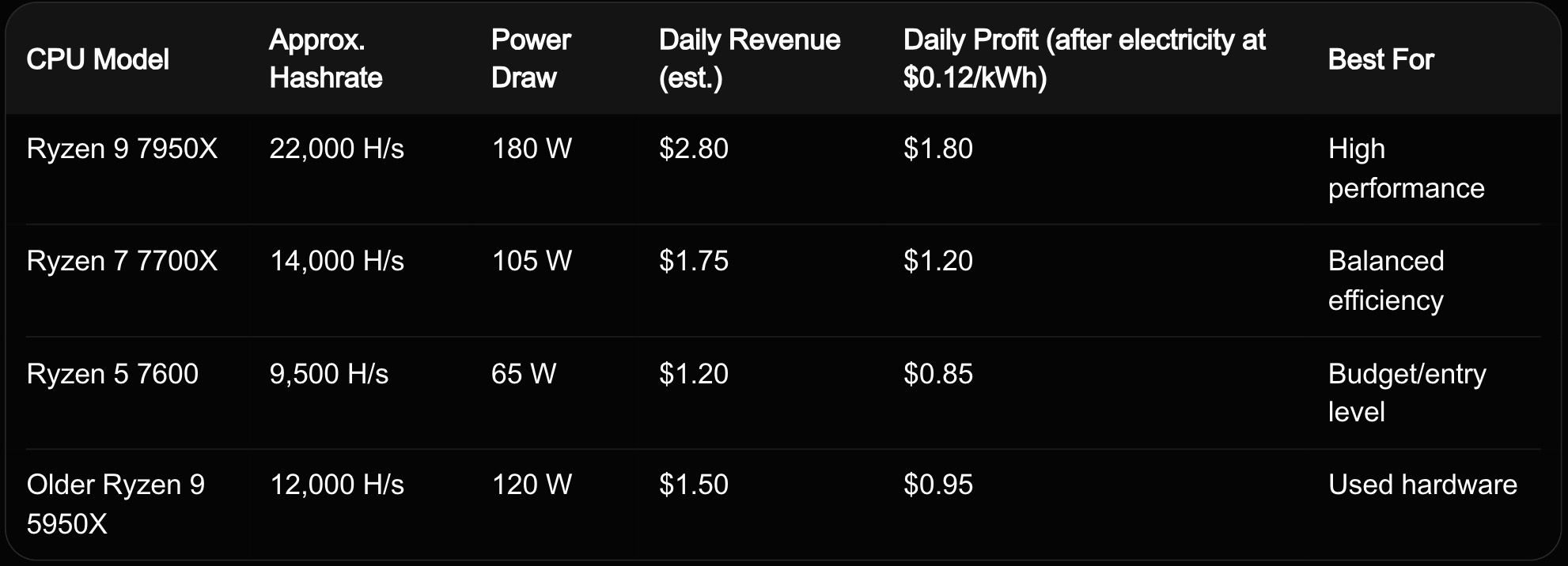
In 2026, you can start mining Monero with almost any modern CPU. High-end desktop processors like AMD Ryzen 9 7950X or Intel Core i9-14900K deliver the best results, offering 15,000–25,000 H/s (hashes per second) depending on configuration. Mid-range CPUs like Ryzen 5 7600 or older Ryzen 9 5950X still earn meaningful rewards at lower power draw. Laptops can mine at reduced efficiency but are not recommended for 24/7 operation due to heat and battery wear.
Setup is simple and free. Download the official Monero GUI or CLI wallet from the project website to receive payments. Then download XMRig, the most popular open-source miner. Configure XMRig with your wallet address, a mining pool URL, and thread count (usually matching your CPU cores). Run the miner in a terminal or as a background service. Start with 70–80% of your CPU cores to avoid overheating, and monitor temperatures with free tools. As explained in our how Monero privacy features work, the CPU focus keeps mining accessible and decentralized.
Next, you'll need to prepare your digital storage. As explained in our secure crypto wallet setup guide, a secure wallet is essential before mining.
Mining Pools vs Solo Mining: Which Is Better?
Most beginners join a mining pool for steady payouts. Popular pools in 2026 include SupportXMR, MineXMR, and NanoPool, which charge 0.5–1% fees and distribute rewards proportionally to contributed hashrate. You receive small but frequent payments (daily or hourly) even with modest hardware. Solo mining is possible but risky: you compete against the entire network and may wait weeks or months for a block, making it unsuitable for beginners. Pools are the practical choice for consistent income.
Here is the hardware comparison table:
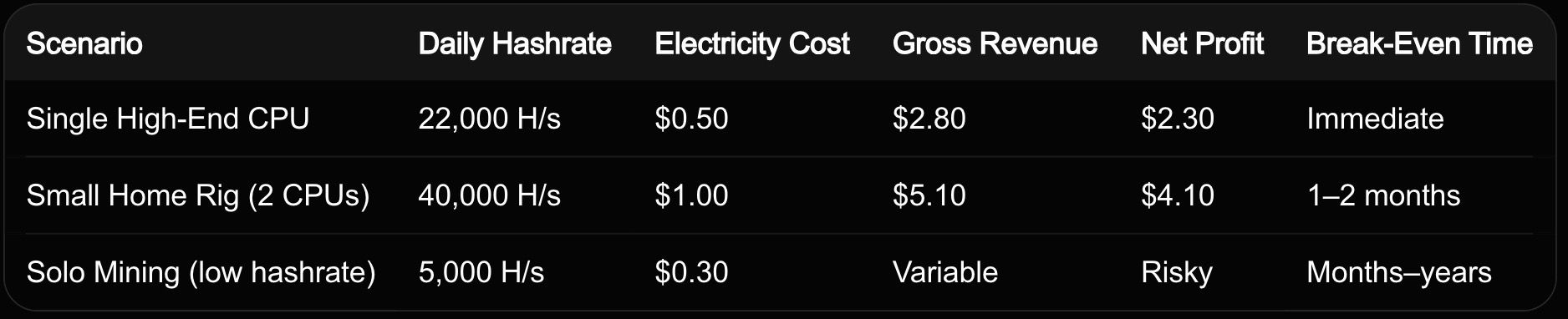
Here is a mining profitability context table (2026 averages at $150 XMR price):
Profitability Factors and Operational Risks
Profitability in 2026 depends on three main factors: your electricity rate, XMR market price, and hashrate. At current prices and average home electricity costs ($0.10–$0.15/kWh), most CPUs generate modest but positive net profit. Tail emission guarantees the block reward never drops to zero, unlike coins with hard caps. Risks include hardware wear from 24/7 operation, pool downtime, and XMR price volatility. Heat management and stable internet are essential.
How baltex.io Enables Practical XMR Liquidity Swaps
Mining Monero is only half the process—converting rewards into usable assets or cash requires reliable liquidity. baltex.io enables practical XMR liquidity swaps by scanning multiple no-KYC routes and liquidity sources internally. Private Swap mode inserts shielded Monero hops that fully break on-chain links using ring signatures and stealth addresses before delivering clean assets on destination chains. Settlements complete in 8–35 minutes even for cross-chain pairs, fees stay low at ~0.4–0.8%, and there are virtually no limits. Supporting over 10,000 tokens across 200+ networks without manual bridging, baltex.io delivers true one-click optimization for miners.
Conclusion
Mining Monero in 2026 is accessible, profitable for home users, and aligned with the coin’s privacy mission. RandomX keeps the network decentralized, tail emission ensures steady rewards, and simple CPU setups let beginners start earning immediately. While profitability depends on electricity and XMR price, the model remains sustainable long-term. Once mined, tools like baltex.io make liquidity seamless and private.
Always monitor electricity costs, start small, and keep your wallet secure.
We cover this in more detail in SimpleSwap Review 2026: Pros, Cons, and Monero Exchange Fees.
For more on this, see our guide on Instant Swap Services: The Go-To for Privacy-Conscious Users.
Related reading: XMR.to Alternatives: How to Pay Bitcoin Invoices with Monero.
We cover this in more detail in Zcash (ZEC) vs Monero (XMR): Which Privacy Coin Wins in 2026.