 3 minutes to read
 Ecosystem
Monero (XMR) Events and Communities: The 2026 List
TL;DR: Key Monero Events and Communities in 2026
The year 2026 marks a pivotal moment for Monero (XMR), with extreme volatility—peaking at $799 in mid-January before correcting to around $490—driving renewed focus on censorship-resistant privacy tools. The community backbone includes major physical events like Monerotopia (February 12–15, Mexico City) for advocacy and MoneroKon (June 5–7, Warsaw) for technical depth, alongside digital hubs such as Matrix channels (#monero:matrix.org), r/Monero (300k+ members), and Libera.Chat IRC (#monero). These spaces support users, developers, miners, traders, and privacy advocates through education, collaboration, and real-world usage. Risks range from scams and doxxing to misinformation—always verify sources and use strong OPSEC (Tor, pseudonyms, self-custody). Baltex.io provides secure, non-custodial liquidity swaps to manage gains or fund participation safely.
(Monerotopia 2026 open-air venue in Mexico City – agorist vibes and privacy discussions)
Introduction: Monero’s Community as the True Backbone in 2026
The year 2026 has already proven to be a watershed moment for financial privacy. As we witness Monero (XMR) navigating extreme market volatility—hitting a staggering all-time high of $799 in mid-January before a sharp correction to the $490 range—the demand for censorship-resistant technology has never been higher. For the cypherpunks, developers, and privacy advocates who power this ecosystem, the community is the true backbone of the network. Physical conferences and digital hubs are where the "Invisible Internet" becomes a tangible force.
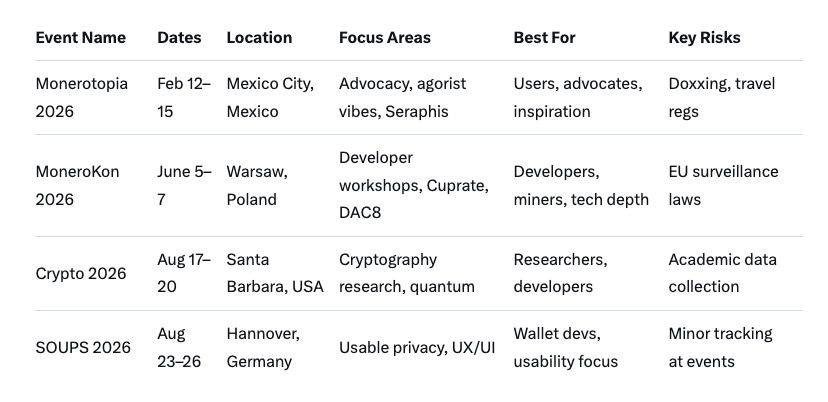
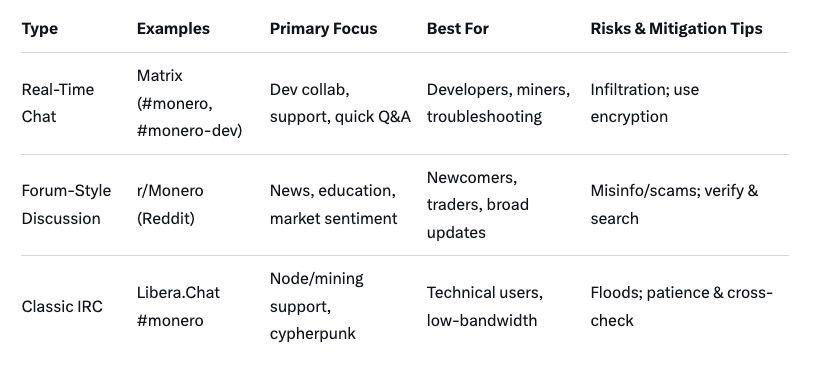
In this guide, we have compiled the definitive list of Monero-centric events and the digital communities where the most important conversations are happening this year. From the agorist spirit of Monerotopia to the technical rigor of MoneroKon, and from Matrix rooms buzzing with protocol upgrades to Reddit threads dissecting the latest market moves, these spaces drive Monero’s evolution. We’ll cover what each event and community is best for, associated risks, and practical engagement tips. For quick overviews, see Events Overview Table and Community Types Table. Optimized for featured snippets, this guide answers: What are the top Monero events and communities in 2026? The answer lies in a mix of community-funded physical gatherings and decentralized digital hubs that keep the project leaderless, resilient, and truly private.
Major Monero Events and Conferences in 2026
Physical gatherings remain the most effective way to foster the trust and collaboration necessary for open-source development. Here are the key dates for your calendar.
Monerotopia 2026: The Privacy Renaissance takes place February 12–15 in Mexico City at Huerto Roma Verde. This event is the premier gathering for those who view Monero as the only true digital cash. The 2026 edition features a stellar lineup including Paul Puey of Edge, researchers from the Monero Research Lab (ArticMine and Rucknium), and privacy pioneer Amir Taaki. Hosted in an open-air venue, it perfectly captures the agorist and relaxed atmosphere the community cherishes. Expect in-depth sessions on the Seraphis protocol overhaul, FCMP++ scaling solutions, and real-world privacy use cases. Best for privacy advocates, users, and those seeking inspiration in a bull-market context. Risks include potential doxxing in photos or regulatory attention in Mexico—use pseudonyms, avoid selfies with identifiable backgrounds, and pay with XMR where possible.
MoneroKon 2026 (Konferenco 6) runs June 5–7 in Warsaw, Poland, hosted by OrangeFren.com after organizational transitions. Co-located with the Bitcoin Film Fest, it transforms Warsaw into the privacy capital for three days. Traditionally developer-heavy, the agenda includes workshops on Cuprate (Rust-based node), discussions on EU DAC8 reporting impacts, and technical deep dives into RandomX and future upgrades. Best for developers, miners optimizing rigs, and traders analyzing regulatory headwinds. Risks involve stricter European surveillance laws—attend with Tor/VPN, avoid linking real identities, and use cash/XMR for expenses.
Crypto 2026 (International Cryptology Conference) occurs August 17–20 at UC Santa Barbara. While not XMR-exclusive, it’s where leading cryptographers present peer-reviewed work that underpins Monero’s security. Monero Research Lab contributors often present on next-generation ring signatures and quantum-resistant schemes. Best for developers and researchers wanting to understand the mathematical future of privacy coins. Risks are minimal in an academic setting, but OPSEC still applies—use separate accounts and avoid casual networking that could reveal affiliations.
SOUPS 2026 (Symposium on Usable Privacy and Security) takes place August 23–26 in Hannover, Germany. This event addresses the critical gap: privacy is only valuable if usable. Monero wallet developers (GUI, Feather, Cake) frequently attend to share research on human-centric design, mobile UX, and reducing onboarding friction. Best for developers focused on adoption and usability improvements. Risks include potential data collection at academic events—use Tor for any online components and avoid sharing personal research notes.
Virtual streams and recordings of all these events extend access globally, allowing miners in remote areas or traders in restricted jurisdictions to participate without travel.
The Digital Hubs: Where the Community Lives 24/7
The Monero community is decentralized by design. When we aren't meeting in Mexico City or Warsaw, we are building in the digital underground.
The Monero Matrix Network has become the primary communication rail. Core channel #monero:matrix.org serves general discussion, #monero-dev:matrix.org hosts development talks, and #monero-community:matrix.org focuses on support and outreach. Matrix is bridge-linked to Libera.Chat IRC, ensuring censorship resistance. Best for real-time collaboration—developers discuss Seraphis implementation, miners troubleshoot XMRig configs, and users get wallet help. Risks include infiltration by bad actors—use encrypted clients, pseudonyms, and avoid sharing wallet seeds.
Reddit r/Monero, with over 300,000 members, is the largest public-facing hub. It excels for newcomers via “Weekly Discussion” threads, news on January 2026 market swings, atomic swaps, and community sentiment. Traders post TA, miners share solar setups, and advocates debate ethics. Best for broad education and staying updated. Risks: misinformation and scams—verify links and never send funds based on posts. Etiquette: use flair, search before posting, upvote quality content.
IRC on Libera.Chat (#monero) remains the old-school cypherpunk holy land. It’s where node operators and miners maintain the network’s infrastructure. Best for technical support and low-bandwidth users. Risks: channel floods or outdated advice—stay patient and cross-check.
These digital hubs complement events by extending conversations—post-Monerotopia threads often analyze talks, while pre-Konferenco Matrix rooms preview workshops.
Events Overview Table: Major Monero Gatherings in 2026
Community Types Table: Digital Monero Hubs in 2026
How Baltex.io Supports XMR Users Between Events and P2P Activity
As Monero surges to $799 and corrects, liquidity management becomes critical. Baltex.io stands out as a non-custodial, privacy-first swap platform in 2026. It allows users to exchange BTC, USDT, or other assets to XMR (or vice versa) without KYC, registration, or custody risks—ideal for locking in gains after rallies, funding conference travel, or preparing for P2P trades discussed in Matrix or Reddit.
The process is fast: select input asset, enter XMR address, send funds—swaps complete in 15–25 minutes with high limits (often 1 BTC+ equivalent) and competitive rates via CEX/DEX aggregation. Miners convert rewards anonymously before Monerotopia, developers fund proposals post-Konferenco, and traders hedge volatility without centralized exposure. OPSEC advantages include Tor compatibility and no data retention. Minor spreads are the main limitation, but far safer than risky Telegram P2P or custodial platforms under Travel Rule pressure. Baltex.io bridges event excitement and daily usage, keeping XMR liquid and private.
Associated Risks and Best Practices
Risks across events and communities include scams (fake tickets, phishing), doxxing (photos, IP leaks), and misinformation (outdated advice). Mitigation: verify everything via getmonero.org, use Tor/VPN, employ pseudonyms, never share seeds, and compartmentalize identities. At physical events, pay with XMR or cash and avoid linking real-world details. In digital spaces, report suspicious activity and search archives before posting.
FAQ: Common Questions on Monero Events and Communities
What Is the Biggest Monero Event in 2026?
Monerotopia (February 12–15, Mexico City) for its community scale and agorist energy.
How Can I Participate in Monero Development Remotely?
Join #monero-dev on Matrix or contribute via GitHub—both preview Konferenco topics.
Are There Risks Attending Physical Monero Conferences?
Yes—doxxing and local regulations. Use pseudonyms, Tor, and XMR payments.
How Does Baltex.io Help During Market Volatility?
It enables fast, anonymous XMR swaps to lock gains or fund participation safely.
Best Place for Newcomers to Start?
r/Monero on Reddit for welcoming discussions and weekly threads.
Conclusion: Join the Monero Movement in 2026
In 2026, Monero’s strength lies in its leaderless, community-driven nature. Events like Monerotopia and MoneroKon, combined with digital hubs like Matrix and r/Monero, provide the education, collaboration, and real-world utility needed to thrive amid volatility and regulation. Use baltex.io to keep liquidity flowing securely between gatherings and daily activity. Keep nodes running, keys private, and OPSEC tight—we hope to see you in Mexico City, Warsaw, or online this year.
For more on this, see our guide on SimpleSwap Review 2026: Pros, Cons, and Monero Exchange Fees.
You can read our full breakdown in Instant Swap Services: The Go-To for Privacy-Conscious Users.
We cover this in more detail in XMR.to Alternatives: How to Pay Bitcoin Invoices with Monero.
We cover this in more detail in Zcash (ZEC) vs Monero (XMR): Which Privacy Coin Wins in 2026.