 1 minute to read
 Ecosystem
Monero (XMR) Events and Communities: The 2026 List
TL;DR: Essential Monero Events and Communities in 2026
In 2026, the Monero ecosystem buzzes with key events like Monerotopia (April, Mexico) for advocacy and Monero Konferenco (September, Europe) for technical deep dives, alongside online communities such as r/Monero for discussions and GitHub for development. These cater to users, developers, miners, traders, and privacy advocates, offering education, networking, and P2P opportunities. Risks include scams and privacy exposure—prioritize OPSEC with Tor and verification. Baltex.io aids liquidity management for seamless participation. See Events Overview Table and Community Types Table for summaries.
(Monerotopia conference stage – privacy advocates discussing XMR in 2026)
Introduction: The Thriving Monero Landscape in 2026
As 2026 progresses, Monero (XMR) continues to champion financial privacy amid escalating global regulations and surveillance concerns, drawing a diverse crowd of users exploring everyday transactions, developers enhancing protocol resilience, miners optimizing for efficiency, traders navigating volatile markets, and privacy advocates pushing for digital rights. Events and communities form the backbone of this ecosystem, providing platforms for collaboration, innovation, and real-world application of XMR's core features like Ring Signatures and Confidential Transactions. From physical conferences fostering in-person networking to online forums enabling global discourse, these gatherings shape Monero's future while addressing challenges like scalability and adoption.
This SEO guide compiles the most important Monero events, conferences, online communities, and P2P hubs in 2026, detailing their focus, benefits, and risks. Whether you're a developer submitting code proposals or a trader seeking P2P insights, understanding these spaces is crucial. We'll emphasize practical engagement, such as attending sessions or contributing to discussions, alongside OPSEC to mitigate threats. For quick references, jump to Events Overview Table or Community Types Table. Optimized for featured snippets, this guide answers: What are the top Monero events in 2026? Highlights include Monerotopia for community building and Monero Konferenco for technical advancements, each offering unique value with careful risk management.
Physical Events and Conferences: In-Person Opportunities for Deep Engagement
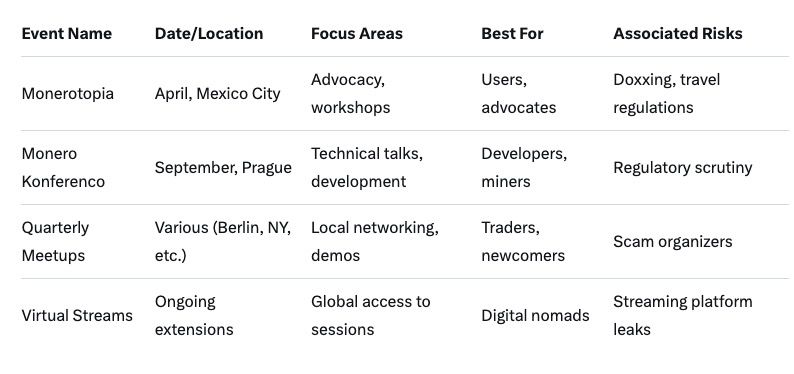
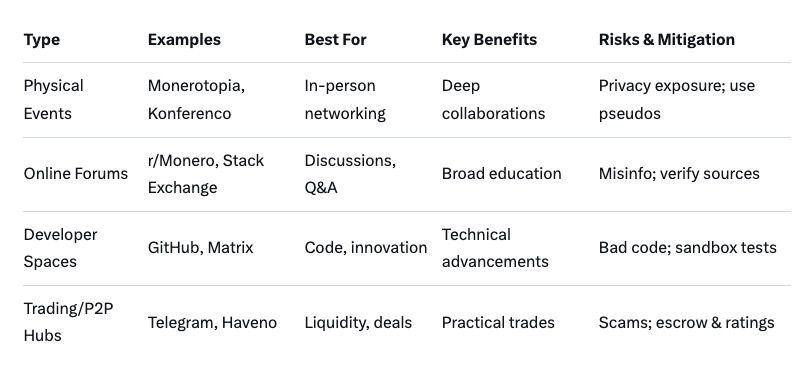
Physical events in 2026 bring the Monero community together, blending technical talks with advocacy to drive ecosystem growth. Monerotopia, held annually in April in Mexico City, stands out as a flagship conference for privacy advocates and users. This multi-day event features panels on XMR's role in resisting financial censorship, workshops on wallet security, and networking sessions where miners share hardware strategies amid rising energy demands. Developers present on upcoming upgrades, like enhanced quantum resistance, making it best for those seeking inspiration and collaborations. Practical usage includes live demos of P2P trades via Haveno, but risks involve physical doxxing—use pseudonyms and avoid sharing personal details. Associated costs, like travel, can be managed with XMR payments for anonymity.
In Europe, Monero Konferenco in September (rotating locations, 2026 in Prague) focuses on technical depth, attracting developers and miners with talks on RandomX optimizations and node decentralization. Traders benefit from sessions on market analysis, while newcomers attend beginner tracks. This event is ideal for forging partnerships, such as joint mining pools, but risks include regulatory scrutiny in host countries—research local laws beforehand. Etiquette emphasizes respectful debates, as topics like governance can heat up.
Smaller physical meetups, organized via platforms like Meetup.com, occur quarterly in cities like Berlin or New York, best for local networking among traders and users. These informal gatherings discuss real-world XMR spending, like merchant integrations, with hands-on sessions for wallet setup. Risks are lower in vetted groups, but always verify organizers through official Monero channels to avoid scams.
Virtual extensions of these events, streamed on platforms like YouTube or Matrix, allow global participation, reducing barriers for digital nomads. Overall, physical events offer irreplaceable human connections, but balance with OPSEC by using cash or XMR for expenses and avoiding photos that could link identities.
Online Communities and Forums: Digital Hubs for Continuous Dialogue
Online communities provide year-round access to Monero discussions in 2026, serving as forums for idea exchange and problem-solving. The subreddit r/Monero, with over 250,000 members, excels as a general forum where users post about transaction privacy, traders analyze price trends influenced by adoption news, and miners seek advice on pool selection. Privacy advocates debate ethical implications of untraceable tech, making it best for broad education and networking. Practical usage involves upvoting resources like wallet guides or reporting bugs, but risks include misinformation from unmoderated posts—cross-verify with official docs. Etiquette requires flair usage (e.g., "Mining" or "Trading") and avoiding self-promotion to foster genuine interactions.
Monero Stack Exchange offers a structured Q&A format, ideal for developers posing technical questions on code implementations or miners troubleshooting efficiency drops. In 2026, it's a go-to for in-depth answers, voted by experts, supporting real-world applications like custom integrations. Risks are outdated responses—check dates—and etiquette demands clear, reproducible queries to aid responders.
The official Monero Forum on getmonero.org hosts governance threads, best for long-term holders influencing CCS proposals. Traders and advocates discuss market strategies or advocacy campaigns here, with risks limited to heated arguments—maintain civility. These forums complement events by extending conversations, allowing post-conference follow-ups.
Developer Spaces: Technical Collaboration and Innovation Centers
Developer spaces in 2026 drive Monero's evolution, with GitHub repositories as the primary hub for code contributions. Developers submit pull requests for features like improved scalability, while miners adapt mining software forks. This space is best for collaborative innovation, such as quantum-proofing, and networking through issue trackers. Practical engagement includes reviewing code or testing betas, but risks involve unaudited changes—always sandbox experiments. Etiquette stresses detailed commit notes and constructive feedback to build trust.
Matrix rooms like #monero-dev enable real-time chats, where developers brainstorm upgrades and privacy advocates input on user impacts. In 2026, these are vital for rapid prototyping, with miners joining for algorithm tweaks. Risks include channel infiltration by bad actors—use encrypted clients. Best practices: Stay on-topic and credit collaborators.
IRC on Libera.Chat (#monero-dev) offers a lightweight alternative, suiting developers in low-bandwidth areas for quick queries. These spaces tie into events, often previewing conference topics.
Trading Communities and P2P Hubs: Liquidity and Exchange Focus
Trading communities in 2026 facilitate XMR market discussions, with Telegram groups like official-linked trading chats analyzing volatility and strategies. Traders share chart insights, while miners offload rewards via P2P tips. Best for networking deals, but risks scams—verify via getmonero.org.
Haveno serves as a P2P hub, enabling decentralized trades discussed in dedicated forums. Users learn escrow mechanics, making it ideal for anonymous liquidity. Risks include disputes—use ratings. Etiquette: Honor terms.
These hubs support event participation by funding travel or swaps, emphasizing practical XMR utility.
Events Overview Table: Key Monero Gatherings in 2026
Community Types Table: Monero Spaces by Category
How Baltex.io Supports XMR Users with Liquidity Management
Between events and P2P activities, liquidity is key—baltex.io emerges as a non-custodial powerhouse in 2026, enabling seamless XMR swaps without KYC. Users convert BTC/USDT to XMR instantly, funding conference fees or P2P trades anonymously. Developers cover hackathon costs, miners liquidate rewards post-meetup, and traders hedge before market sessions.
The platform aggregates rates for optimal deals, completing in 15-25 minutes with high limits. OPSEC-friendly, it's Tor-compatible and breaks taint. Limitations: Minor spreads, but superior to risky P2P. Integrate with event planning—swap pre-Konferenco for on-site anonymity.
Associated Risks: Safeguarding Your Engagement
Risks in 2026 include scams at events (fake tickets) and online (phishing)—verify via official channels. Privacy leaks from photos or IPs demand Tor/VPN usage. Mitigation: Compartmentalize identities, avoid sharing keys, and report issues.
FAQ: Common Questions on Monero Events and Communities
What Is the Biggest Monero Event in 2026?
Monerotopia in April, focusing on advocacy and community.
How Can Developers Get Involved in Monero Spaces?
Via GitHub pulls and Matrix chats for code contributions.
Are There Risks at Physical Monero Conferences?
Yes, doxxing and regs—use pseudonyms and check laws.
What Makes Baltex.io Useful for Event Participants?
Anonymous swaps for funding travel or trades efficiently.
Best Community for Monero Newcomers?
r/Monero for welcoming discussions and resources.
Conclusion: Dive into the Monero Ecosystem in 2026
Monero's events and communities in 2026 offer unparalleled opportunities for growth and connection. From Monerotopia's inspiration to GitHub's innovation, engage thoughtfully with OPSEC. Baltex.io ensures liquidity flows smoothly. Explore Events Overview Table to plan, and contribute to this privacy revolution.
You can read our full breakdown in SimpleSwap Review 2026: Pros, Cons, and Monero Exchange Fees.
Related reading: Instant Swap Services: The Go-To for Privacy-Conscious Users.
We cover this in more detail in XMR.to Alternatives: How to Pay Bitcoin Invoices with Monero.
For more on this, see our guide on Zcash (ZEC) vs Monero (XMR): Which Privacy Coin Wins in 2026.