 2 minutes to read
 Ecosystem
Berachain Bridge Guide: How to Move Liquidity to the New Chain in 2026
TLDR In 2026, moving liquidity to Berachain (the EVM-compatible chain with Proof-of-Liquidity and BGT governance token) is best done via direct bridges like Berachain's native bridge for ETH/BERA and third-party options such as deBridge, Stargate, Wormhole, and Synapse for stablecoins, altcoins, and cross-chain flows. Deposits typically settle in 1–15 minutes with fees dominated by Ethereum L1 gas (or source chain gas) and no extra bridge commissions on most routes; withdrawals follow a 7-day challenge period on optimistic models or near-instant on intent-based bridges. The native bridge offers the lowest risk for BERA/ETH but limited token support, while third-party bridges provide broader asset coverage and faster finality. For intelligent one-click multi-chain routing that scans multiple bridges and DEXs to minimize fees, slippage, and bridge exposure, baltex.io stands out as the superior alternative—see our master-berachain-bridge-step-by-step-guide for detailed Berachain bridging insights. Overall, use the native Berachain bridge for simple ETH/BERA transfers and baltex.io for complex, low-cost liquidity moves—always start with small tests.
Berachain in 2026 has emerged as one of the most innovative EVM-compatible chains, combining Proof-of-Liquidity consensus, BGT governance token incentives, and deep DeFi primitives to attract liquidity providers, traders, and yield farmers. Bridging assets to Berachain is the essential first step for anyone wanting to participate in its ecosystem—whether depositing ETH to mint BERA, moving stablecoins for lending, or bridging altcoins for trading on Berachain DEXs. The official Berachain Bridge, combined with third-party cross-chain solutions, provides multiple paths, each with different trade-offs in fees, speed, supported assets, slippage, and security. This guide explains how to move liquidity to Berachain in 2026, covers the native bridge mechanics, compares popular third-party options, and shows why intelligent routing often outperforms single-bridge flows.
What Is the Berachain Bridge and Which Assets Does It Support
The Berachain Bridge is the official cross-chain gateway connecting Ethereum mainnet (and select L2s) directly to Berachain. It uses a combination of optimistic rollup-style checkpointing and native integration for secure, trust-minimized transfers. In 2026, the bridge supports native ETH (which becomes BERA on Berachain), major ERC-20 tokens (USDC, USDT, WBTC, DAI), and select Berachain-native assets. Deposits arrive as native tokens on Berachain without forced wrapping, eliminating extra approval steps and smart-contract risks associated with wrapped versions.
The bridge is optimized for Ethereum-to-Berachain flows and does not natively support non-EVM chains like Solana or Sui; for those routes you need third-party bridges. This Ethereum-centric focus makes the native bridge the cleanest and lowest-risk option for users whose primary goal is to move ETH or stablecoins to Berachain for liquidity provision or trading. As explained in our master-berachain-bridge-step-by-step-guide, the native bridge ensures seamless asset delivery on Berachain, reducing friction for DeFi participants.
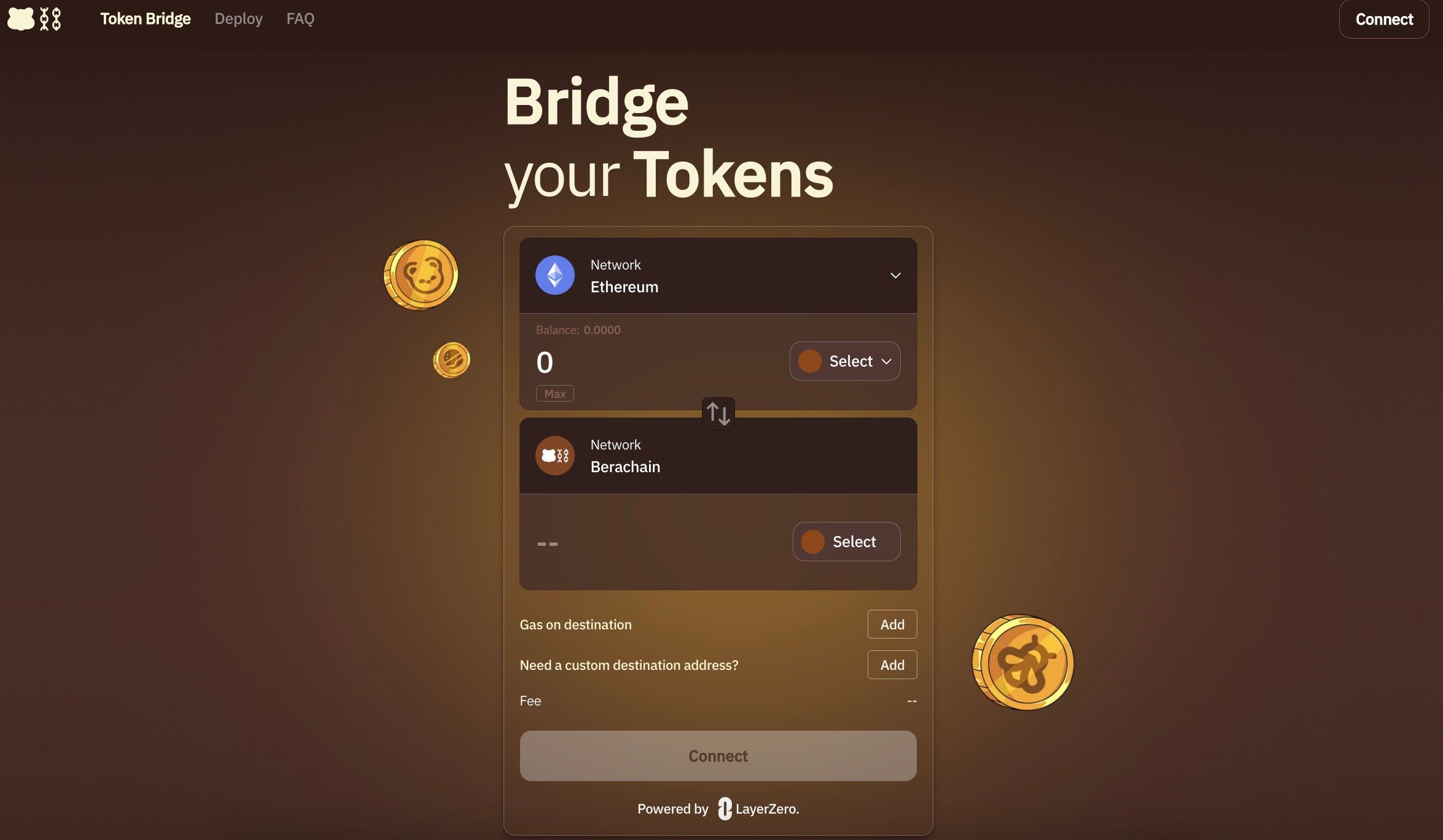
How to Deposit Assets from Ethereum to Berachain (Step-by-Step)
Depositing ETH or ERC-20 tokens to Berachain is simple and designed for efficiency. Connect a compatible wallet (MetaMask, Rabby, or WalletConnect) to the official bridge interface at bridge.berachain.com. Select Ethereum as the source and Berachain as the destination, choose ETH or a supported ERC-20, enter the amount, and confirm the transaction on Ethereum mainnet. The bridge locks your assets on L1 and mints the equivalent native tokens on Berachain.
In 2026, deposits typically complete in 1–15 minutes once the Ethereum transaction is confirmed, thanks to Berachain’s fast sequencer and improved finality. You pay only standard Ethereum gas fees—no additional bridge commission. For users who want lower effective costs, time deposits during low-gas periods on Ethereum or batch multiple transfers. Detailed wallet setup and gas-saving tips are covered in our how-to-transfer-crypto-from-exchange-to-wallet-secure-guide-2025.
How to Withdraw Assets from Berachain Back to Ethereum
Withdrawing assets from Berachain to Ethereum follows an optimistic rollup-style security model. From the same bridge interface, select Berachain as the source and Ethereum as the destination, choose ETH or a supported ERC-20, enter the amount, and initiate the withdrawal. The bridge burns your assets on Berachain and queues a transaction on Ethereum.
The standard withdrawal requires a 7-day challenge period during which anyone can submit fraud proofs if the transaction is invalid. After the period ends, you claim the funds on Ethereum. In 2026, this 7-day wait remains the default for maximum security, but integrated fast-withdrawal services (powered by liquidity providers) can accelerate the process to minutes for a small additional fee. No bridge commission is charged—only Ethereum gas for the final claim transaction. This mechanism ensures the highest possible security for large withdrawals while keeping costs predictable.
Fee Structure and How to Minimize Costs in 2026
The Berachain Bridge has a fully transparent fee structure: there is no platform fee whatsoever. On deposits, you pay only the Ethereum mainnet gas cost for the initial transaction. On withdrawals, you pay Ethereum gas only for the final claim step after the challenge period. Berachain-side gas for the burn transaction is negligible (often under $0.01).
In 2026, average deposit fees range from $2–$15 depending on Ethereum network congestion, while withdrawal claim fees typically fall between $5–$20. To achieve truly low-fee transfers, time deposits during low-gas periods on Ethereum and consider fast-withdrawal services when the 7-day wait is unacceptable. For frequent liquidity movers, combining the native bridge with gas-optimization strategies can keep total costs under 0.1% even on mid-sized transfers. Detailed cost breakdowns and timing strategies are available in our eth-to-arbitrum-guide-2025-bridge-wallets-defi-fees-outlook.
Here is a clear transfer comparison table for ETH moves in 2026:

Here is a fees and limits overview for the official Berachain Bridge in 2026:

These figures reflect live averages—always check current Ethereum gas prices before initiating a transfer.
Settlement Delays and Security Considerations
Deposit delays on the Berachain Bridge are minimal: once your Ethereum transaction is confirmed, the corresponding native ETH/BERA appears on Berachain within minutes. Withdrawals are intentionally slower to allow the optimistic challenge period, ensuring the highest possible security. In 2026, the 7-day period remains the default, but integrated fast-withdrawal services (powered by liquidity providers) let you access funds in minutes for a small premium—ideal when time matters more than absolute security.
Security considerations are excellent for the native bridge. It inherits Ethereum’s security through regular checkpoints and fraud-proof mechanisms. There is no pooled liquidity risk and no third-party custody. The main risk for users is Ethereum mainnet congestion during deposits or failing to claim withdrawals after the challenge period. Always use hardware wallets, double-check addresses, and start with small test transfers when using the bridge for the first time. For a full overview of bridge security risks, see our what-are-the-risks-of-cryptocurrency-top-dangers-how-to-avoid.
Comparing Native Bridging with Alternative Routing Methods
The official Berachain Bridge excels in simplicity and security but is not always the fastest or cheapest option for every scenario. Alternative routing through intent-based bridges or aggregators can deliver native ETH/BERA on Berachain in seconds with lower total costs during high Ethereum gas periods. These methods source liquidity from multiple providers and often bypass the 7-day withdrawal delay entirely. However, they introduce slight additional smart-contract risk compared to the native bridge’s direct Ethereum checkpointing.
For users who only need to move ETH between Ethereum and Berachain occasionally, the official bridge remains the most reliable choice. For frequent or multi-chain flows (Ethereum → Berachain → Solana, for example), alternative routing often saves both time and money. The key trade-off is security versus convenience: native bridging prioritizes maximum safety, while alternatives prioritize speed and cost.
How baltex.io Offers Alternative Multi-Chain Routing Beyond Native Bridges
When the official Berachain Bridge’s 7-day withdrawal period or Ethereum gas costs become inconvenient, baltex.io provides a powerful alternative through direct intelligent multi-chain routing. Instead of committing to a single bridge, Baltex scans dozens of liquidity sources—including deBridge, Across, Stargate, Wormhole, and the official Berachain Bridge—then automatically selects and executes the optimal route in one seamless wallet-to-wallet transaction.
Unlike simple redirects, Baltex handles execution internally, eliminating handoff risk. Private Swap mode can insert shielded hops (including optional Monero routing) to fully obscure origins before landing clean native ETH/BERA or other assets on Berachain. Settlements typically complete in 8–35 minutes even for complex routes, fees remain ultra-competitive at ~0.4–0.8%, and there are virtually no limits. Supporting over 10,000 tokens across 200+ networks without manual bridging, Baltex delivers true one-click optimization for Berachain inflows and outflows.
Liquidity providers and DeFi users moving large volumes benefit enormously—especially when pairing with bridges covered in our master-berachain-bridge-step-by-step-guide. Use the official Berachain Bridge for simple secure ETH/BERA moves and switch to baltex.io when speed, multi-chain optimization, or privacy are priorities.
Conclusion
The official Berachain Bridge in 2026 continues to be the most straightforward and secure way for Ethereum users to move ETH and ERC-20 tokens to Berachain with minimal fees and native asset delivery. Deposits are fast and cheap, withdrawals offer the strongest security guarantees, and the process requires no third-party trust. By understanding gas timing, using hardware wallets, and starting with small tests, you can keep costs low and risks minimal. For users who need faster withdrawals or multi-chain flexibility, intelligent routing platforms like baltex.io provide excellent alternatives that often beat the native bridge on total cost and convenience.
Mastering the Berachain Bridge (and knowing when to use smarter routing) unlocks the full potential of liquidity provision, yield farming, and trading on Berachain. Always double-check addresses, monitor Ethereum gas prices, and stay informed about network upgrades. Explore more cross-chain strategies in our how-to-transfer-crypto-from-exchange-to-wallet-secure-guide-2025, what-are-the-risks-of-cryptocurrency-top-dangers-how-to-avoid, and arbitrum-nova-2025-guide-cheaper-faster-vs-base guides to make every transfer smooth and cost-effective in the evolving 2026 landscape.
Related reading: Across Protocol Review: The Cheapest Bridge for Ethereum L2s.
Related reading: Across Protocol Review: The Cheapest Bridge for Ethereum L2s.
We cover this in more detail in The Role of Liquidity Providers in Instant Exchange Services.
You can read our full breakdown in Linea Bridge Tutorial: Cheapest Ways to Move ETH (July 2026).