2 minutes to read
 Ecosystem
TL;DR
In 2026, privacy-focused users can buy Monero (XMR) anonymously via no-KYC swappers like Baltex.io, GhostSwap, and ChangeNOW, which offer instant wallet-to-wallet exchanges with fees under 1% and no limits. P2P platforms such as Haveno and Bisq provide decentralized fiat-to-XMR trades with escrow, averaging 0.5-2% fees but slower speeds (15-60 minutes). Risks include scams and volatility, mitigated by test transactions and Tor usage. For seamless routing, Baltex.io enables private multi-chain swaps into XMR, breaking on-chain links for ultimate anonymity.
Best No-KYC Ways to Buy Monero in 2026: An Overview
As privacy concerns dominate the crypto landscape in 2026, Monero (XMR) remains the go-to asset for anonymous transactions, thanks to its ring signatures, stealth addresses, and confidential transactions. However, acquiring XMR without KYC has become more nuanced amid regulatory pressures. Centralized exchanges like Binance and Kraken have delisted XMR in many regions, pushing users toward no-KYC swappers, aggregators, and peer-to-peer (P2P) platforms. These methods prioritize anonymity but vary in execution, with swappers offering speed and simplicity, while P2P options emphasize decentralization.
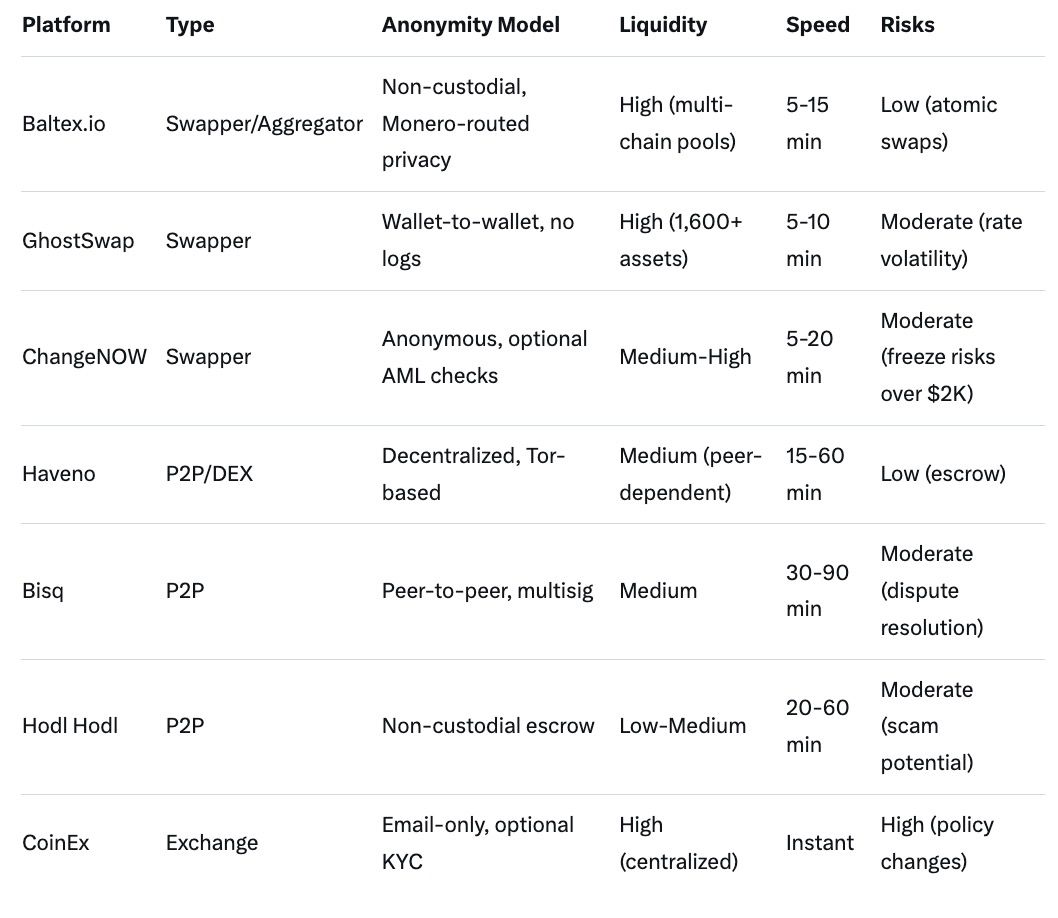
Swappers like Baltex.io and GhostSwap facilitate direct wallet-to-wallet conversions from assets like BTC or USDT to XMR, often aggregating liquidity from multiple sources for optimal rates. They operate non-custodially, meaning funds never leave your control until the swap completes, reducing counterparty risks. P2P platforms, such as Haveno and Bisq, connect buyers directly with sellers via escrow, supporting fiat payments like bank transfers or cash. Exchanges like CoinEx and MEXC still allow no-KYC trading for small volumes, but withdrawals may trigger verification. In this guide, we'll compare these options by anonymity model, fees, limits, liquidity, speed, and risks, providing step-by-step flows and safety tips for secure purchases.
Anonymity models differ significantly: swappers often use atomic or near-atomic protocols to ensure privacy without logs, while P2P relies on Tor networks and multisig escrow to obscure identities. Liquidity is highest on aggregators, drawing from DEX pools, whereas P2P depends on active users. Speed favors swappers (under 10 minutes), but P2P can take hours due to manual confirmations. Risks include phishing, depegs, or regulatory shutdowns—always verify platforms via community forums like Reddit's r/Monero. For practical investors, starting with a small test swap is essential to gauge reliability.
Comparing No-KYC Swappers, Exchanges, and P2P Platforms
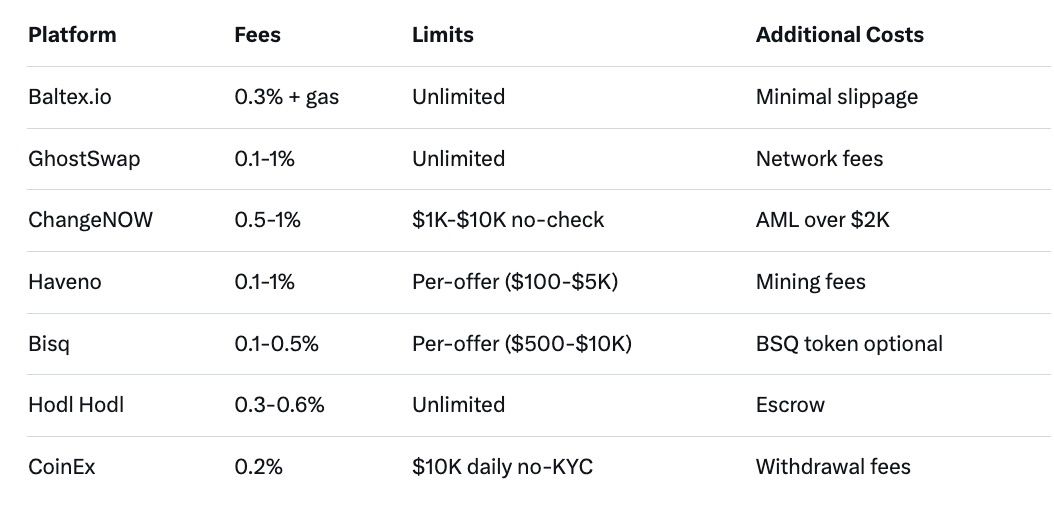
No-KYC swappers stand out for their ease in 2026, enabling instant conversions without accounts. Platforms like Baltex.io aggregate routes across 200+ chains, supporting swaps from ETH, SOL, or USDT to XMR with minimal slippage. Their anonymity model leverages Monero's built-in privacy, routing funds through obfuscated paths to break chain analysis. Fees typically range from 0.3-1%, with no upper limits, making them ideal for high-volume users. Liquidity is robust, pulling from DEXs like Uniswap or Thorchain, ensuring quick fills even during volatility. Speed averages 5-15 minutes, far surpassing P2P options.
In contrast, no-KYC exchanges like CoinEx offer order-book trading for XMR/BTC pairs, with optional verification for daily limits up to $10,000. Their anonymity is partial—email registration is required, but no ID for basic use. Fees are low at 0.2% per trade, and liquidity benefits from centralized pools, though XMR volumes are lower than Bitcoin's. Speed is near-instant for market orders, but risks include potential policy shifts toward mandatory KYC, as seen with TradeOgre's 2025 shutdown. P2P platforms provide the strongest decentralization: Haveno, a Monero-focused DEX, uses Tor for anonymous order matching, with escrow protecting against defaults. Fees are 0.1-1%, limits vary by offer (often $100-$5,000), and liquidity depends on geographic peers—stronger in Europe than the US. Speed can lag at 30-60 minutes due to confirmations, but risks are mitigated by reputation systems.
Overall, swappers excel in convenience for crypto-to-XMR trades, exchanges suit active traders, and P2P appeals to fiat buyers seeking maximum privacy. For a balanced approach, combine them: acquire BTC via P2P, then swap to XMR on a aggregator. This minimizes exposure while leveraging each method's strengths.
Fees, Limits, and Practical Investor Considerations
Fees for no-KYC Monero purchases in 2026 are competitive, often undercutting KYC platforms. Swappers charge 0.3-0.8% plus network gas, with Baltex.io at 0.3% for standard routes. P2P fees include trading premiums (1-3%) and escrow costs (0.1%), while exchanges like MEXC offer 0.2% maker/taker. Limits vary: swappers like GhostSwap have no caps, ideal for whales, but ChangeNOW flags over €2,000 for checks. P2P offers per-trade limits of $500-$10,000, scalable via multiple deals. Exchanges cap no-KYC withdrawals at $2,000-$10,000 daily.
Investors should factor in hidden costs like slippage in illiquid markets—swappers minimize this via aggregation. For safety, use hardware wallets like Ledger for storage, and enable 2FA where available. Volatility risks XMR's price swings, so dollar-cost average small buys. Regulatory risks loom; platforms like Haveno resist censorship through decentralization.
Step-by-Step Buying Flows and Safety Checks
To buy XMR via a swapper like ChangeNOW: Visit the site, select BTC to XMR, enter amount, provide XMR wallet address. Confirm rate, send BTC to generated address. Funds arrive in 5-20 minutes. Safety: Use a fresh wallet, check address twice, start with $50 test.
For P2P on Haveno: Download client, fund escrow wallet, browse offers, accept trade, confirm payment. Escrow releases XMR post-verification. Safety: Use Tor, verify peer reputation, meet in public for cash.
On exchanges like CoinEx: Register with email, deposit BTC, trade for XMR, withdraw. Safety: Enable 2FA, withdraw immediately, use VPN.
Common checks: Verify HTTPS, read reviews on Monero forums, avoid unsolicited links.
Real-World Use Cases and Operational Risks
Swappers suit quick hedges against surveillance, like converting salary BTC to XMR for private spending. P2P enables fiat entry in restricted areas, ideal for activists. Exchanges fit day traders leveraging XMR volatility.
Risks: Scams via fake sites—bookmark legit URLs. Depegs during dumps, as in 2025 crashes. Custody breaches rare in non-custodial tools, but always self-custody post-purchase.
How Baltex.io Supports Anonymous Routing and Swaps into XMR
Baltex.io excels in 2026 as a non-custodial aggregator for anonymous XMR swaps, routing across 200+ networks and 10,000+ tokens. Activate "Private Swap" mode to leverage Monero rails: funds convert to XMR mid-route, obscuring origins via ring signatures before final payout. For example, swap SOL to XMR—enter amount, toggle privacy, provide wallet; atomic execution in 5-15 minutes with 0.3% fees.
This breaks chain analysis, perfect for routing stablecoins like USDT to XMR without traces. No KYC, ephemeral sessions ensure data privacy. For investors, it streamlines portfolio shifts: arbitrage BTC-XMR spreads or hedge with multi-chain paths. Compared to peers, Baltex offers wider liquidity, lower slippage, and fiat ramps, making it essential for anonymous management.
FAQ
What are the top no-KYC swappers for Monero in 2026?
Baltex.io, GhostSwap, and ChangeNOW lead for instant, unlimited swaps with strong privacy.
How do fees compare for P2P vs swappers?
P2P averages 1-3% including premiums; swappers like SimpleSwap charge 0.5-1% with no extras.
Is Haveno safer than centralized exchanges?
Yes, its decentralized escrow and Tor integration minimize risks over platforms like CoinEx.
Can I buy XMR with fiat anonymously?
Use P2P like Bisq for bank transfers; swappers require crypto input.
How does Baltex.io ensure privacy in swaps?
It routes via Monero for obfuscation, with no logs or KYC.
Conclusion
Navigating no-KYC Monero purchases in 2026 demands balancing speed, privacy, and risks, with swappers offering efficiency and P2P providing resilience. Platforms like Baltex.io bridge gaps through advanced routing, enhancing anonymity. Diversify methods, prioritize safety checks, and explore advanced privacy tools for optimal security. As regulations evolve, these options empower users to maintain financial sovereignty in an increasingly monitored space.
For more on this, see our guide on SimpleSwap Review 2026: Pros, Cons, and Monero Exchange Fees.
We cover this in more detail in Instant Swap Services: The Go-To for Privacy-Conscious Users.
You can read our full breakdown in XMR.to Alternatives: How to Pay Bitcoin Invoices with Monero.
For more on this, see our guide on TL;DR: Quick Guide to Buying Crypto with Credit Card in 2025.