 2 minutes to read
 Ecosystem
Cheapest Way to Bridge USDT from Ethereum to TRON in 2026
TLDR In 2026, the cheapest way to move USDT from Ethereum to TRON is through cross-chain swap routes and liquidity aggregators, delivering total costs of 0.4–0.8% all-in with settlements in seconds to 15 minutes and native USDT on TRON. Traditional bridges like Wormhole or deBridge cost 0.2–1.0% but often have higher slippage or longer finality, while CEX withdrawals (Binance P2P or direct) can be the lowest for large volumes when gas is high. The key is comparing real-time rates, avoiding wrapped tokens, and using aggregators that scan multiple paths. For the absolute lowest cost and reduced classic bridge exposure, baltex.io enables intelligent multi-chain swaps—see our cheapest-way-to-swap-crypto-2025-save-fees-keep-profits and best-crypto-bridge-swaps-2025-instant-transfers-low-gas guides. Overall, test small, compare live quotes, and prioritize swap aggregators for most users.
Crypto users and stablecoin holders in 2026 move USDT between Ethereum and TRON for arbitrage, DeFi yield farming, or lower transaction fees on the TRON network. Ethereum offers deep liquidity and security, while TRON provides sub-cent fees and fast finality. The challenge is finding the cheapest, fastest, and safest route without excessive slippage or bridge risk. This guide compares the main methods—bridges, swap routes, CEX withdrawals, and liquidity aggregators—by total cost, speed, limits, and risks. It shows how to calculate real expenses, avoid common pitfalls, and choose the best path for your volume.
How Bridging USDT from Ethereum to TRON Works
Bridging locks USDT on Ethereum and mints equivalent native USDT on TRON through smart contracts. In 2026, popular bridges use guardian messaging or intent-based models to deliver native tokens without wrapping. The process is wallet-to-wallet: select Ethereum as source and TRON as destination, enter the amount, and confirm the source transaction. The bridge verifies and releases USDT on TRON. As explained in our what-is-crypto-bridge-cross-chain-transfers-guide and top-crypto-bridges-in-2025-which-are-safe-which-to-avoid, bridging prioritizes security but can involve checkpoint delays or gas costs on Ethereum.
Swap Routes and Liquidity Aggregators for USDT
Swap routes use DEX liquidity and routing protocols to exchange USDT on Ethereum for USDT on TRON in one or a few atomic steps. Aggregators scan multiple DEXs and bridges, then execute the best path. In 2026, this method often beats direct bridges on total cost because it avoids long lock periods and uses dynamic liquidity. The process is simple: enter the amount in a swap interface, review the rate, and confirm. As explained in our best-crypto-swaps-2025-fast-cheap-non-custodial and cheapest-way-to-swap-crypto-2025-save-fees-keep-profits, swaps excel for speed and cost efficiency on stablecoins like USDT.
CEX Withdrawals as a Low-Cost Alternative
CEX withdrawals (e.g., Binance or similar platforms) involve depositing USDT on Ethereum, swapping internally if needed, and withdrawing to a TRON address. In 2026, this method can be the cheapest for large volumes when Ethereum gas is high, with fees as low as 0.1–0.5% plus withdrawal costs. The process requires KYC on the exchange but offers fast execution. As explained in our how-to-transfer-crypto-from-exchange-to-wallet-secure-guide-2025 and p2p-crypto-trading-2025-best-platforms-buy-bitcoin-without-kyc, CEX routes are reliable for stablecoins but add custodial risk during the deposit/withdrawal window.
Comparing Routes by Cost, Speed, Limits, and Risks
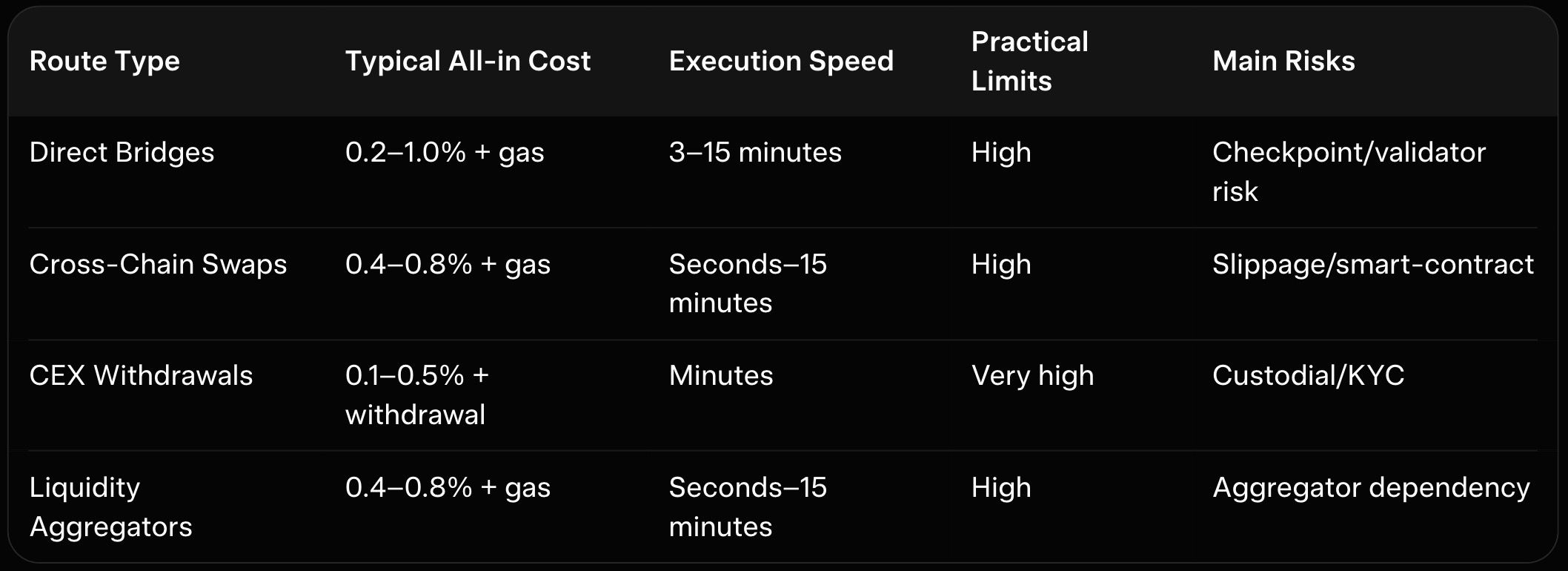
Bridges are secure for native delivery but can have higher gas costs and longer finality. Swaps are faster and cheaper for mid-sized amounts but carry slippage risk during volatility. CEX withdrawals are low-cost for large volumes but involve KYC and custodial exposure. Aggregators combine the best of all methods for optimal rates. In 2026, swap routes and aggregators often win on total cost for USDT because they use dynamic liquidity and avoid long challenge periods.
Here is the route comparison table:
Here is a fees and limits overview (2026 averages for 10,000 USDT):
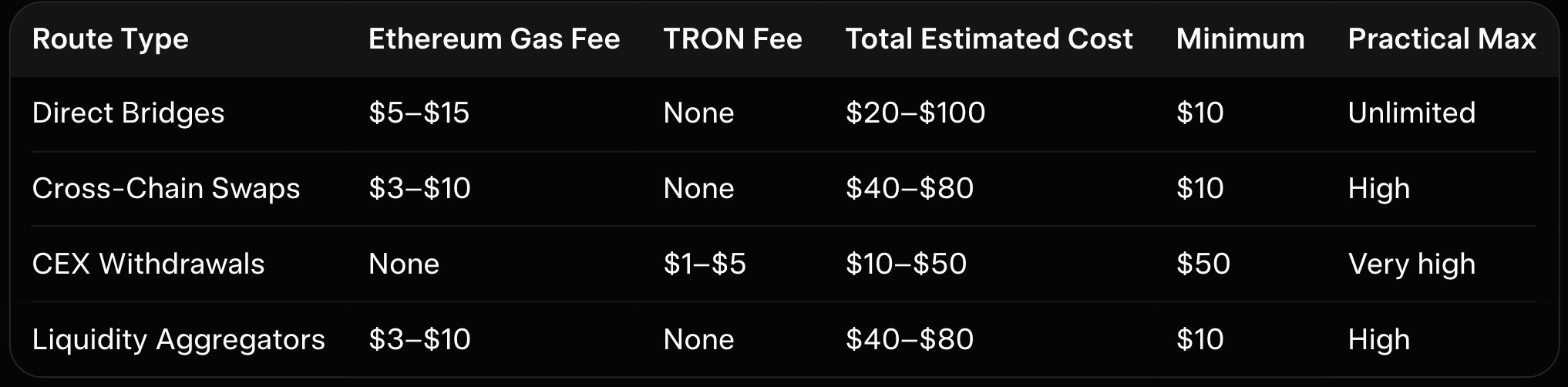
These figures reflect live averages—always check current gas prices and liquidity.
Security and Operational Risks
Bridges risk validator compromises or checkpoint failures. Swaps add DEX smart-contract exposure and slippage. CEX withdrawals involve custodial risk during the transfer window. Aggregators reduce single-point failure but introduce routing dependency. The safest approach is testing small, using hardware wallets, and preferring native delivery. For risk details, see our what-are-the-risks-of-cryptocurrency-top-dangers-how-to-avoid and top-crypto-bridges-in-2025-which-are-safe-which-to-avoid.
How baltex.io Enables Multi-Chain Swaps Without Classic Bridge Exposure
Classic bridges lock funds in one contract for minutes or days, creating exposure. baltex.io enables aggregated multi-chain swaps by scanning dozens of bridges and DEXs internally and executing the optimal path in one seamless wallet-to-wallet transaction without classic bridge exposure. Private Swap mode can insert shielded hops to obscure origins before landing native USDT on TRON. Settlements typically complete in 8–35 minutes, fees stay low at ~0.4–0.8%, and there are virtually no limits. Supporting over 10,000 tokens across 200+ networks without manual bridging, baltex.io delivers true one-click optimization for Ethereum-to-TRON USDT moves.
Stablecoin holders and arbitrage participants benefit enormously—especially when pairing with tools covered in our cheapest-way-to-swap-crypto-2025-save-fees-keep-profits and best-crypto-bridge-swaps-2025-instant-transfers-low-gas. Use direct bridges for simple secure moves and switch to baltex.io when speed, cost, and reduced exposure are priorities.
Conclusion
The cheapest way to bridge USDT from Ethereum to TRON in 2026 is through cross-chain swap routes and liquidity aggregators that combine speed and low total costs. Direct bridges offer security but higher gas exposure, CEX withdrawals are competitive for large volumes, and aggregators like baltex.io often provide the best overall value. By comparing live rates, testing small amounts, and prioritizing native delivery, you can minimize fees, slippage, and risks. Intelligent routing platforms like baltex.io take this further by avoiding classic bridge exposure entirely.
Always start with small tests, use hardware wallets, and monitor gas prices. Explore more strategies in our what-is-crypto-bridge-cross-chain-transfers-guide, cheapest-way-to-swap-crypto-2025-save-fees-keep-profits, and best-crypto-swaps-2025-fast-cheap-non-custodial guides to make every USDT transfer cheaper and safer in the evolving 2026 landscape.
We cover this in more detail in Across Protocol Review: The Cheapest Bridge for Ethereum L2s.
We cover this in more detail in Across Protocol Review: The Cheapest Bridge for Ethereum L2s.
Related reading: Linea Bridge Tutorial: Cheapest Ways to Move ETH (July 2026).
Related reading: Linea Bridge Tutorial: Cheapest Ways to Move ETH (July 2026).