 2 minutes to read
 Ecosystem
How to Buy Monero with a Credit Card: Step-by-Step in 2026
TLDR In 2026, buying Monero (XMR) with a credit card is possible through fiat on-ramps, proxy-asset routes (buy BTC/ETH then swap), and instant no-KYC swap platforms that accept card payments indirectly. Direct card-to-XMR purchases are rare due to delistings and AML restrictions, so most users buy a transparent coin (BTC, ETH, USDT) on a card-friendly platform and swap to XMR. Fees range from 2–6% (card processing + swap), limits vary from €50–€10,000 per transaction, approval rates are high on regulated ramps but lower on privacy-focused ones. Risks include card issuer blocks, higher costs, and partial privacy loss during the proxy step. For practical XMR swaps after fiat purchase without KYC or classic exchange exposure, baltex.io enables shielded routing—see our guide to Monero fiat on-ramps and private USDT to XMR exchange guide. Overall, proxy via card to BTC/ETH then no-KYC swap to XMR is the most reliable method for card users in 2026.
Crypto beginners and privacy-focused users in 2026 often want to buy Monero (XMR) directly with a credit card for convenience, but regulatory pressure and exchange delistings have made direct card-to-XMR purchases rare. Most card-friendly platforms sell transparent coins like Bitcoin or Ethereum, requiring a subsequent swap to XMR. This guide explains every realistic method to buy Monero using a credit card in 2026, including fiat on-ramps, proxy-asset routes, instant swaps with card support, and alternative liquidity paths. It compares fees, limits, approval rates, and risks so you can choose the option that balances speed, cost, and privacy.
Why Direct Credit Card Purchases of Monero Are Limited in 2026
Monero’s strong privacy features—ring signatures, stealth addresses, and RingCT—make it a regulatory target. In 2026, major card processors (Visa, Mastercard) and payment gateways flag privacy coins, leading most centralized exchanges to delist XMR or restrict fiat on-ramps. Direct card-to-XMR buys are unavailable on mainstream platforms like Coinbase, Binance, or Kraken. Users instead buy a proxy asset (BTC, ETH, USDT) with a credit card, then swap to XMR via no-KYC platforms. This two-step process adds fees and slight privacy loss but remains the most accessible card method.
Step-by-Step: Buy Proxy Asset with Credit Card
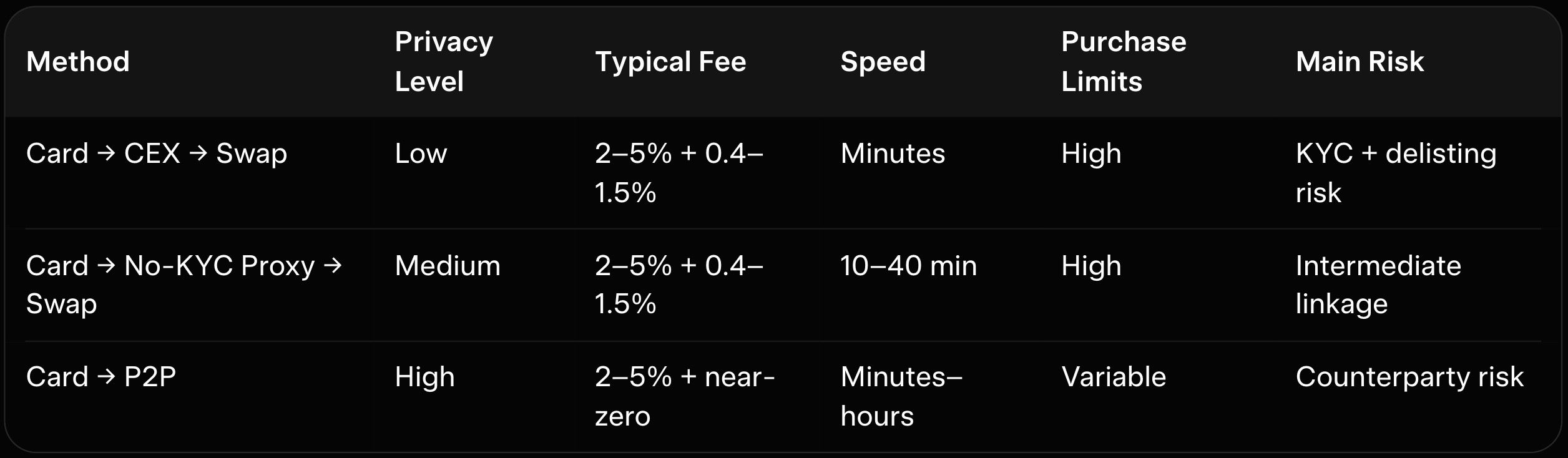
Most card purchases start with buying Bitcoin (BTC), Ethereum (ETH), or USDT on a card-friendly platform. In 2026, reliable options include MoonPay, Simplex, Banxa, and select CEX apps (Kraken, Bitfinex) that still accept cards for non-privacy coins. The process is simple: download the app or visit the site, select “Buy Crypto,” choose BTC/ETH/USDT, enter your card details, and confirm. Fees range from 2–5% (card processing + platform markup), and transactions settle in minutes. Limits vary from €50–€10,000 per purchase depending on verification level. Approval rates are high for standard cards, though some issuers block crypto purchases.
As explained in our step-by-step Bitcoin buying tutorial (similar card mechanics apply), this proxy step is the easiest card entry point. Once you have the proxy asset in your wallet, proceed to the XMR swap step.
Instant No-KYC Swaps After Card Purchase
After buying BTC/ETH/USDT with your card, use a no-KYC instant swap platform to convert to Monero. Platforms like Godex, Exolix, StealthEX, and FixedFloat accept deposits from your wallet and send XMR to your address in 5–30 minutes. No registration or KYC is required. Fees are 0.4–1.5% all-in, with transparent rates shown upfront. Liquidity is sufficient for mid-sized amounts, and execution is non-custodial.
This two-step method (card → proxy → swap) is the most common card route in 2026. Privacy is preserved after the card purchase because the swap is private and non-KYC. Risks are minimal: choose established platforms with good user feedback.
P2P and Alternative Routes with Card Funding
P2P markets let you fund a purchase with a card indirectly: buy USDT or BTC with your card on a card-friendly platform, then trade that asset for XMR on a P2P marketplace using escrow. Fees are low (near-zero plus card processing), speed is minutes to hours, and limits are flexible. Privacy is high when using non-KYC card ramps. Risks include counterparty reliability (mitigated by escrow) and card issuer blocks on crypto purchases.
Here is the platform comparison table:
Here is a fees and limits context table (2026 averages for €1,000 purchase):
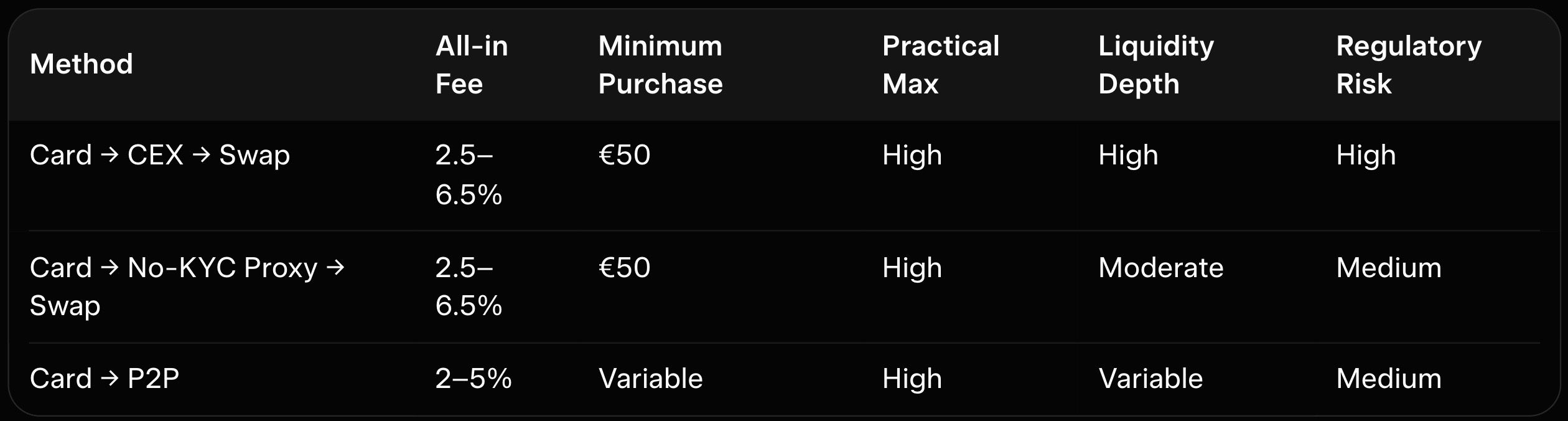
How baltex.io Enables Practical XMR Swaps After Fiat/Card Purchase
Card purchases usually start with transparent assets, requiring a final swap to XMR. Private Swap mode inserts shielded Monero hops that fully break on-chain links using ring signatures and stealth addresses before delivering clean native XMR to your wallet. Settlements complete in 8–35 minutes even for cross-chain pairs, fees stay low at ~0.4–0.8%, and there are virtually no limits. Supporting over 10,000 tokens across 200+ networks without manual bridging, baltex.io delivers true one-click optimization for card users.
Conclusion
Buying Monero with a credit card in 2026 requires a two-step approach: card purchase of a proxy asset (BTC/ETH/USDT) followed by a no-KYC swap to XMR. Non-custodial swap apps offer the best privacy-speed balance, P2P maximizes anonymity for cash-equivalent deals, and remaining CEX apps provide liquidity at the cost of KYC. Understanding fees, limits, and risks helps you choose the right method. Tools like baltex.io make the final swap seamless and private without relying on restricted platforms.
Always start with small test purchases, use hardware wallets, and verify addresses carefully.
For more on this, see our guide on SimpleSwap Review 2026: Pros, Cons, and Monero Exchange Fees.
For more on this, see our guide on Instant Swap Services: The Go-To for Privacy-Conscious Users.
For more on this, see our guide on XMR.to Alternatives: How to Pay Bitcoin Invoices with Monero.
Related reading: TL;DR: Quick Guide to Buying Crypto with Credit Card in 2025.