



 5 minutes to read
 Ecosystem
Cardano Price Prediction 2027: ADA Forecast and Analysis (September 2026 Update)
Cardano price prediction 2026 remains a key reference point as the market moves into the final quarter of the year, with ADA trading near $0.24 amid ongoing network upgrades. Cardano continues to emphasize peer-reviewed development and community governance as it targets broader adoption in decentralized finance and real-world asset tokenization.
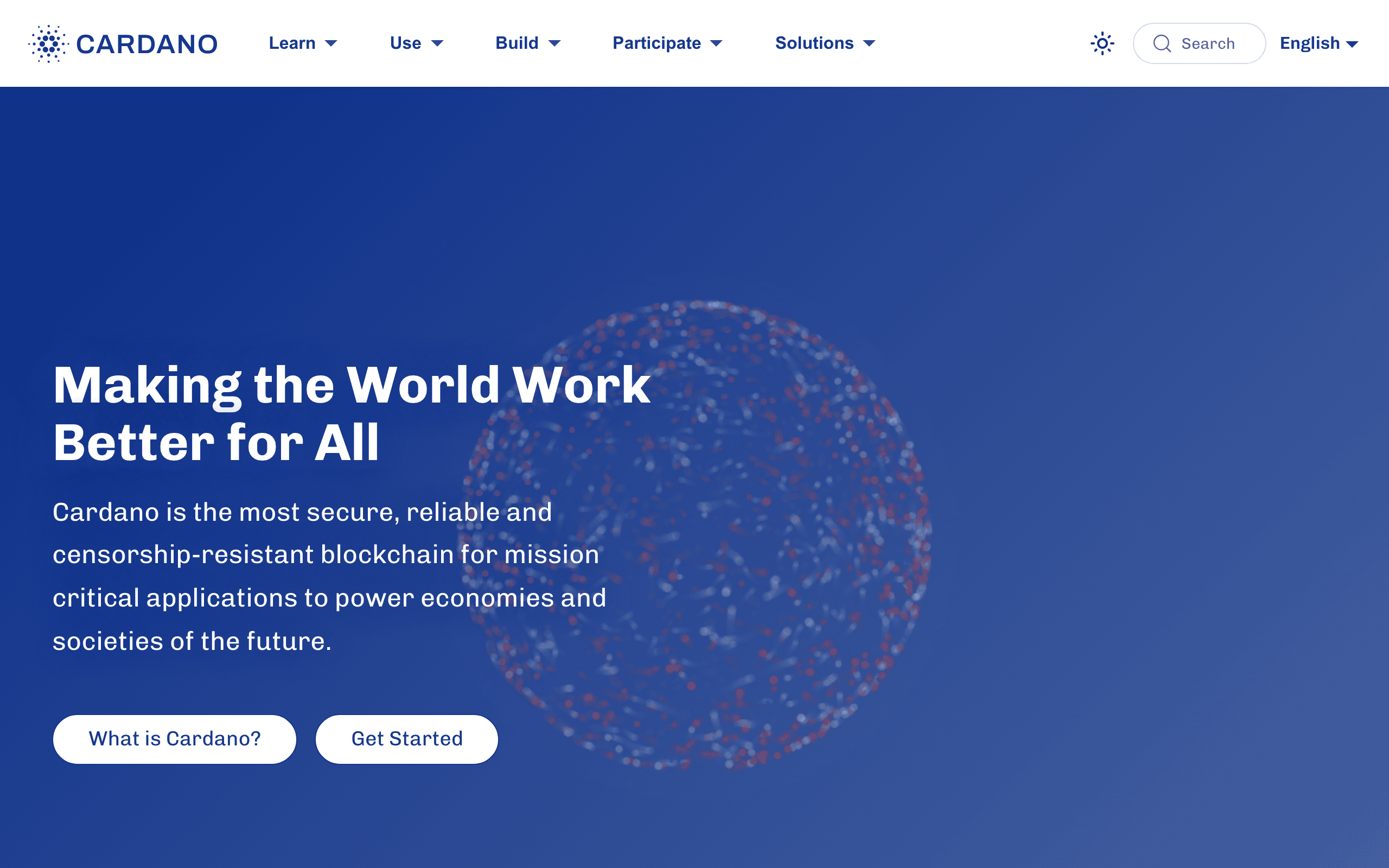
The project, founded on the Ouroboros proof-of-stake protocol, has progressed through multiple eras including the recent van Rossem hard fork that enabled on-chain governance decisions. As of September 2026, circulating supply stands near 37.5 billion ADA out of a 45 billion total cap. Market participants watch technical milestones such as the upcoming Leios upgrade for clues on whether 2027 could mark a meaningful recovery phase.
Direct Answer: Cardano Price Outlook for 2027
Analysts project ADA trading in a $0.22 to $1.50 range by the end of 2027, with an average around $0.65 assuming moderate DeFi growth and successful scaling. Conservative models from platforms like CoinCodex and DigitalCoinPrice cluster near $0.35-$0.50, while optimistic scenarios from CoinStats and others reach $1.50 under strong altcoin conditions and institutional inflows. These figures derive from models incorporating network activity, Bitcoin cycle timing, and upgrade delivery rather than guarantees.
CoinStats Model: $0.22-$1.50 Range for 2027
CoinStats analysis places the 2027 low at $0.22 if recovery stalls and competition from faster networks limits gains. The average $0.65 implies roughly $24 billion market cap at current supply levels, supported by rising stablecoin usage and governance participation. The high case of $1.50 assumes measurable dApp traction and altseason rotation, equating to over $56 billion market cap. The model highlights that Cardano's eUTXO architecture provides deterministic smart contract execution, a differentiator that could attract enterprise use cases if throughput improves.
Godex.io Scenario Analysis: Base Case $0.55
Godex.io outlines bear, base, and bull cases for 2027 at $0.15, $0.55, and $1.20 respectively. The base case assumes steady enterprise traction through projects like Midnight and incremental DeFi TVL growth. Bull case requires visible revenue from institutional deployments and a favorable macro environment. The analysis notes that governance under the Voltaire era allows community-directed treasury spending, potentially accelerating development without relying solely on the founding team.
Changelly and CoinCodex Technical Forecasts
Changelly models point to $0.58-$0.96 for 2027 based on historical patterns and technical indicators. CoinCodex offers a narrower $0.34-$0.48 band, factoring in post-halving cycle dynamics and competition. Both emphasize that reclaiming $1 resistance from prior cycles would require sustained volume and positive sentiment around the Leios mainnet launch targeted for late 2026.
WalletInvestor Daily Projection Outlook
WalletInvestor machine-learning forecasts show ADA around $0.30 by late 2027 under central estimates, with daily ranges reflecting volatility. The model projects modest upside of roughly 27% from September 2026 levels but highlights month-to-month swings. Such algorithmic approaches complement fundamental analysis by quantifying historical volatility patterns.
Historical Price Milestones Table
Key events illustrate Cardano's path:
- September 2017: Launch at fractions of a cent.
- September 2021: All-time high above $3.00 during broader bull market.
- 2022-2023: Bear market low near $0.22 amid macro pressures.
- 2024-2025: Recovery attempts capped below $1.00.
- July 2026: van Rossem hard fork activates community governance.
These milestones show resilience through cycles while underscoring the importance of delivery on scaling promises for future appreciation.
Adoption and Technology Factors
Adoption metrics include stablecoin launches such as USDCx in early 2026, which quickly became the largest by market cap on the network. Growing dApp activity in payments and tokenization could drive fee revenue and staking demand. Regulation remains a wildcard; clear frameworks in major jurisdictions could unlock institutional products like ETFs. Macro conditions tied to Bitcoin dominance and interest rates influence altcoin rotation into assets like ADA. Technology upgrades, particularly Leios aiming for over 1,000 TPS, address historical throughput limitations compared to competitors.
Practical Use Cases for Cardano in 2027
Cardano suits users seeking research-backed security for long-term holding and staking without lockups or slashing risks. Developers benefit from predictable fees and the eUTXO model for complex dApps. Institutions exploring tokenization may find value in the governance framework that allows on-chain voting. However, for high-frequency trading or applications requiring sub-second finality, networks with higher current throughput may prove more suitable depending on specific requirements.
Where ADA Can Be Accessed and Swapped
ADA is available on major centralized exchanges and decentralized platforms across supported networks. For instant cross-chain swaps without custody, users can leverage aggregators that pull liquidity from multiple sources. Baltex is a non-custodial crypto swap aggregator that enables instant cryptocurrency exchanges across multiple blockchains through aggregated liquidity sources, supporting over 200 networks and 10,000 assets with no registration required for most swaps. This approach keeps users in control of keys while facilitating efficient ADA movements.
Key Points Summary
- Current price hovers near $0.24 as of September 2026 per market trackers.
- 2027 forecasts average around $0.65 with wide variance based on upgrade success.
- Leios and governance represent primary catalysts.
- Risks include competition and macro headwinds.
- Staking offers yields without additional custody requirements.
Closing Thoughts
Cardano's trajectory into 2027 hinges on translating infrastructure investments into measurable usage and adoption. While models provide directional ranges, actual outcomes will reflect execution, market cycles, and evolving regulatory landscapes. Investors should conduct independent research and consider diversified approaches given the inherent volatility of digital assets.
You can read our full breakdown in Can XRP Decouple From Bitcoin? Decoupling Scenarios for 2026.
You can read our full breakdown in Can XRP Decouple From Bitcoin? Decoupling Scenarios for 2026.
What is the Cardano price prediction for 2027?
Is Cardano a good long-term investment?
How high will ADA go by 2027?
Where can I swap or trade ADA?
What factors will influence ADA price in 2027?
What is the current Cardano price?
See others posts
G. Khan

Stellar (XLM) Price Prediction 2030 (September 2026 Update)
Ecosystem
G. Khan
XLM vs XRP: Which Payments Coin Has the Stronger 2026 Case?
Ecosystem
G. Khan
Stellar (XLM) Price Prediction 2026, 2027 and 2030 (September 2026 Update)
Ecosystem
G. Khan
Cardano Price Prediction 2030 (September 2026 Update)
Ecosystem
G. Khan
Cardano (ADA) Price Prediction 2026, 2027 and 2030
Ecosystem