 3 minutes to read
 Ecosystem
What Is CatGPT? Everything You Need to Know About This Crypto Project
TL;DR: CatGPT (CATGPT) is a community-driven meme coin on the Solana blockchain, blending cat-themed fun with AI inspiration. Launched in 2023, it's positioned as a "virtual AI cat" acting as a community assistant. It's primarily a speculative meme token with limited real utility, typical high risks of volatility and potential rugs, and no strong roadmap or doxxed team. Ideal for meme enthusiasts, but approach with caution—DYOR and only invest what you can afford to lose.
CatGPT has captured attention in the crowded meme coin space by combining two evergreen trends: adorable cats and cutting-edge artificial intelligence. In a market flooded with dog-themed tokens and AI hype projects, CatGPT stands out as a playful take on both. The project describes itself as more than just a token—it's portrayed as a "soul companion" for the community, an intelligent virtual cat that provides support, answers questions, and evolves with user needs.
At its core, CatGPT draws inspiration from humanity's love for pets, especially cats, and the rapid advancements in AI technology seen in tools like ChatGPT. The token launched on Solana in May 2023, riding the wave of meme coin mania that has produced viral hits like BONK and POPCAT. While it doesn't boast complex DeFi mechanics or groundbreaking tech, its appeal lies in community engagement and humorous branding. Holders often joke about CatGPT as an "AI overlord cat" ready to assist—or playfully dominate—the crypto world.
The project's narrative emphasizes friendliness and accessibility. CatGPT is meant to appear whenever community members need help, offering wise, witty responses in Telegram groups, Discord, or social channels. Over time, the vision is for it to learn and adapt, becoming a universal helper bot. However, in practice, much of this remains aspirational, with the token functioning mainly as a speculative asset driven by social hype and trading volume.
Project Overview
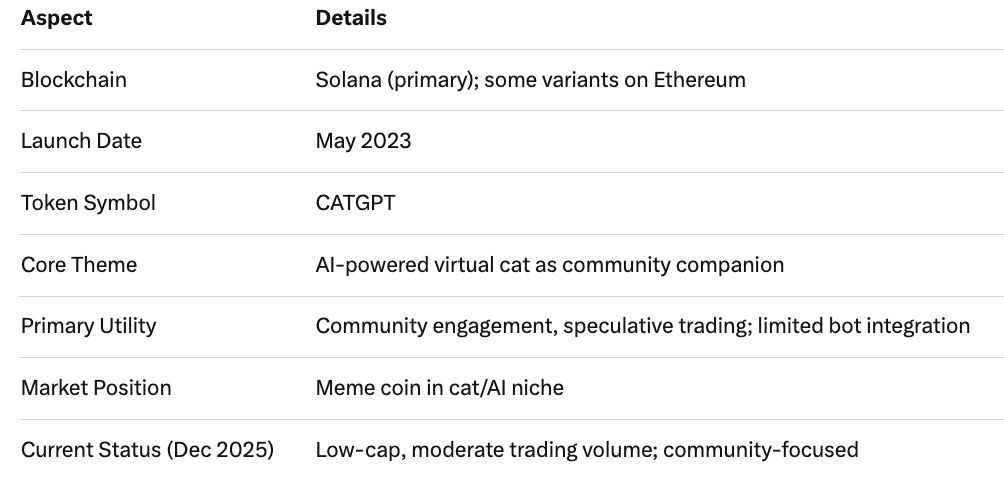
CatGPT operates in the highly competitive meme coin sector, where success often hinges on viral marketing, strong community vibes, and timely hype cycles. Unlike utility-heavy projects, it leans into fun and relatability, appealing to beginners drawn to cute animal memes and AI buzz.
How CatGPT Works and Token Purpose
CatGPT's mechanics are straightforward, typical of most meme coins. The token exists to facilitate ownership within its ecosystem and serve as a vehicle for community participation. Its stated purpose is to power interactions with the "virtual cat" AI, which acts as a customer service bot and assistant.
In theory, holding CATGPT grants access to enhanced features, such as priority responses from the bot or exclusive community perks. The AI cat is designed to provide real-time help, from answering crypto questions to offering market insights. It positions itself as an ever-present, learning entity that grows smarter with community input.
However, the actual implementation is basic. The "AI" aspect often relies on simple integrations or manual moderation rather than advanced machine learning. Trading happens primarily on decentralized exchanges like Raydium (for Solana) or Uniswap (for Ethereum variants), with liquidity pools providing the backbone for buys and sells.
The token's utility extends to governance in some community decisions, like voting on marketing spends or bot upgrades, though this is informal. Overall, CatGPT thrives on narrative: it's a fun, low-stakes entry into crypto for those who enjoy meme culture without needing deep technical involvement.
Tokenomics and Risks
Tokenomics play a crucial role in any project's longevity, especially in meme coins where distribution can make or break trust.
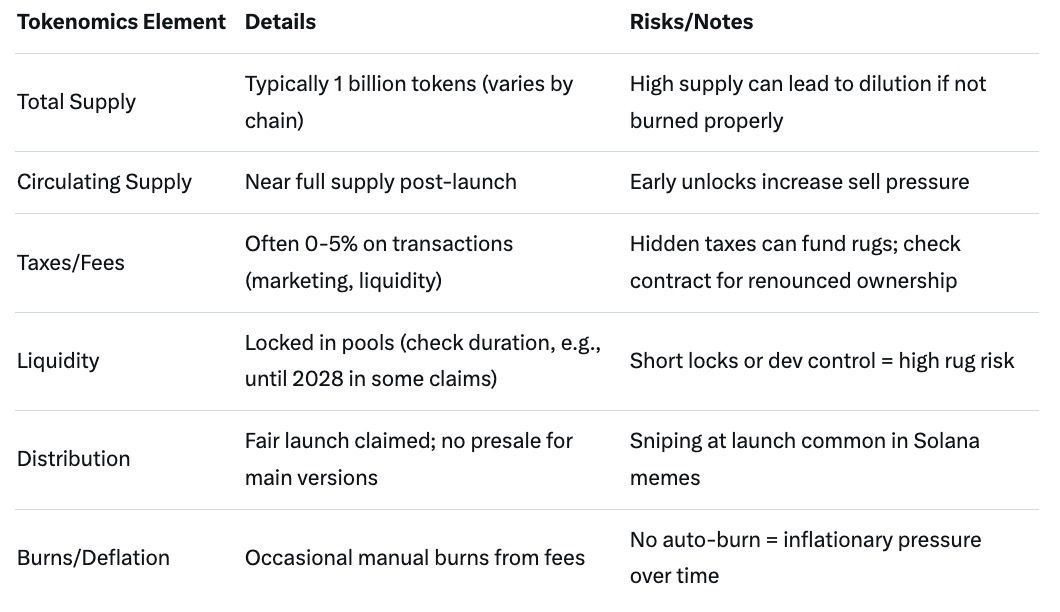
CatGPT's tokenomics are designed for simplicity, aiming for broad distribution to avoid whale dominance. Many versions renounce contract ownership post-launch, a positive signal for decentralization. However, meme coins like this carry inherent risks: extreme volatility, pump-and-dump schemes, and low liquidity leading to sharp price drops.
Major risks include:
- Rug Pull Potential: If liquidity isn't fully locked or devs hold large bags, sudden withdrawals can tank the price.
- Market Manipulation: Bots and coordinated pumps are common in low-cap memes.
- Lack of Utility: Beyond hype, real-world use is minimal, making it vulnerable to fading interest.
- Regulatory Scrutiny: Meme coins can face delistings or scrutiny if marketed misleadingly.
- Competition: Oversaturated cat/AI niche with stronger players like POPCAT.
Always verify the contract on explorers like Solscan or Etherscan before buying.
Team and Community Signals
One of the biggest red flags—or green flags—in meme coins is transparency around the team. CatGPT follows the anonymous trend common in memes, with no doxxed developers. The project is community-takeover in spirit, driven by holders rather than a central team.
Positive signals include active social channels, regular updates, and engaged moderators. Community strength is evident in Telegram and X discussions, where holders share memes, bot interactions, and hype posts. Look for organic growth: consistent holder count increases, steady volume without massive dumps.
Warning signs: Sudden dev wallet movements, paid shills, or promises of unrealistic gains. Strong communities often self-organize raids, AMAs, and partnerships.
Roadmap
CatGPT's roadmap is light compared to utility projects, focusing on community milestones rather than tech-heavy deliverables. Typical phases include:
- Enhanced bot integrations for better AI responses.
- NFT collections featuring cyborg cats (seen in older Ethereum versions).
- Partnerships with other meme projects or AI tools.
- Marketing pushes for listings on bigger DEXs or CEXs.
Progress is community-dependent, with no strict timelines. This flexibility allows adaptability but also means delays or pivots are common.
How to Research Before Buying: Step-by-Step Checks
Before diving into any meme coin like CatGPT, thorough research is essential. Here's a practical guide:
-
Verify the Contract: Copy the official address from trusted sources (project Telegram, website). Scan on DexScreener or RugCheck for ownership renounced, liquidity locked, and no honeypot functions.
-
Check Liquidity and Holders: Use tools like DexTools to see pool size and top holder distribution. Avoid if top wallets hold >10-20%.
-
Audit Socials: Join Telegram/Discord. Gauge activity—is it organic or bot-filled? Search X for recent sentiment.
-
Review Chart History: Look for sustainable growth vs. quick pumps/dumps.
-
Assess Risks Personally: Only invest disposable funds. Set sell targets to lock profits.
-
Test Small: Buy a tiny amount first to confirm smooth transactions.
Following these steps can help spot scams early and make informed decisions.
How Baltex.io Enables Quick Multi-Chain Swaps Before Cash-Out
Many meme coins like CatGPT live on Solana, but holders often want to move profits to stablecoins on Ethereum, Base, or even fiat ramps. This is where multi-chain swap platforms shine.
Baltex.io stands out as a non-custodial, privacy-focused aggregator supporting over 20 chains including Solana, Ethereum, Base, TON, and more. It enables instant cross-chain swaps without KYC or sign-ups—simply connect your wallet (like Phantom for Solana) and trade.
The process is seamless: Select your token (e.g., CATGPT on Solana), choose the destination asset/chain (e.g., USDT on Ethereum), and execute. Baltex.io optimizes routes for low slippage and fees, often completing in seconds. For cashing out gains, swap to a fiat-friendly chain then use on-ramps.
Its privacy features (like Monero routing options) add security, breaking on-chain links. Visit baltex.io for fast, efficient exits without centralized exchange hassles.
FAQ
Is CatGPT a good investment? It's speculative—high reward potential from hype, but equally high risk of loss. Not financial advice; DYOR.
Where to buy CATGPT? Primarily Raydium on Solana or Uniswap variants. Use DEX aggregators for best rates.
Does CatGPT have real AI? Basic bot features; more hype than advanced tech.
What's the difference from other cat coins? Unique AI assistant angle, though similar to POPCAT or MEW in meme appeal.
Can it reach $0.01? Possible in bull runs, but depends on market and community.
Conclusion
CatGPT embodies the whimsical side of crypto: a fun, AI-cat meme token that's easy to like but hard to predict. For beginners and meme lovers, it offers an entertaining entry point with community vibes and viral potential. Yet, the risks are stark—volatility, limited utility, and anonymity mean it's far from a safe bet.
If you're drawn to the purr-fect blend of cats and AI, start small, research diligently, and enjoy the ride. Crypto's meme sector rewards the bold (and lucky), but always prioritize safety. In the end, projects like CatGPT remind us why we love this space: innovation, humor, and endless possibility.
You can read our full breakdown in Understanding the Need for Ethereum-Cosmos Interoperability.
You can read our full breakdown in Understanding the Need for Ethereum-Cosmos Interoperability.
You can read our full breakdown in Understanding the Need for Ethereum-Cosmos Interoperability.
You can read our full breakdown in Understanding the Need for Ethereum-Cosmos Interoperability.