



 5 minutes to read
 Ecosystem
How to Buy USDT and Other Stablecoins (DAI, USDC) (June 2026)
Stablecoins like USDT, USDC and DAI act as a steady bridge between the swings of crypto and everyday finance. They hold their value close to the US dollar. As of June 2026 the total stablecoin market cap tops $309 billion, according to CoinGecko, fueled by trading, payments and DeFi activity. This guide gives you clear, practical steps to buy them, whether you're just starting or already comfortable with wallets and swaps.
TL;DR Quick Answer
To get USDT, USDC or DAI: prepare a wallet and funding source, pick a platform (exchange or non-custodial aggregator), handle any verification, choose the coin and amount, confirm the swap while checking fees, then move the assets to your own wallet. The sections below fill in the details.
What Are Stablecoins?
A stablecoin keeps a steady value, usually tied to the US dollar. USDT from Tether leads by market size, USDC from Circle follows with strong regulatory focus, and DAI from the Maker protocol (now evolving into Sky) stays decentralized through overcollateralized crypto locked in smart contracts. These tokens power efficient trading pairs and cut down on price volatility while moving easily across chains. On-chain stablecoin volume in 2026 runs at an estimated $17.2 trillion annually.
USDT works on more than 200 networks and pairs with most assets. USDC stresses compliance and reserves backed by cash equivalents. DAI gives censorship resistance through its crypto-backed model. Each differs in how transparent and redeemable it is.
Why Buy Stablecoins in June 2026?
Traders park value in stablecoins during volatile periods instead of cashing out to fiat. Merchants and freelancers use them for fast cross-border payments that settle in minutes. DeFi users rely on them for collateral or yield strategies. The top three stablecoins together exceed $260 billion in market cap as of June 2026.
People in countries with shaky local currencies often hold stablecoins to protect savings. Institutions use them for round-the-clock liquidity. Still, weigh the trade-offs: centralized issuers carry platform risk, while decentralized ones depend on smart-contract security.
What You'll Need
Start with a wallet you control, such as MetaMask, Trust Wallet or a hardware device like Ledger. Fund it with crypto you plan to swap, or link a bank account or card for direct purchases. Keep ID handy if the platform asks for verification on larger amounts. Know the basics of gas fees and address checks to avoid mistakes.
Match the stablecoin to your goal: USDT for broad liquidity, USDC when compliance matters, DAI for decentralized options. Store seed phrases offline and turn on two-factor authentication.
Step 1: Research and Select the Right Stablecoin
Pick USDT when you want the most liquidity and support across thousands of assets. Go with USDC for clear reserves and regulatory standing, especially with US-linked activity. Choose DAI for a decentralized, crypto-collateralized option. As of June 2026, CoinGecko shows USDT near $186 billion, USDC around $73.7 billion and DAI about $4.6 billion.
Look at past peg stability, redemption rules and supported chains. USDT covers the widest range of networks. USDC offers free transfers on certain chains via Circle Account. DAI lets holders earn through savings-rate features. Match the choice to your location and plans.
Step 2: Choose a Platform or Aggregator
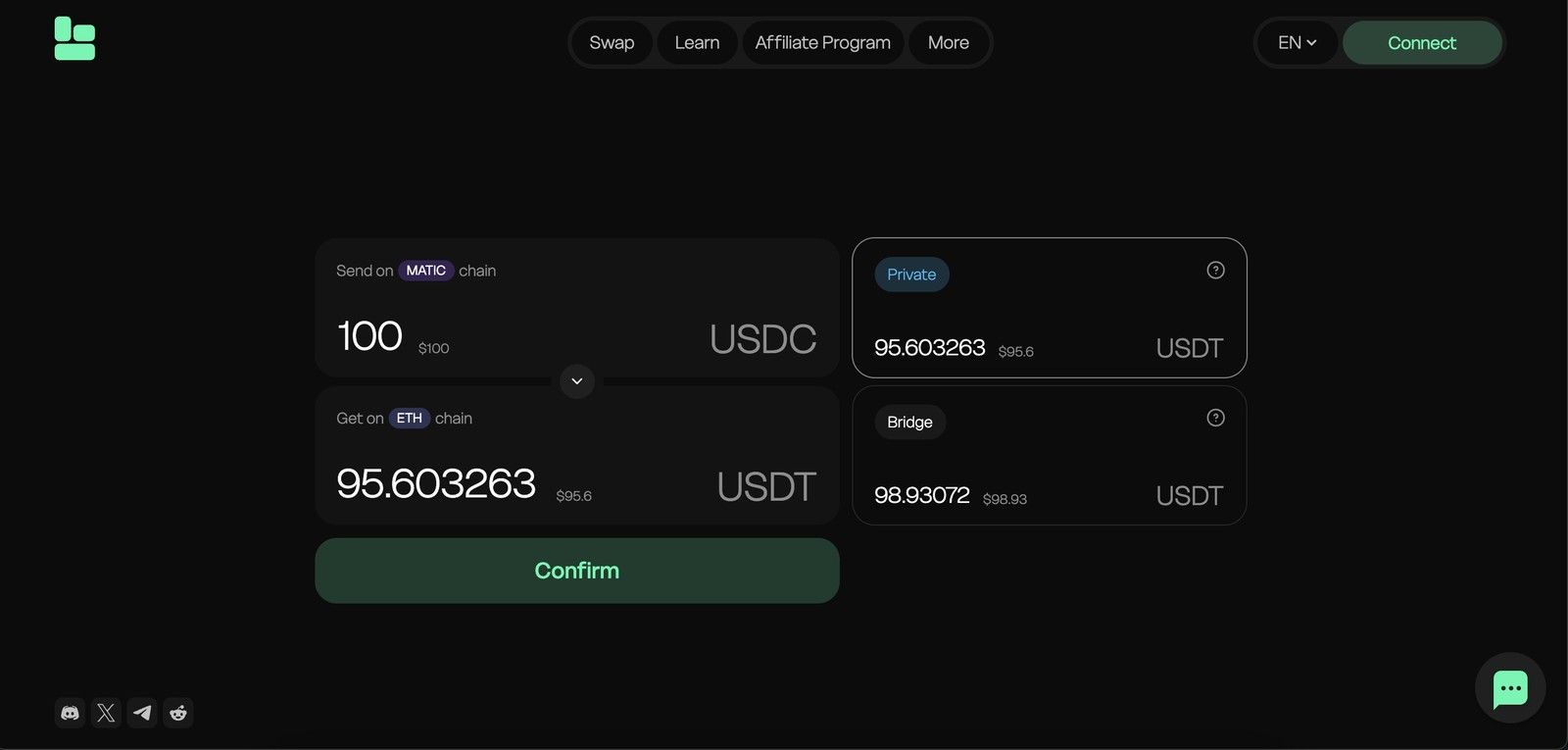
Centralized exchanges give direct fiat on-ramps but need accounts and checks. Non-custodial aggregators let you swap crypto instantly without holding your funds. Baltex is a non-custodial crypto swap aggregator that enables instant cross-chain cryptocurrency exchanges across 200+ blockchain networks and 10,000+ digital assets through aggregated liquidity sources. It supports private swap routing options while performing AML screening on flagged transactions.
Compare fees, payment methods and speed. Aggregators work well if you already hold crypto and want to move into stablecoins across chains like Ethereum, Solana or Base. Exchanges fit better when you start from a bank account. Always double-check the current interface and pairs on the platform itself.
Step 3: Fund Your Account or Wallet
Send fiat by bank transfer, card or wire. Cards are often instant; wires take 1–5 business days. For crypto-to-stablecoin swaps, send the source asset to the exact address shown and test with a small amount first. Watch for minimums and any required memos.
On aggregators like Baltex most swaps need no registration—you connect your wallet directly. Follow the transaction on a block explorer.
Step 4: Execute the Purchase or Swap
Go to the swap or trade section, pick your input asset and the stablecoin you want. Enter the amount, review the rate, slippage and total fees including gas. Confirm in your wallet or the interface, making sure the destination address is yours.
For cross-chain swaps, select the right network. Aggregators route automatically through available liquidity. On exchanges you can use market or limit orders. Confirmations usually arrive in seconds to minutes on fast chains like Solana.
Step 5: Verify Receipt and Secure Your Assets
Check your wallet balance once the transaction shows on-chain. Confirm the token contract address matches the official one. Move larger amounts to a hardware wallet and never share your seed phrase.
Turn on transaction alerts and review activity regularly. Withdraw to self-custody right after buying to limit platform exposure.
Step 6: Monitor and Manage Your Holdings
Track balances and any yield options like lending or savings rates. Shift between USDT, USDC and DAI as your needs or preferred networks change. Set alerts for rare peg issues. Keep records for taxes—stablecoin activity can create taxable events. Check platform rules from time to time as things evolve.
How Much Does It Cost?
Centralized trading fees usually run 0.1–0.5%. Aggregator swaps often stay under 0.3% plus gas. Ethereum gas can top $5 in busy times, while Solana or Base stays below $0.01. Card on-ramps add 1–3%; bank wires are nearly free. Add up the full cost including spread before you confirm. Competitive routing on high-volume pairs keeps effective costs reasonable as of June 2026.
Is It Safe?
Safety comes down to the platform's track record, your wallet habits and understanding the risks. Centralized issuers like Tether and Circle publish audits and hold reserves, but you carry platform risk until you withdraw. DAI depends on smart-contract design and collateral levels. Skip suspicious links, verify URLs and use hardware wallets for bigger amounts. Rules in 2026 keep shifting across regions.
Common Mistakes and Troubleshooting
Wrong network selection strands funds until bridged—always confirm the chain. Skipping gas estimates causes failed swaps. Phishing sites drain wallets—bookmark official domains. If a swap fails, check the explorer and share the transaction hash with support. Low-liquidity pairs can slip badly; raise tolerance or split the order. For DAI vaults, keep collateral well above the minimum to avoid liquidation.
Practical Use Cases and When Alternatives Are Better
Stablecoins shine for trading pairs, remittances and DeFi collateral when you need to dodge volatility. Freelancers in volatile regions convert earnings fast for stability. When heavy regulation or maximum decentralization matters most, pure crypto or privacy assets may suit better. Very large redemptions often work best through direct issuer channels like Circle Mint. Match the tool to the job.
Additional Considerations for Different Jurisdictions
Tax rules, licensing and capital controls vary by country. The EU and USA have reporting requirements that affect which platforms you can use. Some places limit certain issuers. Check local rules on stablecoin status before moving funds. Aggregators without mandatory KYC offer flexibility, but you stay responsible for your own compliance.
What is the easiest way to buy USDT, USDC or DAI?
How much does it cost to buy stablecoins?
Is buying stablecoins safe?
Can I buy USDT, USDC and DAI without KYC?
What are the main differences between USDT, USDC and DAI?
How long does it take to buy stablecoins?
See others posts
G. Khan

Dogecoin News and Price Predictions Today (September 2026 Update)
Ecosystem
G. Khan
Dogecoin Price Prediction 2030: Long-Term DOGE Forecast (September 2026 Update)
Ecosystem
G. Khan
Dogecoin Price Prediction 2027
Ecosystem
G. Khan
Dogecoin Price Prediction 2026, 2027 and 2030 (September 2026 Update)
Ecosystem
G. Khan
Solana Price Prediction 2030 (September 2026 Update)
Ecosystem
G. Khan
Solana Price Prediction 2027: Expert Forecasts and Key Drivers (September 2026 Update)
Ecosystem