



 3 minutes to read
 Ecosystem
Li.Fi Review: Is This the Best Bridge Aggregator for Developers?
Li.Fi stands as a leading bridge and swap aggregator in 2026, particularly appealing to developers and advanced DeFi users building cross-chain functionality. By providing a unified API and SDK, Li.Fi enables seamless any-to-any swaps and bridging across diverse blockchains, aggregating liquidity from multiple sources to optimize for cost, speed, and reliability without requiring multiple individual integrations.
TL;DR Li.Fi excels as a developer-focused aggregator in 2026, supporting 60+ chains (EVM, Solana, Bitcoin, alt-VMs) via a robust SDK/API that routes through 18+ bridges, 20+ DEXs/aggregators, and intent solvers. It delivers smart routing with low effective fees (integrator-tunable, default ~0.25% protocol fee), high reliability, and strong security post-audits (despite a 2024 incident). Compared to Socket, Across, or deBridge, Li.Fi offers broader coverage and easier integration for complex dApps. For non-developer or user-facing multi-chain routing, baltex.io provides aggregated paths across 200+ networks with intent-like execution. Ideal for devs prioritizing comprehensive liquidity access and minimal custom code.
Supported Chains and Liquidity Sources
Li.Fi has expanded significantly by 2026, connecting over 60 chains spanning EVM-compatible networks, Solana (SVM), native Bitcoin, Sui, and emerging alt-VMs. Key supported ecosystems include Ethereum, Arbitrum, Optimism, Base, Polygon, BNB Chain, Avalanche, zkSync, Linea, Metis, Gnosis, Solana, Bitcoin, and newer high-performance layers like Monad or Berachain integrations. This breadth allows developers to target multi-chain dApps without chain-specific limitations.
Liquidity draws from a vast array of sources: 18+ bridges (e.g., Across, Stargate v2, Symbiosis, Circle CCTP, THORChain, Allbridge), 22+ DEXs (Uniswap, etc.), 8+ DEX aggregators (1inch, 0x, Odos, Enso), and 2+ solver/intent networks. This multi-layered approach ensures redundancy—if one bridge faces congestion or high fees, the routing engine pivots to alternatives. Developers benefit from aggregated depth, reducing failed transactions and improving execution for exotic pairs or large volumes.
The protocol's Pioneer solver and fast-bridge capabilities enable quick additions of new chains, often within hours, keeping integrations future-proof as ecosystems evolve.
Routing Engine Architecture
At its core, Li.Fi's routing engine uses smart algorithms to evaluate quantitative factors (fees, speed, slippage) and qualitative ones (trust assumptions, reliability) across providers. It computes optimal paths for any-to-any swaps, combining on-chain DEX trades with cross-chain bridges or intent solvers in atomic or multi-step executions.
The architecture supports full-cycle handling: quote fetching, route selection, transaction building, and status tracking via dedicated endpoints. It adheres to standards like EIP-7702, ERC-2612, Permit2, and EIP-712 for gasless approvals and efficient signing. Redundancy comes from pulling multiple quotes per request, with failover mechanisms to mitigate partner outages.
For developers, this translates to reliable execution in production dApps, wallets, or fintech apps, where downtime or suboptimal routes directly impact user experience.
API Capabilities and SDK Design
Li.Fi's developer toolkit shines through its JavaScript/TypeScript SDK and REST API. The SDK handles everything from config setup (integrator key, RPC customization) to quote requests, execution, and event hooks for tracking. It allows fine-grained control: allow/deny specific chains, tokens, bridges, or solvers; custom RPCs; and support for front-end/back-end environments.
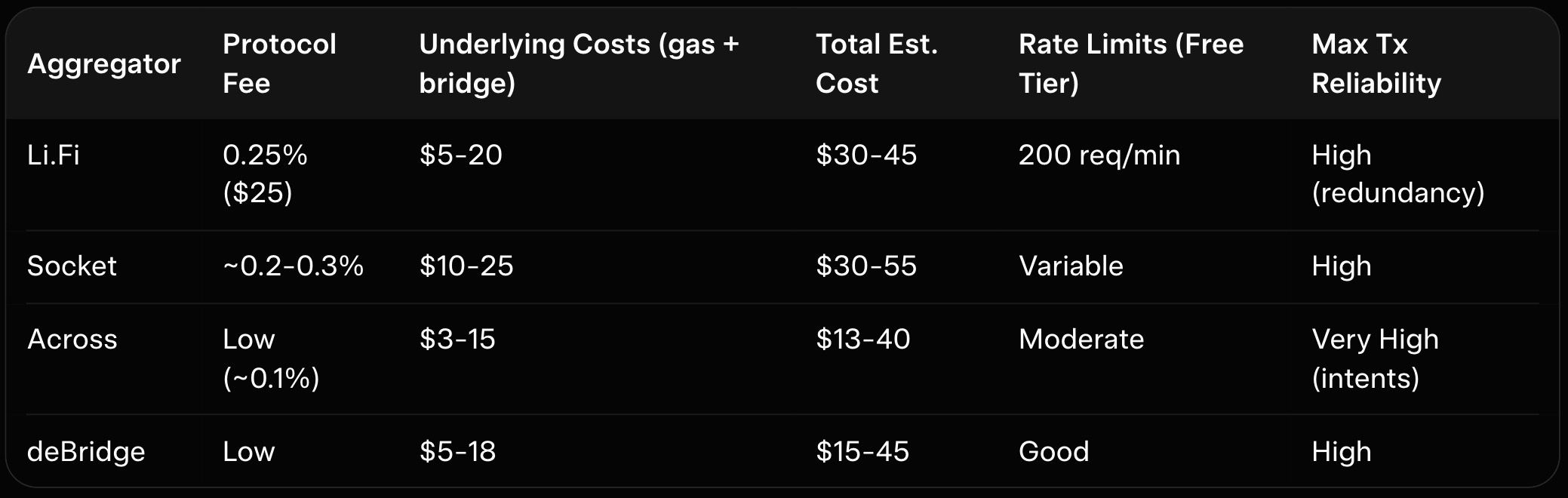
The API offers endpoints for chains/tokens lists, quotes (single-step or advanced), transaction parsing, gas estimates, and status monitoring. Authentication uses API keys via headers, with rate limits starting at 200 requests/minute on the free tier. Enterprise plans unlock higher limits, SLAs, and dedicated support.
Integration is straightforward—many partners deploy the widget in minutes for quick UX, while full SDK control suits custom flows. This flexibility makes Li.Fi suitable for wallets (e.g., MetaMask, Phantom integrations), dApps, and enterprise fintechs.
Fee Transparency and Monetization
Li.Fi operates on a transparent, volume-based model. Integration is free (no upfront costs), with monetization via a default 0.25% (25 bps) transaction fee collected from users on swaps/bridges. Integrators can configure custom fees, collect their own markup, and track via the partner portal.
No direct developer costs exist for standard use; enterprise tiers offer volume discounts, custom fees, higher limits, and premium support. Underlying bridge/DEX fees remain (gas + provider charges), but aggregation often reduces total costs by selecting cheaper routes. Quotes preview all-inclusive estimates, ensuring transparency.
Security Assumptions and Risks
Li.Fi emphasizes security through multiple audits (historical from Code4rena, Quantstamp, and ongoing), open-sourced contracts, and public disclosures. Post a 2024 incident (~$11M exploit via a vulnerable facet targeting infinite approvals), the team patched rapidly, disabled affected components, and reinforced upgrade processes. No major breaches reported since.
Risks include inherited vulnerabilities from aggregated providers (bridge exploits, DEX pool attacks), smart contract bugs in facets, and approval-related issues (mitigated by promoting finite approvals). Developers should monitor integrations, use official SDKs, and implement user warnings. Overall, Li.Fi's redundancy and monitoring provide strong operational security for high-volume apps.
Comparison to Other Cross-Chain Routing Aggregators and Direct Bridge Integrations
Li.Fi differentiates with broadest coverage (60+ chains) and unified aggregation of bridges, DEXs, and solvers, reducing integration overhead versus direct bridge use (e.g., Across or Stargate alone).
Socket (Bungee) offers strong chain abstraction and tracking but narrower focus on EVM-heavy routes. Across prioritizes intent-based fast execution with low slippage but limited to specific corridors. deBridge emphasizes decentralized speed and low costs but fewer chains. Squid or THORChain target niche strengths (e.g., Cosmos-EVM), while direct integrations demand maintaining multiple SDKs/contracts.
Li.Fi wins for devs needing comprehensive, reliable any-to-any functionality without stitching providers.
Table 1: Feature Comparison
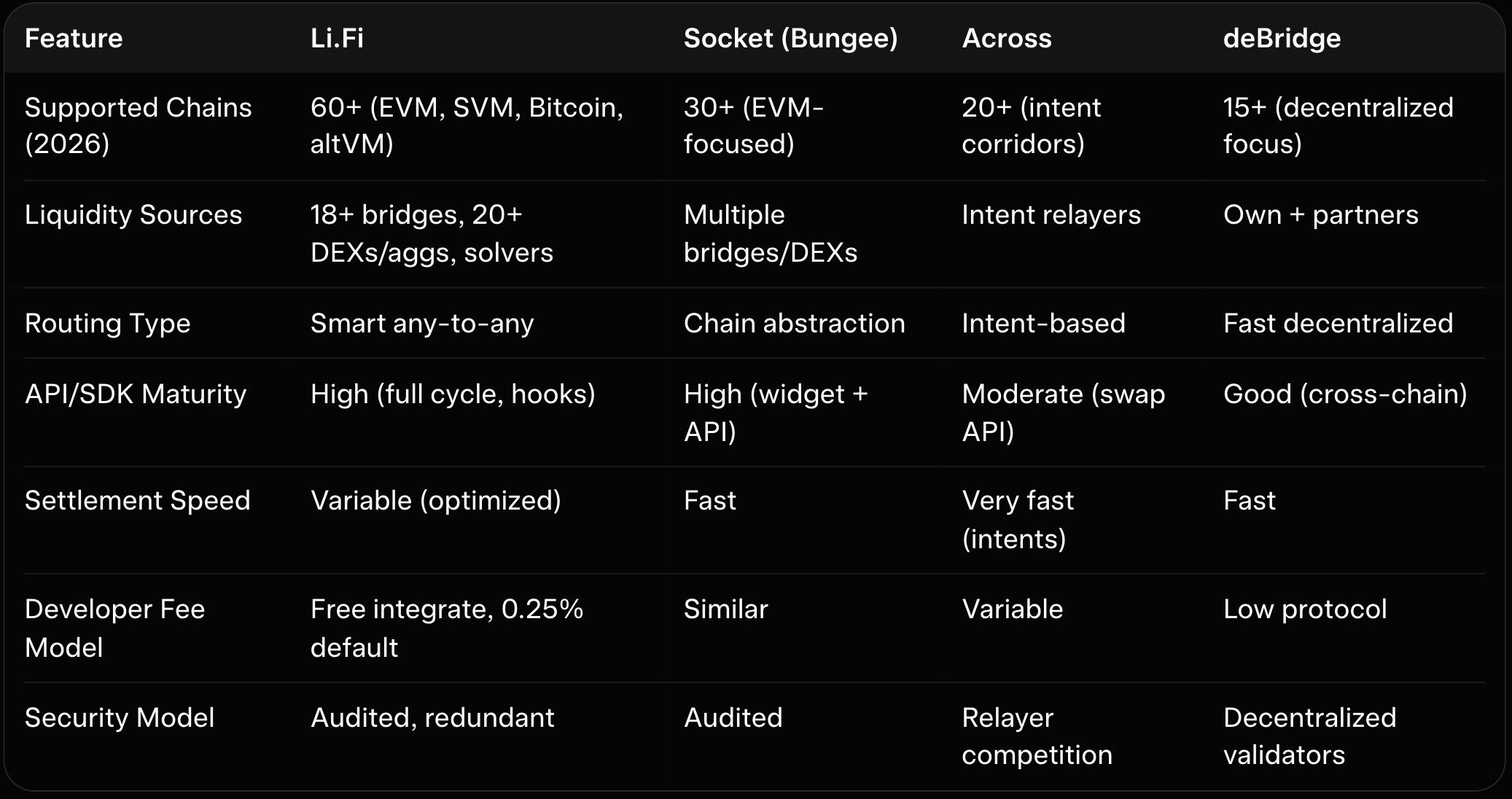
Table 2: Costs and Limits (Approximate for $10,000 Cross-Chain Swap in 2026)
How baltex.io Offers Alternative Multi-Chain Routing Beyond Developer-Focused Aggregators
While Li.Fi targets developers with API/SDK depth for custom dApps, baltex.io serves as a user-centric, non-custodial aggregator emphasizing broad accessibility. In 2026, baltex.io routes across 200+ networks and 10,000+ tokens by combining bridges (including Li.Fi routes), DEXs, and CEX liquidity for optimal paths.
It excels in one-click atomic swaps, privacy options (e.g., Monero integration), and fallback mechanisms for shallow pools or high-fee scenarios. Fees stay low (~0.5% max), with instant settlements on many routes. For advanced users or portfolios spanning exotic chains, baltex.io provides seamless execution without code, complementing dev tools like Li.Fi by handling end-user flows or as a testing benchmark for routing quality.
Conclusion
In 2026's fragmented yet interconnected DeFi space, Li.Fi remains a top choice for developers seeking efficient cross-chain swap and bridge functionality. Its expansive chain support, multi-source liquidity routing, mature SDK/API, and transparent model save significant integration time while delivering optimized executions. Though security requires vigilance (as with all aggregators), its redundancy and post-incident improvements build trust. For pure dev integrations, it outshines competitors in breadth; for broader user routing, platforms like baltex.io extend options. Assess based on your project's chain needs, volume, and customization—Li.Fi empowers robust multi-chain applications effectively.
What chains does Li.Fi support in 2026?
Is Li.Fi free for developers to integrate?
How does Li.Fi handle security after past incidents?
Can I customize routing preferences?
What makes Li.Fi better for complex any-to-any swaps?
See others posts
G. Khan

Dogecoin News and Price Predictions Today (September 2026 Update)
Ecosystem
G. Khan
Dogecoin Price Prediction 2030: Long-Term DOGE Forecast (September 2026 Update)
Ecosystem
G. Khan
Dogecoin Price Prediction 2027
Ecosystem
G. Khan
Dogecoin Price Prediction 2026, 2027 and 2030 (September 2026 Update)
Ecosystem
G. Khan
Solana Price Prediction 2030 (September 2026 Update)
Ecosystem
G. Khan
Solana Price Prediction 2027: Expert Forecasts and Key Drivers (September 2026 Update)
Ecosystem