



 5 minutes to read
 Ecosystem
Scroll Network Bridge Review (July 2026): Fees and Speed Deep Dive
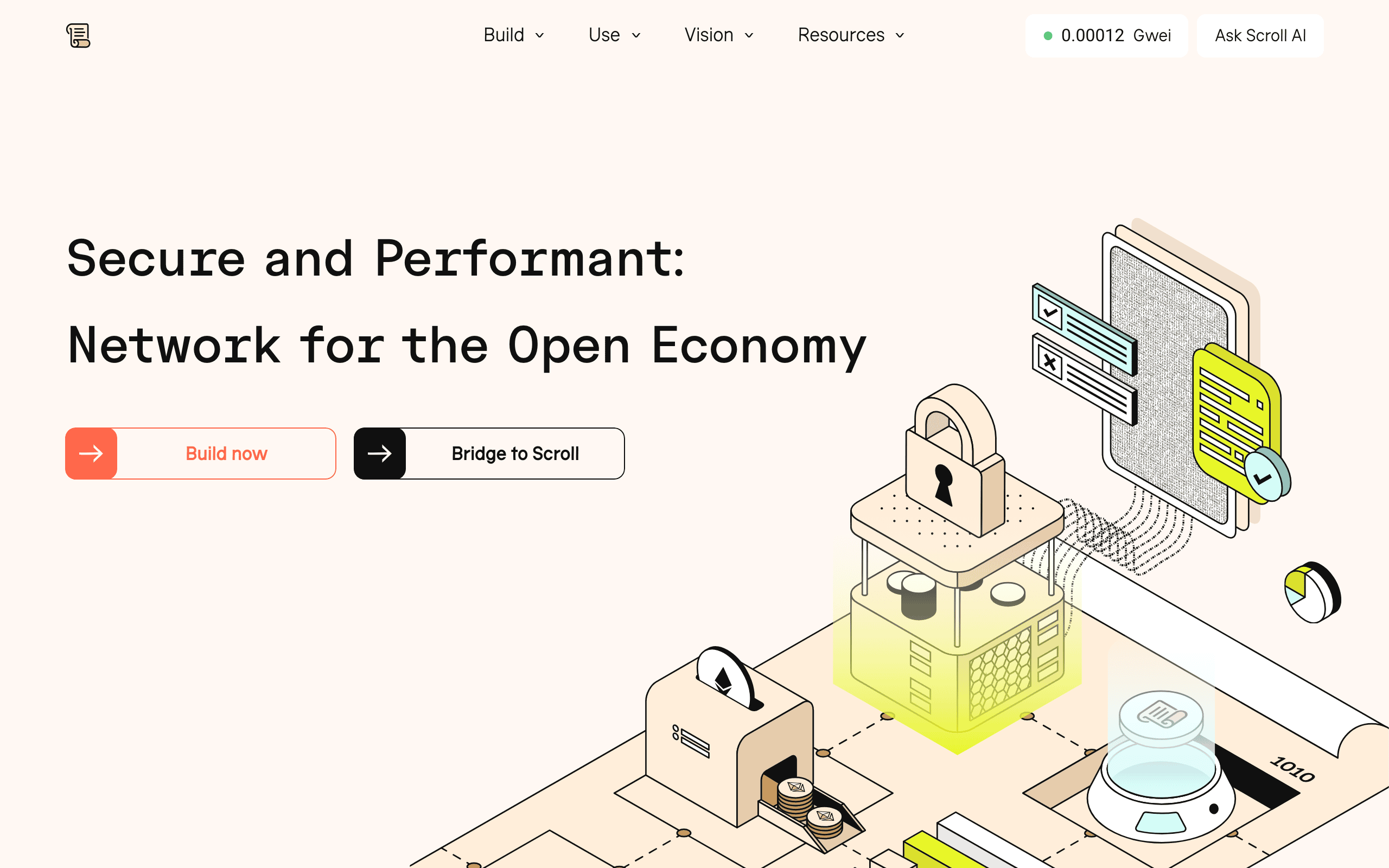
Scroll is a zkEVM Layer 2 scaling solution for Ethereum that launched its mainnet in 2023 and has since grown into a popular destination for DeFi activity. The native bridge at portal.scroll.io lets users move assets between Ethereum mainnet and Scroll without intermediaries for the core flows. This review zeros in on the fees and speed that matter most to active users in 2026.
Introduction and Quick Verdict
The Scroll Network Bridge pairs low L2 execution costs with reliable but not instant finality. Deposits from Ethereum wrap up in a few minutes, while withdrawals hit the standard optimistic challenge window of roughly one to two hours. Third-party aggregators can trim effective times on certain routes. Overall it suits users who value predictable low fees over sub-minute cross-chain speed and feel comfortable with a zkEVM rollup’s security model. Main advantages include transparent fee composition and competitive L2 gas prices; the biggest limitation stays withdrawal latency plus occasional L1 data cost spikes.
Scroll Network Bridge Overview
Scroll runs as a zero-knowledge Ethereum Virtual Machine rollup, posting transaction data and proofs to Ethereum for security. The official bridge handles native ETH and ERC-20 transfers by locking assets on one side and minting equivalents on the other. As of July 2026 the network supports over 200 decentralized applications and processes thousands of daily transactions. Bridge usage has stayed steady even after network fee adjustments in April 2026 that briefly raised L1 posting costs before settling back down.
The bridge interface stays straightforward: connect a wallet, pick direction, review the quote, and confirm. No account creation or KYC is required for standard transfers. This keeps things simple for retail traders moving smaller amounts and developers testing dApps alike. Liquidity runs deep for major assets like ETH, USDC, and WBTC, which helps cut slippage versus thinner bridges.
How Scroll Network Bridge Fees Work
Transaction costs split into two main parts laid out in the official Scroll documentation. The L2 fee covers sequencer execution on Scroll and equals gas used times the current L2 gas price, which stays low thanks to the rollup design. The L1 fee covers posting compressed transaction data and validity proofs to Ethereum and usually makes up most of the bill under normal conditions.
As of July 2026, average L2 fees for simple transfers sit around $0.005 while L1 components range from $0.05 to $0.40 depending on Ethereum congestion and data volume. Total costs for bridging 1 ETH typically land between $0.10 and $0.60 all-in. Larger transfers spread the fixed pieces better, so the bridge gets more economical above $500 in value. Users can check real-time estimates right in the bridge UI before confirming.
Fee spikes hit in early April 2026 when the network temporarily raised L1 data posting parameters by a factor of 1,280, leading to over $50,000 in excess user costs according to on-chain analysis. The change was later reversed and baseline fees returned to normal. That episode showed how sensitive total bridge costs can be to sequencer settings.
Speed Performance of Scroll Network Bridge
Deposit speed from Ethereum to Scroll averages two to five minutes for finality once the transaction lands in an L2 block. The zkEVM generates proofs posted to Ethereum, giving near-immediate soft confirmation and full security after L1 settlement. Withdrawals the other way need a challenge period of about one hour on the canonical bridge to allow fraud proofs, so total times run 60 to 120 minutes.
Third-party solutions that batch or use intent-based routing often deliver effective results in under one minute for Scroll routes. These options add a small routing premium but buy faster UX on time-sensitive transfers. Native bridge speed therefore works best for users who can plan ahead rather than those needing instant liquidity movement.
Network upgrades in 2025 and 2026 have sharpened proof generation efficiency, trimming seconds off L2 confirmation times. Throughput stays high enough that bridge queues rarely form except during big NFT mints or airdrop events.
Real-World Fee Examples and Scenarios
Take a user bridging 1,000 USDC from Ethereum to Scroll. The L2 portion might cost $0.003 while L1 data posting adds roughly $0.15, for a total around $0.15 or 0.015 percent of the amount. Scaling to 10,000 USDC keeps the absolute fee nearly identical, dropping the percentage to 0.0015 percent. By contrast, a small 50 USDC transfer sees the percentage fee climb to nearly 0.3 percent, so micro-transfers feel less attractive on the native bridge.
During low Ethereum gas periods the L1 component can drop below $0.05, making total costs competitive with many intent-based bridges. When Ethereum base fees exceed 20 gwei, though, the L1 share can push totals above $1 for complex token transfers involving multiple hops inside the bridge contract.
Developers batching multiple user deposits into a single L1 transaction can cut per-user costs further, a tactic already used by several wallets integrating Scroll support.
Security Model and Its Impact on Fees and Speed
The zkEVM design delivers strong security guarantees once proofs are posted, removing the longer challenge windows needed by optimistic rollups. This keeps L1 data costs manageable because only compressed data and proofs get submitted instead of full transaction calldata. No major security incidents have hit the bridge since launch, which helps maintain user confidence.
Still, dependence on L1 data availability ties fees to Ethereum conditions. During the April 2026 fee adjustment period, users saw both higher costs and slightly slower effective settlement while the network recalibrated. Regular audits by reputable firms and open-source code add transparency around these mechanics.
User Experience and Practical Considerations
The bridge portal shows clear fee breakdowns before each transaction, helping users skip surprises. Mobile wallet support holds up well, with MetaMask and others displaying accurate gas estimates. Historical transaction data shows consistent uptime above 99.9 percent, with brief maintenance windows announced ahead of time.
For repeated transfers, users gain from watching L2 gas prices via the Scroll block explorer and timing moves during off-peak Ethereum hours. Advanced users can also call the bridge contracts directly for programmatic bridging in DeFi strategies.
When Scroll Network Bridge Excels and When Alternatives May Be Better
The bridge shines for planned transfers of mid-to-large sizes where the one-to-two-hour withdrawal window works and users want to avoid third-party counterparty risk. It fits especially well for DeFi participants who deposit once and stay active on Scroll before withdrawing.
When sub-minute speed matters or when bridging very small amounts where percentage fees add up, intent-based or liquidity-pool bridges often deliver better economics and faster settlement. In those cases, users may prefer routes that settle via solver networks instead of waiting for canonical L1 finality.
Baltex Integration Context for Scroll Transfers
Baltex serves as a non-custodial crypto swap aggregator that can route liquidity through multiple providers, including paths that interact with Scroll Network Bridge flows for users seeking optimized rates across 200+ networks. This approach lets users move in or out of Scroll seamlessly without separate bridge steps in certain token pairs.
Pros and Cons Summary
Pros
- Transparent fee structure with low L2 execution costs
- Strong zkEVM security model with no major incidents
- Deep liquidity for major assets reducing slippage
- Predictable estimates in the official interface
Cons
- Withdrawal times of 1-2 hours on the canonical route
- L1 posting costs can spike during Ethereum congestion or sequencer adjustments
- Small transfers suffer higher percentage fees
- Limited native speed compared to some intent-based competitors
Verdict: Is Scroll Network Bridge Worth It in July 2026?
For users focused on cost-efficient, secure transfers to a growing zkEVM ecosystem who can live with the withdrawal timeline, the Scroll Network Bridge remains a solid choice. Fees stay competitive for most practical amounts while speed meets expectations for a canonical rollup bridge. Those prioritizing instant finality or micro-transactions should look at aggregated routing options instead. Always check current quotes in the bridge UI and weigh your specific timing and size needs before transacting.
Additional Practical Tips
Track Ethereum gas prices alongside Scroll-specific metrics to anticipate L1 fee changes. Enable transaction simulation in supported wallets to preview exact costs. For institutional or high-volume users, direct contract interaction or batching can further optimize economics. The network keeps iterating on proof efficiency, which should gradually trim the L1 data component over time.
Stay informed through official Scroll channels for any upcoming upgrades that might shift fee parameters or speed characteristics. This keeps the review current as the ecosystem evolves through the rest of 2026 and beyond.
What are Scroll Network Bridge fees?
How fast is the Scroll Network Bridge?
Is Scroll Network Bridge safe to use?
How much does bridging cost on Scroll Network Bridge?
Can I use Baltex with Scroll Network Bridge?
What are the main drawbacks of Scroll Network Bridge fees and speed?
See others posts
G. Khan

Solana Price Prediction 2030 (September 2026 Update)
Ecosystem
G. Khan
Solana Price Prediction 2027: Expert Forecasts and Key Drivers (September 2026 Update)
Ecosystem
G. Khan
Solana Price Prediction for the End of 2026
Ecosystem
G. Khan
Solana (SOL) Price Prediction 2026, 2027 and 2030 (September 2026 Update)
Ecosystem
G. Khan
Ethereum Price Prediction September 2026
Ecosystem
G. Khan
AI Ethereum Price Prediction for 2026 and 2027 (September 2026 Update)
Ecosystem