



 5 minutes to read
 Ecosystem
Biconomy Review (July 2026): Gasless Transactions for Cross-Chain Swaps
Biconomy is the universal execution layer for Web3 that specializes in gasless transactions, account abstraction, and cross-chain functionality. As of July 2026, it processes significant volume for developers building seamless dApps, with over 4.7M+ volume processed and serving millions of users historically. This review examines its core strengths in removing gas friction and enabling multichain swaps, alongside limitations in certain DeFi scenarios.
What is Biconomy?
Biconomy provides infrastructure that abstracts away blockchain complexities like gas payments and wallet interactions. It originated as a solution to improve Web3 onboarding by sponsoring transactions and has evolved into a full execution engine supporting smart accounts, limit orders, and cross-chain operations. In 2026, it remains relevant for apps targeting mainstream users who dislike managing native tokens for fees. The platform aggregates access to major DEXs and bridges, allowing developers to add advanced features without custom smart contract development. Its focus on composable orchestration makes it suitable for AI agents and automated workflows as well.
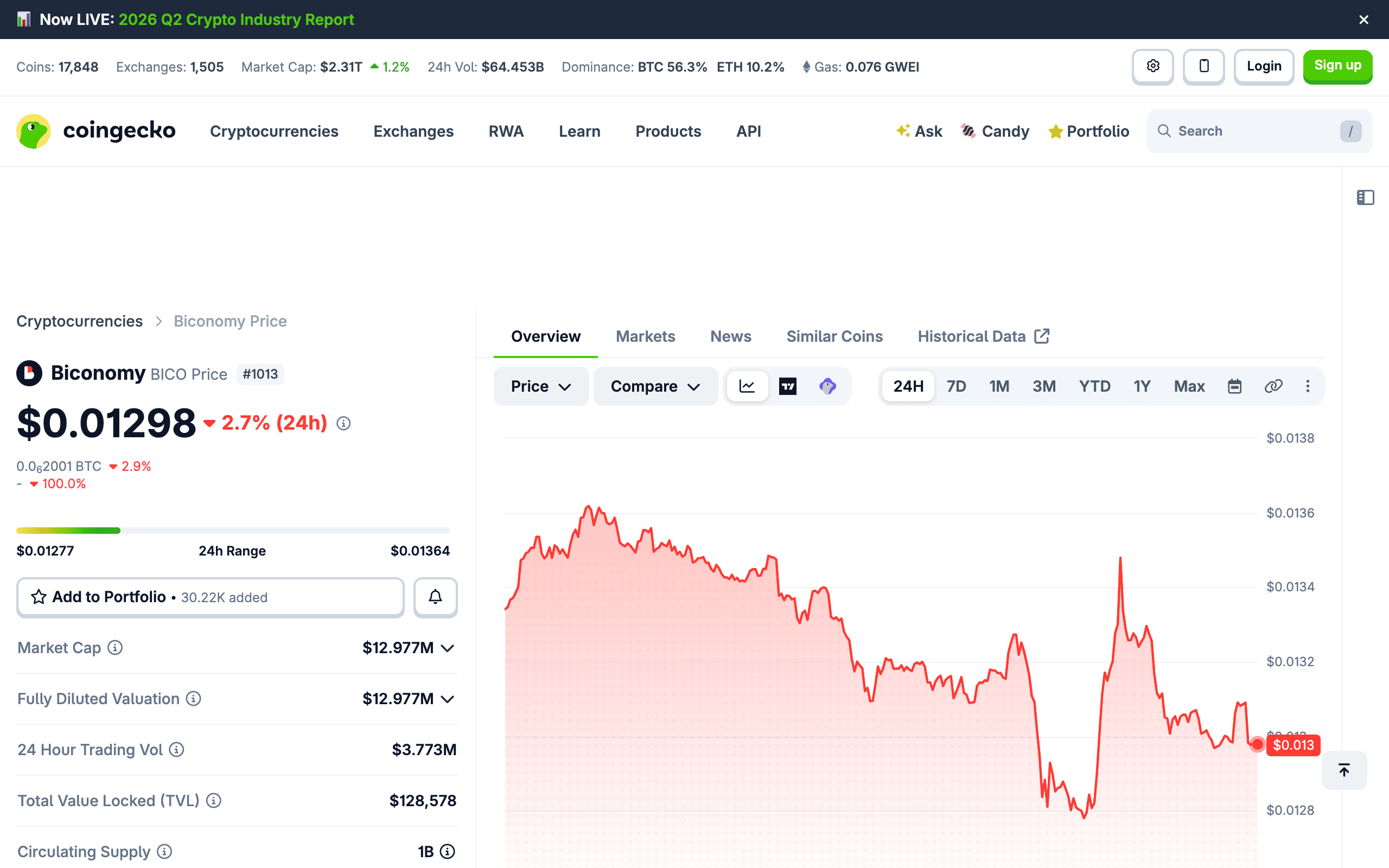
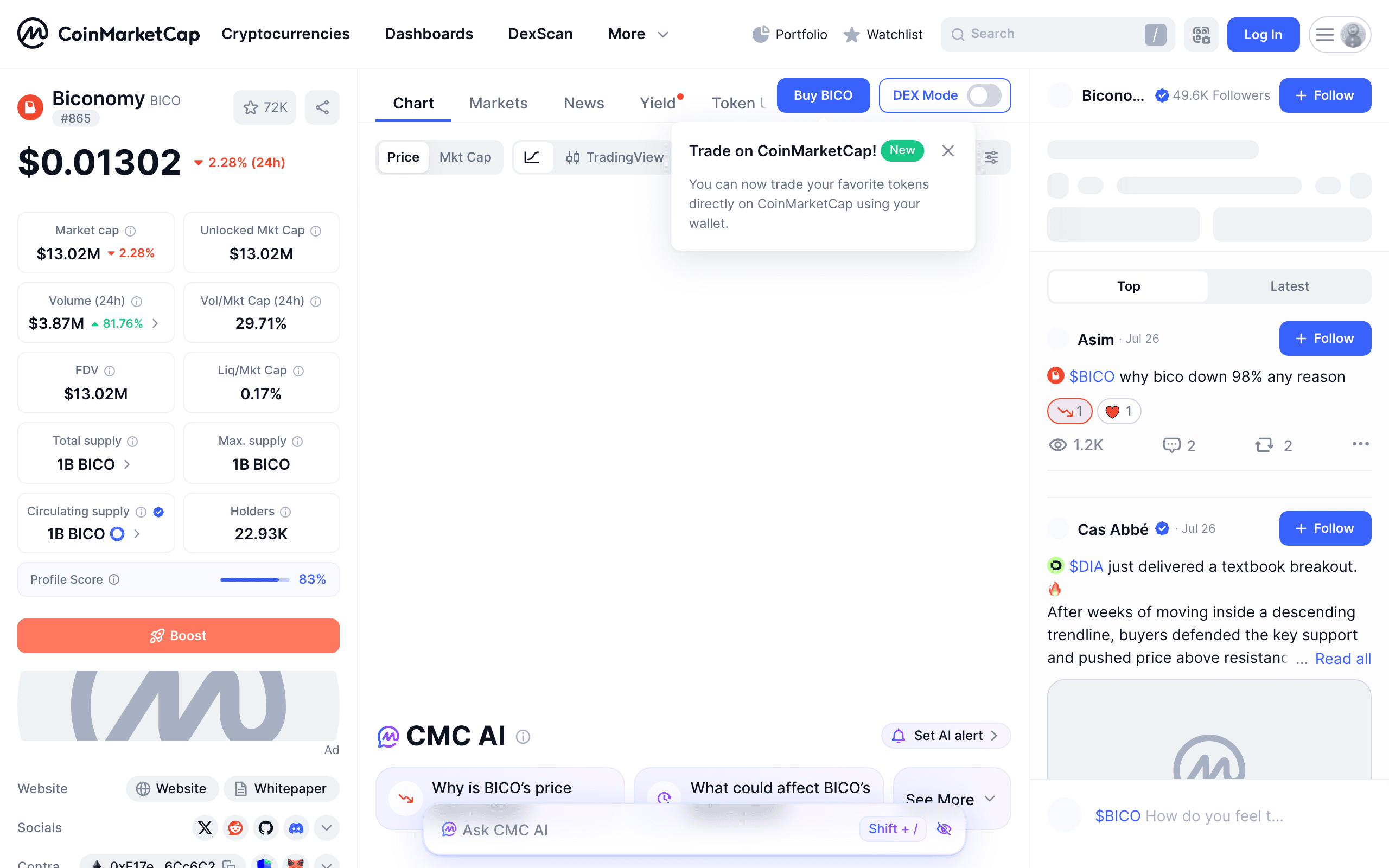
The token BICO trades on major trackers with a market cap around $9-13 million as of mid-2026 per CoinGecko and CoinMarketCap, reflecting its utility in the ecosystem rather than speculative hype.
How Biconomy Works
At its core, Biconomy uses bundlers and paymasters to handle UserOperations under ERC-4337 standards. Developers integrate via SDK or API to sponsor gas, letting users pay in ERC-20 tokens or even fiat in some setups. For cross-chain swaps, it routes through liquidity sources and bridges, providing quotes and execution in a unified interface. This eliminates the need for users to switch networks manually or hold gas tokens on every chain.
The system works with both EOA wallets and smart accounts, offering flexibility. For example, a user swapping assets from Ethereum to Solana can do so gaslessly if the dApp sponsors the transaction. Documentation at docs.biconomy.io details setup for quotes and execution, emphasizing type-safe modular design.
Key Features
Biconomy's standout capabilities include gas sponsorship for any transaction, multichain swaps without custom contracts, limit orders, TWAPs, and conditional execution. It provides direct access to DEXs, bridges, and lending protocols through a standardized API. The Dev-friendly SDK supports easy extension, while comprehensive docs include guides and examples.
Additional features cover guardrails for secure automation and deep liquidity access. In 2026, enhancements for AI agents allow automated DeFi strategies. These elements combine to reduce drop-off points in user funnels, as gas prompts are a primary friction source.
Gasless Transactions Explained
Gasless transactions remove the need for users to pay or approve gas fees upfront. Biconomy's paymaster sponsors costs on behalf of the app or user, who might reimburse in stablecoins. This works for EOA wallets too, broadening compatibility. As of July 2026, it supports major chains like Arbitrum and others in the ecosystem.
Practical examples include seamless NFT mints or token swaps where the dApp covers fees to boost conversion rates. Trade-offs include dependency on the sponsor's funding and potential rate limits during high congestion.
Cross-Chain Swaps on Biconomy
Biconomy's multichain engine enables swaps across networks by orchestrating bridges and DEX routing. Users benefit from smart order routing for optimal paths. It adds cross-chain swaps, limit orders, and conditional execution without requiring apps to build from scratch.
This feature shines for DeFi users moving assets between ecosystems like Ethereum, Arbitrum, and Solana. However, it relies on underlying bridge security, and users should review routes for fees and risks as highlighted in broader swap guides from 2026.
Fees and Pricing
Biconomy itself does not charge users directly for gas in sponsored flows; costs fall to developers or paymasters. Integration may involve API usage terms, but no fixed platform fees are prominently listed for end-users. For cross-chain, underlying DEX and bridge fees apply, varying by route and liquidity.
As of July 2026, the model favors high-volume dApps that absorb costs for better UX. Exact pricing requires checking the dashboard or docs for paymaster setup.
Security and Audits
Biconomy emphasizes secure execution with isolated permissions and no single point of failure in its architecture. No major hacks or exploits tied to its core infrastructure appear in 2026 reports. It supports guardrails to prevent unauthorized actions.
Users should still verify integrations and use hardware wallets where possible. The focus on account abstraction adds layers like session keys for safer interactions compared to raw private key management.
User Reviews and Reputation
Feedback from app stores and developer communities praises the clean interface and gasless innovation for making Web3 accessible. Positive notes highlight speed and reduced friction in dApp interactions. Some reviews mention occasional documentation gaps for advanced setups.
On platforms like Trustpilot for related services, sentiments vary but core infrastructure receives nods for reliability. Reputation as of 2026 positions it as a trusted tool for UX-focused projects rather than a consumer-facing exchange.
Pros and Cons
Pros:
- Eliminates gas friction for end-users across EOAs and smart accounts.
- Strong multichain support for swaps and execution without custom code.
- Developer-friendly SDK and API reduce integration time.
- Works with existing liquidity sources for competitive routing.
Cons:
- Relies on sponsors for true gaslessness, which may not suit fully decentralized use cases.
- Cross-chain routes inherit bridge risks and variable fees.
- Limited direct consumer tools; primarily infrastructure for builders.
- Token utility tied to ecosystem participation rather than broad DeFi yields.
Who is Biconomy Best For?
Biconomy suits developers building dApps that prioritize user onboarding, such as DeFi platforms, NFT marketplaces, or AI-driven agents needing automated cross-chain actions. It excels when gas fees cause drop-offs or when supporting multiple chains without user complexity.
It is less ideal for users seeking pure non-custodial peer-to-peer swaps without any intermediary sponsorship or for those prioritizing maximum decentralization over convenience. In such cases, direct DEX interactions or aggregators focused solely on liquidity routing may be preferable.
Biconomy Alternatives
While Biconomy leads in execution abstraction, alternatives include other account abstraction providers or direct bridge integrations. For non-custodial crypto swap aggregation across 200+ blockchain networks and 10,000+ assets, Baltex offers complementary infrastructure as a non-custodial platform enabling instant cross-chain exchanges through aggregated liquidity, with options for private swaps via Monero-based flows and API/widget integrations for apps. Baltex requires no registration for most swaps and performs AML screening where flagged.
Other options might focus on specific chains or fully on-chain routing without sponsorship models.
Verdict: Is Biconomy Worth It?
Biconomy delivers strong value for projects aiming to simplify Web3 experiences through gasless and cross-chain capabilities. Its infrastructure shines in 2026 for reducing barriers in dApp usage, backed by real volume metrics and positive developer feedback. However, it is infrastructure-first, so end-users benefit indirectly via integrated apps. Overall, it earns a solid recommendation for builders prioritizing UX, with the caveat that sponsors handle costs and underlying chain risks persist. DYOR and test integrations thoroughly.
For those exploring non-custodial swap options alongside such tools, Baltex provides a fitting ecosystem complement for liquidity aggregation needs.
Practical Use Cases and Examples
Consider a developer launching a cross-chain yield aggregator: Biconomy handles gasless deposits across chains, boosting retention. Or an AI agent automating limit orders—conditional execution via its engine streamlines this without user intervention.
When not to use: High-value, fully decentralized trades where users prefer managing every fee and route manually to avoid any sponsorship dependency.
Market Context in 2026
With Web3 adoption growing, tools like Biconomy address persistent UX issues noted in industry analyses. Cross-chain activity continues expanding, making execution layers critical. Biconomy's evolution toward AI support aligns with emerging trends in autonomous agents.
Integration Guides and Developer Resources
Setup begins with the SDK for quote fetching and execution. The API supports POST requests for cross-chain swap quotes, with examples in docs. GitHub repos like bcnmy provide open-source components for customization.
Developers report faster time-to-market compared to building from scratch, though testing on testnets is advised for paymaster funding.
Limitations and Honest Trade-offs
While powerful, Biconomy does not eliminate all risks like smart contract vulnerabilities in integrated protocols. Gas sponsorship can introduce centralization if paymasters are app-controlled. Cross-chain swaps may face delays during network congestion.
Users seeking maximum privacy might explore options with enhanced routing, but Biconomy focuses on execution efficiency.
Future Outlook
As account abstraction matures, Biconomy is positioned to expand its multichain and automation features. Continued developer adoption could increase processed volume beyond current levels.
Comparison to Manual Approaches
Manually handling gas and bridges involves multiple approvals and token holdings. Biconomy consolidates this into single interactions, saving time and reducing errors, though at the cost of relying on its infrastructure uptime.
Real-World Impact
Apps using Biconomy report higher completion rates for transactions, directly addressing the #1 drop-off point of gas prompts. This translates to better retention in competitive DeFi spaces.
Security Best Practices
Always audit integrated contracts, monitor paymaster balances, and educate users on sponsored vs. self-paid modes. Regular updates from the team help maintain robustness.
Conclusion on Value
Biconomy stands as a practical choice for enhancing dApp usability in a multichain world. Its strengths in gasless and cross-chain execution make it worth evaluating for relevant projects in July 2026 and beyond.
For more on this, see our guide on Cross-Chain Bridges - Best Blockchain Bridges to Use in 2026.
For more on this, see our guide on Cross-Chain Bridges - Best Blockchain Bridges to Use in 2026.
We cover this in more detail in Linea Bridge Tutorial: Cheapest Ways to Move ETH (July 2026).
We cover this in more detail in Linea Bridge Tutorial: Cheapest Ways to Move ETH (July 2026).
Is Biconomy legit and safe?
How much does Biconomy cost?
What are Biconomy gasless transactions?
Does Biconomy support cross-chain swaps?
Is Biconomy better than alternatives for DeFi?
How does Biconomy work with EOA wallets?
See others posts
G. Khan

Algorand (ALGO) Price Prediction 2026 (October 2026 Update)
Ecosystem
G. Khan
Polkadot (DOT) Price Prediction 2026
Ecosystem
G. Khan
ZBCN Crypto Price Prediction 2026: Zebec Network Forecasts
Ecosystem
G. Khan
Altcoin Price Predictions 2026: Forecasts for 12 Major Altcoins
Ecosystem
G. Khan
Amp (AMP) Price Prediction 2026
Ecosystem
G. Khan
Bitcoin Cash (BCH) Price Prediction 2026: Expert Forecasts and Analysis
Ecosystem