5 minutes to read
 Ecosystem
How Hardware Wallets Work (Tangem)
Hardware wallets stand out as one of the strongest options for securing cryptocurrency in 2026. They keep private keys completely offline and away from internet-connected devices, which cuts down on the hacks that often hit software wallets. Tangem takes a fresh approach with its card-based, battery-free design that works through simple NFC taps.
Understanding the Basics of Hardware Wallets
Hardware wallets are physical devices built to hold cryptocurrency private keys offline. Hot wallets stay connected to the internet, but these cold storage tools generate and protect keys in an isolated environment. That separation matters because private keys grant access to funds on the blockchain. Lose control of a key online and assets can disappear in seconds.
The key step is signing transactions right on the device. The wallet produces a digital signature that proves ownership without ever showing the private key. It follows standard cryptographic methods like ECDSA on most chains. Users prepare the transaction in a connected app, then the hardware reviews and signs it.
In everyday use, hardware wallets handle major coins such as Bitcoin and Ethereum plus thousands of tokens. Many include multi-signature support and recovery tools. Adoption has risen with growing cyber threats, and plenty of people now choose them for long-term holdings instead of leaving assets on exchanges.
Practical takeaway: Hardware wallets fit best for anyone holding meaningful value who values security more than quick daily access. They work well for cold storage of assets you do not trade often.
Introducing Tangem's Unique Approach
Tangem uses plastic cards with secure chips inside. Each card functions as its own secure element, much like a bank card but tuned for blockchain. No batteries, cables, or USB ports are needed—just NFC with a smartphone.
Cards usually ship in sets of two or three for backup. During production the chip readies for key creation, but the actual private key forms only when the user sets up the device. On-device generation draws from physical sensors for genuine randomness. The key pair stays locked in the chip and never leaves for the phone or cloud.
Tangem covers more than 10,000 assets on 200+ networks, including Bitcoin, Ethereum, Solana, and others. The mobile app acts as the interface for balances and actions, yet every sensitive step happens on the card. This mobile-first setup removes the need for a desktop.
The cards carry an IP68 rating for water and dust resistance, so they hold up to daily carry. Firmware updates continue to add chain support through the app.
How Tangem Generates and Stores Keys
Setup starts when the user taps the first card to an NFC phone. The secure element chip, often Samsung EAL6+ certified, uses a true random number generator to build the private key from physical entropy inside the chip.
Once made, the private key stays permanently in the tamper-resistant chip. Public keys and addresses appear in the app as needed. For backup, users can create an optional 12- or 24-word seed phrase that the app generates and the card can import later.
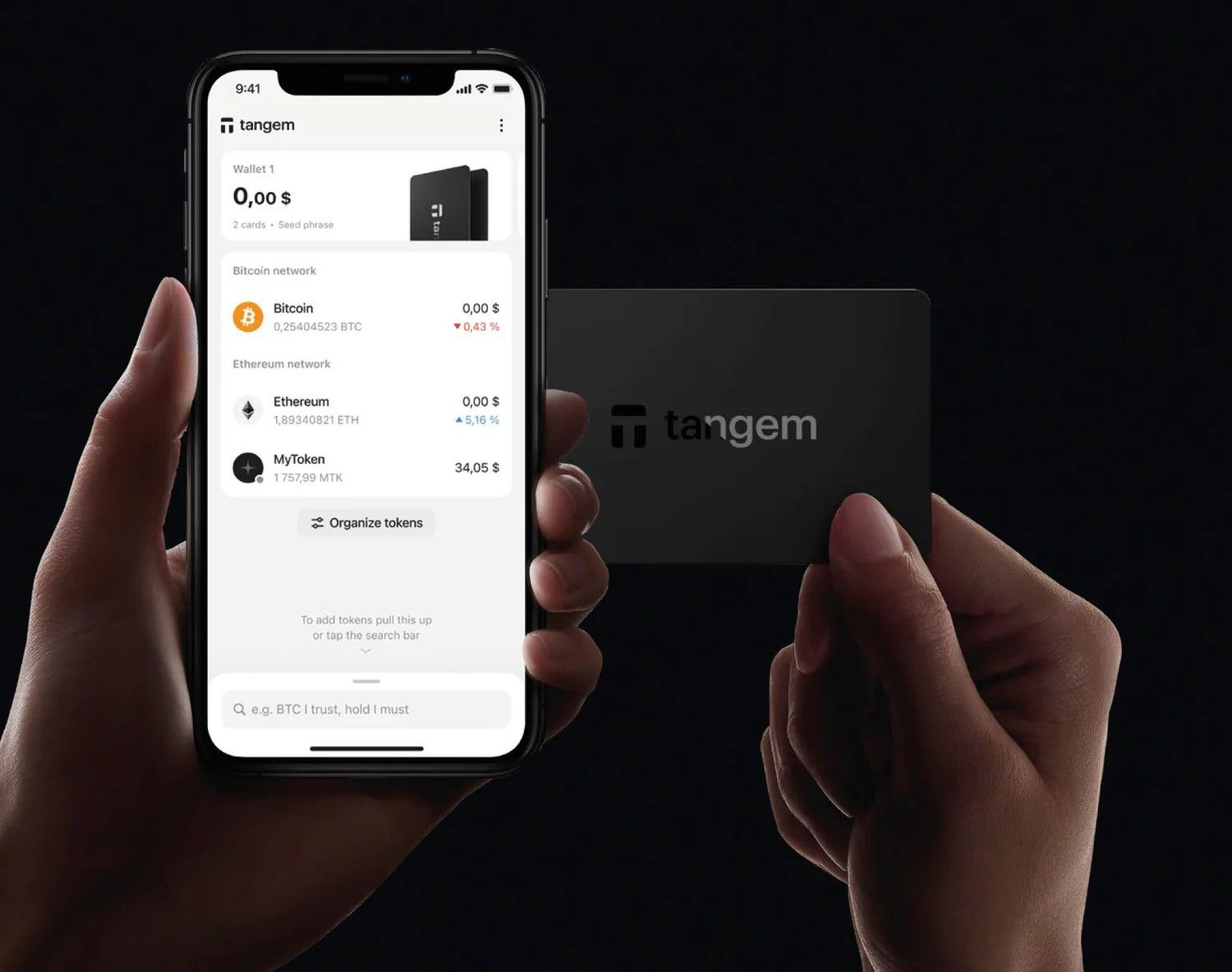
Sets of multiple cards share the same key through encrypted transfer at setup. Each extra card receives its copy via end-to-end encryption between chips. This gives redundancy without weakening security. Lose one card and the others keep working.
The chip certifications protect against physical attacks and side-channel exploits. Keys never show up in plaintext on the phone. This setup sidesteps the common risks in software wallets where keys sit in device storage.
The Transaction Signing Process Step by Step
Signing begins in the mobile app. Pick the asset, enter the recipient address and amount, then review the details on screen. The app prepares the unsigned transaction data.
Tap the Tangem card to the phone's NFC reader. The card receives the transaction hash, checks it internally, and asks for confirmation in the app. Once approved, the secure element signs the transaction with the stored private key entirely inside the chip.
The signed transaction returns to the app, which sends it to the blockchain. The private key never leaves the card, and the phone never sees it. Communication follows the ISO 14443 standard used for contactless payments.
The whole process usually finishes in seconds. For complex swaps across chains or DeFi steps, the app manages routing while the card gives final approval. Firmware updates keep everything compatible with new protocols.
Security Features and Protections in Detail
Tangem layers several protections. The secure element delivers hardware isolation with Common Criteria EAL6+ certification, showing resistance to advanced attacks. Physical tampering attempts can trigger key destruction in some models.
PIN protection or biometric checks through the app add another layer of user confirmation. The card itself has no internet connection, so remote attacks are not possible.
Recovery relies on the multi-card backup system and the optional seed phrase. Store backups offline in safe places. Regular app updates fix software issues without touching the hardware keys.
Compared with traditional USB hardware wallets, Tangem removes risks from cable connections or malware intercepting USB traffic. The NFC tap approach shortens exposure time. No major breaches have hit Tangem's core chip technology so far.
Comparing Tangem to Software Wallets like Exodus
Software wallets such as Exodus give convenient access on phones and computers. They create keys inside the app and keep them encrypted on the device. Quick transactions are possible, but keys can be at risk if malware or phishing hits the device.
Tangem keeps keys offline and never loads them into app memory. Signing occurs on dedicated hardware. Exodus works well for frequent access, built-in swaps, and portfolio tracking in one place. It covers similar assets but runs as a hot wallet.
For long-term holdings, Tangem adds stronger defense against online threats. Many users keep most funds on Tangem cards and use Exodus for smaller active amounts. Both are non-custodial, so users control their keys, yet the hardware layer adds a physical barrier.
Trade-offs include Tangem's need for an NFC-compatible smartphone versus Exodus's wider device support. Exodus often includes exchange features, while Tangem focuses on secure key management. Choose based on your threat model—high-value storage favors hardware.
Practical Use Cases and When to Choose Alternatives
Tangem works well for cold storage of Bitcoin or Ethereum, DeFi use through connected apps, and shared wallets with multi-card sets. Travelers like the durable, pocket-sized design for secure management on the move.
It suits people who prefer to avoid daily seed phrase handling, though backups still matter. Institutions and high-net-worth users often combine it with multi-signature setups.
When a different option is better: Very frequent small transactions or users without NFC phones benefit more from software wallets like Exodus for faster access without hardware. Purely custodial services fit those who do not want to handle keys at all. Tangem is less ideal for complete beginners who feel uneasy with any self-custody responsibility.
Integrating with Non-Custodial Swap Platforms
Users often want to exchange assets without moving funds to centralized platforms. Non-custodial aggregators make this possible by routing through multiple liquidity sources. Baltex, a non-custodial crypto swap aggregator, lets Tangem users complete instant cross-chain swaps across 200+ networks and 10,000+ assets straight from their hardware-protected keys.
The flow is straightforward: connect the Tangem card through the app to approve the swap. Baltex pulls liquidity from CEX, DEX, and other providers without ever holding user funds. This keeps the cold storage model intact while allowing efficient moves, such as shifting value from Ethereum to Solana.
Privacy features include support for private swaps and Monero-based routing options, though standard AML screening still applies. This integration extends Tangem's reach from simple storage to active portfolio management without weakening its core security.
Maintenance, Recovery, and Long-Term Considerations
Keeping a Tangem wallet in good shape means updating the app and protecting the cards physically. Firmware updates improve compatibility and security without exposing keys. Cards have no battery, so their lifespan depends on chip durability, which supports years of use.
Recovery uses backup cards or the seed phrase. Test recovery now and then. If one card is lost, the remaining set keeps working without interruption.
Over the long term, Tangem's open-source elements on GitHub let the community review the SDK. Buy only from official sources to avoid tampered hardware. As blockchain ecosystems grow in 2026, Tangem's firmware plans keep adding support for new chains and standards.
In short, hardware wallets like Tangem deliver strong protection by design. Knowing how they work helps users make clearer choices about securing digital assets.
For more on this, see our guide on How Stablecoin AMMs Work: Inside Curve, Balancer, and Beyond.
For more on this, see our guide on How Stablecoin AMMs Work: Inside Curve, Balancer, and Beyond.
For more on this, see our guide on How Stablecoin AMMs Work: Inside Curve, Balancer, and Beyond.
For more on this, see our guide on How Stablecoin AMMs Work: Inside Curve, Balancer, and Beyond.