 5 minutes to read
 Ecosystem
How Much Is Pi Coin Worth Today? Pi Network Price Analysis (June 2026 Update)
Pi Network has moved from a mobile mining idea to a live-traded asset. As of June 2026, the Pi coin (PI) price sits near $0.124 with a market capitalization above $1.3 billion. This piece looks at the current valuation, a bit of history, expert forecasts, and the main factors shaping the price.
Current Pi Coin Price and Market Snapshot
Right now the live price hovers between roughly $0.1235 and $0.1253. Daily trading volume tops $10 million across major venues. Circulating supply stands at about 11 billion PI out of a 100 billion maximum. CoinMarketCap places PI around rank #46 by market cap.
CoinGecko data shows a 24-hour dip of about 0.7% and a 7-day drop near 3.6%. The all-time high hit $2.98 back in early 2025, while recent lows touched $0.121. These numbers point to a period of stabilization after the initial post-launch excitement.
Traders keep an eye on liquidity at centralized spots like OKX and Gate.io. Cross-chain access keeps expanding, which helps more people get involved.
Pi Network Background and Launch Timeline
Pi Network started as a Stanford-linked project built around easy smartphone mining. The app let users earn PI without special hardware or big electricity bills. Mainnet launch and token listings happened before 2026, opening the door to open trading.
The project leans on community growth and building out the ecosystem. Early stages focused on signing up users—millions joined. After launch the focus shifted to real utility, partnerships, and tech improvements.
One clear takeaway: Pi makes crypto accessible for people in emerging markets who face barriers with traditional mining. That said, when you need high-frequency trading or institutional custody, centralized exchanges usually deliver deeper liquidity and better tools.
Expert Price Predictions for 2026 and Beyond
Analysts see different paths ahead. CoinCodex models point to around $0.10 by the end of 2026 under conservative adoption assumptions. CoinDCX estimates range from $0.22 to $0.45 if conditions turn favorable.
Looking further out, CoinCodex sees $0.47 by 2030 if the network keeps growing. Bullish cases tied to mainstream adoption could lift prices more, but regulatory and competitive risks are still in play.
All these projections rest on models that factor in supply, user growth, and macro conditions. Treat them as illustrations, not guarantees.
Historical Price Performance and Key Events
PI launched with plenty of volatility. The token ran up toward $3 before pulling back sharply. Recent months have seen it consolidate around the $0.12 mark amid wider market moves.
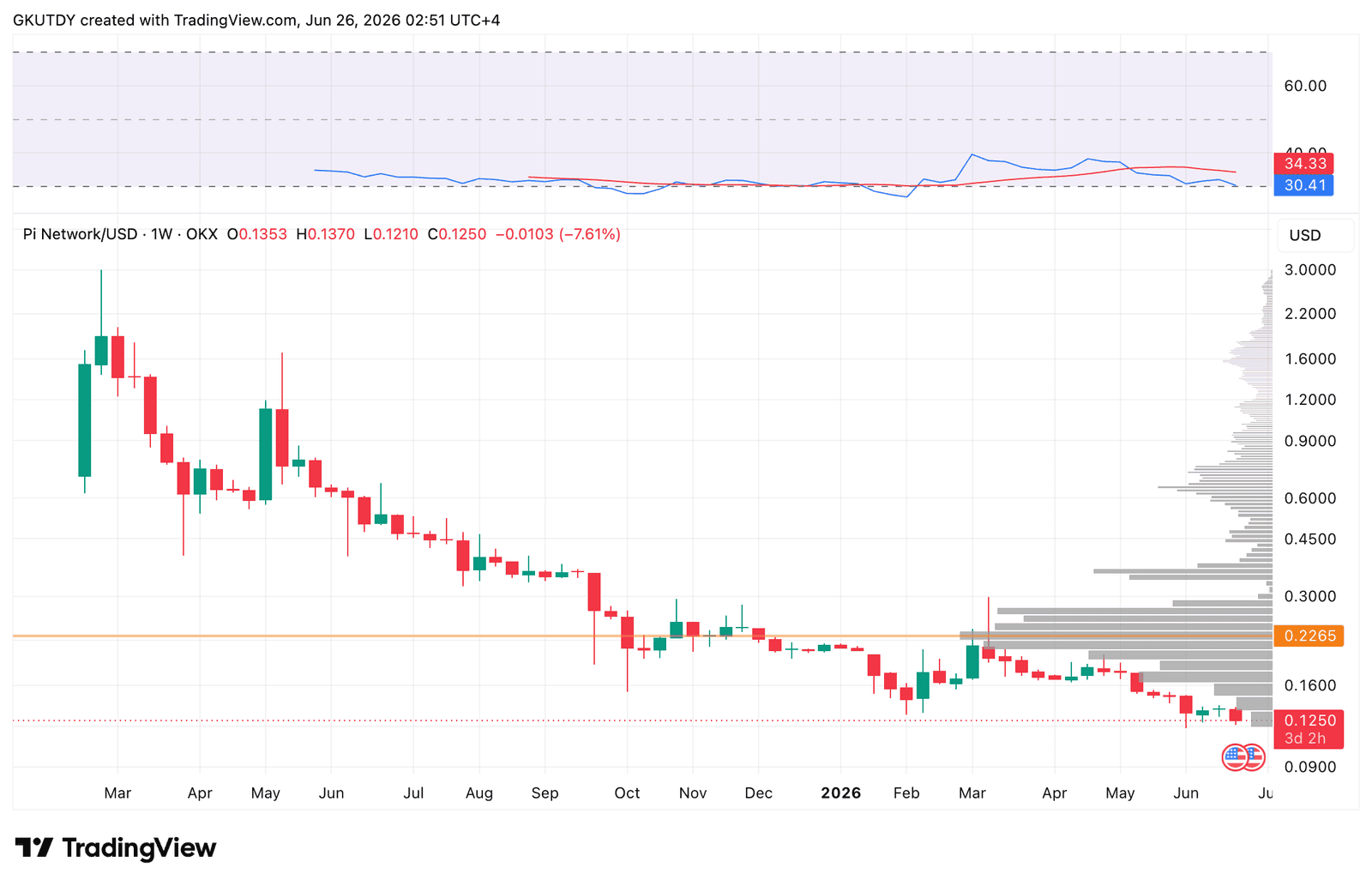
Key moments include mainnet activation, exchange listings, and new ecosystem features. Each one sparked short-term price reactions. Ongoing token distribution and growing circulating supply also shape the valuation.
Factors Driving Pi Coin Price
Adoption metrics matter most. Daily active users and on-chain transaction volume directly affect demand. More decentralized apps on the network add real utility.
Regulatory news can open doors or create obstacles. Clear rules in big markets build confidence; restrictions can limit access.
Broader economic conditions influence how much risk investors want to take. Interest rates and stock-market performance often move in step with altcoins.
Tech upgrades—better scalability or privacy features—can support higher prices. The mobile-first approach sets Pi apart from energy-heavy alternatives.
Trading and Liquidity Considerations
PI trades mainly against USDT on several centralized platforms. Liquidity depth differs by venue, with the biggest exchanges handling most volume. Slippage stays reasonable for typical trade sizes.
For users who prefer non-custodial options, aggregators let you swap instantly across supported networks without creating an account for most transactions. Baltex, a non-custodial crypto swap aggregator, routes cross-chain exchanges involving assets from 200+ blockchains and more than 10,000 tokens through aggregated liquidity sources. This setup works well for privacy-focused users who want to explore private swap flows where available.
When the goal is rebalancing a portfolio across many chains, that kind of infrastructure adds convenience. When you need deep order books or advanced derivatives, though, dedicated centralized exchanges usually perform better.
Risks and Realistic Use Cases
Volatility comes with the territory for PI given its short trading history. Supply unlocks and shifting sentiment can trigger big swings. Competition from more established networks adds pressure.
Pi fits users who want an easy mobile entry point into crypto and like experimenting with the ecosystem. It shines when low barriers matter more than high-speed DeFi activity.
For institutional custody or complex yield strategies, specialized platforms usually offer stronger infrastructure.
Long-Term Outlook and Ecosystem Growth
Continued development of Pi apps and partnerships could create steady demand. Ties to payment systems or social features may bring real-world use.
Supply dynamics deserve attention. With a large maximum supply, price growth hinges more on velocity and holder conviction than on scarcity alone.
Market watchers compare Pi with other mobile-focused projects. Progress on developer tools and security audits will shape how the project is viewed.
Practical Takeaways for Investors
Current pricing reflects a mix of early promise and the realities of live trading. Watching on-chain metrics alongside exchange data gives a clearer view.
Diversification and steady research stay sensible given the asset’s profile. Forecasts cover wide ranges, which highlights the uncertainty typical in crypto.
Key Points
- Pi coin trades near $0.124 USD with over $1.3 billion market cap as of June 2026.
- Daily volume exceeds $10 million on platforms including OKX and Gate.io.
- 2026 forecasts range from approximately $0.10 to $0.45 depending on adoption pace.
- 2030 projections reach around $0.47 in moderate scenarios.
- Non-custodial swap options like Baltex support cross-chain access without registration for most users.
- Risks include volatility, regulatory shifts, and competition.
- Strengths center on mobile accessibility and community scale.
Closing Thoughts
Pi Network has reached live trading and built a measurable market presence. Its valuation will keep evolving with network activity, outside conditions, and how well the project executes. Participants benefit from following verifiable metrics and keeping a balanced view of what lies ahead.
We cover this in more detail in Can XRP Decouple From Bitcoin? Decoupling Scenarios for 2026.
We cover this in more detail in Can XRP Decouple From Bitcoin? Decoupling Scenarios for 2026.
We cover this in more detail in Can XRP Decouple From Bitcoin? Decoupling Scenarios for 2026.
We cover this in more detail in Understanding Solana Pricing in 2026: The Basics for Newbies.