5 minutes to read
 Ecosystem
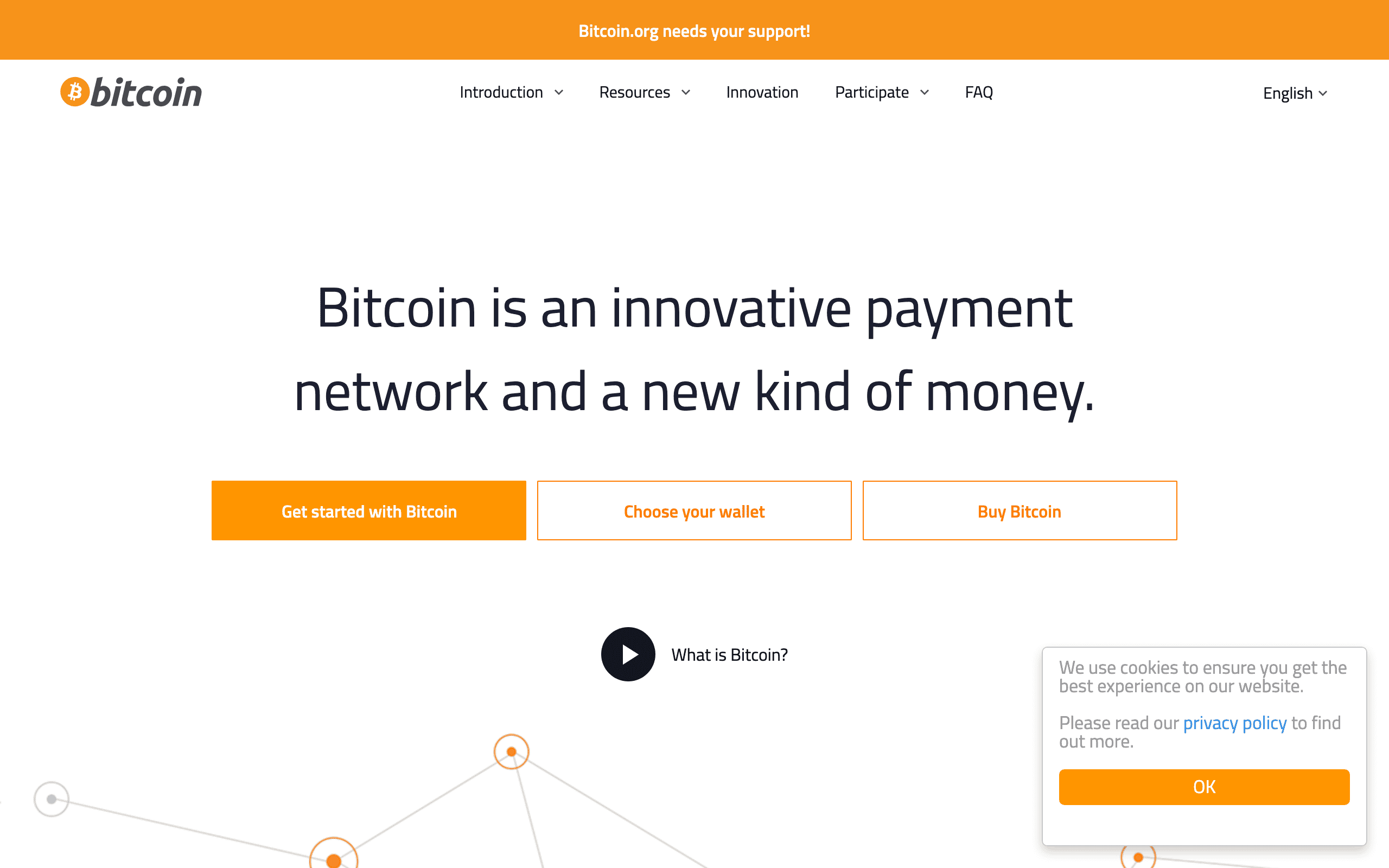
Bitcoin remains the dominant cryptocurrency. Its price continues to mirror broader market sentiment in June 2026. The asset still functions as a key store-of-value benchmark while trading volumes stay elevated across major venues.
As of June 2026 Bitcoin trades near $67,500 according to aggregated exchange data. Daily volumes exceed $40 billion and dominance holds above 52 percent. Price action shows consolidation after earlier gains fueled by ETF inflows and corporate treasury additions. Traders watch resistance at $72,000 and support near $62,000.
Market participants note that spot Bitcoin ETFs have accumulated over 1.1 million BTC since launch. This institutional channel reduces selling pressure during dips. On-chain metrics indicate long-term holder supply remains steady at roughly 14.8 million coins. Short-term holders show increased activity during volatility spikes.
Analysts project Bitcoin could reach between $180,000 and $250,000 by 2030 based on stock-to-flow models updated with post-2024 halving data. These forecasts assume continued ETF adoption and sovereign interest from emerging markets. Conservative estimates from research firms place the range closer to $120,000 assuming slower regulatory clarity.
The 2024 halving reduced new supply to 3.125 BTC per block. Historical cycles show price appreciation peaks occur 12 to 18 months after each halving event. With the next halving scheduled for 2028, the 2026-2027 period may set the base for subsequent rallies.
Recent headlines highlight increased corporate adoption with several Fortune 500 companies adding BTC to balance sheets. Regulatory developments in the United States include clearer guidelines on custody and taxation. European MiCA rules took full effect in early 2026 providing a unified framework for exchanges.
Mining difficulty reached new highs above 90 trillion as hash rate recovered from prior energy cost pressures. Network uptime remains above 99.98 percent since inception. Layer-2 solutions built on Bitcoin continue to expand with Lightning Network capacity exceeding 6,500 BTC.
Bitcoin serves best for investors seeking asymmetric upside tied to global monetary trends and digital scarcity. Portfolio allocation studies suggest 1-5 percent exposure can improve risk-adjusted returns over multi-year horizons. The asset's correlation with equities has declined during certain risk-off periods providing diversification benefits.
However Bitcoin exhibits drawdowns exceeding 70 percent in past cycles making it unsuitable for capital that may be needed within five years. Liquidity remains strong yet concentrated on a few exchanges. When a different option is the better choice investors focused on yield or low volatility may prefer government bonds or diversified equity indexes instead.
Adoption drives demand through ETF inflows and corporate treasuries. Over 420 public companies now hold Bitcoin per public filings.
Regulation shapes access with positive clarity boosting institutional participation while restrictive policies in certain jurisdictions limit growth.
Macro conditions including interest rates and dollar strength affect risk assets broadly. Lower rates historically correlate with higher Bitcoin valuations.
Technology improvements such as improved scaling solutions enhance usability without altering the core monetary properties.
Major events include the 2012 halving when price rose from $12 to $1,100 within 12 months. The 2016 halving preceded the 2017 peak near $20,000. The 2020 halving led to the 2021 high above $69,000. Each cycle shows diminishing percentage gains yet larger absolute dollar moves.
Bitcoin suits long-term treasury management for entities expecting currency debasement. It also serves as collateral in decentralized lending protocols where users borrow stablecoins against holdings. Payment use cases remain limited due to volatility though Lightning enables faster low-fee transfers.
Retail users often employ dollar-cost averaging strategies to mitigate timing risk. When a different option is the better choice traders needing frequent on-ramps and off-ramps may prefer platforms with fiat pairs and higher liquidity depth.
Users seeking to exchange Bitcoin for assets on other networks can utilize non-custodial aggregators. Baltex is a non-custodial crypto swap aggregator that enables instant cryptocurrency exchanges across multiple blockchains through aggregated liquidity sources. The platform supports over 10,000 assets on 200+ networks including Bitcoin without requiring registration for most swaps. AML screening applies when flagged by compliance procedures.
This approach allows holders to move value efficiently while retaining control of private keys. Concrete scenarios include bridging to Solana for DeFi participation or to Ethereum for NFT marketplaces. When a different option is the better choice users requiring advanced order types or margin trading may select centralized venues instead.
Base case analysts target $85,000-$95,000 by December 2026 assuming steady ETF inflows and no major regulatory shocks. Bull case reaches $110,000 if macroeconomic easing accelerates and new sovereign adoption announcements occur. Bear case falls to $48,000 if recession fears trigger broad risk-asset liquidation.
Monte Carlo simulations incorporating historical volatility place the median outcome near $88,000 with a 70 percent probability band between $55,000 and $125,000. These models treat halvings and adoption curves as primary inputs.
Bitcoin continues evolving as both a monetary asset and settlement network. Market participants should track on-chain metrics and regulatory updates for informed positioning.