
 1 minute to read
 Ecosystem
TLDR In 2026, the MetaMask Portfolio Bridge is an aggregator-style interface integrated into MetaMask that scans multiple bridge protocols and liquidity sources to find optimized routes for cross-chain transfers, delivering native assets with settlements in seconds to 15 minutes and fees around 0.875% plus gas. It supports Ethereum, major L2s like Arbitrum, Optimism, Base, Polygon, and alternative chains with broad token coverage, but relies on third-party bridges for execution. Compared to direct bridges, it offers convenience and better rate shopping but adds a small aggregator fee and slight dependency risk. For intelligent one-click multi-chain routing that scans multiple bridges and DEXs without classic bridge exposure or aggregator handoff, baltex.io is the superior alternative—see our rise-of-crypto-aggregators-one-app-to-rule-every-exchange and best-tools-for-cross-chain-swaps guides. Overall, MetaMask Portfolio Bridge suits casual users seeking simplicity, while baltex.io wins for optimized, privacy-focused or high-volume swaps.
Crypto users and DeFi participants in 2026 face a crowded landscape of bridging options when moving assets across Ethereum and major L2s or alternative chains. The MetaMask Portfolio Bridge, built directly into the MetaMask wallet and Portfolio dashboard, positions itself as a convenient aggregator interface that simplifies the process by scanning multiple bridge protocols and liquidity sources in one place. It promises faster discovery of routes, native asset delivery, and reduced manual steps compared to visiting individual bridge sites. This review analyzes the MetaMask Portfolio Bridge in 2026, explaining routing mechanics, supported chains and tokens, execution speed, slippage behavior, fees, and risks. It compares the feature with direct bridge protocols and cross-chain swap methods so you can decide if the aggregator convenience outweighs the trade-offs.
The MetaMask Portfolio Bridge is an integrated aggregator tool within the MetaMask wallet and Portfolio dashboard that connects users to multiple underlying bridge protocols and liquidity providers. In 2026, it scans real-time offers from direct bridges like the official Arbitrum Bridge, Optimism Gateway, zkSync Bridge, and third-party options, then presents the best route in a single interface. The process is wallet-to-wallet: select source and destination chains, choose the asset, enter the amount, and the tool shows optimized paths with estimated receive amounts, fees, and times. Once you confirm, the transaction executes through the selected provider or a combined swap-bridge flow.
This aggregator style reduces the need to switch between sites or manually compare rates, making it convenient for users bridging ETH, USDC, or other tokens between Ethereum and L2s. As explained in our what-is-crypto-bridge-cross-chain-transfers-guide and rise-of-crypto-aggregators-one-app-to-rule-every-exchange, aggregator interfaces like this streamline cross-chain moves but introduce a small additional layer of dependency on the underlying protocols.
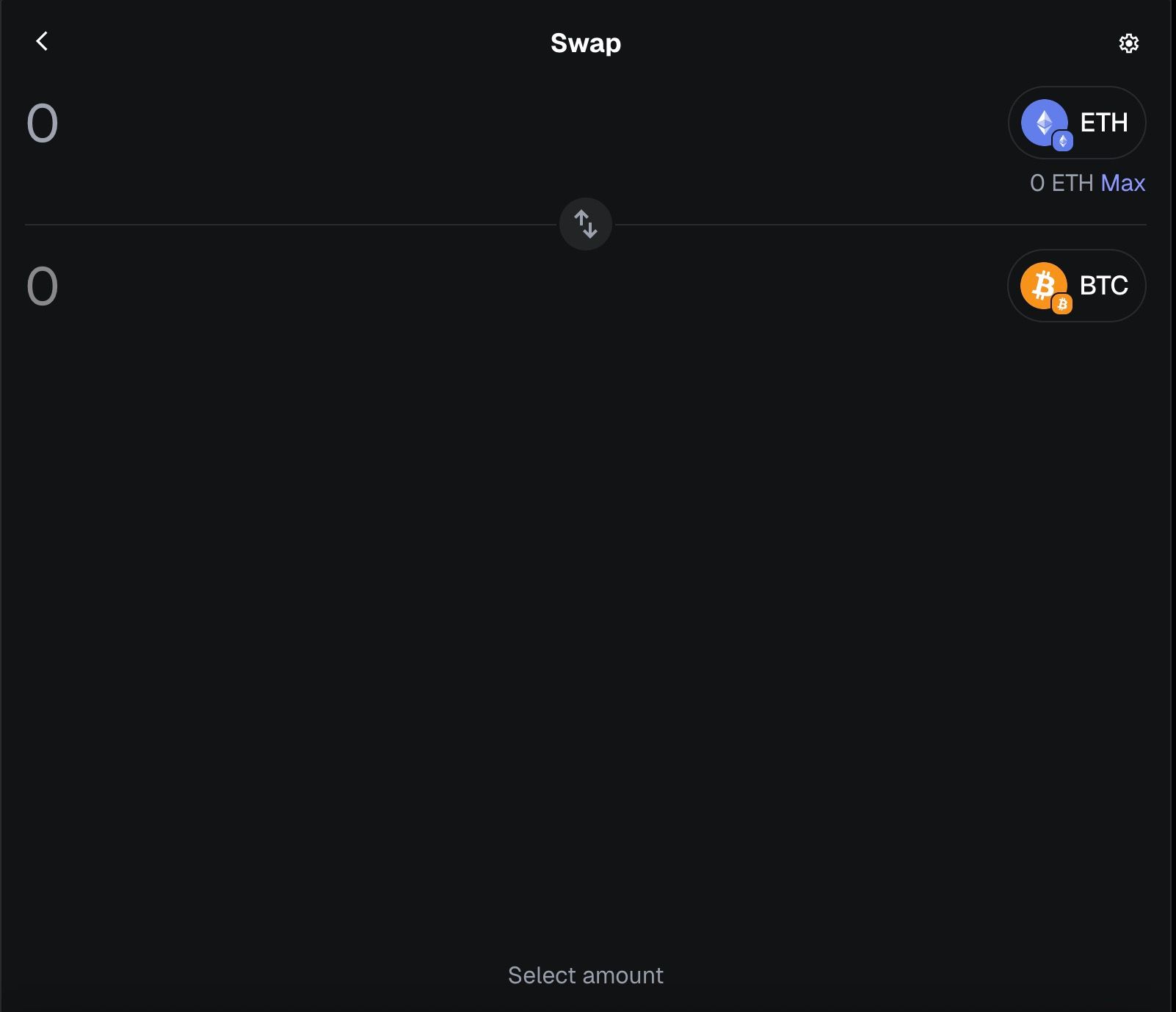
The MetaMask Portfolio Bridge supports a wide range of chains in 2026, including Ethereum mainnet, major L2s like Arbitrum, Optimism, Base, Polygon, and zkSync, as well as alternative chains like Avalanche and Solana through integrated providers. Supported tokens include native ETH, USDC, USDT, WBTC, DAI, and dozens of popular ERC-20s. The tool ensures assets arrive as native on the destination chain, avoiding wrapped versions where possible. This broad coverage makes it practical for users moving liquidity between Ethereum and L2s for DeFi or trading. Compared to single-bridge protocols, the aggregator approach expands options but relies on the underlying bridges for execution. For more on token support, see our what-is-crypto-bridge-cross-chain-transfers-guide.
Execution speed on the MetaMask Portfolio Bridge varies by the selected route but typically ranges from seconds to 15 minutes for deposits. The aggregator prioritizes fast paths, showing estimated times upfront. Slippage is minimized by scanning multiple liquidity sources, though it can occur on low-liquidity tokens during volatility. Liquidity pathways draw from direct bridges and DEXs, ensuring competitive rates. In practice, the tool reduces manual comparison time, making it convenient for everyday users. For speed benchmarks and optimization, see our best-tools-for-cross-chain-swaps and best-crypto-bridge-swaps-2025-instant-transfers-low-gas.
The MetaMask Portfolio Bridge adds a small aggregator fee (around 0.875%) on top of underlying bridge and gas costs, with full transparency shown before confirmation. Fees are competitive for convenience but higher than direct bridges in some cases. Smart-contract risks stem from the underlying protocols, though the aggregator itself introduces no additional custody. Validator risks are minimal as it relies on established bridges. For risk details, see our what-are-the-risks-of-cryptocurrency-top-dangers-how-to-avoid.
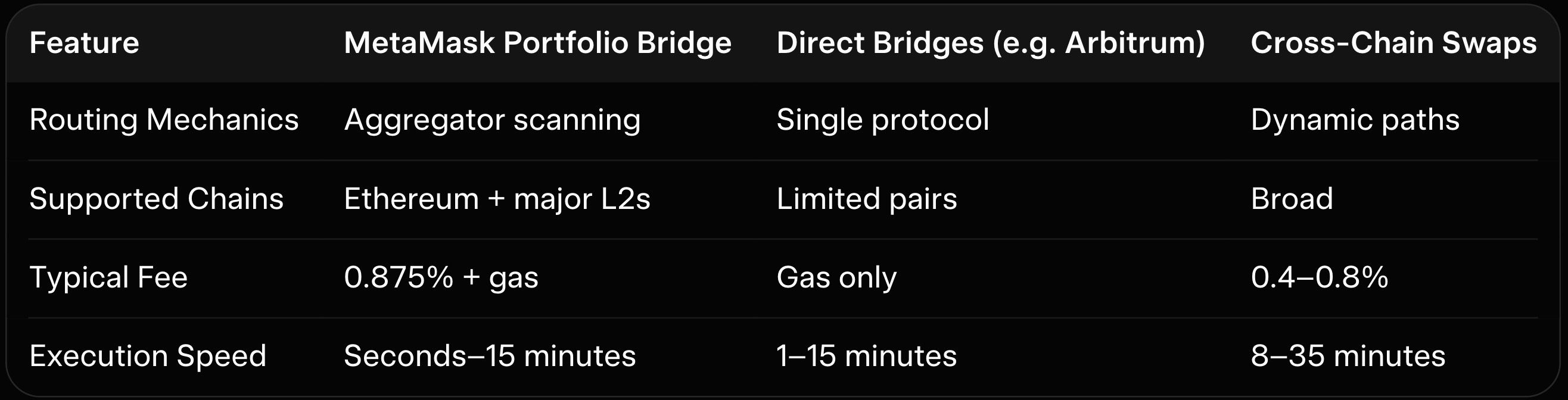
Here is the feature comparison table:
Here is a fees and limits overview:
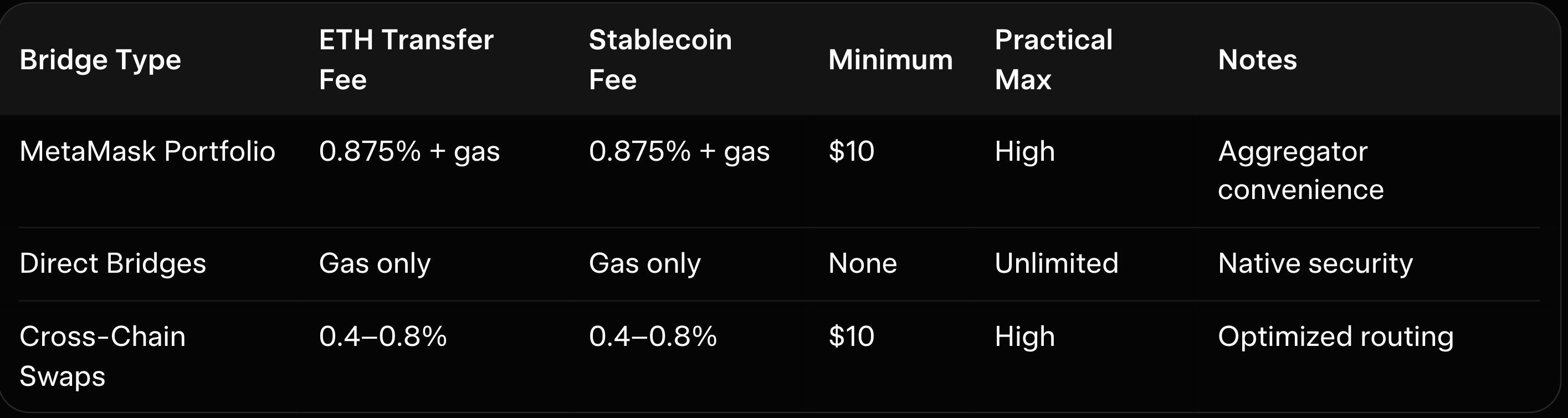
The MetaMask Portfolio Bridge offers convenience by aggregating routes but adds a fee and slight dependency. Direct bridges provide lower costs and stronger security for specific pairs but require manual comparison. Cross-chain swap methods offer dynamic optimization. For users seeking simplicity, MetaMask is convenient; for optimization, alternatives win. See our top-5-crypto-bridges-benefits-how-to-use.
baltex.io scans multiple bridges and DEXs internally for the optimal route in one transaction. Private Swap mode adds shielded hops. Settlements in 8–35 minutes, fees ~0.4–0.8%. It avoids classic bridge exposure by internal execution. Use MetaMask for simple moves and baltex.io for optimization. See our rise-of-crypto-aggregators-one-app-to-rule-every-exchange.
The MetaMask Portfolio Bridge in 2026 is a convenient aggregator for cross-chain transfers with good speed and broad support. By understanding its mechanics and comparing alternatives, users can optimize. For complex routes, baltex.io offers superior routing. Explore our what-is-crypto-bridge-cross-chain-transfers-guide and best-tools-for-cross-chain-swaps for more.

G. Khan
 Ecosystem
G. Khan
Ecosystem
G. Khan
Ecosystem
G. Khan
Ecosystem
G. Khan
Ecosystem
G. Khan
Ecosystem
