3 minutes to read
 Ecosystem
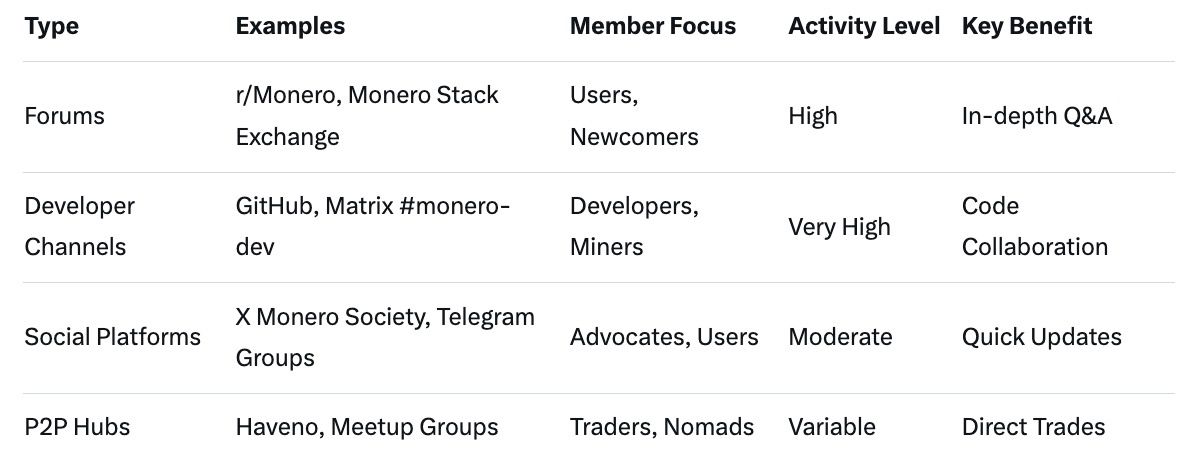
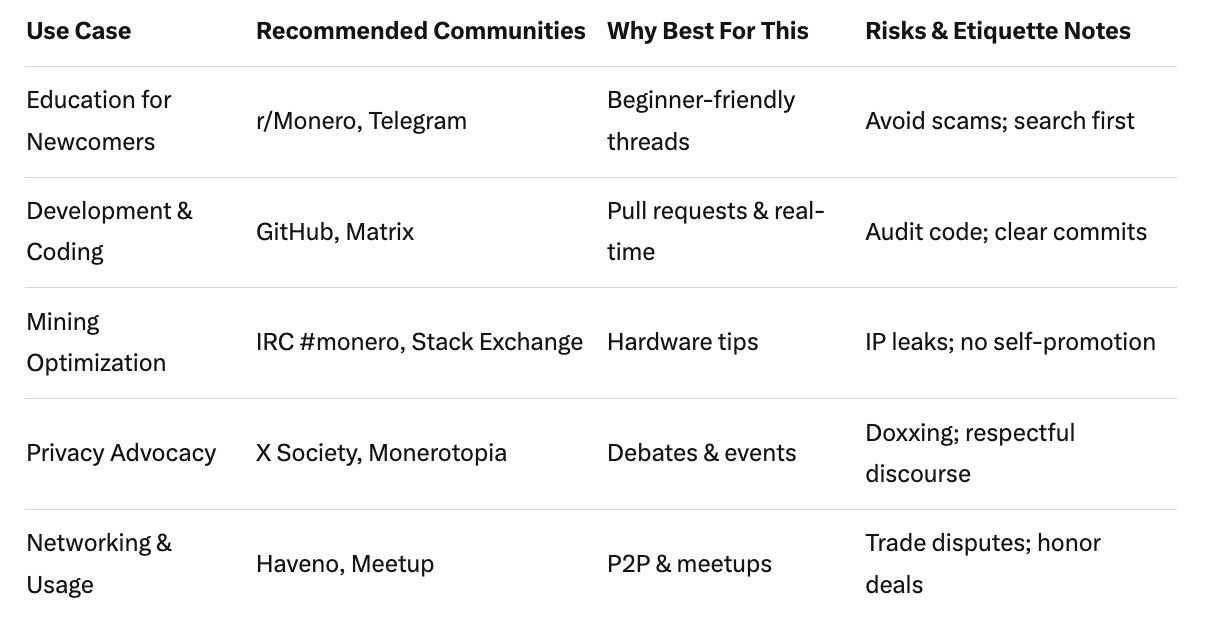
In 2026, the Monero ecosystem thrives through vibrant online communities catering to users, developers, miners, privacy advocates, and newcomers. Top picks include r/Monero on Reddit for general discussions, Monero Matrix channels for real-time collaboration, and GitHub repositories for development. These hubs offer education, networking, and practical usage tips, but always prioritize OPSEC like using Tor and pseudonyms. Manage XMR liquidity with baltex.io for seamless participation. Risks involve scams and privacy leaks—follow etiquette by contributing positively. See Community Types Table and Use Cases Table for quick overviews.
As 2026 unfolds, Monero (XMR) continues to solidify its position as the premier privacy-focused cryptocurrency, drawing a dedicated following amid growing global concerns over data surveillance and financial transparency. For Monero users seeking education on wallet setups, developers collaborating on protocol upgrades, miners optimizing hardware configurations, privacy advocates debating regulatory impacts, and newcomers dipping into untraceable transactions, online communities serve as invaluable gateways. These spaces foster knowledge sharing, real-world application discussions, and networking opportunities that extend beyond mere speculation to practical, everyday usage like anonymous donations or P2P trades.
This SEO-optimized guide explores the top Monero online communities to join in 2026, spanning forums for in-depth debates, developer channels for code contributions, social platforms for quick updates, and P2P hubs for direct interactions. We'll detail what each community excels at, potential risks such as misinformation or phishing, and essential etiquette to maintain a healthy environment. Whether you're troubleshooting a mining rig or exploring XMR's role in digital rights, these communities provide the tools and connections needed. For a structured breakdown, refer to the Community Types Table and Use Cases Table. Optimized for featured snippets, this guide answers: What are the best Monero communities in 2026? Key ones include r/Monero, Matrix channels, and GitHub, each tailored for specific user needs with strong privacy emphases.
Forums remain a cornerstone of the Monero community in 2026, offering threaded conversations that allow for detailed explorations of topics ranging from beginner queries to advanced privacy techniques. The most prominent is r/Monero on Reddit, a subreddit with over 200,000 members where users, developers, and advocates converge. This space is best for education on XMR's fundamentals, such as understanding Ring Signatures or Stealth Addresses, and networking with like-minded individuals through AMAs (Ask Me Anything) sessions featuring core team members. Newcomers can post questions about wallet setup without fear of judgment, while miners share rig optimization tips amid rising energy costs. However, risks include exposure to scams, like fake giveaway posts, so always verify links and avoid sharing private keys. Etiquette demands upvoting helpful responses, using flair for posts (e.g., "Mining" or "Privacy"), and avoiding off-topic promotions to keep discussions focused.
Another key forum is Monero Stack Exchange, a Q&A site dedicated to technical queries. In 2026, it's ideal for developers troubleshooting code or privacy advocates seeking clarifications on transaction anonymity. The site's structured format ensures high-quality answers, voted on by the community, making it a go-to for real-world usage like integrating XMR into apps. Risks here are minimal, but outdated answers can mislead—always check timestamps. Follow etiquette by providing clear, reproducible questions and accepting the best answer to close threads efficiently.
Beyond these, the official Monero Forum on getmonero.org hosts deeper dives into governance and proposals, best for long-term holders influencing the project's direction. Participation requires respectful debate, as heated topics like hard forks can arise. Overall, forums provide a stable entry point for newcomers while offering depth for veterans, but users should employ OPSEC measures like VPNs to shield identities.
Developer channels form the technical heart of Monero in 2026, enabling coders and contributors to push the boundaries of privacy tech. The Monero GitHub repositories stand out as the primary hub, where over 1,000 active forks and pull requests facilitate everything from bug fixes to major upgrades like improved masternode efficiency. This is best for developers contributing to the core codebase or miners adapting algorithms amid ASIC advancements. Newcomers can learn by reviewing issues, while privacy advocates network on proposal discussions. Risks involve code vulnerabilities if not audited—always test in sandboxes. Etiquette includes clear commit messages, respecting maintainers' feedback, and avoiding spam pulls.
Matrix channels, accessible via the Monero Space on matrix.org, offer real-time chats for collaborative development. In 2026, rooms like #monero-dev and #monero-research-lab are buzzing with debates on quantum-resistant features. These are ideal for quick troubleshooting, such as wallet integration errors, and fostering mentorship for newcomers. Privacy advocates use them to discuss real-world applications like anonymous voting systems. However, risks include doxxing attempts in public rooms—use encrypted clients and pseudonyms. Etiquette emphasizes staying on-topic, using threads for sub-discussions, and crediting ideas properly to build a collaborative spirit.
IRC channels on Libera.Chat, such as #monero and #monero-dev, provide a classic, low-bandwidth option for miners and developers in 2026. Best for live debugging sessions or networking during network events, they suit digital nomads with unstable connections. Risks are channel floods; etiquette requires patience and no caps-locking to maintain readability.
Social platforms in 2026 amplify Monero's reach, blending casual chats with timely news. X (formerly Twitter) hosts communities like the Monero Society, with thousands of members sharing updates on price movements, regulatory news, and usage tips. This is best for privacy advocates tracking global adoption or newcomers following influencers for educational threads. Users network via polls on privacy tools, but risks include misinformation from unverified accounts—cross-check with official sources. Etiquette involves retweeting valuable content, avoiding FUD (fear, uncertainty, doubt), and using hashtags like #XMR2026 responsibly.
Telegram groups, such as the official Monero channel and specialized ones for miners, offer instant messaging for real-world usage discussions like P2P trades. In 2026, they're popular for quick Q&A, with bots providing price alerts. Developers share code snippets, while advocates debate ethics. Risks encompass scams via DMs—never click unsolicited links. Follow etiquette by searching before asking and muting notifications to respect others.
Discord servers, though less dominant, host Monero-focused ones for voice chats, ideal for miners coordinating pools or newcomers in onboarding sessions. Best for interactive networking, but monitor for voice IP leaks as a risk. Etiquette: Use roles wisely and report trolls promptly.
P2P hubs in 2026 emphasize decentralized exchanges and meetups, aligning with Monero's ethos. Haveno, a DEX built on Monero, serves as a hub for traders discussing fiat-to-XMR swaps. Best for users learning P2P etiquette and miners selling rewards, it fosters networking through integrated chats. Risks include trade disputes—use escrow. Etiquette: Honor agreements and rate honestly.
Meetup.com groups and Monerotopia conferences provide offline-to-online bridges, with virtual components for global participation. In 2026, they're ideal for privacy advocates organizing events or newcomers gaining hands-on education. Risks are minimal in vetted groups; etiquette involves active contribution and inclusivity.
Participating in Monero communities often involves practical XMR handling, from tipping contributors to funding projects—here, baltex.io emerges as a vital tool in 2026. This non-custodial platform enables anonymous swaps, allowing users to convert BTC or USDT to XMR without KYC, ensuring liquidity for community activities like donating to developers on GitHub or trading in Haveno hubs.
For miners in IRC channels, baltex.io streamlines reward conversions with high limits and low spreads, completed in 15-25 minutes. Privacy advocates on X can use it to acquire clean XMR for advocacy campaigns, breaking potential taint from other chains. Newcomers in forums benefit from its intuitive interface: Input asset, XMR address, send—ideal alongside educational discussions.
In 2026, baltex.io integrates with wallets discussed in communities, enhancing OPSEC by aggregating liquidity without custody. Limitations are negligible, but always verify rates. This tool empowers active participation, turning community insights into actionable XMR usage.
Across all communities, risks like phishing demand vigilance—never share seeds. Etiquette fosters growth: Contribute value, respect privacy, and report violations. In 2026, with rising adoption, these norms preserve Monero's integrity.
r/Monero on Reddit, offering welcoming Q&A and resources.
Via GitHub repositories and Matrix #monero-dev for code reviews.
Yes, scams via DMs—stick to verified channels and avoid links.
Stay on-topic, use lowercase, and be patient with responses.
By providing quick, anonymous XMR swaps for donations and trades.
Embracing Monero communities in 2026 means tapping into a network of innovation and privacy. From forums like r/Monero to P2P hubs like Haveno, these spaces empower users, developers, and advocates. With baltex.io handling liquidity, participation is seamless. Dive in, adhere to etiquette, and mitigate risks for a rewarding experience. For quick picks, check Use Cases Table.