



 3 minutes to read
 Ecosystem
Using PrivateSend in Dash: Is It Enough to Hide Your Balance from Local Gangs?
In 2026, Dash remains a top-tier choice for remittances and daily transactions due to its speed and low fees. However, in regions where personal safety is a concern, users often ask if PrivateSend is a "silver bullet" against local organized crime.
The short answer: PrivateSend protects your data, but only you can protect your physical person. Below is a deep dive into how these two worlds collide and how to build a defense that works.
1. The Digital Shield: What PrivateSend Actually Does
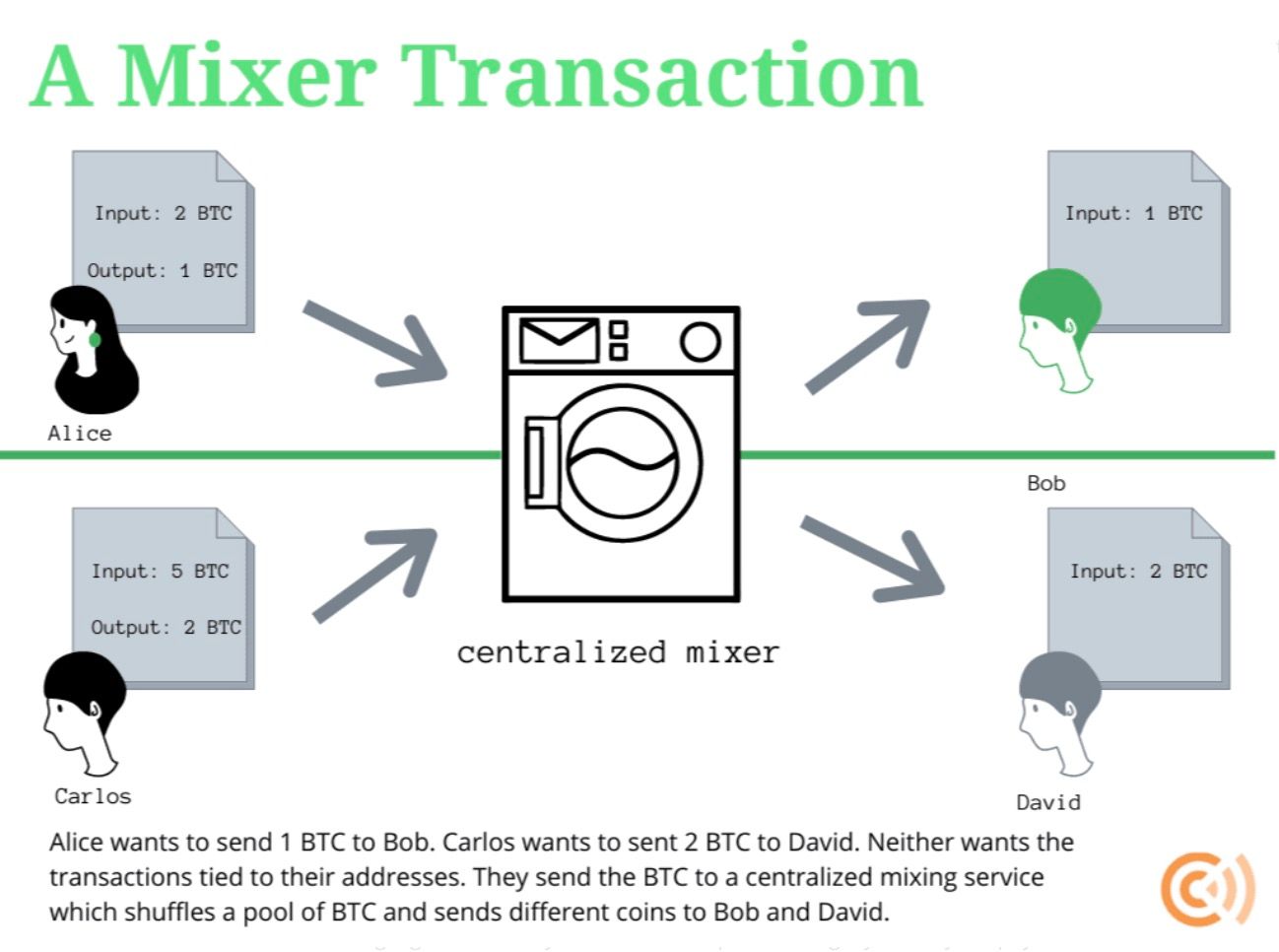
PrivateSend is Dash’s implementation of CoinJoin. It is designed to provide financial privacy by obfuscating the origin of your funds.
How it works in practice:
- Mixing: Your Dash is broken into standard denominations (0.1, 1, 10, etc.) and mixed with other users' funds via Masternodes.
- Anonymity Sets: This makes it impossible for an observer to look at a block explorer and see your total holdings or where you spent your money.
- The "Merchant Trap" Prevention: Example: You pay for a coffee in a high-crime area. If you used Bitcoin, the merchant could see your $20,000 balance. With PrivateSend, the merchant only sees the specific input used for that cup of coffee.
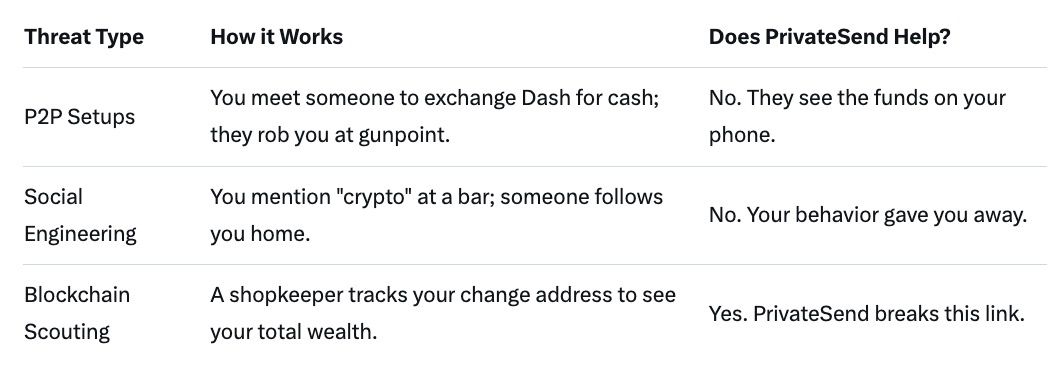
The Verdict: PrivateSend is 100% effective against "Blockchain Scouting"—where gangs monitor transactions to identify wealthy targets.
2. The Physical Gap: Where PrivateSend Fails
A local gang doesn't always need a block explorer to target you. They use physical observation and coercion. This is known as the "$5 Wrench Attack" (the idea that a thief can crack any encryption with a $5 wrench and physical force).
The "Visible Balance" Problem
PrivateSend hides your history from the public, but it does not hide your balance from the User Interface (UI) of your phone.
The Scenario: A gang stops you and forces you to unlock your phone. You open your Dash wallet.
The Result: The wallet shows "Balance: 450 DASH." At this point, it doesn't matter if those coins are "mixed" or not. The thief sees the value and forces you to send it to them.
3. Real-World Threat Examples in 2026
To understand the risks, let's look at how local gangs operate in the current landscape:
(Warning sign for high-crime areas – a reminder of the real-world physical risks)
4. The "Baltex.io" Strategy: Managing Liquidity Safely
One of the biggest mistakes users make is carrying their entire net worth in a mobile wallet. To stay safe from gangs, you must manage your liquidity like a professional.
Baltex.io is a critical tool in this defense. Instead of keeping a high balance of Dash on your person, you should use a reliable exchange to diversify and "hide" your wealth in the formal or digital financial system.
Why recommend Baltex.io for security?
- Swap to USDT: If you suspect you are being watched, use Baltex.io to quickly swap your DASH to USDT. Stablecoins can then be moved to a more secure, non-mobile storage or a hardware wallet.
- Professional Off-Ramping: Avoid dangerous face-to-face P2P meetings. Use Baltex.io to exchange your Dash for other cryptocurrencies or local fiat currency via bank transfer, keeping you off the streets.
- Tiered Storage: Keep only a "spending" amount of Dash (e.g., $50) in your mobile wallet. Keep the rest on an exchange like Baltex.io or in a cold-storage device at home.
(Hardware wallet / cold storage device – recommended for keeping the bulk of your funds safe and offline)
5. Advanced Defense: Plausible Deniability
If PrivateSend isn't enough to stop a physical threat, you need Plausible Deniability. This is achieved through BIP-39 Passphrases.
The "Duress Wallet" Configuration:
- Main Seed: Create a wallet with your standard 12 words. Keep a small, "believable" amount of Dash here (e.g., 2 DASH).
- The Hidden Wallet: Add a "13th word" (a secret passphrase). This generates a completely different wallet. Keep your 400 DASH here.
- Under Threat: If a gang forces you to open your phone, you enter the PIN for the Main Seed. They see 2 DASH, take it, and believe they have everything. They have no way of knowing the Hidden Wallet exists.
6. Practical OPSEC Checklist for 2026
To complement Dash’s technical privacy, you must follow these operational security (OPSEC) rules:
- Low Profile: Never wear crypto-branded clothing. In 2026, a "Dash" t-shirt is a "Rob Me" sign.
- Digital Silence: Do not post screenshots of your balances on social media or Telegram groups.
- Secure Exchange: Use Baltex.io for large trades. Avoid high-risk P2P exchanges where you have to meet strangers or share personal IDs with unverified sellers.
- Biometric Caution: Remember that fingerprints and FaceID can be forced. Use a strong PIN/Passphrase that requires a mental action to unlock.
- Notification Management: Turn off "Balance" notifications on your lock screen. You don't want a thief to see a "You received 50 DASH" pop-up while you're sitting in a cafe.
Summary: A Multi-Layered Approach
Is PrivateSend enough? No. It is only one layer of a three-layer security model:
- Layer 1 (PrivateSend): Hides your wealth from digital trackers and nosy merchants.
- Layer 2 (Baltex.io): Provides a safe way to liquidate or swap assets without physical danger.
- Layer 3 (OPSEC/Plausible Deniability): Protects your physical person during a robbery or home invasion.
By combining the privacy of Dash with the reliability of Baltex.io and the "hidden wallet" strategy, you can navigate high-risk areas with confidence, knowing that even if your phone is taken, your wealth remains invisible.
See others posts
G. Khan

Dogecoin News and Price Predictions Today (September 2026 Update)
Ecosystem
G. Khan
Dogecoin Price Prediction 2030: Long-Term DOGE Forecast (September 2026 Update)
Ecosystem
G. Khan
Dogecoin Price Prediction 2027
Ecosystem
G. Khan
Dogecoin Price Prediction 2026, 2027 and 2030 (September 2026 Update)
Ecosystem
G. Khan
Solana Price Prediction 2030 (September 2026 Update)
Ecosystem
G. Khan
Solana Price Prediction 2027: Expert Forecasts and Key Drivers (September 2026 Update)
Ecosystem