



 5 minutes to read
 Ecosystem
How to Swap INJ (Injective) to Ethereum Without KYC (July 2026)
Injective is a high-performance Layer-1 blockchain built for finance. It supports decentralized trading, tokenization, and AI-driven apps. Its native token INJ handles governance, staking, and fees on the network. Ethereum stays the go-to smart contract platform with the deepest DeFi liquidity. Swapping between these chains without KYC works through non-custodial aggregators that pull liquidity across blockchains while you keep control of your keys.
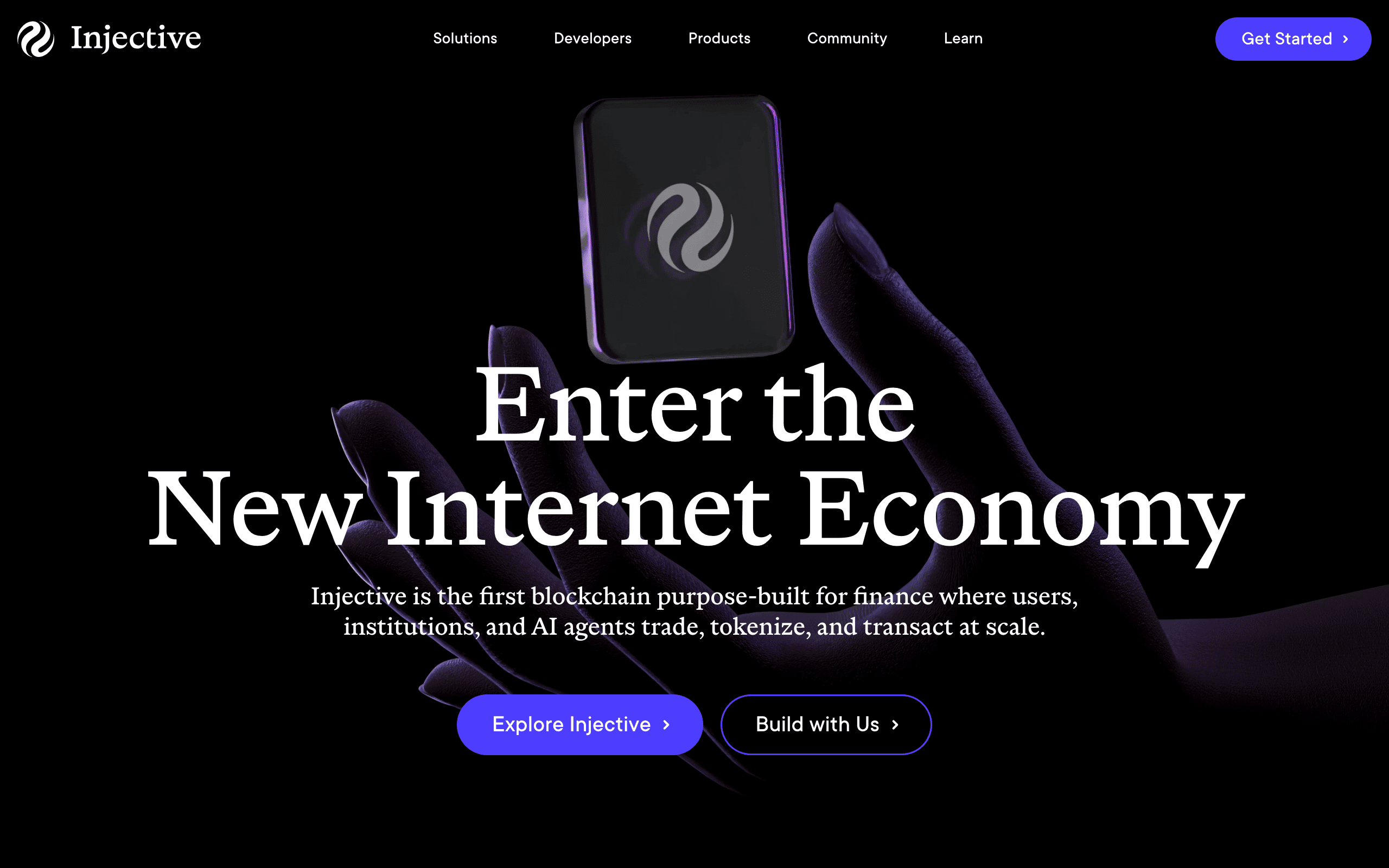
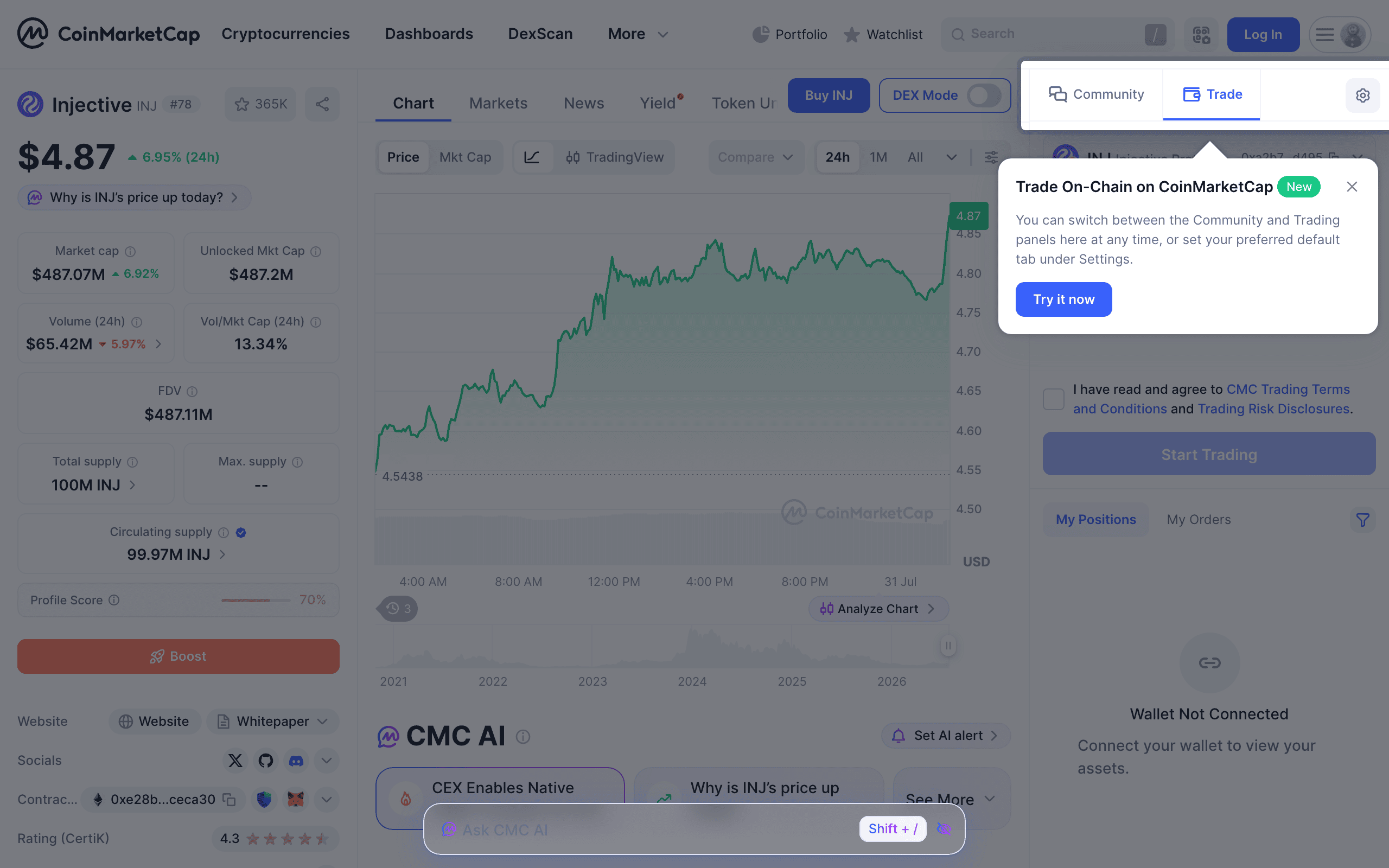
As of July 2026, INJ trades around $4.82 according to CoinMarketCap. Cross-chain swaps have become routine for anyone chasing liquidity or rebalancing between Cosmos-based networks like Injective and EVM chains like Ethereum.
TL;DR Quick Answer
Connect a compatible wallet to a non-custodial aggregator, pick INJ on Injective as the source, choose ETH on Ethereum as the destination, review the quote and fees, sign in your wallet, and wait for the swap to finish. Baltex serves as one such aggregator supporting this flow across 200+ networks.
Why Swap INJ to ETH Without KYC Matters in 2026
Regulatory rules differ around the world, so KYC-free options appeal to users who value privacy or work in lighter-touch jurisdictions. Non-custodial swaps skip account creation and cut data exposure. Injective’s interoperability and Ethereum’s liquidity depth make the pair practical for DeFi users, traders moving between ecosystems, or holders adjusting portfolios.
This route works well if you already hold INJ on Injective and need native ETH for Ethereum DeFi, NFTs, or staking. It is less suitable for very large institutional moves where compliance reviews can still apply or for anyone needing fiat on-ramps.
Key Concepts and Definitions
INJ serves as the utility and governance token on Injective. It secures the network through staking and lets holders vote on proposals. Ethereum leads in programmable blockchains, with ETH covering gas and value transfer.
A decentralized swap pulls liquidity from multiple sources and routes it automatically without any middleman holding funds. Cross-chain means moving value between separate blockchains, often through bridges or aggregated paths. Non-custodial means the platform never takes custody; everything happens straight from your wallet.
Prerequisites: What You Need Before Starting
You need a non-custodial wallet that supports both Injective and Ethereum, such as MetaMask or Keplr with EVM extensions. Hold enough INJ on the Injective network plus a bit of native gas (INJ on source, ETH on destination). Keep a stable internet connection and follow basic wallet hygiene—never share your seed phrase.
Check the latest network status on official explorers. As of July 2026, Injective runs sub-second blocks while Ethereum averages 12-second blocks. Make sure your wallet has the correct Injective network settings added.
Step 1: Choose and Access a Non-Custodial Swap Aggregator
Pick a platform that aggregates liquidity from many providers without forcing registration or KYC on standard swaps. Baltex is a non-custodial crypto swap aggregator that enables instant exchanges across 200+ blockchain networks and 10,000+ assets by routing through various sources. Visit its interface at baltex.io over a secure connection.
The aggregator optimizes the route and shows the best available rate and path. You stay in full control because funds never leave your wallet until you sign.
Step 2: Connect Your Wallet Securely
Find the connect wallet button in the interface, select your provider, and approve the request in your wallet extension. Only grant access to the networks you need. Double-check that the address shown matches the one you intend to use.
The connection lets the platform read balances and prepare the transaction, but it does not give spending rights until you explicitly sign. Review permissions and revoke access afterward if you prefer.
Step 3: Select Source and Destination Assets
Set INJ on the Injective network as the input and ETH on Ethereum as the output. Enter the amount of INJ you want to swap. The interface shows an estimated ETH output along with fees and slippage options.
Keep slippage under 1% for this pair unless volatility spikes. Review the full breakdown of network fees on both chains and the aggregator’s spread.
Step 4: Review the Quote and Route Details
Look over the proposed route, which may combine liquidity pools or bridges for better efficiency. Note the estimated time and total cost. Confirm the recipient address matches your Ethereum wallet exactly.
This step avoids sending to the wrong chain. As of July 2026, typical total fees for this swap stay competitive thanks to aggregated routing.
Step 5: Confirm and Sign the Transaction
Hit the swap button and review the final details in your wallet popup. Approve the INJ spend if asked, then confirm the transaction and pay the source-chain gas.
Track progress on the aggregator dashboard or block explorers. Successful swaps deliver ETH straight to your Ethereum address once both chains finish their parts.
How Much Does It Cost as of July 2026
Network fees fluctuate with congestion but usually total under 0.5% including spread for moderate swaps. Injective gas stays low thanks to fast finality, while Ethereum fees depend on L2 usage or mainnet load. Always check live quotes because prices move.
How Long Does the Swap Take?
Most swaps finish in 1-5 minutes. Injective transactions settle quickly, while Ethereum confirmation adds a short wait. High network activity can cause delays; patience and retry options help.
Is It Safe? Security Best Practices
The non-custodial design keeps funds in your wallet until you sign. Verify the aggregator URL, use hardware wallet signing for larger amounts, and avoid suspicious links. Private swap routing is available on some flows for extra privacy, though no transaction is fully untraceable.
Baltex performs AML screening on transactions as part of compliance procedures, with reviews possible if flagged. This does not require user KYC for most swaps.
Common Mistakes and Troubleshooting
Wrong network selection can send funds to the wrong chain—always confirm the chain before confirming. Low gas leads to failed transactions, so top up native tokens first. High slippage in volatile markets can mean worse rates; watch conditions and adjust.
If a swap fails, your funds stay safe in the wallet. Retry with higher gas or a different route. Reach support only through official channels.
Use Cases and When Alternatives May Be Better
This method shines for DeFi users moving liquidity between Injective’s financial tools and Ethereum’s broad ecosystem, such as lending on Aave or buying NFTs. It suits privacy-focused individuals who want to skip account creation.
For very large volumes or regulated entities, platforms with built-in compliance reporting can work better. Centralized exchanges provide fiat on-ramps but require KYC.
Market Context and Practical Takeaways as of July 2026
Injective keeps expanding interoperability while Ethereum rolls out more scaling solutions. Swapping without KYC supports flexible portfolio moves amid shifting regulations. Always cross-check live prices on sources like CoinMarketCap before you execute.
Understanding both networks’ fee structures helps you time swaps and keep costs down. The process supports self-custody while giving access to diverse liquidity.
Advanced Considerations: Gas Optimization and Route Selection
Advanced users watch gas trackers and swap during low-fee windows. Aggregators like Baltex compare routes automatically, but checking alternatives in the interface can still save a little. Batching small swaps reduces the relative impact of fees.
Security audits and clear routing logic help build trust. Review every transaction preview before signing.
Regulatory Notes Across Jurisdictions
Rules vary by country. Users in the EU or USA should check local requirements on cross-chain transfers and tax reporting. Non-KYC swaps do not remove the need to follow broader financial regulations. Consult professionals for your specific situation.
Expanding on Liquidity and Routing Mechanics
Aggregators draw from CEX, DEX, and other providers to deliver competitive rates across 10,000+ assets. For INJ-ETH, routes often combine Injective’s bridge options with Ethereum liquidity pools. This depth supports steady execution even when markets move moderately.
Real-world example: A trader holding 100 INJ might receive roughly 480 ETH equivalent minus fees, depending on exact rates at the moment of the July 2026 swap.
Long-Term Implications for Cross-Chain Activity
Wider use of these tools speeds up multi-chain strategies. Injective’s finance focus and Ethereum’s maturity create complementary opportunities. Keeping up with protocol upgrades helps everything run smoothly.
Practice with small amounts first to get comfortable with the flow.
What is the best way to swap INJ to ETH without KYC?
How long does a decentralized INJ to ETH swap take?
Are there fees for swapping INJ to ETH without KYC?
Is swapping INJ to ETH without KYC safe?
Can I swap INJ to ETH on mobile?
What happens if my swap fails?
See others posts
G. Khan

SHIB Ecosystem Rally: Can Shibarium and the Burn Rate Move the Price?
Ecosystem
G. Khan
Shiba Inu Price Prediction 2027 (September 2026 Update)
Ecosystem
G. Khan
Shiba Inu Price Prediction 2030: SHIB 2030 Forecast (September 2026 Update)
Ecosystem
G. Khan
Shiba Inu (SHIB) Price Prediction 2026, 2027 and 2030 (September 2026 Update)
Ecosystem
G. Khan
Dogecoin News and Price Predictions Today (September 2026 Update)
Ecosystem
G. Khan
Dogecoin Price Prediction 2030: Long-Term DOGE Forecast (September 2026 Update)
Ecosystem