



 5 minutes to read
 Ecosystem
Multichain Smart Contracts: How Developers Bridge DApps (2026)
Multichain smart contracts mark a real shift in how blockchain apps get built. Instead of staying locked to one network, developers can now spread logic across chains so everything works together. Multichain smart contracts let teams create experiences that feel seamless no matter which blockchain a user is on. The payoff shows up in more liquidity, bigger audiences, and features that play to each chain's strengths.
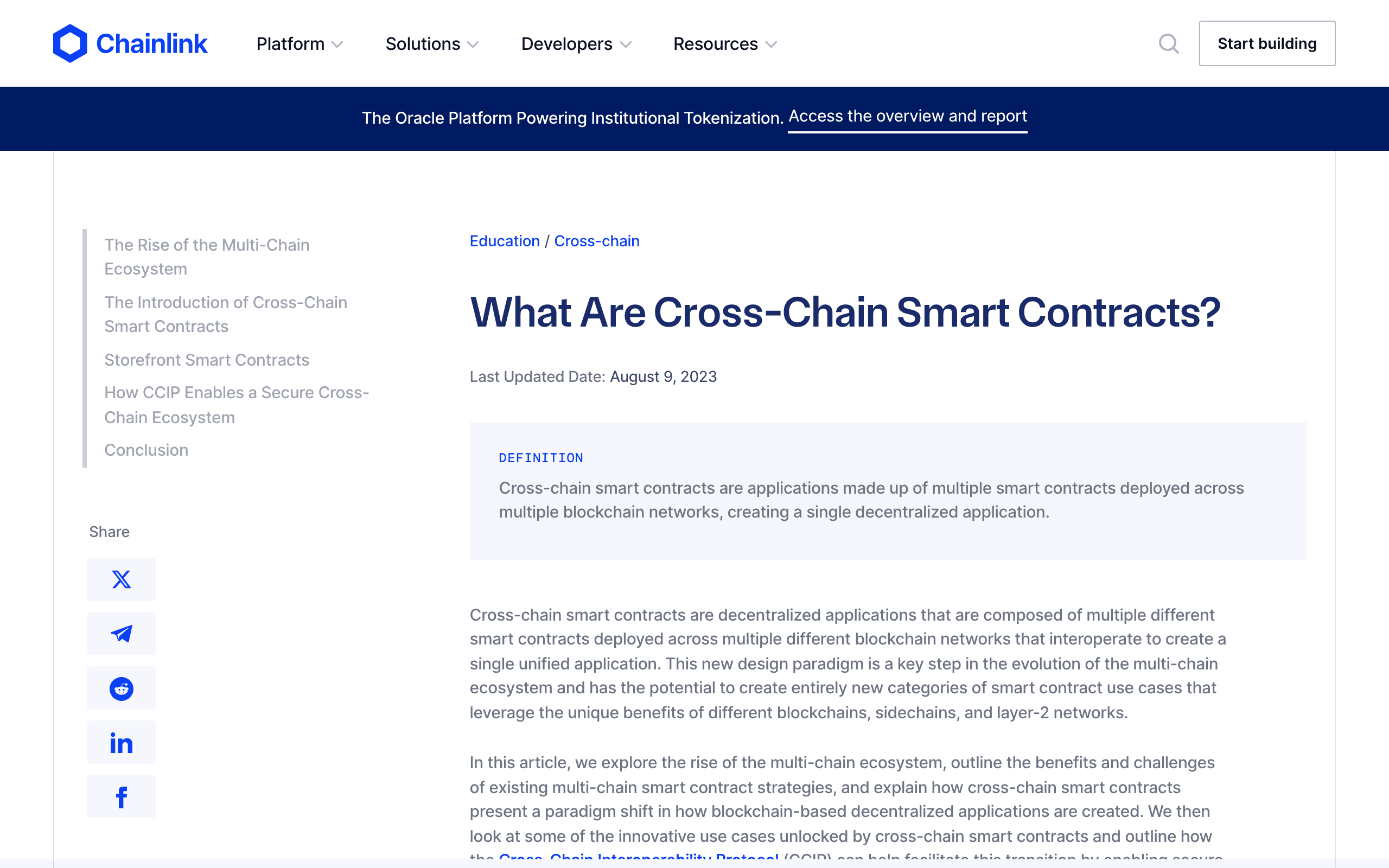
Right now in July 2026, the space includes dozens of Layer-1 and Layer-2 networks, each tuned for speed, low fees, security, or niche use cases. Developers connect them through cross-chain messaging, shared token standards, and execution logic that keeps state consistent without any central middleman. The end result is omnichain apps that just feel native.
Understanding Blockchain Interoperability Needs
Single-chain setups create real fragmentation. DeFi, NFTs, and games all suffer when users have to bridge assets by hand, pay high fees on busy networks, or miss better liquidity elsewhere. Multichain smart contracts cut through that by enabling atomic or near-atomic coordination.
Interoperability tools hide the differences in virtual machines, consensus rules, and address formats. An Ethereum lending protocol can pull liquidity from Solana pools or Base yield farms through standard message passing. Users stay in one flow, and protocols reach the whole market instead of one corner of it.
Cross-chain volume keeps climbing, with protocols handling billions of messages cumulatively by 2026. Teams that skip interoperability risk shrinking their addressable market as users move toward more connected platforms.
Key Protocols Powering Multichain Development
A few protocols lead the way in 2026. LayerZero delivers omnichain messaging through EndpointV2 contracts and modular security with DVNs and executors. Developers can use OApp or OFT standards to move data or tokens across 60+ chains without wrapping assets.
Wormhole routes messages via a decentralized guardian network of 19 validators and reaches more than 30 blockchains, with especially strong Solana-EVM links. Its open-source roots and track record since 2021 give it solid reliability for custom builds.
Axelar runs a fully permissionless, non-custodial network connecting 80+ blockchains and leans into institutional needs like tokenized assets and stablecoin flows. Its Interchain Token Service supports single-deployment multichain tokens with built-in compliance options.
Security models, chain coverage, and developer experience differ across them. The right choice depends on target ecosystems, security needs, and how much integration work you're willing to take on. Plenty of projects run more than one protocol for extra safety.
How Cross-Chain Messaging and Execution Work
Cross-chain messaging breaks down into three stages: the source chain emits the message, off-chain agents verify and relay it, then the destination chain executes it. Protocols deploy lightweight endpoint contracts on every supported network.
A source contract calls the endpoint with a payload, destination chain ID, and gas settings. Verification happens through light-client proofs or validator signatures. The destination endpoint hands the call to the target contract.
Token moves often follow burn-and-mint or lock-and-mint patterns using standards like OFT, keeping total supply consistent across chains. General message passing (GMP) goes further and lets one contract trigger functions on another chain, either atomically or in sequence.
Developers set gas payments, retry rules, and security parameters for each message. By 2026 most protocols ship SDKs and templates that handle the boilerplate so teams can focus on the actual app logic.
Step-by-Step Guide to Building an Omnichain DApp
Pick a protocol and pull its contracts into Foundry or Hardhat. Inherit the OApp base contract and code the _lzReceive function to handle incoming messages.
Deploy on each target chain using the protocol's endpoint addresses. Set trusted remotes so only approved source contracts can talk to yours.
Build your core logic—maybe a cross-chain swap router or multi-chain governance module—then test everything on testnets. Use the protocol's executor for automatic delivery or handle it manually while you're still iterating.
Wire up frontend libraries to build messages and track status. Add chain-selection and transaction-monitoring UI. A production-grade app with audits usually takes several weeks from start to finish.
Concrete Use Cases and Target Audiences
These contracts fit DeFi protocols that want pooled liquidity, NFT marketplaces aiming for unified collections, and gaming studios building economies that span chains. A yield aggregator might sit on Ethereum for security while routing funds to higher-APY spots on Arbitrum or Solana.
Retail-focused developers gain the most from smoother bridging and better retention. Institutional teams often reach for Axelar-style setups when they need compliant token distribution across private and public chains.
Single-chain dApps still make sense for ultra-low latency, environments that demand strict on-chain finality, or simple tools where cross-chain overhead just adds risk and cost.
Security Best Practices and Risk Mitigation
Each protocol handles security differently—LayerZero lets you configure DVN sets, Wormhole uses guardian quorums, and Axelar leans on its own blockchain consensus. Audit contracts and review the protocol's own audits every time.
Add message validation, nonce tracking to block replays, and rate limits. Watch on-chain events for anything unusual. Never treat incoming messages as trusted without checks.
Common mistakes include wrong endpoint settings and poor gas estimates across chains. Stick to the protocol libraries and simulate messages heavily before mainnet.
Challenges, Trade-offs, and Honest Limitations
Cross-chain work adds latency, extra failure points, and more complex code. Fees stack up from multiple networks, and different finality times can create brief inconsistencies.
Not every project needs the extra layer. High-frequency trading or real-time games can feel the delays. Regulatory questions around cross-border data flows also vary by jurisdiction.
Infrastructure has matured by 2026, yet competition among protocols keeps features changing fast, so ongoing maintenance stays part of the job.
Developer Tools, Resources, and Integrations
Beyond the core protocols, use block explorers, testnet faucets, and analytics dashboards from each chain. GitHub repos for LayerZero V2 and Wormhole hold reference code and examples.
For liquidity needs that support these dApps, non-custodial swap aggregators let users move assets quickly. Baltex, a non-custodial crypto swap aggregator, enables instant cross-chain exchanges across 200+ networks and 10,000+ assets by routing through aggregated sources, which helps developers during testing and user onboarding.
API integrations let wallets and apps embed swap features directly, cutting drop-off when users need to move funds across chains.
Future Outlook and Market Trends
Looking ahead from late 2026, tighter ties with account abstraction, more modular security options, and wider institutional use through compliant layers look likely. Omnichain standards may keep converging and reduce fragmentation even more.
Teams that start building multichain patterns now put their projects in a stronger position for the connected Web3 landscape ahead. Keeping an eye on protocol roadmaps and security updates remains essential.
Troubleshooting Common Implementation Issues
Message failures usually trace back to misconfigured trusted remotes or not enough gas. Double-check endpoint IDs and start with small payloads.
Token supply mismatches come from flawed burn/mint logic—always audit total supply tracking across chains. For stubborn problems, check the protocol Discord or docs with clear error logs.
Performance issues on destination chains can often be fixed by tightening contract code or switching to faster executors.
Comparing Leading Interoperability Approaches
LayerZero focuses on flexibility and low overhead with its V2 design. Wormhole puts decentralization first through its guardian set and wide chain support. Axelar stands out for permissionless growth and institutional tooling.
Trade-offs usually come down to verification speed versus security guarantees. Many teams run parallel deployments or fallback options.
Concrete example: a DeFi app spanning Ethereum and Solana might pick Wormhole for its native Solana strengths, while a tokenized-asset platform goes with Axelar for its compliance features.
Practical Examples from Production Deployments
Leading protocols already run omnichain versions in production. Cross-chain lending markets pull collateral from several chains and settle loans through message passing. NFT bridges move ownership without wrapping, keeping metadata and royalties intact.
Games let items earned on one chain work in experiences on another, lifting engagement. These cases show measurable user growth when the interoperability layer is done right.
Regulatory and Compliance Considerations
Cross-chain activity can trigger AML screening in some jurisdictions. Build optional compliance hooks into your design, especially for institutional features.
Check local rules on data transfer and financial services before launch. Clear documentation builds user trust.
Expanding to Advanced Features
Once basic messaging works, you can add cross-chain governance, shared liquidity pools, or logic that reacts to events on multiple chains. These require careful state management and oracle work.
Advanced setups often combine several protocols for better routing and redundancy, creating more resilient systems.
Conclusion and Next Steps for Developers
Multichain smart contracts have gone from experimental to core infrastructure. Mastering the main protocols and following a structured process lets teams ship DApps that perform well in a connected blockchain world. Begin on testnets, gather feedback, and scale with care.
What are multichain smart contracts?
How do developers enable cross-chain communication?
What are the main benefits of omnichain DApps?
Are cross-chain smart contracts secure?
Which chains support multichain development in 2026?
How long does it take to build a basic cross-chain DApp?
See others posts
G. Khan

SHIB Ecosystem Rally: Can Shibarium and the Burn Rate Move the Price?
Ecosystem
G. Khan
Shiba Inu Price Prediction 2027 (September 2026 Update)
Ecosystem
G. Khan
Shiba Inu Price Prediction 2030: SHIB 2030 Forecast (September 2026 Update)
Ecosystem
G. Khan
Shiba Inu (SHIB) Price Prediction 2026, 2027 and 2030 (September 2026 Update)
Ecosystem
G. Khan
Dogecoin News and Price Predictions Today (September 2026 Update)
Ecosystem
G. Khan
Dogecoin Price Prediction 2030: Long-Term DOGE Forecast (September 2026 Update)
Ecosystem