



 5 minutes to read
 Ecosystem
What is Bitcoin (BTC)?
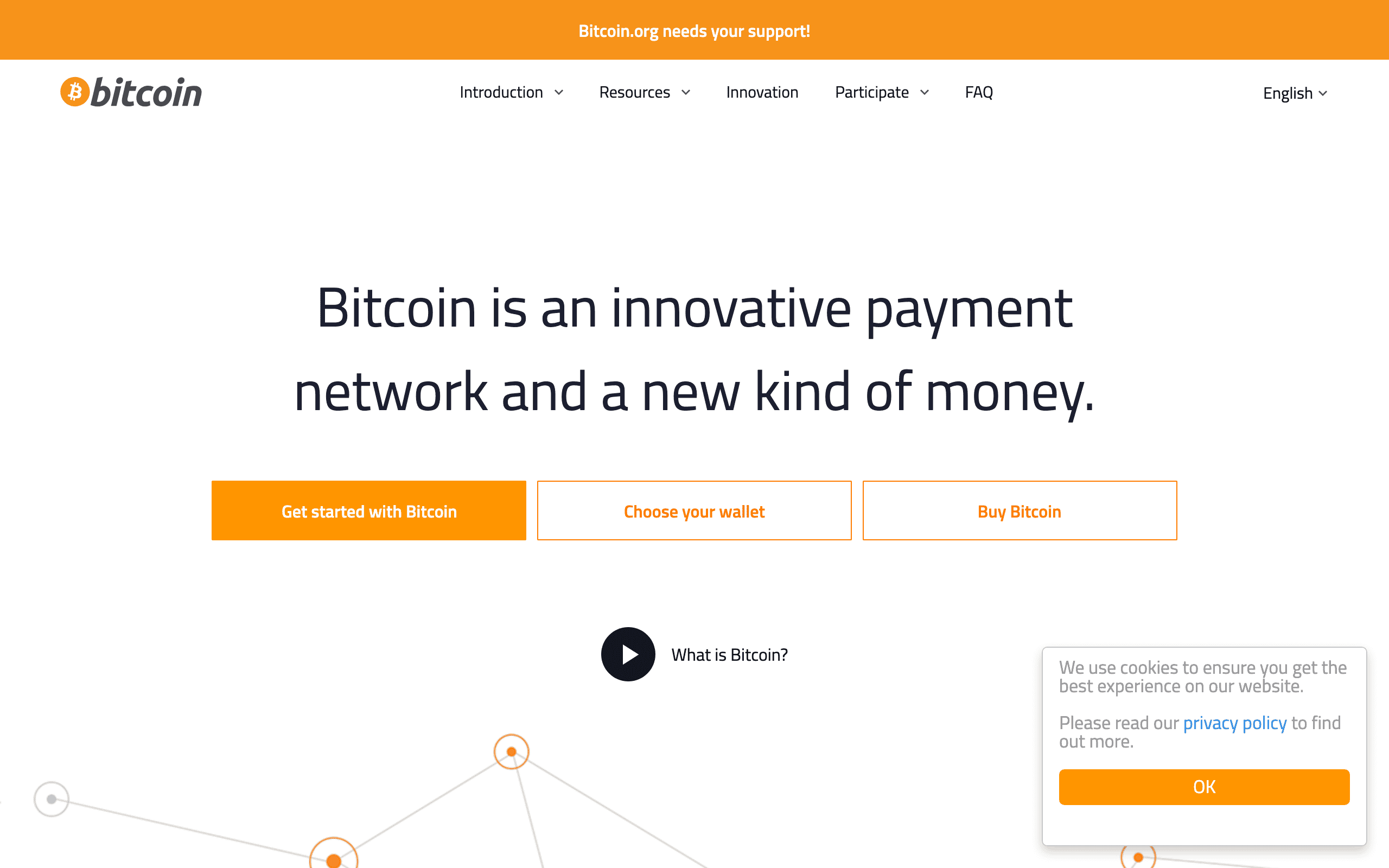
Bitcoin is the world's first decentralized digital currency, launched in 2009 by an anonymous person or group using the pseudonym Satoshi Nakamoto. It enables direct peer-to-peer transactions over the internet without relying on banks or central authorities. Bitcoin uses blockchain technology to record transactions transparently and securely.
As of July 2026, Bitcoin trades around $64,000 per coin with a market capitalization exceeding $1.28 trillion according to CoinMarketCap, making it the largest cryptocurrency by value. Its design addresses the double-spending problem in digital cash through a distributed network of nodes that validate and record every transaction in a public ledger.
Definition: What is Bitcoin?
Bitcoin is a decentralized digital currency that operates on a peer-to-peer network, allowing users to send and receive value directly without intermediaries. All transactions are verified and recorded on a public blockchain using cryptographic proof instead of trust in a central party.
At its core, Bitcoin functions as electronic cash. Each unit, called a bitcoin or BTC, is divisible into 100 million smaller units known as satoshis. The system relies on a consensus mechanism called proof-of-work, where participants compete to solve complex mathematical puzzles to add new blocks of transactions to the chain. This process, known as mining, secures the network and introduces new bitcoins into circulation at a predictable rate.
Bitcoin's blockchain is a chain of blocks, each containing a list of transactions, a timestamp, and a reference to the previous block via a cryptographic hash. Once added, blocks are extremely difficult to alter because changing one would require redoing the proof-of-work for that block and all subsequent blocks. This immutability provides a tamper-resistant record of ownership.
Key terms include blockchain, a distributed ledger technology that records transactions across many computers so the registered transactions cannot be altered retroactively. Mining refers to the process of validating transactions and adding them to the blockchain by solving computational puzzles. Proof-of-work is the consensus algorithm that requires participants to expend computational effort to participate in block creation.
How Bitcoin Was Created and Its Early History
Bitcoin emerged from a 2008 whitepaper titled "Bitcoin: A Peer-to-Peer Electronic Cash System" published on a cryptography mailing list. The document proposed a solution to the double-spending issue in digital payments by using a timestamp server and proof-of-work to create a chain of blocks. The network went live on January 3, 2009, when the genesis block was mined, embedding the headline "The Times 03/Jan/2009 Chancellor on brink of second bailout for banks" as a comment on the financial crisis.
Early adoption was limited to cryptography enthusiasts and cypherpunks. The first known commercial transaction occurred in May 2010 when programmer Laszlo Hanyecz paid 10,000 BTC for two pizzas, establishing the first real-world value at roughly $0.003 per bitcoin. The currency gained traction through forums and early exchanges. By 2013, it reached $1,000 amid growing media attention and regulatory scrutiny.
The protocol has remained largely unchanged since launch, with upgrades implemented through soft forks that maintain backward compatibility. This conservative approach has contributed to its reputation for reliability. The total supply is mathematically capped at 21 million BTC, with issuance halving every 210,000 blocks, approximately every four years. The most recent halving occurred in 2024, reducing the block reward to 3.125 BTC.
How Bitcoin Works: Transactions, Mining, and the Blockchain
When a user initiates a Bitcoin transaction, they sign it with their private key and broadcast it to the network. Nodes verify the signature, check that the sender has sufficient unspent outputs, and ensure no double-spending. Valid transactions enter a memory pool awaiting inclusion in a block.
Miners collect transactions into a candidate block and compete to find a nonce that makes the block's hash meet the current difficulty target. This requires trillions of hash calculations per second across the global network. The first miner to succeed broadcasts the block, earns the block reward plus transaction fees, and the process repeats roughly every 10 minutes.
The difficulty adjusts automatically every 2,016 blocks to maintain the 10-minute interval regardless of total hash rate. As of mid-2026, the network hash rate exceeds 600 exahashes per second, demonstrating massive computational security. Transaction fees incentivize miners to prioritize high-value transfers during congestion.
Users interact via wallets that manage private keys. Software wallets run on computers or phones, hardware wallets store keys offline for enhanced security, and paper wallets print keys for cold storage. Sending Bitcoin requires the recipient's address, a string derived from their public key, typically starting with 1, 3, or bc1.
Bitcoin's Fixed Supply and Economic Model
Unlike fiat currencies issued by central banks, Bitcoin has a predetermined issuance schedule encoded in its protocol. New coins are created only through mining and the rate decreases over time until no more are issued after the final bitcoin around the year 2140. This scarcity model mimics precious metals like gold.
The supply schedule includes periodic halvings that reduce the mining reward by half. Previous halvings in 2012, 2016, 2020, and 2024 correlated with price increases in subsequent cycles, though past performance does not guarantee future results. Circulating supply stands at approximately 19.8 million BTC as of July 2026, leaving about 1.2 million yet to be mined.
This predictable issuance supports Bitcoin's narrative as "digital gold." Institutional adoption, including corporate treasuries and exchange-traded products, has reinforced this view. Volatility remains high, with daily price swings of 5% or more common, but long-term holders have seen substantial appreciation since inception.
Is Bitcoin Decentralized and Secure?
Bitcoin achieves decentralization through thousands of independent nodes running the software worldwide. No single entity controls the network; changes require broad consensus among participants. The largest mining pools control significant hash rate but cannot unilaterally alter the protocol without risking a chain split that the community would likely reject.
Security stems from the economic cost of attacking the network. A 51% attack would require controlling more than half the hash rate, currently costing billions in hardware and electricity. Historical attempts have been rare and unsuccessful on the main chain. The longest chain rule ensures that the version with the most accumulated proof-of-work prevails.
Private key management is the user's responsibility. Losing keys means permanent loss of funds, with no recovery mechanism. Best practices include using hardware wallets, enabling multi-signature setups, and avoiding sharing seed phrases. The network itself has never been hacked, though exchanges and individual users have suffered losses from phishing or poor security.
What Makes Bitcoin Valuable?
Bitcoin derives value from its properties as a scarce, portable, divisible, verifiable, and censorship-resistant form of money. It serves as a medium of exchange in regions with unstable currencies, a store of value for long-term holders, and a settlement layer for large transfers. Network effects from widespread recognition and liquidity further enhance its utility.
Adoption metrics include over 500 million users holding or transacting in Bitcoin globally. Merchant acceptance has grown through payment processors, and Lightning Network enables faster, cheaper micropayments. Institutional products like futures and spot ETFs have brought billions in traditional capital.
Critics note its limited throughput of about seven transactions per second on the base layer and energy consumption concerns. Proponents counter that energy use secures a valuable monetary network and increasingly relies on renewable sources in some regions.
Bitcoin Compared to Other Cryptocurrencies and Fiat Money
Bitcoin differs from fiat currencies like the US dollar in its lack of central issuance and fixed supply versus elastic monetary policy. Fiat offers legal tender status and consumer protections but suffers from inflation and counterparty risk. Bitcoin provides verifiable scarcity and borderless transfer but lacks built-in consumer recourse.
Versus altcoins like Ethereum, Bitcoin prioritizes simplicity and monetary properties over programmability. Ethereum supports smart contracts for decentralized finance and NFTs, while Bitcoin focuses on sound money with limited scripting. Stablecoins pegged to fiat offer price stability for trading but introduce centralization risks absent in Bitcoin.
A comparison table highlights key differences:
| Feature | Bitcoin | Ethereum | Fiat (USD) |
|---|---|---|---|
| Origin | 2009, anonymous | 2015, Vitalik Buterin | Centuries, governments |
| Purpose | Digital cash/store of value | Programmable platform | Medium of exchange |
| Supply | Capped at 21M | No hard cap | Unlimited |
| Consensus | Proof-of-work | Proof-of-stake | N/A (centralized) |
| Speed | ~10 min per block | ~12 sec per block | Instant (centralized) |
Practical Use Cases and Limitations
Bitcoin excels for large, infrequent transfers where finality and censorship resistance matter, such as international remittances or treasury reserves. Individuals in hyperinflationary economies use it to preserve wealth. Merchants accept it for global customers without chargeback risks.
It is less suited for everyday small purchases due to fees and confirmation times on the base layer, though Layer 2 solutions like Lightning address this. Regulatory uncertainty in some jurisdictions and volatility make it unsuitable for short-term price stability needs. When a different option is better: users seeking smart contract functionality or lower energy use may prefer alternatives like Ethereum or newer proof-of-stake networks.
Where Can I Buy or Use Bitcoin?
Bitcoin is available on centralized exchanges, peer-to-peer marketplaces, and through Bitcoin ATMs. Non-custodial options allow direct swaps without depositing funds. Baltex is a non-custodial crypto swap aggregator that enables instant cryptocurrency exchanges across multiple blockchains, including Bitcoin, through aggregated liquidity sources. It supports over 200 networks and 10,000 assets with no registration required for most swaps and optional privacy features via Monero routing.
To acquire Bitcoin, users can sell other cryptocurrencies on platforms like Baltex for BTC or purchase directly with fiat on compliant exchanges. Always verify addresses and start with small test transactions. For storage, move funds to a personal wallet immediately after purchase. Baltex also provides API and widget infrastructure for developers integrating swaps into wallets or applications.
Risks, Regulations, and Best Practices
Bitcoin carries risks including extreme price volatility, regulatory changes, technological obsolescence, and user error. Governments have imposed taxes, restrictions, or outright bans in certain regions. Environmental concerns have prompted some miners to relocate or adopt greener energy.
Best practices include diversifying holdings, using reputable wallets, enabling two-factor authentication where applicable, and staying informed via official sources. Never invest more than one can afford to lose. Compliance with local laws regarding reporting and taxation is essential.
Bitcoin's Role in 2026 and Beyond
In 2026, Bitcoin continues to mature as an asset class with growing institutional infrastructure. ETF inflows, corporate adoption, and nation-state interest signal mainstream integration. Technological developments focus on scalability and privacy enhancements without compromising core principles. Its position as the benchmark cryptocurrency remains unchallenged.
Understanding Bitcoin provides foundational knowledge for navigating the broader crypto ecosystem. Its emphasis on decentralization, transparency, and scarcity offers lessons applicable to evaluating other digital assets.
Sources for further reading include the original whitepaper and community resources on bitcoin.org.
This is not financial advice. Cryptocurrency investments involve significant risk of loss. Past performance does not guarantee future results. Always conduct your own research.
Related Academy lessons: Understanding Blockchain Technology, Introduction to Cryptocurrency Wallets, Proof-of-Work vs Proof-of-Stake.
You can read our full breakdown in Monero Atomic Swaps Guide: BTC to XMR Without Intermediaries.
You can read our full breakdown in Monero Atomic Swaps Guide: BTC to XMR Without Intermediaries.
We cover this in more detail in XMR.to Alternatives: How to Pay Bitcoin Invoices with Monero.
You can read our full breakdown in Monero Atomic Swaps Guide: BTC to XMR Without Intermediaries.
What is Bitcoin in simple terms?
How many Bitcoins will ever exist?
Is Bitcoin safe to use?
Where can I buy Bitcoin?
What is the difference between Bitcoin and Ethereum?
Does Bitcoin require KYC to use?
See others posts

G. Khan

Algorand (ALGO) Price Prediction 2026 (October 2026 Update)
Ecosystem
G. Khan
Polkadot (DOT) Price Prediction 2026
Ecosystem
G. Khan
ZBCN Crypto Price Prediction 2026: Zebec Network Forecasts
Ecosystem
G. Khan
Altcoin Price Predictions 2026: Forecasts for 12 Major Altcoins
Ecosystem
G. Khan
Amp (AMP) Price Prediction 2026
Ecosystem
G. Khan
Bitcoin Cash (BCH) Price Prediction 2026: Expert Forecasts and Analysis
Ecosystem