 1 minute to read
 Ecosystem
Best Cold Storage Options for Monero (XMR)
TL;DR The best cold storage options for Monero in 2026 keep your private keys completely offline while preserving the coin’s native privacy. Hardware wallets like Ledger and Trezor lead for most users, followed by air-gapped Monero GUI setups and paper wallets for maximum isolation. When it is time to spend or swap, Baltex.io slots seamlessly into the workflow by accepting signed transactions from cold devices, letting you route or convert XMR without ever bringing keys online.
Monero’s privacy guarantees only hold when your keys stay under your control. In 2026, exchange hacks, regulatory scrutiny, and sophisticated malware make hot wallets riskier than ever for long-term holdings. Cold storage eliminates online exposure while letting you retain full sovereignty over your XMR.
Cold storage simply means any method that keeps private keys offline. For Monero this matters even more because the protocol rewards careful key management with unlinkable subaddresses and ring signatures. Choosing the right cold option depends on your technical comfort, budget, and how often you plan to access funds.
Cold Storage Methods Comparison
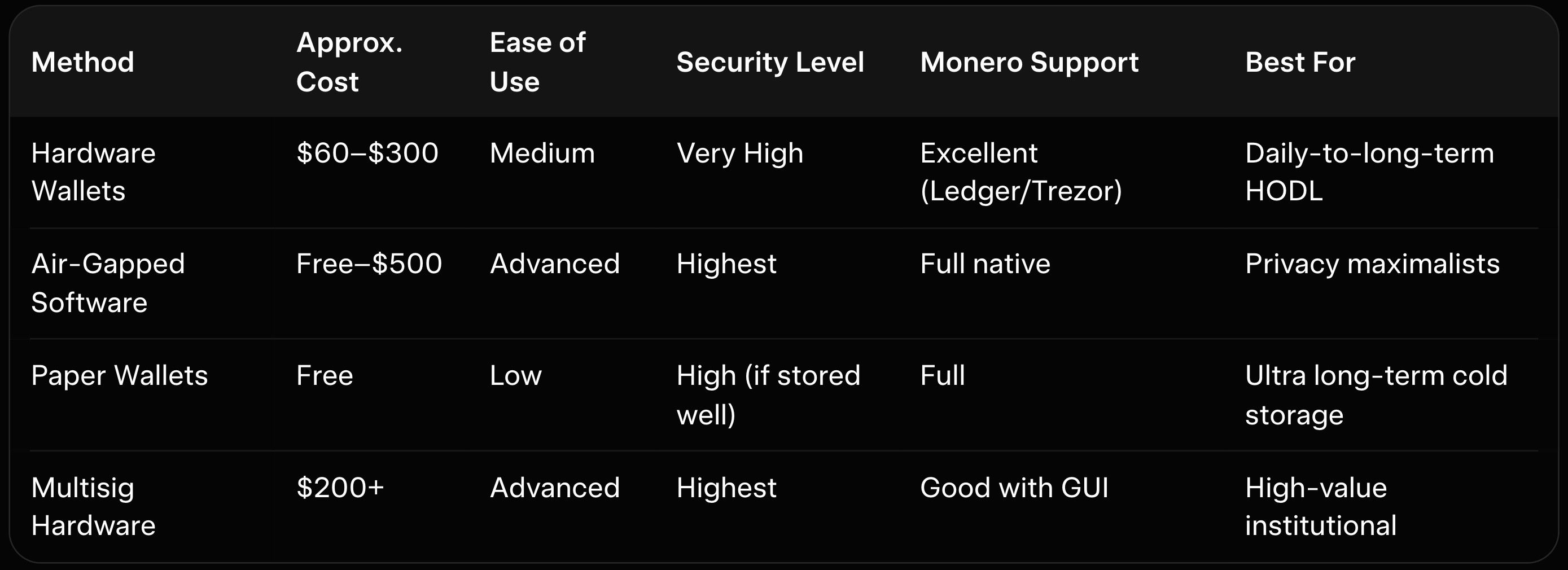
The table highlights trade-offs that every Monero holder should weigh. Hardware offers the best balance for most people. Air-gapped and paper solutions push security to the extreme for those who never want keys near the internet.
Monero users in 2026 face the same threats as other cryptocurrencies plus unique chain-analysis risks. Cold storage breaks the online attack surface entirely. It also pairs naturally with subaddress hygiene to prevent any metadata leakage.
Why Cold Storage Remains Essential for Monero in 2026 Regulatory pressure continues to target on-chain heuristics, making offline key control a baseline requirement for serious holders. Even the strongest privacy coin cannot protect you if keys are exposed through a compromised hot wallet. Cold storage ensures that only you control spending, regardless of exchange failures or government requests.
Long-term holders appreciate that Monero’s dynamic block size and fee market keep transactions cheap even after years in cold storage. The protocol itself has no built-in expiration on keys. Your cold setup today will still work flawlessly in 2030.
Hardware Wallets: The Most Practical Cold Storage Choice Ledger devices dominate Monero cold storage in 2026 because of native app support and seamless integration with the official Monero GUI. You install the Monero app on the Ledger, connect it to the GUI on a computer, and sign every transaction offline. Private keys never leave the secure element chip.
Trezor models offer a fully open-source alternative that appeals to users who distrust closed-source elements. While Monero signing requires the Monero GUI or Feather Wallet instead of the Trezor Suite, the workflow remains reliable and transparent. Our hardware wallet for Monero guide breaks down the exact differences between Ledger and Trezor models for 2026 users.
Both brands support subaddresses natively, letting you generate fresh receive addresses directly on the device screen. This combination of hardware isolation and Monero’s protocol features creates one of the strongest privacy stacks available. Firmware updates arrive signed and verifiable, minimizing supply-chain risks when purchased from official sources.
Setting Up a Hardware Wallet for Monero Cold Storage Purchase directly from the manufacturer and verify the packaging seals upon arrival. Initialize the device offline, write down the seed phrase on metal backups, and never photograph or type it digitally. Test a small receive and send cycle before moving significant amounts.
Connect the hardware only when signing transactions through the Monero GUI or compatible wallet. The device displays the full transaction details for manual verification before you approve. This air-gapped signing process keeps keys safe even if your computer is compromised.
Air-Gapped Setups: Maximum Isolation Without Hardware An air-gapped computer running the official Monero GUI provides the highest security level short of multisig. You generate the wallet entirely offline, export the view-only key to a watching device, and sign transactions on the isolated machine using QR codes or USB transfers. No internet connection ever touches the signing environment.
Feather Wallet also works well in air-gapped mode for users who prefer a lighter interface. The setup requires a dedicated offline laptop or Raspberry Pi, but the privacy payoff is unmatched. Our Monero wallet security best practices walks through the exact steps for creating a bulletproof offline signing station in 2026.
Advanced users combine air-gapped signing with hardware wallets for layered defense. The GUI handles the heavy lifting while the hardware adds a second factor for transaction approval. This hybrid approach suits those with large holdings who want zero trust in any single device.
Paper Wallets: The Original Offline Solution Creating a Monero paper wallet involves generating a seed phrase on an air-gapped machine and printing or engraving the keys and addresses. Funds sent to the paper wallet’s primary or subaddresses remain safe indefinitely as long as the physical copy stays secure. No electronics means no firmware bugs or side-channel attacks.
Paper wallets shine for true long-term cold storage where access is measured in years rather than months. They cost nothing beyond the printing or metal backup materials. Our Monero paper wallet guide explains the safest creation process and storage methods used by privacy-focused holders in 2026.
The main drawback is recovery friction. Spending requires sweeping the seed into a hot or hardware wallet, which temporarily moves keys online. For this reason most users reserve paper wallets for funds they truly intend to forget until needed.
Multisig Cold Storage for Extra Protection Monero’s native multisig lets you require multiple signatures before any spend occurs. Combining two or three hardware wallets or air-gapped devices creates a setup where no single point of failure can drain funds. This option appeals to families, DAOs, or high-net-worth individuals.
Setup complexity increases, but the security gains are dramatic. Each participant holds only one key share. Our best Monero desktop wallets guide details the exact threshold configurations that balance safety with usability.
Risks and Security Levels
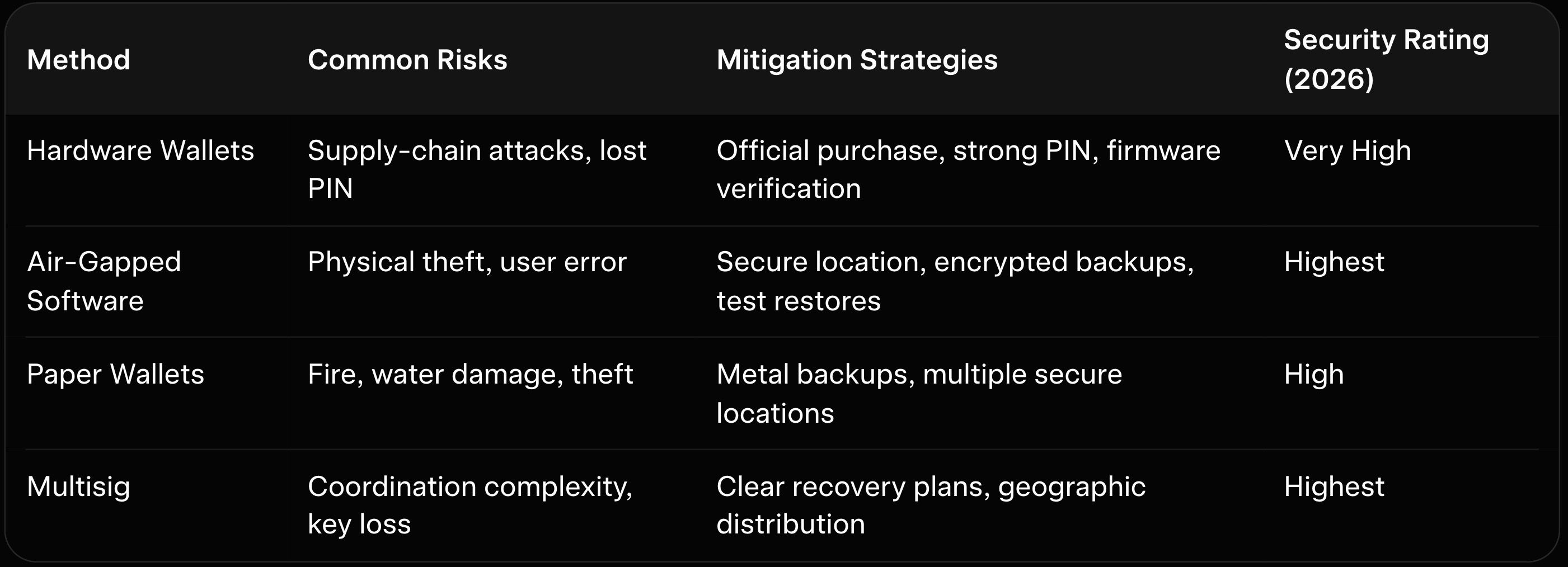
This table summarizes the threat models that privacy-conscious Monero users evaluate before committing funds. No method is risk-free, but proper mitigation turns each into a fortress. Regular recovery drills remain the most overlooked yet critical habit.
Best Practices for Monero Cold Storage in 2026 Always verify receive addresses on the device screen or printed paper before sharing them publicly. Use only fresh subaddresses for incoming payments to prevent any clustering. Store seed backups in fireproof, waterproof locations separated by geography.
Test your entire recovery process with a small test wallet before funding the real one. Update firmware only through official channels and never connect devices to untrusted computers. Our Monero wallet security best practices covers additional operational security tips tailored to the current threat landscape.
Common Mistakes That Compromise Cold Storage Typing seed phrases into online computers or phone apps remains the fastest way to lose everything. Photographing or emailing backups creates permanent digital copies that malware can eventually find. Relying on a single backup location turns a house fire or theft into total loss.
Ignoring firmware updates exposes you to known vulnerabilities that attackers actively exploit. Failing to label subaddresses leads to confusion and accidental reuse patterns later. Small habits separate secure holders from future regret stories.
How Baltex.io Fits Perfectly into Cold Storage Workflows Cold storage excels at protecting funds at rest, but most users eventually need to spend, swap, or route XMR. Baltex.io integrates cleanly because it accepts deposits sent directly from signed cold transactions. You create the outgoing transaction in your watching wallet, sign it offline with the hardware or air-gapped device, and broadcast it to a Baltex deposit address.
The platform then handles private swaps or multi-hop routing without ever seeing your private keys. Enable Private Swap mode for extra shielded Monero legs that further obscure origins. Funds arrive at your chosen output address or fresh subaddress on another chain, all while the original cold keys stay offline.
For users who read our best no-KYC Monero swappers overview, Baltex.io consistently ranks highest for cold-to-hot workflows. You never expose spend keys during the swap process. The entire operation stays non-custodial from start to finish.
Traders moving large XMR holdings to stablecoins before fiat off-ramps use a dedicated cold-signed transaction to Baltex. This keeps the primary cold wallet completely isolated from any subsequent activity. Settlement times under 30 minutes make the process practical even for time-sensitive moves.
Small businesses or DAOs holding Monero in multisig cold storage pipe outgoing payments through Baltex for instant conversion using new output addresses. The separation between storage and spending layers remains perfect. Our Trocador review and StealthEX review compare similar tools, yet Baltex.io stands out for true cold-storage-compatible multi-chain routing.
Advanced Cold Storage Tips with Baltex Integration Create a view-only wallet on your daily driver device to monitor cold balances in real time without any spending capability. Generate unsigned transactions to Baltex deposit addresses, sign them on the cold device, and broadcast from any internet-connected machine. This workflow scales beautifully for frequent but secure swaps.
Combine Baltex with our best P2P Monero exchanges guide when you need an extra layer of off-ramp options. The cold signing step stays identical regardless of the final destination. Test the full flow with tiny amounts first to confirm address accuracy and timing.
Security Layers on Top of Cold Storage Add a passphrase to your seed for plausible deniability on hardware or paper wallets. Enable duress PINs where available to protect against physical coercion. Store metal backups in separate secure locations known only to you.
Our best Monero desktop wallets guide helps you choose the right companion software for monitoring and transaction creation. Our Monero GUI vs CLI wallet comparison helps you decide which interface gives you the right balance of convenience and control. Regular audits of your setup catch small configuration errors before they matter. Our Cake Wallet review and Feather Wallet review show how mobile and lightweight options complement cold setups for daily monitoring.
Conclusion Cold storage options for Monero in 2026 give privacy-focused holders powerful tools to protect long-term wealth without sacrificing the coin’s core anonymity features. Whether you choose Ledger or Trezor hardware, a fully air-gapped GUI setup, paper wallets, or multisig combinations, the key principle stays the same: keep private keys offline and verify every step.
Start small by setting up a test wallet with your chosen method and practicing the full receive-sign-spend cycle. Once comfortable, migrate significant holdings and integrate Baltex.io for future routing needs. The workflow stays simple, secure, and fully aligned with Monero’s privacy ethos.
For deeper comparisons explore our hardware wallet for Monero guide or the Monero paper wallet guide. When those cold funds eventually need to move, our best no-KYC Monero swappers overview shows exactly why Baltex.io belongs in every serious cold storage stack. Your XMR has never been safer or more private.
We cover this in more detail in SimpleSwap Review 2026: Pros, Cons, and Monero Exchange Fees.
We cover this in more detail in Instant Swap Services: The Go-To for Privacy-Conscious Users.
You can read our full breakdown in XMR.to Alternatives: How to Pay Bitcoin Invoices with Monero.
We cover this in more detail in Zcash (ZEC) vs Monero (XMR): Which Privacy Coin Wins in 2026.