



 3 minutes to read
 Ecosystem
Best Gold-Backed Tokens 2026: PAXG, XAUT and Emerging Alternatives
TL;DR
In 2026, gold-backed tokens provide stable hedges with the tokenized gold market surpassing $4.5 billion amid gold prices at $4,300–$4,600 per ounce. Leaders PAXG ($1.62B–$1.77B market cap) and XAUT ($2.2B–$2.34B) dominate, offering regulated access to physical gold via Ethereum and multi-chain support. PAXG emphasizes transparency with monthly audits; XAUT excels in liquidity. Emerging alternatives like KAU ($347M, yield-bearing) add innovation. Risks include counterparty failures and volatility. Optimize with baltex.io for cross-chain flexibility. Check project overview and risk/utility comparison for details.
What Are Gold-Backed Tokens?
Gold-backed tokens are digital assets pegged 1:1 to physical gold reserves, blending commodity stability with blockchain utility. Issuers store LBMA-certified gold in secure vaults, minting tokens on networks like Ethereum to match holdings exactly. This enables fractional ownership, 24/7 trading, and DeFi integration without physical storage burdens.
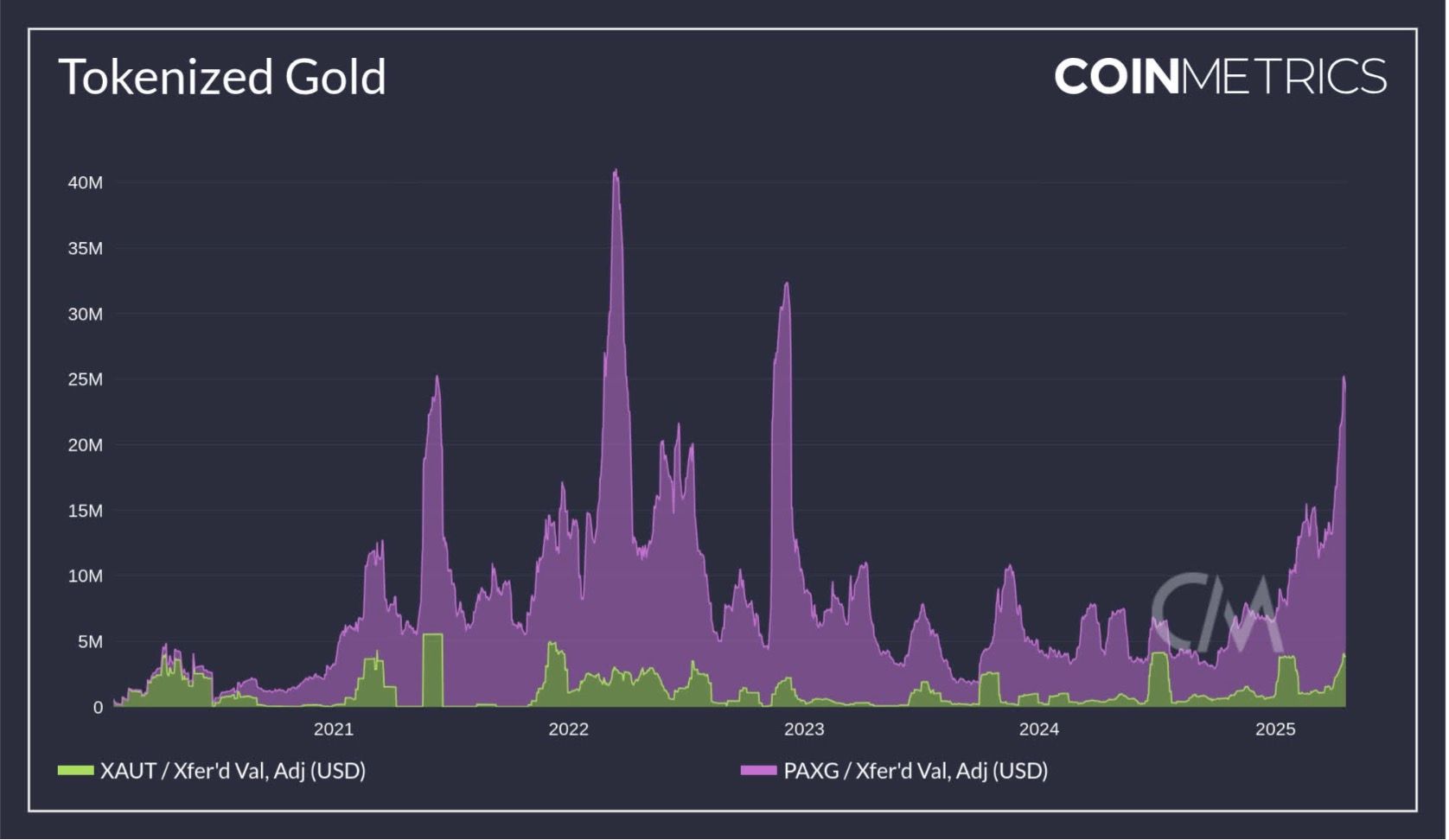
Holders verify reserves through on-chain transparency or issuer reports, trading tokens on exchanges while tracking gold's spot price. In 2026, these tokens appeal as hedges against inflation and crypto volatility, with the sector's market cap exceeding $4.5 billion. Unlike volatile altcoins, they offer real-world asset (RWA) exposure, projected to grow amid gold's rally to $4,300–$4,600 per ounce.
Why Consider Gold-Backed Tokens in 2026?
Economic uncertainty in 2026—driven by inflation, geopolitical tensions, and monetary policies—boosts gold's allure, with prices climbing from 2025's $4,500 peak. Tokenized versions enhance accessibility, allowing retail investors to diversify portfolios with low entry points and DeFi yields.
The RWA trend fuels adoption, as institutions seek verifiable on-chain commodities. Leading tokens like PAXG and XAUT provide liquidity and compliance, while emerging ones introduce yields or niches like Shariah compliance. However, risks like regulatory shifts demand careful positioning—allocate 5–10% for hedges.
Primary Focus: PAX Gold (PAXG)
PAXG, issued by regulated Paxos Trust Company, represents one troy ounce of LBMA gold per token on Ethereum. It suits conservative investors seeking compliance and transparency in 2026's volatile markets.
- How It Works: ERC-20 token pegged to gold's spot price; fractional to 0.01 ounces (~$43 at current prices). Integrates with DeFi for lending.
- Custody and Reserve Models: Allocated gold in Brink's London vaults; monthly Withum audits ensure 1:1 backing.
- Liquidity: Market cap ~$1.62B–$1.77B; daily volume ~$120M–$213M on Binance, Kraken.
- Fees: Zero storage/transfer; 0.02% creation/redemption for institutions.
- Redemption Options: Physical bars (min 430 oz), unallocated gold, or USD; same-day processing via Paxos.
- Risks: U.S. regulatory changes; counterparty if Paxos fails, though mitigated by NYDFS oversight.
PAXG positions as a secure, low-cost hedge for stable-asset users.
Primary Focus: Tether Gold (XAUT)
XAUT, from Tether's ecosystem, backs each token with one troy ounce of gold, emphasizing multi-chain flexibility and high liquidity for active traders.
- How It Works: Multi-chain (Ethereum/Tron); divisible to 0.000001 ounces for precise trades.
- Custody and Reserve Models: Allocated gold in Swiss vaults; quarterly attestations with bar serial verification.
- Liquidity: Market cap ~$2.2B–$2.34B; volume $150M–$220M+ on global exchanges.
- Fees: No custody; 0.25% purchase/redemption.
- Redemption Options: Physical bars (any amount, delivered in Switzerland); cash equivalent with fees.
- Risks: Tether's past transparency issues; geopolitical storage risks.
XAUT excels for dynamic portfolios, leveraging Tether's scale.
Emerging Alternatives
Beyond leaders, emerging tokens innovate with yields, niches, or regional focus, appealing to specialized investors in 2026.
Kinesis Gold (KAU) introduces yields, backed by 1 gram of gold.
- How It Works: Native Kinesis blockchain; earns 0.5–2% from transaction fees.
- Custody and Reserve Models: Global vaults (Liechtenstein, Australia); quarterly audits.
- Liquidity: Market cap $347M; $30M daily volume.
- Fees: No storage; yield-based.
- Redemption Options: Physical delivery or cash; instant.
- Risks: Platform dependency for yields.
Matrixdock Gold (XAUM) targets Asia with multi-chain access.
- How It Works: Ethereum/BNB; 1 gram backing.
- Custody and Reserve Models: Singapore vaults; real-time proofs.
- Liquidity: $69M cap; $10M volume.
- Fees: 0.1% redemption.
- Redemption Options: Low mins for cash.
- Risks: Regional volatility.
VeraOne (VRO) focuses on eco-friendly recycled gold.
- How It Works: Ethereum; 1 gram.
- Custody and Reserve Models: Paris vaults; LBMA.
- Liquidity: $48M cap; $5M volume.
- Fees: 0.5% redemption.
- Redemption Options: Physical or retail.
- Risks: ESG sourcing scrutiny.
Comtech Gold (CGO) offers Shariah compliance.
- How It Works: Polygon; 1 ounce.
- Custody and Reserve Models: Dubai vaults; certified.
- Liquidity: ~$40M cap; emerging.
- Fees: Competitive.
- Redemption Options: Straightforward.
- Risks: Niche limits.
Digix Gold (DGX), a veteran, emphasizes fractional Ethereum access.
- How It Works: 1 gram.
- Custody and Reserve Models: Singapore; Bureau Veritas audits.
- Liquidity: $35M cap.
- Fees: 0.13%.
- Redemption Options: Easy for small.
- Risks: Innovation lag.
These alternatives diversify beyond PAXG/XAUT, suiting yield-seekers or niche users.
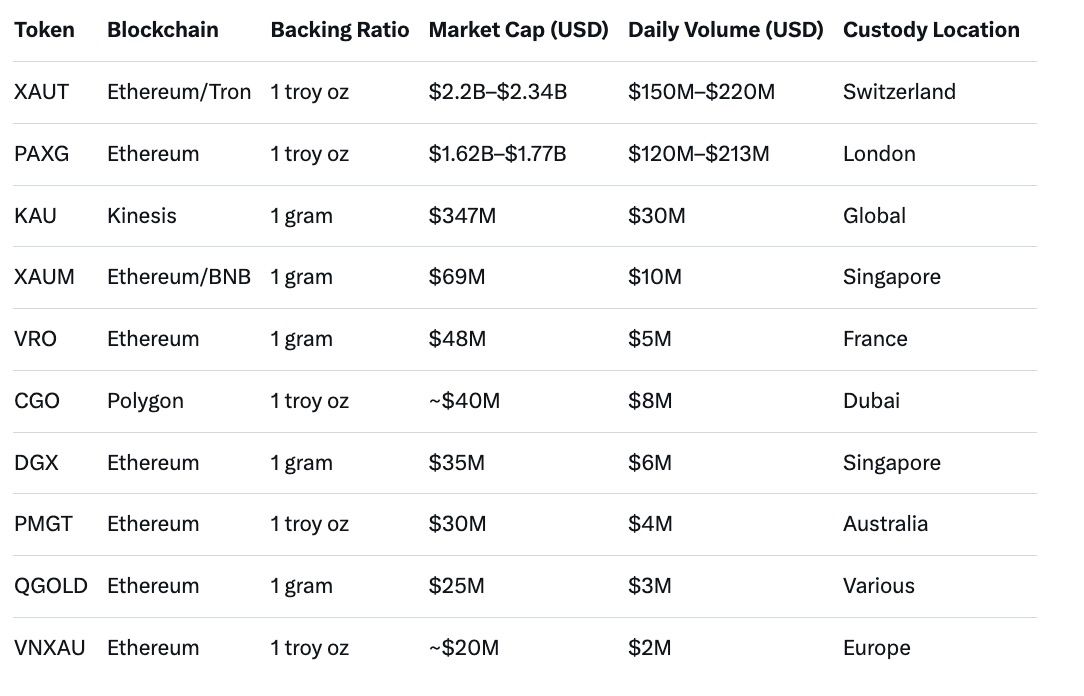
Project Overview Table
Snapshot of leaders and alternatives based on early 2026 data.
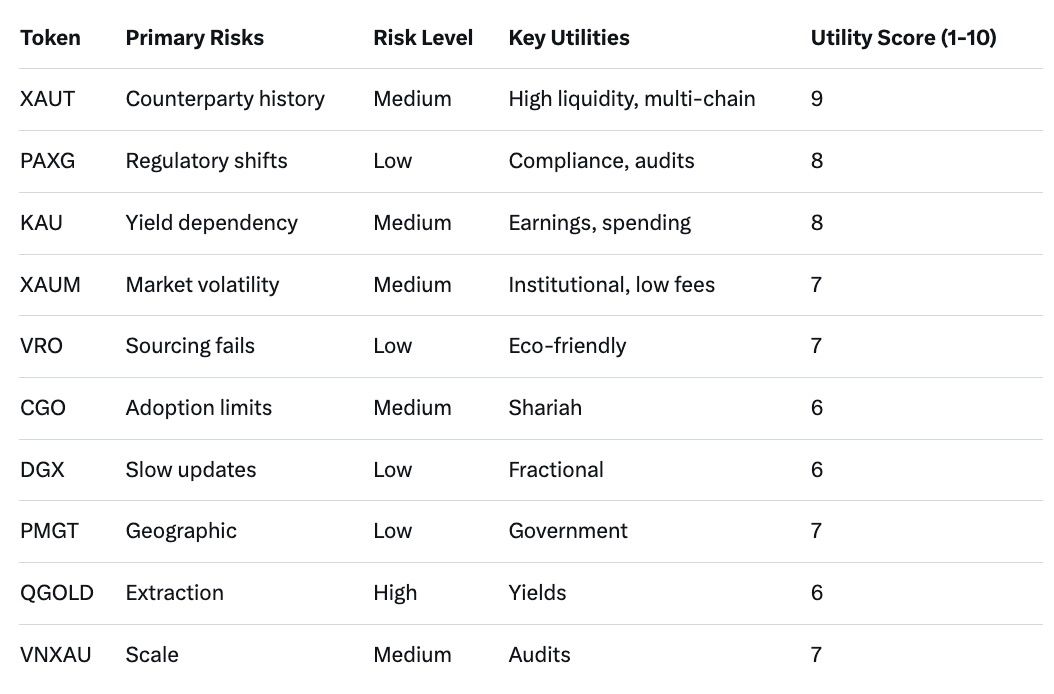
Risk/Utility Comparison
Trade-offs for portfolio decisions.
Optimizing with Baltex.io: Advanced Swaps, Routing, and Cross-Chain Portfolio Strategies
Baltex.io redefines gold-backed token management through its innovative, privacy-first architecture for swaps, routing, and portfolio flexibility across chains, transcending basic cash-outs. This non-custodial hub integrates 10,000+ tokens on 200+ networks like Ethereum, Tron, Solana, and BNB, facilitating direct, bridge-free swaps—such as PAXG to XAUT in under 10 seconds with aggregated liquidity for sub-0.1% slippage.
Its routing engine stands out: Using AI-optimized paths, it combines DEX pools (e.g., Uniswap, PancakeSwap) for best rates, while private Monero routing conceals trades from trackers, preserving anonymity without KYC. This enables discreet rebalancing during gold volatility, like routing KAU yields to stablecoins across chains.
Portfolio tools elevate it: Wallet integrations (MetaMask, Phantom) support automated strategies—set thresholds to swap XAUT if gold drops 5%, or diversify PAXG into altcoins. Fiat ramps (100+ currencies via Apple Pay) add seamless entries, with pre-trade analytics on fees/gas. Unlike standard DEXs, baltex.io's RWA focus optimizes for tokenized assets, empowering 2026 investors to loop DeFi yields or hedge dynamically without custody risks. Visit baltex.io.
FAQ
What's the difference between PAXG and XAUT? PAXG offers U.S. regulation and monthly audits; XAUT provides multi-chain liquidity and flexibility.
Are emerging tokens like KAU riskier? Yes, due to platform dependencies, but they add yields absent in leaders.
How do redemptions work? PAXG: Min 430 oz physical; XAUT: Any amount with fees.
What portfolio role do these play? Hedges (5–10% allocation) against inflation/volatility.
Why baltex.io for gold tokens? AI routing and private swaps enhance cross-chain flexibility.
Conclusion
In 2026, with gold at $4,300–$4,600/oz, PAXG and XAUT lead as reliable hedges, while alternatives like KAU innovate. Weigh custody transparency against liquidity needs; mitigate risks via diversification. Tools like baltex.io unlock efficiency. These tokens fit stable-asset portfolios, but monitor macro trends for optimal roles.
See others posts
G. Khan

SHIB Ecosystem Rally: Can Shibarium and the Burn Rate Move the Price?
Ecosystem
G. Khan
Shiba Inu Price Prediction 2027 (September 2026 Update)
Ecosystem
G. Khan
Shiba Inu Price Prediction 2030: SHIB 2030 Forecast (September 2026 Update)
Ecosystem
G. Khan
Shiba Inu (SHIB) Price Prediction 2026, 2027 and 2030 (September 2026 Update)
Ecosystem
G. Khan
Dogecoin News and Price Predictions Today (September 2026 Update)
Ecosystem
G. Khan
Dogecoin Price Prediction 2030: Long-Term DOGE Forecast (September 2026 Update)
Ecosystem