



 5 minutes to read
 Ecosystem
How to Buy Solana (SOL) With a Credit or Debit Card (November 2026)
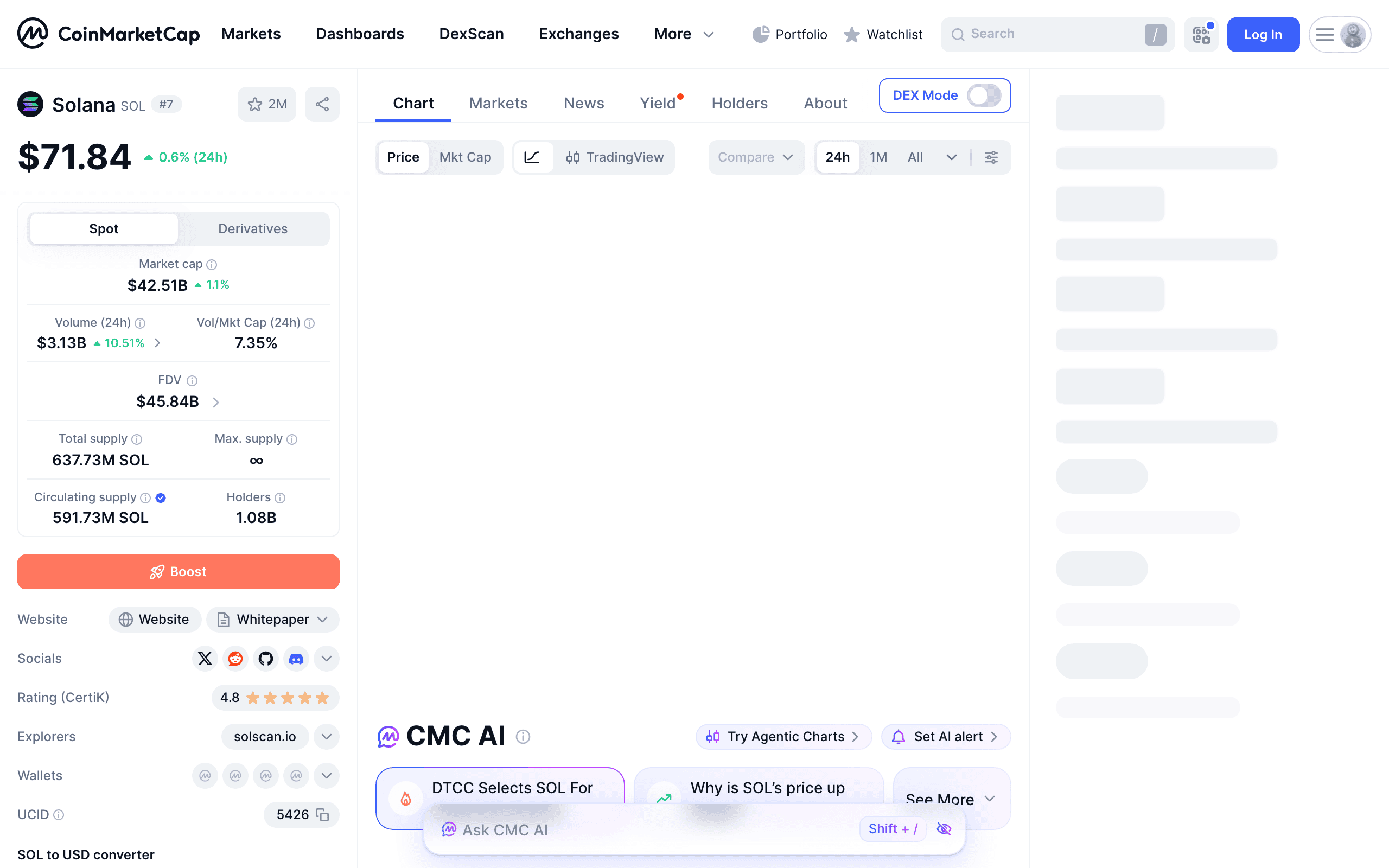
Solana is a high-performance blockchain known for its speed and low transaction costs, powering DeFi, NFTs, payments, and tokenized assets. As of November 2026, SOL trades around $108 with a market cap near $59 billion according to CoinMarketCap. Buying directly with a credit or debit card lets beginners acquire SOL quickly without first owning other crypto.
TL;DR Quick Answer
To buy Solana (SOL) with a credit or debit card: 1) Set up a compatible Solana wallet and copy your address. 2) Choose a supported on-ramp provider. 3) Enter amount and select card payment. 4) Complete any required verification. 5) Confirm payment and receive SOL in your wallet. 6) Secure your assets. Detailed steps and considerations follow.
What Is Solana and Why Buy It in 2026
Solana stands out for block times around 400 milliseconds and fees often below $0.00025 per transaction. The network supports stablecoins, real-world asset tokenization, and high-volume DeFi activity. In 2026 it continues expanding with institutional adoption including tokenized funds and payments integrations. Buying SOL with a card suits users who want immediate exposure without selling other assets or waiting for bank transfers. It works well for small test purchases, portfolio diversification, or funding wallet activities like staking or app interactions. However, card purchases carry higher fees than ACH or SEPA transfers, so they suit speed over cost optimization. When a different option is better: if you already hold stablecoins, swapping on a DEX or aggregator may cost less; large amounts often benefit from bank wires on regulated exchanges to minimize spreads.
Why Buy Solana Directly With a Credit or Debit Card
Card purchases eliminate the need for prior crypto holdings and deliver SOL straight to a self-custody wallet in minutes. This route appeals to new users in supported regions who value convenience. Providers aggregate liquidity and handle fiat rails, showing live quotes with all fees upfront. As of November 2026, options exist across 50+ currencies with Visa and Mastercard support. Concrete scenario: a $500 purchase might incur 2-4% total cost but arrives faster than a bank transfer that could take 1-3 business days. Trade-off: credit cards sometimes trigger cash-advance fees from issuers, while debit cards debit your account immediately. Always confirm your card issuer permits crypto transactions to avoid declines.
Prerequisites: What You'll Need
Prepare a non-custodial Solana wallet such as Phantom or Solflare before starting. Download from official sources, create a new wallet, and securely back up the seed phrase. Copy the exact SOL deposit address for the Solana network—double-check it matches to prevent loss. Have a Visa or Mastercard with sufficient balance and crypto purchases enabled. Confirm your country is supported by the chosen provider; most cover 150+ jurisdictions but restrict certain high-risk areas. Review local regulations on crypto purchases and taxes. Small test purchases help verify the flow. No registration is needed for some direct-to-wallet on-ramps, though compliance screening applies.
Step 1: Choose and Set Up a Solana Wallet
Select a wallet that supports direct fiat on-ramps or easy receipt of SOL. Phantom offers a user-friendly browser extension and mobile app with built-in swap features. Solflare provides similar functionality focused on the Solana ecosystem. Create the wallet following the app prompts, enable biometric or PIN security, and write down the 12- or 24-word seed phrase on paper stored offline. Never share this phrase. Test the address by sending a tiny amount from another source if available. This step ensures you control your keys and can receive the purchased SOL without custodial intermediaries.
Step 2: Select a Reputable Card On-Ramp Provider
Compare providers that support card-to-SOL purchases and deliver directly to external wallets. Look for transparent fee displays, positive user feedback on speed, and coverage in your region. Options often include services handling Visa/Mastercard with limits from $5 upward. Aggregators can surface multiple quotes for your amount and location. As of November 2026, typical supported networks emphasize the native Solana chain. Verify the provider performs AML screening but does not store your funds. For users later needing cross-chain swaps, Baltex offers a non-custodial aggregator that routes through aggregated liquidity across 200+ networks without account creation for most swaps.
Step 3: Enter Purchase Details and Review Quotes
Input your desired fiat amount or SOL quantity on the provider interface. The system displays the live exchange rate, estimated fees, and final SOL you will receive. Confirm the destination address matches your wallet exactly and that the network is Solana. Review any minimum or maximum limits. This step surfaces the all-in cost so you can decide if the speed justifies the premium over slower funding methods. Adjust the amount if needed to stay within comfortable fee ranges.
Step 4: Complete Verification and Payment
New users typically undergo light KYC such as ID upload and selfie for first purchases. Subsequent buys may skip this. Enter card details securely through the provider's PCI-compliant checkout. Authorize the transaction via your bank's app or 3D Secure if prompted. Funds debit immediately upon approval. Monitor for any issuer declines and contact your bank if needed. The entire payment process usually completes in under five minutes for approved cards.
Step 5: Receive and Verify SOL in Your Wallet
Once payment processes, SOL arrives in your wallet address within minutes. Check the transaction on a Solana explorer using the address or transaction hash provided. Confirm the balance matches the quoted amount minus any network fee. Small discrepancies can occur from rounding or timing. If funds do not appear after 30 minutes, contact provider support with transaction details. This direct delivery keeps assets in your control from the start.
Step 6: Secure Your SOL and Plan Next Steps
Immediately enable all available wallet security features including transaction approvals and address whitelisting where supported. Consider moving a portion to cold storage for larger holdings. SOL can be staked directly in many wallets to earn rewards while securing the network. For further trading or cross-chain needs, Baltex lets you handle instant swaps across ecosystems without taking custody of your assets. Monitor your card statements for the purchase and report any issues promptly.
Typical Fees, Limits, and Costs in November 2026
Card purchases generally add 1-5% total cost combining provider margins, payment processor fees, and any spread. A $1,000 purchase might deliver approximately $960-990 worth of SOL depending on the provider and market conditions. Limits often start at $5-$10 minimum and reach $10,000-$50,000 per transaction or daily, varying by verification level and region. Compare live offers because rates fluctuate with liquidity and demand. Bank transfers remain cheaper for amounts over a few thousand dollars but sacrifice speed. Always view the final quote before confirming to avoid surprises.
Security Best Practices and Common Risks
Never enter wallet seed phrases on any purchase site. Verify every URL and avoid phishing links. Use hardware wallets or multisig for holdings above a few thousand dollars. Enable 2FA on email and any related accounts. Be wary of unsolicited support messages or offers promising guaranteed returns. Card issuers may flag crypto purchases as high risk; keep records of transactions for disputes. On-chain, always confirm the recipient address character-by-character. These steps reduce the chance of irreversible losses common in self-custody environments.
Common Mistakes and Troubleshooting
Mistake 1: Sending to the wrong network—always select Solana explicitly. If SOL arrives on another chain, recovery is usually impossible. Mistake 2: Ignoring fees—calculate total cost upfront. Troubleshooting: if payment fails, try a different card or smaller amount; contact support with screenshots. Mistake 3: Skipping wallet backup—restore from seed only on trusted devices. If transaction stalls, check explorer status and provider dashboard. Most issues resolve by double-checking addresses and network selection before payment.
Legal, Tax, and Jurisdictional Considerations
Crypto purchases are legal in most jurisdictions but subject to local rules on reporting and taxation. Track cost basis for capital gains when selling or spending SOL. Some regions require declaring holdings above certain thresholds. Card purchases may trigger different tax treatment than transfers. Consult a local tax advisor and review regulations from bodies like the SEC for US users. Providers perform AML screening; flagged transactions may prompt additional verification. Stay compliant to avoid account restrictions.
What to Do After Buying SOL
Stake SOL through your wallet to participate in network security and earn rewards, typically 5-8% APY depending on validator choice as of late 2026. Explore Solana dApps for DeFi lending, NFT marketplaces, or payments. Use Baltex for seamless non-custodial swaps when needing assets on other chains. Monitor market developments including stablecoin growth and institutional tokenization on the network. Rebalance periodically based on your risk tolerance rather than short-term price moves.
Alternatives to Card Purchases
Bank transfers via ACH or SEPA often cost under 1% but take longer. Peer-to-peer platforms provide flexibility but carry counterparty risk. If you hold other crypto, DEX swaps via aggregators can be efficient. For very large sums, over-the-counter desks at major exchanges minimize slippage. Card remains optimal for speed and simplicity when the premium is acceptable.
Market Context and Practical Takeaways as of November 2026
Solana's ecosystem growth supports diverse use cases from consumer apps to institutional finance. Card on-ramps lower the barrier for new participants. Concrete example: a user wanting quick SOL for a specific dApp interaction benefits from the minutes-long delivery. However, for long-term holding, combining card purchase with immediate transfer to self-custody and staking maximizes control. Weigh the convenience against fees and consider dollar-cost averaging with multiple smaller buys to smooth entry prices.
Outlook for Buying SOL With Cards
Expect continued improvements in on-ramp speed and geographic coverage as infrastructure matures. Regulatory clarity in key markets may expand options while maintaining compliance. Users benefit from comparing multiple providers each time rather than defaulting to one. Always prioritize security and verify current terms, as interfaces and supported regions evolve.
This guide provides general information only and does not constitute financial, legal, or investment advice. Cryptocurrency involves significant risk of loss. Verify all details with official sources and comply with regulations in your jurisdiction.
We cover this in more detail in Current Solana Price and Market Context as of September 2026.
For more on this, see our guide on How to Buy Solana (SOL): Where and How to Buy (October 2026).
Can I buy Solana with a credit card without KYC?
What are typical fees when buying SOL with a card?
Is it safe to buy Solana with a debit card?
How long does it take to receive SOL after card payment?
Which countries support buying SOL with Visa or Mastercard?
What wallet should I use for receiving SOL bought with a card?
Can I buy SOL with a card and then swap it on Baltex?
See others posts
G. Khan

Why Is My Crypto Swap Taking So Long (November 2026)
Ecosystem
G. Khan
How to Recover Funds Sent Without a Memo or Destination Tag (November 2026)
Ecosystem
G. Khan
Sent Crypto to the Wrong Network? How to Recover It (2026)
Ecosystem
G. Khan
Fixed Rate vs Floating Rate Crypto Exchange: Which to Choose (2026)
Ecosystem
G. Khan
How to Swap LTC to BTC: Fees, Networks and Step-by-Step Guide (November 2026)
Ecosystem
G. Khan
How to Swap XRP to USDT (November 2026)
Ecosystem