
 5 minutes to read
 Ecosystem
Bitcoin is the original cryptocurrency with a strictly limited supply. Bitcoin was designed from the start with a maximum of 21 million coins that can ever exist. This fixed cap creates digital scarcity unlike traditional currencies that central banks can print endlessly.
As of June 2026, the network has already issued more than 95% of that total. Understanding exactly how many Bitcoins remain, how the supply schedule works, and what this means for scarcity helps investors and users grasp Bitcoin's unique monetary policy.
Bitcoin's total supply is hardcoded at 21 million coins. This limit cannot be changed without overwhelming network consensus. The protocol releases new coins gradually through mining rewards that decrease over time. The design ensures predictable issuance rather than arbitrary inflation.
By mid-2026 the network has issued roughly 20.046 million BTC according to multiple trackers. This leaves approximately 954,000 BTC still to be created. The remaining supply will take decades to issue because reward halvings slow the pace dramatically. The final coins are projected to be mined around the year 2140.
This schedule gives Bitcoin a disinflationary character that becomes deflationary once all coins are issued. Many analysts view the hard cap as one of Bitcoin's strongest value propositions because it mirrors the scarcity of gold while offering perfect digital verifiability.
The supply curve was set by Satoshi Nakamoto in the original whitepaper and code. Every 210,000 blocks the reward halves. This mechanism prevents runaway inflation and forces miners to rely increasingly on transaction fees for revenue after the last subsidy.
The result is a transparent, auditable monetary base that anyone can verify on the public blockchain. No single entity controls issuance. The fixed supply stands in contrast to fiat systems where new money can be created at will. Investors often cite this predictable scarcity when comparing Bitcoin to other assets.
Halvings are the core mechanism that enforces Bitcoin's supply schedule. Every four years the block reward is cut in half. The first halving occurred in 2012 when the reward dropped from 50 to 25 BTC. Subsequent events reduced it to 12.5, then 6.25, and most recently to 3.125 BTC after the April 2024 halving.
The next reduction to 1.5625 BTC is scheduled around April 2028. Each halving slows the rate of new supply entering circulation. This built-in scarcity has historically coincided with price appreciation cycles although past performance does not guarantee future results.
Halvings also shift miner incentives toward transaction fees. After the final halving the network will rely entirely on fees for security. The predictable schedule allows market participants to plan years in advance.
Data from on-chain analytics firms show that long-term holders accumulate ahead of halvings because they expect reduced selling pressure from new issuance. The mechanism is one reason Bitcoin is often called "digital gold" in financial discussions.
According to real-time blockchain data the circulating supply stood at approximately 20.046 million BTC in June 2026. Multiple sources including CoinGecko and on-chain explorers confirm figures between 20.046 million and 20.047 million depending on the exact block height.
The 20 millionth coin was mined on March 9, 2026. Since then daily issuance has continued at the post-2024 rate of 3.125 BTC per block. Roughly 144 blocks are produced each day so new supply adds about 450 BTC daily before any lost coins are considered. This pace will continue until the 2028 halving.
The percentage of supply already issued exceeds 95 percent. The remaining fraction will be released over the next 114 years at an ever-slowing rate. Market capitalization calculations use this circulating figure multiplied by the current price. As of June 2026 reports placed Bitcoin's market cap above one trillion dollars based on the approximately 20.046 million coins in circulation.
Less than one million BTC remain to be mined as of June 2026. Precise calculations show roughly 953,500 to 954,000 coins still unissued. This number decreases by 3.125 BTC every ten minutes on average.
The tail end of the supply curve is extremely long because halvings continue until the reward becomes smaller than the smallest Bitcoin unit. In practice the final fraction of a Bitcoin may never be mined due to rounding in the code.
The remaining supply is divided among future halvings that will reduce daily issuance to just a few coins by the 2030s. By 2040 issuance will be negligible compared with today's rate. This gradual release protects the network from sudden supply shocks.
Holders who understand the schedule can position portfolios accordingly. The scarcity narrative strengthens as the remaining amount shrinks and awareness grows among new participants.
Not all mined Bitcoins remain accessible. Estimates suggest between 2 million and 4 million BTC have been permanently lost due to forgotten private keys, destroyed hardware wallets, or deceased owners. Some analyses place the figure closer to 3 million.
These coins are still counted in the circulating supply but cannot be spent or traded. The effective available supply is therefore lower than the headline 20.046 million figure. This lost-coin dynamic increases real scarcity for the coins that are still movable.
Institutional holders and long-term investors often factor lost supply into valuation models. On-chain metrics such as coins that have not moved in years help quantify dormant supply. The combination of the hard cap and permanent losses creates an even tighter float than the protocol alone would suggest.
Analysts at firms like River Financial and Ledger have published detailed studies supporting these loss estimates. The phenomenon reinforces Bitcoin's store-of-value narrative because every lost coin reduces future selling pressure.
Bitcoin's supply mechanics create verifiable digital scarcity that is impossible to replicate with physical commodities or fiat currencies. The blockchain provides transparent proof of total issuance at any moment. No trusted third party is required to audit the supply.
This transparency attracts investors seeking assets immune to arbitrary dilution. As more of the remaining supply is mined the asset becomes progressively scarcer on a per-capita basis given global population growth.
Halvings act as scheduled supply shocks that historically correlate with price cycles. While correlation is not causation the reduction in new issuance often coincides with increased demand from new entrants. The 21 million cap also limits Bitcoin's inflation rate to zero once mining ends.
After 2140 the network will be purely deflationary if demand remains constant or grows. This monetary policy is unique among major cryptocurrencies and forms the foundation of Bitcoin's value proposition in 2026.
Traditional assets lack Bitcoin's transparent and immutable supply schedule. Gold has an estimated above-ground stock of roughly 200,000 tonnes with new mining adding 1-2 percent annually. Fiat currencies have no hard cap and central banks adjust supply through policy.
Other cryptocurrencies often feature uncapped or inflationary models. Bitcoin stands out because its issuance is predetermined and publicly verifiable.
The comparison to gold is common yet Bitcoin offers advantages in portability, divisibility, and auditability. Unlike gold, Bitcoin supply cannot be increased by new discoveries or technological advances in mining.
The fixed cap provides a clear long-term scarcity signal that many investors price into holdings. Market data providers such as CoinMarketCap track Bitcoin dominance partly because of its unique supply characteristics relative to altcoins with larger or uncapped supplies.
Individuals and institutions can acquire Bitcoin through regulated exchanges, peer-to-peer platforms, or direct mining. Popular methods include buying on centralized platforms with fiat on-ramps or swapping other cryptocurrencies for BTC.
Non-custodial solutions are increasingly popular because they eliminate counterparty risk. Baltex is a non-custodial crypto swap aggregator that enables instant cross-chain cryptocurrency exchanges across 200+ blockchain networks and 10,000+ digital assets through aggregated liquidity sources. Users can swap assets for Bitcoin without creating an account for most transactions and without the platform taking custody of funds.
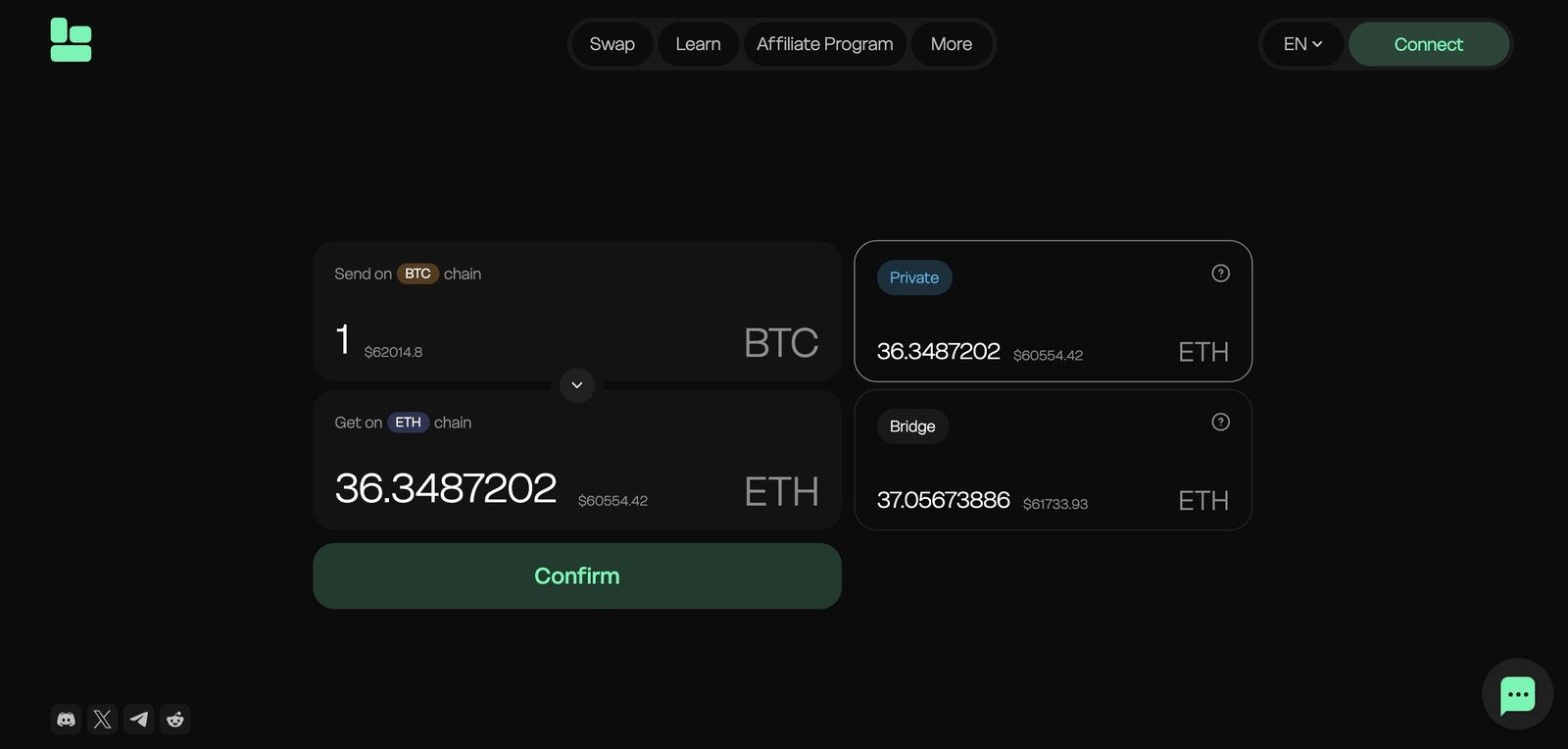
This model aligns with self-sovereignty principles that many Bitcoin holders value. When choosing a platform consider factors such as liquidity, fees, supported networks, and compliance features. Baltex aggregates liquidity from multiple providers and supports routing through various sources while performing AML screening on transactions.
For users seeking maximum privacy certain flows route through Monero-based paths although no service can guarantee complete anonymity. Always verify current fees and supported pairs directly on the platform before executing swaps.
Those who prefer traditional on-ramps can use established exchanges or brokerages that offer Bitcoin trading pairs. The choice depends on individual needs for speed, cost, custody model, and regulatory comfort.
While Bitcoin's supply story is compelling it is not the only factor in portfolio construction. Investors seeking higher yields or different risk profiles may prefer assets with staking rewards or different monetary policies.
Those needing frequent transactions might choose faster or cheaper networks for day-to-day use while holding Bitcoin as a long-term reserve asset. Regulatory environments vary by jurisdiction and some users prefer platforms with stronger KYC processes for large volumes.
Mining requires significant capital and technical expertise so most individuals are better served by purchasing rather than producing new coins. Diversification across multiple assets remains a prudent strategy given market volatility.
Bitcoin's fixed supply provides one form of protection against inflation but does not eliminate price fluctuations driven by adoption, macroeconomics, or sentiment. Understanding these trade-offs helps users decide when Bitcoin fits their goals and when alternatives may serve specific needs better.
By 2030 the daily issuance rate will have halved again and the remaining supply will represent an even smaller fraction of the total. Long-term holders continue to accumulate because they believe the combination of fixed supply and growing demand will support value over decades.
Institutional adoption through ETFs and corporate treasuries has increased visibility and liquidity. The network's security budget increasingly relies on fees as the subsidy declines. Developers continue to improve efficiency and scalability without changing the monetary rules.
The 21 million cap remains one of the most discussed features in financial media and academic papers. As the last coins approach issuance the narrative of absolute scarcity is expected to intensify. Market participants monitor on-chain metrics and halving countdowns closely.
The supply schedule is deterministic and auditable giving Bitcoin a level of predictability rare in financial assets. This transparency supports its role as a potential global reserve asset in the eyes of many analysts.
In summary Bitcoin's supply mechanics deliver a clear and verifiable scarcity model that distinguishes it from other forms of money. With over 95 percent already issued and the remainder scheduled to arrive at a decelerating pace the asset's monetary policy is set for the long term. Whether used as a store of value, medium of exchange, or portfolio diversifier the fixed supply remains central to Bitcoin's design and appeal in 2026 and beyond.

G. Khan
 Ecosystem
G. Khan
Ecosystem
G. Khan
Ecosystem
G. Khan
Ecosystem
G. Khan
Ecosystem
