



 5 minutes to read
 Ecosystem
What Is HBAR (Hedera)?
Quick Summary
- HBAR is the native cryptocurrency of the Hedera network, used for transaction fees, staking, and value transfers on a high-performance distributed ledger.
- The Hedera network employs hashgraph consensus technology, achieving thousands of transactions per second with finality in seconds as of July 2026.
- Maximum supply of HBAR is fixed at 50 billion tokens, with circulating supply around 37-38 billion depending on releases.
- Hedera supports enterprise use cases including tokenization of real-world assets, decentralized finance, and supply chain tracking.
- Governance comes from a council of global enterprises that guide network upgrades and policy.
- HBAR price hovered near $0.07 in mid-2026 amid growing institutional interest and ETF developments.
Definition: What is HBAR (Hedera)?
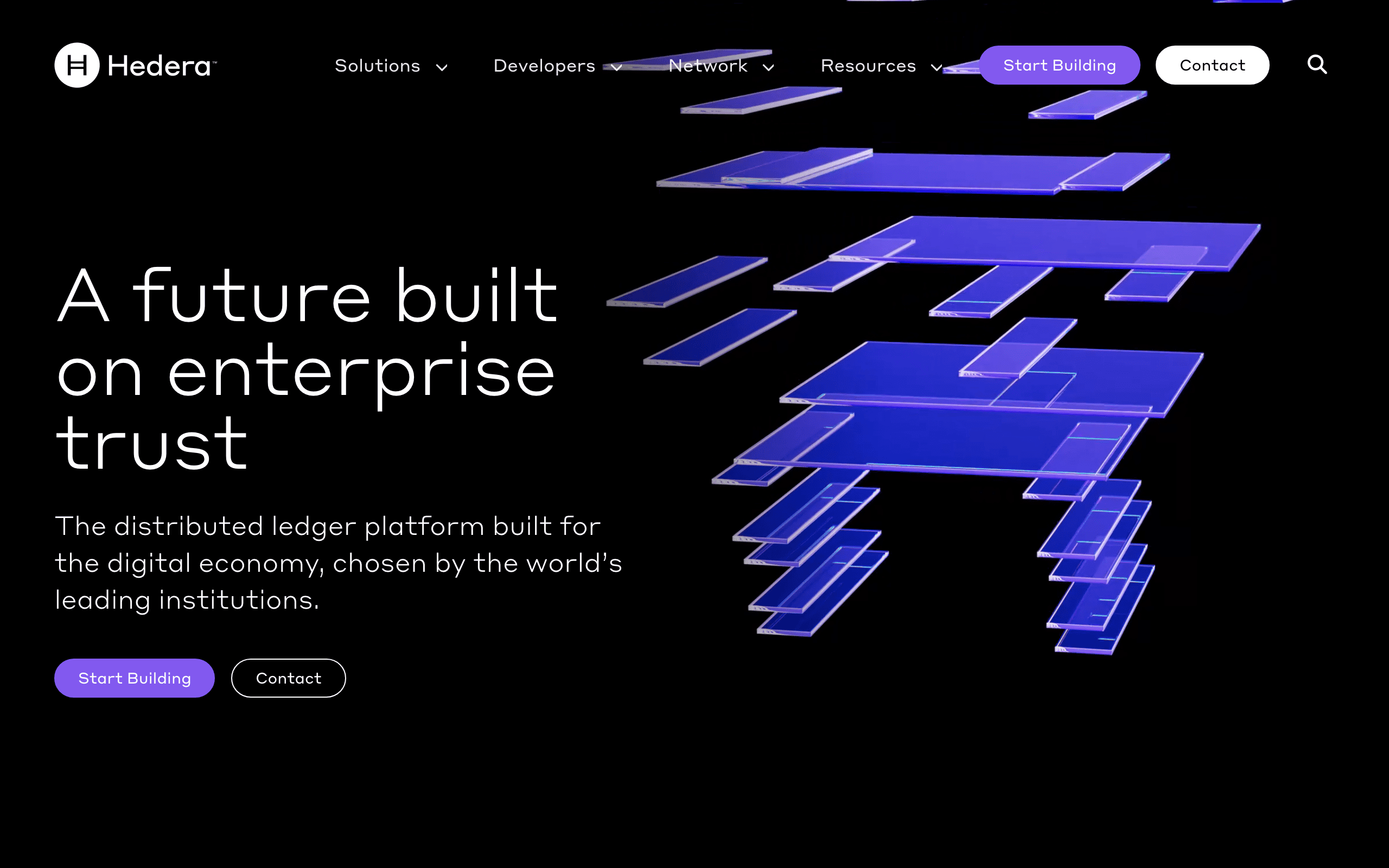
Hedera is a public distributed ledger technology platform that uses the hashgraph consensus algorithm rather than a traditional blockchain structure. HBAR serves as its native token for paying fees, participating in network security, and facilitating transfers. Launched in 2018 after years of development, the platform targets enterprise and decentralized applications needing high throughput, low costs, and predictable performance. Unlike many cryptocurrencies focused on retail speculation, Hedera emphasizes compliance, speed, and integration with existing business systems. The network reached significant milestones by 2026, including expanded council membership and increased transaction volumes for real-world asset settlements exceeding billions of dollars annually.
Key terms explained inline: A distributed ledger records transactions across multiple nodes without a central authority. Hashgraph refers to the specific data structure and algorithm enabling fast, fair consensus. The token HBAR powers all network activity, similar to how gas works on other platforms but with fixed, low fees.
How Does the Hedera Hashgraph Consensus Work?
The core innovation of Hedera lies in its hashgraph consensus mechanism, which replaces linear blockchains with a directed acyclic graph approach combined with gossip-about-gossip and virtual voting. In practice, nodes share not only transaction data but also information about what they have heard from others, allowing information to propagate exponentially fast across the network. Virtual voting then lets each node independently calculate consensus timestamps and order without additional communication rounds. This results in asynchronous Byzantine fault tolerance, meaning the system remains secure even if some nodes act maliciously or fail, as long as more than two-thirds are honest. Transactions achieve finality in 3 to 5 seconds on average, with the network capable of handling over 10,000 transactions per second in tested conditions. Fair timestamps derived from median node receipt times prevent manipulation of ordering, reducing risks like front-running common in other systems. The approach is energy efficient compared to proof-of-work mining because it avoids competitive puzzle solving. Developers access these capabilities through official documentation and SDKs hosted on the Hedera site. In 2026, ongoing upgrades continue to optimize performance for tokenized securities and high-frequency use cases.
HBAR Token Economics and Supply Details
HBAR has a fixed maximum supply of 50 billion tokens, with no further issuance planned after initial allocations. As of mid-2026, the circulating supply stands near 37-38 billion tokens according to public trackers, with the remainder held in treasury or scheduled for gradual release to support network growth and staking incentives. The token serves three primary roles: paying predictable fees for services such as smart contract execution, token issuance, and data logging; staking or proxy-staking to secure the network and earn rewards; and transferring value between accounts. Fee schedules remain stable and low, often fractions of a cent per transaction, making micro-payments and high-volume applications viable. Staking mechanisms allow holders to contribute to security while earning yields, with proxy staking options available for those not running nodes. Economic papers detail the release schedule designed to align incentives with long-term adoption rather than short-term speculation. In 2026, increased demand from real-world asset platforms and enterprise pilots has supported steady utility growth. Market data shows HBAR trading around $0.07 with an all-time high near $0.57, reflecting both volatility and growing recognition of its enterprise utility.
Enterprise Use Cases and Real-World Applications
Hedera excels in scenarios requiring speed, compliance, and scalability beyond typical retail DeFi. Real-world asset tokenization stands out, with platforms using the network to issue and manage digital representations of securities, real estate, or commodities that stream cash flows in real time. Supply chain solutions leverage immutable logging for traceability, while decentralized identity systems benefit from fast verification. In 2026, the network handled settlements worth over ten billion dollars in a single year, driven by partnerships with major firms. Gaming and metaverse projects utilize low fees for in-game economies, and carbon credit platforms track environmental assets transparently. Developers appreciate the predictable costs and high throughput for applications handling thousands of users simultaneously. However, Hedera is best suited for projects prioritizing enterprise features and regulatory alignment over maximum censorship resistance or fully permissionless experimentation. Purely speculative or highly decentralized communities may prefer alternative networks with different governance models. Concrete examples include tokenized funds on the platform and integrations with traditional finance rails for seamless on-off ramps.
Governance Model and Path to Decentralization
Hedera operates under a governing council comprising up to 39 leading global organizations from diverse industries and geographies. These members vote on software upgrades, fee adjustments, and treasury decisions, providing stability and expertise that appeals to regulated entities. The structure includes term limits and diversity requirements to prevent capture by any single group. Over time, the network has introduced more permissionless elements, such as open node participation and staking, while maintaining council oversight during the transition. This hybrid approach delivers the reliability enterprises demand alongside growing community involvement. Council decisions are documented publicly, and the model has supported consistent upgrades through 2026, including enhancements for tokenization and developer tooling. Compared to fully decentralized autonomous organizations, this setup trades some ideological purity for practical execution speed and legal clarity, suiting use cases involving regulated assets or institutional capital.
Security, Compliance, and Risks
Security stems from the mathematical guarantees of hashgraph consensus, which provides strong finality and resistance to common attacks without relying on energy-intensive mining. The network undergoes regular audits and maintains enterprise-grade compliance features, including support for regulatory reporting and KYC-friendly tooling. In 2026, continued focus on real-world asset frameworks has attracted attention from traditional finance players seeking on-chain solutions. Risks include smart contract vulnerabilities common to any programmable platform, potential governance disputes among council members, and broader cryptocurrency market fluctuations affecting HBAR value. Regulatory changes in major jurisdictions could impact adoption or operations. Users should evaluate these factors alongside technical strengths when considering participation. The platform's emphasis on predictable fees and fast settlement reduces certain operational risks compared to slower or more variable networks.
Comparison: Hedera vs Traditional Blockchains
Hedera differs fundamentally from Bitcoin or Ethereum-style blockchains in its data structure and consensus. While blockchains bundle transactions into sequential blocks requiring energy or stake for validation, hashgraph uses gossip and virtual voting for near-instant agreement on order and timing. Throughput reaches thousands of TPS versus dozens on many Layer 1s, with fees remaining fractions of a cent versus variable gas costs. Energy consumption stays minimal due to the absence of proof-of-work. Governance via council contrasts with on-chain voting or miner dominance in other systems. Supply is capped at 50 billion with scheduled releases, offering predictability absent in inflationary models. For developers, Hedera provides native support for tokens, consensus services, and file storage without additional layers. Trade-offs include less emphasis on maximal decentralization in early stages and a focus on enterprise rather than purely permissionless innovation. Projects needing extreme censorship resistance or global anonymous participation may find other options preferable, while those requiring speed and compliance benefit from Hedera's design.
Where Can I Buy or Use HBAR?
HBAR trades on major centralized exchanges and decentralized platforms supporting the Hedera network. Users can acquire it through spot markets or swaps, then store in compatible wallets for staking or transactions. For instant cross-chain exchanges without account creation in most cases, platforms like Baltex serve as non-custodial crypto swap aggregators that route liquidity across networks including Hedera. Baltex aggregates sources for crypto-to-crypto swaps on over 200 blockchains and supports thousands of assets, making it convenient for users moving between ecosystems. Always verify network details and use hardware wallets for larger holdings. Staking occurs directly via the network or through supported services to earn rewards while contributing to security. Before transacting, review current fee schedules and wallet options in the official documentation. Liquidity remains strong due to institutional interest and listings on prominent venues.
Practical Considerations and Future Outlook
Adoption in 2026 centers on tokenization and enterprise pilots, with council members including global corporations driving integration. Developers benefit from comprehensive SDKs and testnet environments for building proofs of concept. Challenges include competition from other high-throughput networks and the need for broader retail education on hashgraph technology. Looking ahead, continued upgrades aim to enhance scalability and developer experience while advancing decentralization milestones. HBAR's utility in paying for services positions it well for sustained demand as real-world applications expand. Individuals and organizations evaluating the network should assess alignment with their specific needs for speed, compliance, and governance preferences rather than treating it as a universal solution.
This content is for educational purposes only and does not constitute financial, investment, or legal advice. Cryptocurrency investments involve significant risk, and past performance does not guarantee future results.
You can read our full breakdown in Why These Altcoins Stand Out for Portfolio Diversification.
You can read our full breakdown in Why These Altcoins Stand Out for Portfolio Diversification.
You can read our full breakdown in Why These Altcoins Stand Out for Portfolio Diversification.
You can read our full breakdown in Why These Altcoins Stand Out for Portfolio Diversification.
You can read our full breakdown in Why These Altcoins Stand Out for Portfolio Diversification.
What is HBAR used for?
How fast is the Hedera network?
Is HBAR a good investment in 2026?
How is Hedera governed?
Where can I buy HBAR safely?
What makes Hedera different from blockchain?
See others posts
G. Khan

How to Buy Bitcoin and USDT in India (INR) (October 2026)
Ecosystem
G. Khan
The 10 Best Places to Buy Crypto Online in 2026
Ecosystem
G. Khan
The Cheapest Way to Buy Crypto: Fees by Payment Method Compared (October 2026)
Ecosystem
G. Khan
How to Buy Bitcoin and Ethereum in Canada (2026)
Ecosystem
G. Khan
How to Buy Bitcoin in the UK and Australia (October 2026)
Ecosystem
G. Khan
How to Buy Solana with a Credit or Debit Card (October 2026)
Ecosystem