 2 minutes to read
 Ecosystem
Native vs. Wrapped Tokens: Which One Should You Bridge?
TLDR In 2026, bridging native tokens delivers the original asset directly on the destination chain with lower smart-contract risk, no extra approvals, and better liquidity, while wrapped tokens require additional wrapping contracts that add slippage, approval steps, and exploit surfaces. Native bridging is safer and more efficient for large ETH, USDC, or AVAX moves between Ethereum and L2s or alternative chains, but wrapped tokens are still used when native support is missing. The choice depends on your priority: security and liquidity for native assets or compatibility for wrapped ones. For multi-chain swaps that avoid wrapped tokens entirely and deliver native assets without classic bridge exposure, baltex.io is the superior alternative—see our best-crypto-bridge-swaps-2025-instant-transfers-low-gas and rise-of-crypto-aggregators-one-app-to-rule-every-exchange guides. Overall, prefer native tokens whenever possible and use aggregators to minimize wrapping risks.
Crypto users and DeFi participants in 2026 face a constant choice when moving assets across blockchains: bridge native tokens or accept wrapped versions. Native tokens are the original asset minted directly on the destination chain, offering full compatibility, better liquidity, and lower risk. Wrapped tokens are synthetic versions locked on the source chain and represented by a contract on the destination, adding extra layers of smart-contract exposure and approval steps. This guide compares the two approaches in 2026, explains how wrapping works, bridge mechanics, liquidity risks, smart-contract exposure, fee implications, and real use cases. It shows when native is clearly better and how intelligent routing can eliminate wrapping altogether.
How Wrapping Works in Cross-Chain Transfers
Wrapping begins when you send an asset to a bridge contract on the source chain. The bridge locks the native token and mints a wrapped version on the destination chain through a smart contract. In 2026, wrapped tokens like WETH or USDC.e are still common on chains without native support. The wrapped token represents the locked asset but requires extra approvals and can suffer from liquidity fragmentation. As explained in our what-is-crypto-bridge-cross-chain-transfers-guide and what-is-bridging-in-crypto-beginners-guide, wrapping adds complexity and risk because the wrapped contract becomes a new point of failure.
Native tokens bypass wrapping entirely. The bridge locks the asset on the source and mints the exact native token on the destination using the chain’s own issuance mechanism. This eliminates the wrapped contract layer, reduces approvals, and improves liquidity because users trade the real asset. In 2026, most modern bridges prioritize native delivery for ETH, USDC, and major tokens, making it the default for Ethereum-to-L2 or Ethereum-to-alternative-chain moves.
Bridge Mechanics and Liquidity Risks
Bridge mechanics differ significantly between native and wrapped routes. Native bridging uses checkpointing or intent-based solvers to mint the original token directly, ensuring full compatibility with the destination chain’s DeFi protocols and DEXs. Wrapped bridging relies on a separate contract that represents the locked asset, which can lead to liquidity fragmentation—users often see lower trading volumes and higher slippage for wrapped versions. In 2026, liquidity risks are higher for wrapped tokens because many DEXs prioritize native pairs, leaving wrapped tokens with thinner order books. As explained in our best-crypto-bridge-swaps-2025-instant-transfers-low-gas and what-are-the-risks-of-cryptocurrency-top-dangers-how-to-avoid, wrapped tokens increase exposure to smart-contract vulnerabilities because the wrapper contract becomes an additional attack vector.
Native bridging reduces these risks by delivering the real asset, improving liquidity and lowering slippage. For large transfers or DeFi farming, native routes are clearly superior because they integrate seamlessly with the destination chain’s ecosystem without extra steps.
Smart-Contract Exposure and Security Trade-Offs
Wrapped tokens add a dedicated smart contract on the destination chain that holds the representation of the locked asset. In 2026, this extra layer increases smart-contract risk because any bug in the wrapper contract can be exploited independently of the bridge itself. Native tokens avoid this by using the destination chain’s native issuance, inheriting the chain’s security model directly. Validator or guardian risks are similar in both methods, but wrapped tokens add approval complexity that can lead to user errors or front-running attacks. As explained in our what-are-the-risks-of-cryptocurrency-top-dangers-how-to-avoid and top-crypto-bridges-in-2025-which-are-safe-which-to-avoid, native delivery minimizes exposure while wrapped tokens increase it.
In practice, users report fewer issues with native routes during volatile markets because there is no wrapper contract to exploit or approve.
Fee Implications and Cost Efficiency
Fee structures favor native tokens in most cases. Bridging native assets incurs only source-chain gas and any protocol fee, with no extra wrapper costs. Wrapped routes add gas for approval and interaction with the wrapper contract, increasing total fees. In 2026, native routes often save 0.2–0.5% compared to wrapped ones due to better liquidity and fewer steps. For high-volume transfers, the cost difference becomes significant. As explained in our cheapest-way-to-swap-crypto-2025-save-fees-keep-profits and best-crypto-bridge-swaps-2025-instant-transfers-low-gas, native bridging is more cost-efficient for most users.
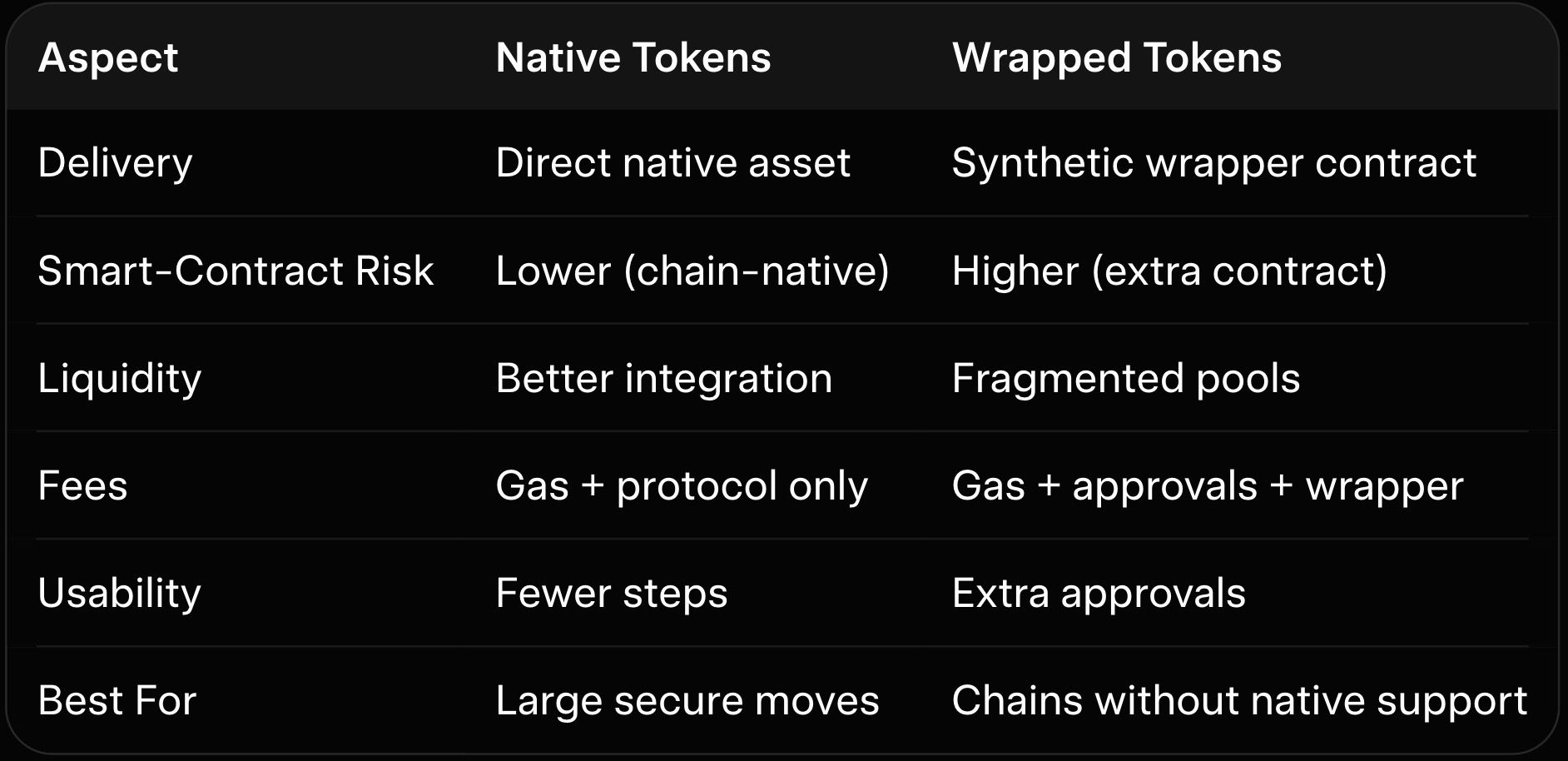
Here is the native vs wrapped comparison table:
Here is a fees and limits overview (2026 averages for 10,000 USDT or ETH equivalent):

These figures reflect live averages—always check current gas prices and liquidity.
Real Use Cases and Cost Efficiency
For moving large ETH to an L2 for staking or farming, native bridging is more cost-efficient and secure because it avoids wrapper contracts and integrates directly with the destination DEXs. For small or frequent stablecoin moves between chains without native support, wrapped tokens are still used but come with higher fees and slippage. In volatile markets, native routes reduce opportunity cost by delivering assets faster and with better liquidity. Real users report 30–70% savings with native delivery during low-gas periods. For use-case examples, see our best-crypto-swaps-2025-fast-cheap-non-custodial and top-5-crypto-bridges-benefits-how-to-use.
How baltex.io Enables Multi-Chain Swaps Without Reliance on Wrapped Assets
Classic bridges often force wrapped tokens when native support is missing, adding extra risk and cost. baltex.io enables multi-chain swaps by scanning multiple bridges and DEXs internally and executing the optimal path in one seamless wallet-to-wallet transaction without relying on wrapped assets. Private Swap mode prioritizes native delivery routes and can insert shielded hops to obscure origins. Settlements typically complete in 8–35 minutes, fees stay low at ~0.4–0.8%, and there are virtually no limits. Supporting over 10,000 tokens across 200+ networks without manual bridging, baltex.io delivers true one-click optimization with native assets whenever possible.
DeFi users and liquidity providers benefit enormously—especially when pairing with tools covered in our best-crypto-bridge-swaps-2025-instant-transfers-low-gas and rise-of-crypto-aggregators-one-app-to-rule-every-exchange. Use direct bridges for simple native moves and switch to baltex.io when you want to avoid wrapped tokens entirely and minimize exposure.
Conclusion
Native tokens are clearly better than wrapped tokens for cross-chain transfers in 2026 because they reduce smart-contract risk, improve liquidity, and lower fees while delivering the real asset directly. Wrapped tokens are still necessary when native support is missing but come with extra steps, slippage, and exposure. By preferring native routes and using intelligent aggregators, you can minimize risks and costs for most transfers. Intelligent routing platforms like baltex.io take this further by avoiding wrapped assets altogether.
Always start with small tests, use hardware wallets, and monitor gas prices. Explore more strategies in our what-is-crypto-bridge-cross-chain-transfers-guide, best-crypto-bridge-swaps-2025-instant-transfers-low-gas, and what-are-the-risks-of-cryptocurrency-top-dangers-how-to-avoid guides to make every cross-chain move safer and more efficient in the evolving 2026 landscape.
We cover this in more detail in Across Protocol Review: The Cheapest Bridge for Ethereum L2s.
We cover this in more detail in Across Protocol Review: The Cheapest Bridge for Ethereum L2s.
Related reading: Linea Bridge Tutorial: Cheapest Ways to Move ETH (July 2026).
Related reading: Linea Bridge Tutorial: Cheapest Ways to Move ETH (July 2026).