


 5 minutes to read
 Ecosystem
How to Buy Ethereum (ETH): Step-by-Step Guide (2026)
Ethereum powers decentralized applications, smart contracts, and DeFi across thousands of projects. As of late October 2026, ETH trades around $2,300 with a market capitalization exceeding $280 billion, making it one of the largest cryptocurrencies by size and utility.
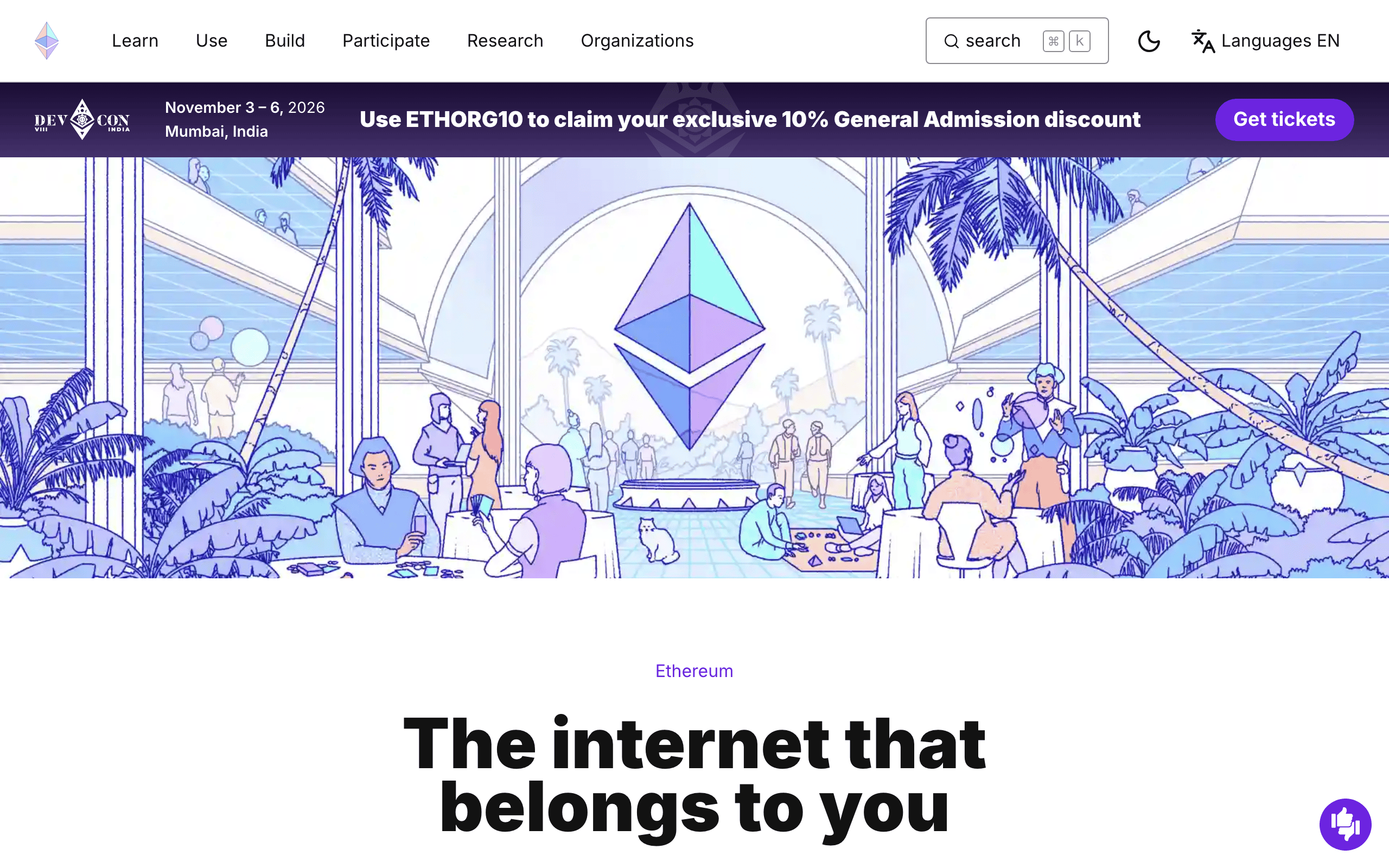
The Ethereum Foundation describes Ethereum as a decentralized platform for building and using applications that run exactly as programmed without downtime or third-party interference.
TL;DR Quick Answer
To buy Ethereum (ETH): 1) Choose a platform such as a centralized exchange or non-custodial aggregator. 2) Set up and verify your account or wallet. 3) Deposit funds via bank transfer or card. 4) Execute the purchase or swap for ETH. 5) Withdraw to a secure personal wallet. This process typically takes 30 minutes for instant options or 1-3 days with bank transfers. Details follow below.
What You'll Need
Prepare these items before starting. A government-issued photo ID and proof of address for KYC on regulated platforms. A compatible wallet like MetaMask or hardware options such as Ledger for self-custody. Initial funds in fiat (USD, EUR) or another cryptocurrency. Internet access and a device with updated security software. For non-custodial routes, a wallet supporting multiple networks. Review your local regulations on crypto purchases and taxes, as requirements differ by jurisdiction.
Understanding Ethereum and Its Role in 2026
Ethereum evolved from a simple cryptocurrency into the backbone of Web3. Developers deploy smart contracts that automate agreements on a global scale. Users interact with DeFi protocols for lending, borrowing, and trading without banks. NFTs, gaming, and decentralized identity tools also rely on ETH for gas fees.
In 2026, Ethereum continues post-Merge upgrades with improved scalability through layer-2 solutions. Daily trading volume often exceeds $8 billion according to aggregated data sources. ETH serves as the native token for staking rewards and governance participation. Beginners benefit from its liquidity and widespread support across exchanges and wallets.
Practical use cases include paying for decentralized services, participating in DAOs, or holding as a long-term asset alongside Bitcoin. Ethereum suits users seeking programmable money rather than just store-of-value properties.
Step 1: Choose a Platform
Select based on your location, preferred payment method, and custody needs. Centralized exchanges like Coinbase or Kraken offer fiat on-ramps with strong compliance and insurance. They suit beginners needing easy bank integration.
For users already holding other crypto, non-custodial options provide direct swaps without accounts. Baltex is a non-custodial crypto swap aggregator that enables instant cross-chain cryptocurrency exchanges across 200+ blockchain networks and 10,000+ digital assets through aggregated liquidity sources. It requires no registration for most swaps and supports private routing options while performing AML screening.
Compare fees: spot trading on advanced interfaces often runs 0.1-0.5%, while instant buys or cards add 2-4% spreads. Consider supported networks—Ethereum mainnet plus layer-2s like Arbitrum or Optimism for lower costs. Geographic availability matters; US users prioritize licensed platforms, while EU residents access MiCA-regulated services.
Decide between custodial convenience and self-custody control. Exchanges hold assets temporarily but introduce counterparty risk. Aggregators like Baltex keep users in control throughout the swap.
Step 2: Set Up Your Account or Wallet
Create an account on your chosen exchange and complete identity verification. Upload ID documents and complete any selfie or address checks, which usually finish in under 30 minutes. Enable two-factor authentication immediately.
For wallet-based purchases, download a reputable mobile or browser extension wallet. Generate a new wallet, back up the seed phrase offline on paper or metal, and test a small receive transaction. Connect the wallet to an on-ramp service or aggregator interface when ready.
Never reuse passwords across services. Review privacy policies to understand data handling. Test small transfers first to confirm addresses match exactly.
Step 3: Deposit Funds
Fund your account or wallet. Bank transfers (ACH, SEPA, wire) remain the lowest-cost option, often free or under $25 with settlement in 1-3 business days. Credit or debit cards provide instant access but incur higher fees of 2-4%.
For crypto-to-crypto paths, deposit an existing asset to the aggregator or exchange. Confirm network compatibility to avoid lost funds—always double-check the deposit address and memo if required.
Monitor deposit confirmations via blockchain explorers. Start with amounts under $500 for initial tests. Keep records of all transactions for tax purposes.
Step 4: Execute the Purchase or Swap
Place a market order for ETH on exchanges using the advanced trading view to minimize spreads. Enter the amount, review the total including fees, and confirm. On aggregators, select the input asset and output ETH, review the route, slippage tolerance, and gas estimate before approving the transaction in your wallet.
Baltex aggregates liquidity for efficient cross-chain swaps, routing through multiple providers for competitive rates on supported networks including Ethereum, Solana, and others. Execute only after verifying the exact ETH amount and any network fees.
Monitor the transaction status. On-chain swaps typically confirm in minutes depending on network congestion. Save the transaction hash for reference.
Step 5: Secure and Manage Your Ethereum
Withdraw ETH from the exchange to your personal wallet immediately for amounts over a few hundred dollars. Verify the withdrawal address twice. Use hardware wallets for larger holdings to keep private keys offline.
Enable all available security features including withdrawal whitelisting where offered. Monitor for phishing attempts—never click unsolicited links or share seed phrases. Consider staking ETH through official protocols for yield once comfortable with the process.
Track your holdings via portfolio apps or wallet dashboards. Rebalance only when necessary to control taxable events.
Costs, Time, and Fees in Detail
Fees vary by method. Bank-funded spot trades average 0.2-0.5% total. Card purchases reach 3-5% including spreads. On-chain swaps add gas fees of $1-20 depending on network and congestion levels in 2026.
Time ranges from instant (card or aggregator) to several days (bank verification). Factor in KYC wait times for new users.
Ethereum itself has no purchase fee beyond network costs. Compare live quotes across platforms before committing.
Safety Best Practices
Always verify URLs and use bookmarks for exchanges. Enable hardware security keys for accounts. Store seed phrases in multiple secure, offline locations. Avoid public Wi-Fi for transactions.
Understand that crypto involves volatility—ETH prices fluctuate daily. Never invest more than you can afford to lose. Report suspicious activity to platform support promptly.
Common Mistakes and Troubleshooting
Mistake: Sending to the wrong network address. Solution: Always confirm the exact chain and test with tiny amounts first.
Mistake: Ignoring fees until the final screen. Solution: Review all costs including gas and spreads before approval.
Mistake: Leaving large balances on exchanges. Solution: Withdraw promptly to self-custody after purchase.
If a transaction fails, check wallet balance for sufficient gas and retry with higher priority. Contact support with transaction hashes for stuck deposits.
When Baltex or Other Options Fit Best
Baltex suits users swapping existing crypto across chains without KYC for most transactions. It excels for cross-chain needs involving 200+ networks. For fiat on-ramps from scratch, traditional exchanges provide smoother bank integration.
Choose self-custody routes when privacy or direct control matters most. Opt for regulated exchanges if you value insurance and easy fiat entry. Hybrid approaches—buy on exchange then swap via aggregator—combine strengths.
This method works well for active DeFi users or those managing multi-chain portfolios. Beginners may prefer one-stop exchanges initially.
Practical Examples and Market Context
A user in the EU might use a MiCA-licensed exchange for SEPA deposit, buy ETH, then move to a wallet for staking. Someone holding USDC on another chain could use an aggregator for a direct swap to ETH on Ethereum mainnet.
Market conditions in October 2026 show ETH down from its 2025 high near $4,946, offering potential entry points but requiring risk awareness. Volume remains robust at over $8 billion daily.
Review official resources regularly as interfaces and regulations evolve. Always prioritize security over speed when handling significant amounts.
What is the cheapest way to buy Ethereum in 2026?
How long does it take to buy Ethereum?
Is it safe to buy Ethereum on exchanges?
Can I buy Ethereum without KYC?
What should I do after buying Ethereum?
How much Ethereum should a beginner buy?
See others posts
G. Khan

How to Buy Bitcoin and USDT in India (INR) (October 2026)
Ecosystem
G. Khan
The 10 Best Places to Buy Crypto Online in 2026
Ecosystem
G. Khan
The Cheapest Way to Buy Crypto: Fees by Payment Method Compared (October 2026)
Ecosystem
G. Khan
How to Buy Bitcoin and Ethereum in Canada (2026)
Ecosystem
G. Khan
How to Buy Bitcoin in the UK and Australia (October 2026)
Ecosystem
G. Khan
How to Buy Solana with a Credit or Debit Card (October 2026)
Ecosystem