



 1 minute to read
 Ecosystem
Best Decentralized Exchanges (DEX) to Buy Monero
TLDR In 2026, the best decentralized exchanges to buy Monero (XMR) are atomic swap platforms like Bisq and Haveno (highest privacy, 0–0.5% fees), cross-chain DEX with proxy routing (better liquidity, 0.5–1.5% fees), and aggregated decentralized protocols. Atomic swaps maximize unlinkability but have lower liquidity, while proxy routes offer faster execution. For the most practical non-custodial XMR swaps and cross-chain liquidity without classic bridge exposure, baltex.io combines DEX routing with shielded hops—see our best no-KYC Monero swap platforms and private USDT to XMR swaps guides. Overall, atomic swap DEXs remain the top choice for privacy-focused users.
Privacy-focused crypto users in 2026 turn to decentralized exchanges (DEX) to buy Monero (XMR) because centralized platforms have delisted the coin due to AML and MiCA regulations. Monero’s mandatory privacy—ring signatures that hide the sender, stealth addresses that protect the receiver, and RingCT that conceals amounts—makes it the gold standard for unlinkable transactions. Decentralized methods let users acquire native XMR directly to their wallet without KYC, preserving this anonymity. This guide compares the best DEX options for buying Monero, analyzing atomic swap models, liquidity pathways, proxy-asset conversions, fees, execution speed, and usability trade-offs. It shows how each method works and why intelligent aggregators often provide the most practical experience.
Atomic Swap DEX Platforms: Maximum Privacy
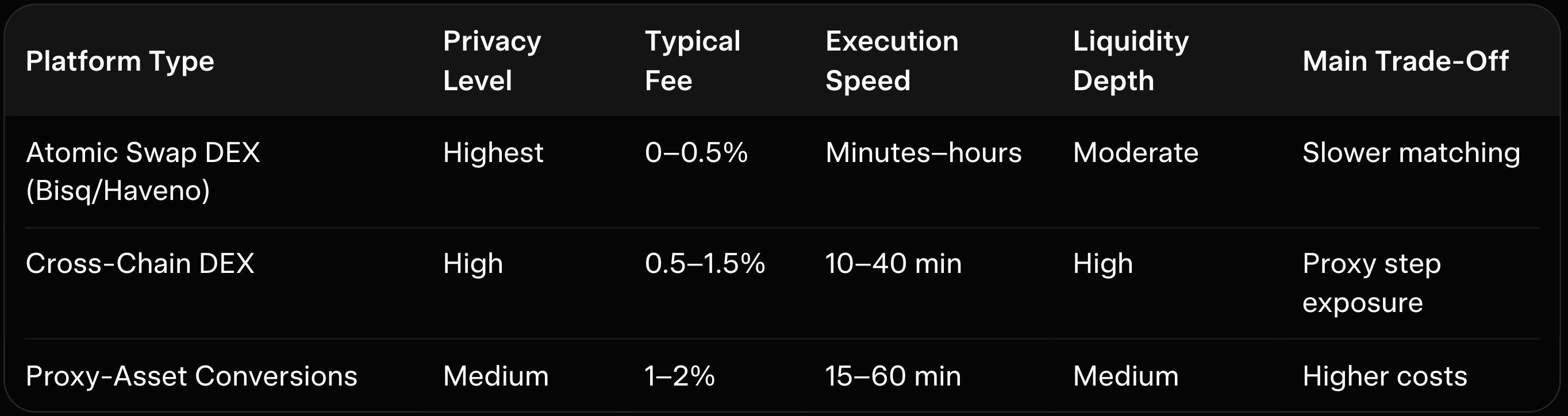
Atomic swap DEX platforms remain the purest way to buy Monero without centralized intermediaries. Protocols like Bisq and Haveno use hash-time-locked contracts to enable direct peer-to-peer trades between BTC or other assets and XMR. The process is fully non-custodial: you lock your input asset, the counterparty locks XMR, and cryptographic proofs release both funds simultaneously. If either party fails to complete, the timeout refunds the locked coins. In 2026, these platforms support Monero pairs with global liquidity pools and onion routing for extra privacy.
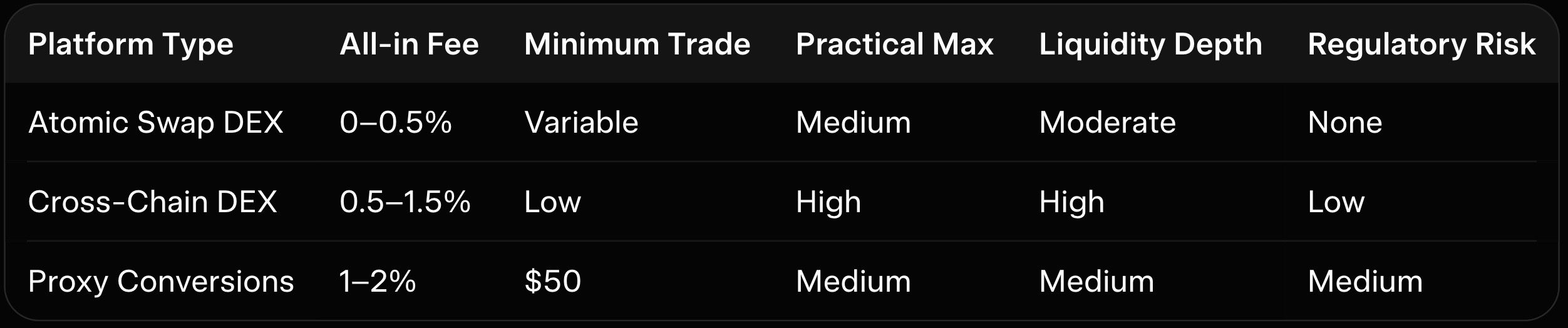
Fees are extremely low—0–0.5% or just network gas—because there is no middleman taking a cut. Speed ranges from minutes to a few hours depending on blockchain confirmations, and limits are flexible for trusted traders. Liquidity is moderate compared to centralized options but sufficient for mid-sized trades. The main trade-off is usability: atomic swaps require more technical knowledge and patience for matching orders. As explained in our anonymous XMR to SOL swaps and LTC to XMR proxy buying methods, atomic swaps deliver the highest unlinkability because no third party ever holds your funds or sees your full transaction history.
Cross-Chain DEX with Proxy Routing
Cross-chain DEX platforms in 2026 use proxy-asset routing to bring deeper liquidity to Monero trades. You deposit BTC or another accessible coin into a decentralized protocol, which routes through liquidity pools or bridged paths and delivers native XMR. In practice, the DEX scans multiple liquidity sources and executes the swap in one or a few atomic steps. Fees are 0.5–1.5% all-in, speed is 10–40 minutes, and limits are higher than pure atomic swaps due to aggregated liquidity. Privacy is strong but not absolute during the proxy step, as intermediate chains may leave temporary traces.
These platforms are user-friendly with mobile apps and simple interfaces, making them popular for traders who need faster execution than pure atomic swaps. Risks include smart-contract vulnerabilities (mitigated by audited protocols) and slippage during volatile periods. As explained in our safely transferring Ethereum to Monero and XMR to Cardano conversion guide, cross-chain DEX provide a practical middle ground between privacy and liquidity.
Proxy-Asset Conversions on Decentralized Platforms
Proxy-asset conversions let you buy a more liquid privacy-friendly coin (such as shielded Zcash or Dash PrivateSend) on a decentralized exchange and then swap it to Monero via an integrated no-KYC router. In 2026, this method is common because direct XMR pairs are limited. You trade on a DEX for the proxy asset, then use an atomic or instant swap module to convert to native XMR. Fees are 1–2% total, speed is 15–60 minutes, and limits are medium to high. Privacy is good after the final swap but slightly reduced during the proxy step.
This route is useful for users who want to start with a CEX-like experience but finish with full Monero privacy. Risks include intermediate chain exposure and higher overall costs. As explained in our comparison of privacy coins in 2026, proxy conversions expand access while maintaining strong final privacy.
Here is the DEX comparison table:
Here is a fees and limits context table (2026 averages for 1 BTC equivalent to XMR):
How baltex.io Enables Practical XMR Swaps and Cross-Chain Liquidity
Pure decentralized exchanges for Monero often suffer from liquidity fragmentation or slow matching. baltex.io solves this by acting as an intelligent aggregator that scans multiple DEX routes, atomic protocols, and liquidity sources internally. It executes the optimal path in one seamless wallet-to-wallet transaction without ever taking custody or requiring KYC. Private Swap mode inserts shielded Monero hops that fully break on-chain links using ring signatures and stealth addresses before delivering clean native XMR to your wallet. Settlements complete in 8–35 minutes even for complex cross-chain pairs, fees stay low at ~0.4–0.8%, and there are virtually no limits. Supporting over 10,000 tokens across 200+ networks without manual bridging, baltex.io delivers true one-click optimization while remaining fully decentralized in spirit.
Use pure atomic DEX for maximum privacy and switch to baltex.io when speed and liquidity are needed without counterparties.
Conclusion
Decentralized exchanges in 2026 make buying Monero practical and private through atomic swaps, cross-chain routing, and proxy-asset conversions. Atomic swap DEXs deliver the highest unlinkability, cross-chain platforms provide better liquidity and speed, and proxy routes expand access for users starting with other assets. Understanding fees, limits, and risks helps you choose the right method. Tools like baltex.io combine the best of all worlds by aggregating decentralized routes into one fast, non-custodial transaction.
Always start with small test trades, use hardware wallets, and verify addresses carefully.
You can read our full breakdown in SimpleSwap Review 2026: Pros, Cons, and Monero Exchange Fees.
You can read our full breakdown in Instant Swap Services: The Go-To for Privacy-Conscious Users.
For more on this, see our guide on XMR.to Alternatives: How to Pay Bitcoin Invoices with Monero.


_.jpg)
.jpg)