 1 minute to read
 Ecosystem
How to Swap USDT to XMR Without Identity Verification
TL;DR
Swapping USDT to XMR without identity verification in 2026 is straightforward using non-custodial instant exchanges, privacy-focused aggregators, and select decentralized routes. Leading options like GhostSwap, Trocador, and Baltex.io deliver wallet-to-wallet execution in minutes with no accounts or KYC while preserving strong unlinkability. Baltex.io stands out by adding shielded Monero hops that fully break transaction trails across chains for maximum privacy at competitive rates.
Privacy-focused holders often hold USDT on networks like Ethereum, Tron, or Solana and need to move into Monero for true anonymity. USDT’s transparent ledger creates traceable trails that Monero’s ring signatures and stealth addresses erase. No-KYC methods keep the entire process detached from personal identities.
Demand for these swaps has grown steadily amid tightening regulations. Instant exchanges and aggregators dominate for speed while decentralized protocols offer higher trustlessness at the cost of complexity. Users must weigh fees, network differences, and residual risks before choosing a path.
Why Swap USDT to XMR Anonymously
USDT provides stable liquidity and easy entry points on multiple chains. Monero delivers built-in privacy that hides amounts, senders, and receivers. Converting without KYC prevents linking the two assets on public ledgers.
The process stays simple across leading platforms. Users send USDT from their wallet and receive native XMR in another. No personal data collection occurs on reputable no-verification services.
Real-world scenarios include portfolio rebalancing after stablecoin holdings or preparing private spending. The swap also serves as a privacy layer before further DeFi activity or long-term storage.
Main Methods to Swap USDT to XMR Without KYC
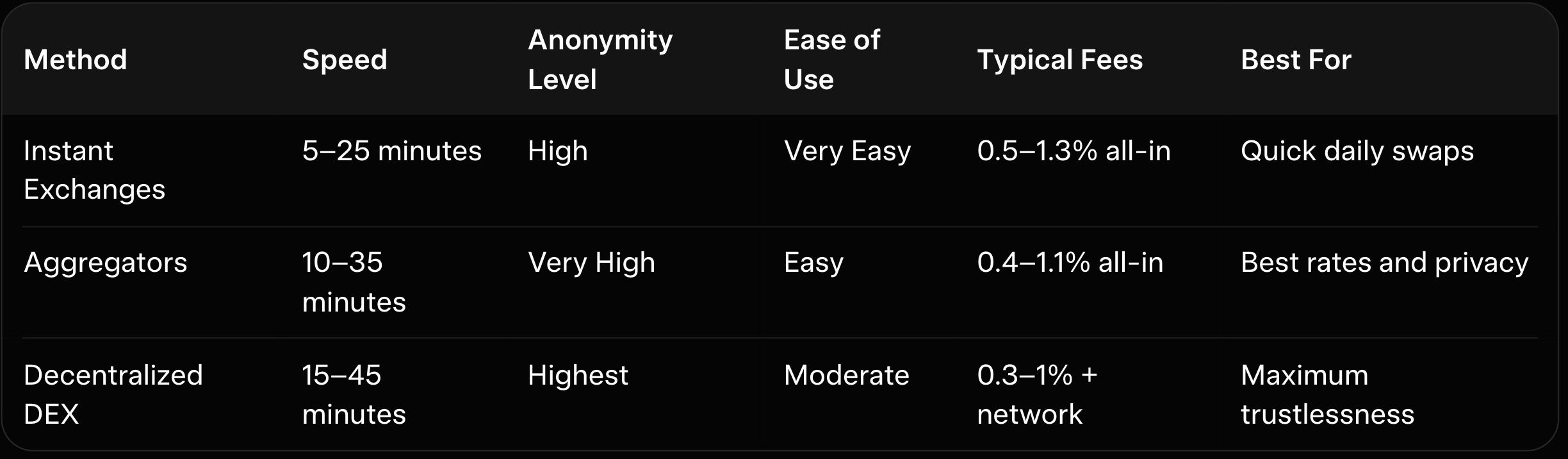
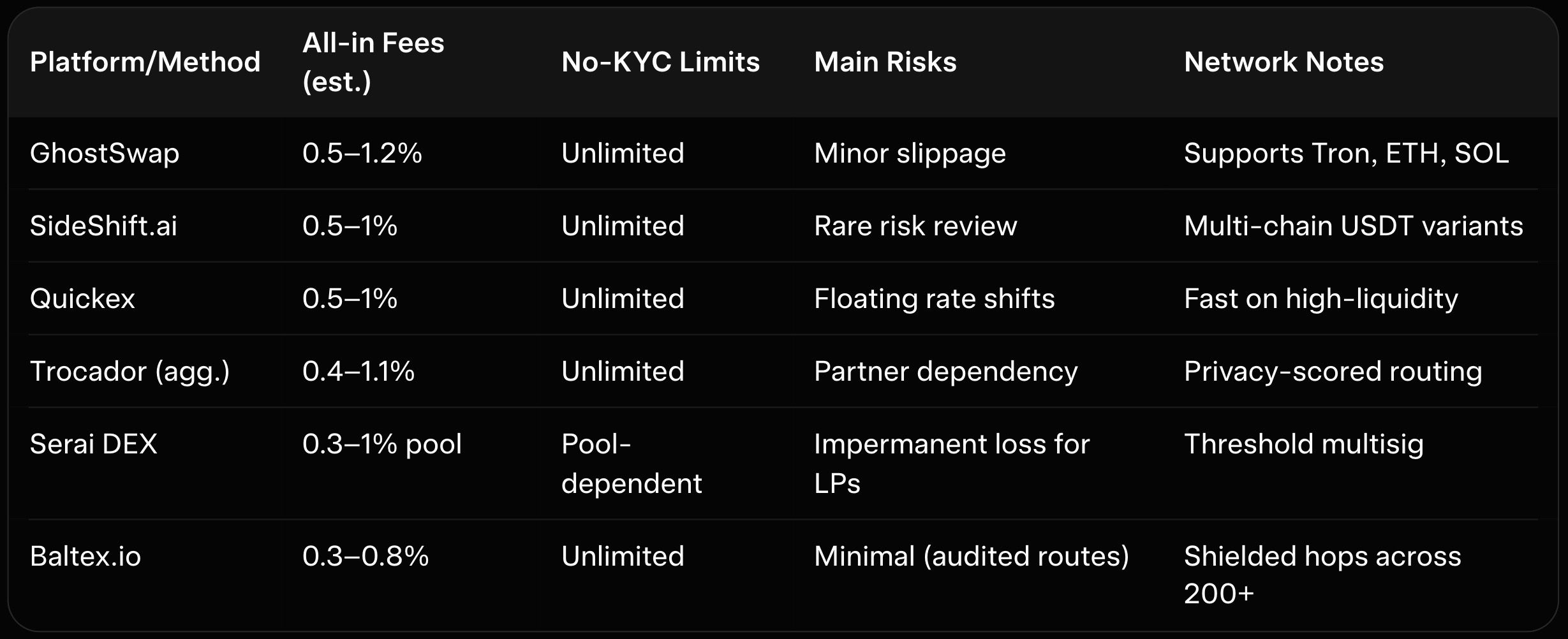
Instant exchanges handle most no-KYC volume with direct wallet-to-wallet flows. Platforms like GhostSwap, SideShift.ai, and Quickex support dozens of USDT variants to XMR. Select the pair, paste a fresh Monero address, and send USDT to the generated deposit for automatic conversion.
Aggregators compare rates across multiple providers simultaneously. Trocador scans dozens of instant exchangers and routes to the best offer while applying privacy scores. This method often saves money and maintains full anonymity without extra accounts.
Decentralized options like Serai DEX use liquidity pools and threshold multisigs for native cross-chain swaps. Users send USDT to a vault address and receive XMR without intermediaries holding funds. These protocols require more technical comfort but eliminate single-provider dependency.
Method Comparison Table
Fees and Risks Table
Step-by-Step Guide for Instant Exchanges
Open a no-KYC instant platform that lists USDT to XMR directly. Select your USDT network variant and XMR as the receive asset, then enter the desired amount. Review the live quote that shows the expected XMR output after fees.
Paste a fresh Monero subaddress from your wallet. The service generates a one-time USDT deposit address. Send the exact amount from your source wallet and wait for network confirmations.
Once the deposit registers, XMR arrives automatically in your receive address. Most swaps finish within minutes. Test with a small amount first to confirm timing and receipt on your chosen network.
Using Aggregators for Optimized Rates
Aggregators pull live quotes from many instant providers at once. Enter your USDT amount once and compare ranked options with privacy scores. Select the best offer and proceed with the same wallet-to-wallet flow inside the aggregator interface.
This approach reduces costs on larger swaps where small differences add up. Anonymity stays intact because the aggregator never touches funds itself. Many users layer Tor or VPN access for extra operational privacy.
Decentralized Options Explained
Decentralized protocols use liquidity pools and threshold signatures to coordinate swaps without central control. Send USDT to the generated vault address with the required memo or parameters. The protocol automatically executes the XMR output after confirmations.
These methods eliminate counterparty risk but require understanding pool depth and slippage. Execution times depend on both source and destination network activity. They suit users who prioritize sovereignty over instant convenience.
Privacy Risks and Network Differences
USDT on Tron offers low fees but slightly different privacy dynamics than Ethereum or Solana versions. Choose networks with strong liquidity for faster, cheaper swaps. Even no-KYC platforms may apply automated risk checks on unusual patterns.
On-chain timing or amount clustering can create residual links if not handled carefully. Fresh subaddresses and randomized timing defeat most analysis. Review our Monero vs Bitcoin privacy comparisons for detailed unlinkability strategies.
Best Practices for Maximum Anonymity
Generate a new Monero subaddress for every incoming swap to maintain unlinkability. Combine this with fresh USDT send addresses and randomized amounts. Access platforms through Tor or trusted VPNs to hide IP details.
Split larger swaps into smaller batches spread over time. Store received XMR immediately in a secure wallet. Check hardware options in our Ledger vs Trezor for Monero or mobile guides like Monerujo Android wallet review.
How Baltex.io Enables Efficient Private USDT to XMR Routing
Baltex.io functions as a non-custodial router built for privacy-first flows between USDT and XMR. Users select their USDT network variant, enter the amount, and receive optimized XMR output through a simple four-step wallet-to-wallet process. The platform scans liquidity across sources while inserting shielded Monero hops that completely sever any traceable connection.
Private routing forms its core advantage. Baltex breaks links using advanced Monero privacy technology even across different chains like Tron, Ethereum, or Solana. No bridges or wrapped assets expose extra risk, and fees stay low at 0.3–0.8% with full previews before confirmation.
Many workflows integrate Baltex naturally after initial USDT holdings. Users route directly from a wallet for unlinkable XMR ready for storage or spending. The same flow works in reverse when liquidity demands a return path. Compare options in our Baltex vs ChangeNOW guide or Trocador privacy-focused review.
Additional ecosystem resources support complete stacks. Instant platforms appear in StealthEX anonymous XMR instant exchange review and GODEX no-KYC review. Wallet setup guides include MyMonero web and desktop wallet guide for post-swap storage.
P2P users benefit from best P2P Monero exchanges. Troubleshooting lives in Monero wallet FAQs and connecting to remote nodes. Broader insights cover Monero vs Zcash and best decentralized exchanges for buying Monero.
Risks to Consider
Counterparty risk exists on instant platforms despite non-custodial design during the brief swap window. Reputable services with transparent operations lower this concern. Decentralized options reduce platform risk but introduce smart-contract or pool volatility.
Regulatory shifts could affect provider availability over time. No single method is future-proof. Layering instant exchanges, aggregators, and routers creates resilient workflows.
Conclusion
Swapping USDT to XMR without identity verification remains accessible and effective in 2026 when using the right combination of instant exchanges, aggregators, and decentralized tools. Non-custodial platforms deliver speed and privacy while clear rate previews help manage fees and risks. Users who test small amounts and follow best practices maintain full control in a regulated environment.
Baltex.io integrates seamlessly by providing efficient private routing that optimizes rates and adds unlinkability layers beyond standalone methods. Combine it naturally with any initial swap for maximum discretion and value. Test routes live, secure your wallets, and layer protections as volume grows.
The privacy landscape rewards informed choices and diversified tools. With careful execution, USDT to XMR swaps stay private, fast, and cost-effective throughout 2026 and beyond. Explore ecosystem guides on wallets, privacy coins, and swap strategies to refine your personal workflow.
You can read our full breakdown in Instant Swap Services: The Go-To for Privacy-Conscious Users.
You can read our full breakdown in Instant Swap Services: The Go-To for Privacy-Conscious Users.
We cover this in more detail in XMR.to Alternatives: How to Pay Bitcoin Invoices with Monero.
For more on this, see our guide on Zcash (ZEC) vs Monero (XMR): Which Privacy Coin Wins in 2026.