 3 minutes to read
 Ecosystem
Bisq Review: The King of Decentralized P2P Fiat-to-XMR Swaps
TL;DR
Bisq remains a leading decentralized P2P exchange in 2026 for fiat-to-XMR swaps, offering true non-custodial trading with multisig escrow and no KYC. It excels in privacy and security for users who value sovereignty over speed. Baltex.io complements Bisq perfectly by providing fast private routing after P2P acquisition, turning slow fiat entry into seamless, unlinkable XMR holdings.
Privacy-focused traders continue to rely on Bisq when centralized platforms demand identity checks. The desktop application connects users directly through a Tor-based peer network. No central server holds funds or data, making it resistant to shutdowns and surveillance.
Fiat-to-Monero trades represent a core use case on Bisq. Users buy XMR with bank transfers, cash deposits, or digital payments while keeping the entire process detached from personal profiles. This setup delivers unmatched discretion in an era of increasing financial monitoring.
Bisq Overview and Core Architecture
Bisq operates as fully open-source software that users run locally on their devices. It forms a decentralized network where peers discover offers and execute trades without intermediaries. The platform supports Bitcoin as its primary base with strong XMR trading pairs.
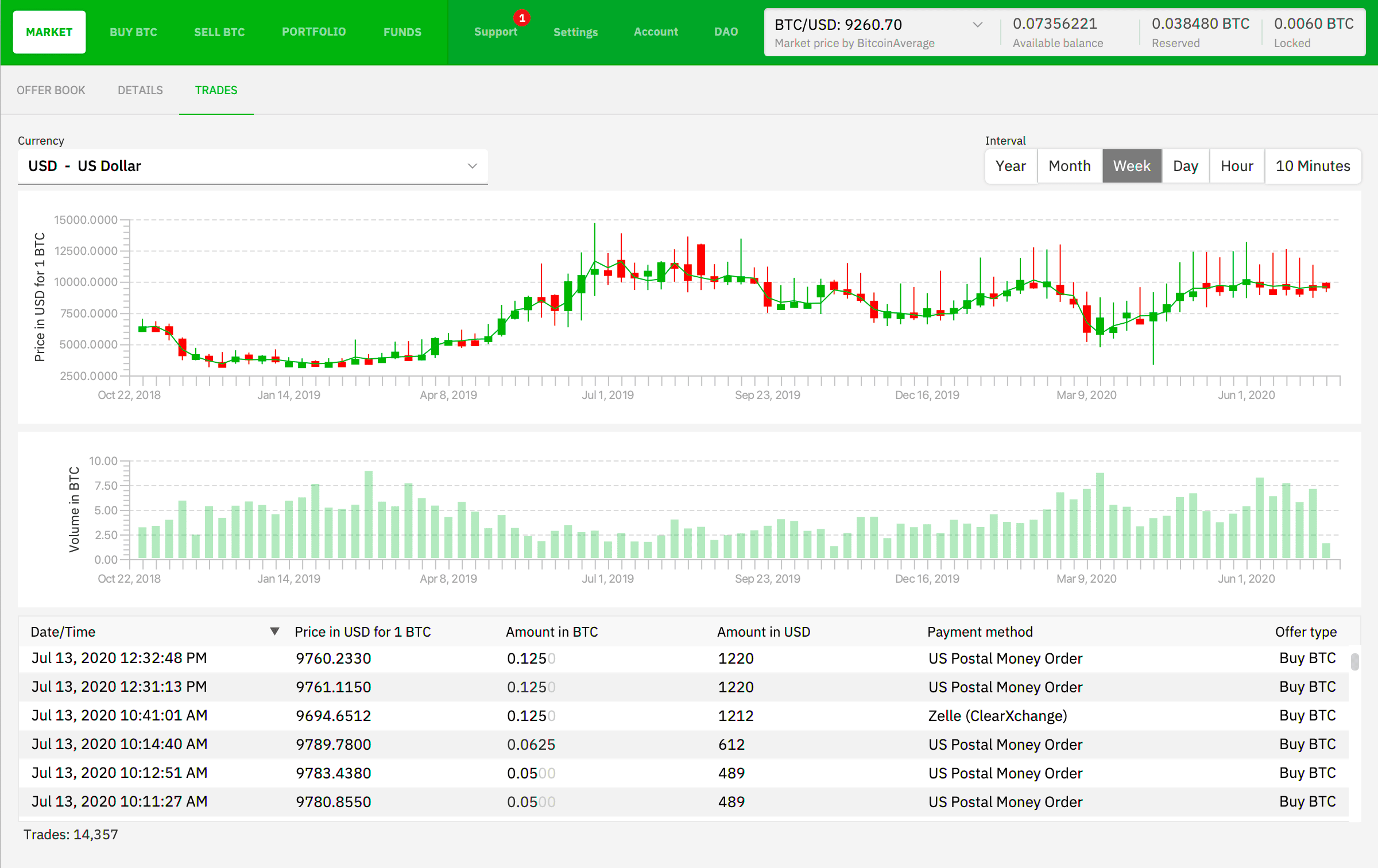
In 2026, Bisq continues evolving with improved protocols and community governance through its BSQ token. New users download the app, set up payment accounts, and browse the offer book. The entire experience prioritizes privacy by default with Tor integration.
Custody Model and Escrow Mechanics
Bisq employs a non-custodial model where users always control their private keys. For most trades, funds enter a 2-of-2 multisig escrow address that requires signatures from both buyer and seller. Security deposits from both parties add economic incentives for honest behavior.
This structure eliminates single points of failure common on centralized exchanges. Neither party can access funds unilaterally during the trade window. Time-locked refund mechanisms provide additional safety if communication breaks down.
Payment Methods for Fiat-to-XMR Swaps
Bisq supports dozens of fiat payment options worldwide. Popular choices include bank transfers, Revolut, Zelle, cash deposits, and even face-to-face or cash-by-mail for maximum privacy. Limits vary by payment method age and trader reputation.
For XMR trades, users often complete off-chain fiat payments before releasing crypto. The system accommodates various national currencies with flexible offer terms. Traders specify exact conditions when creating or taking offers.
Fees Structure on Bisq
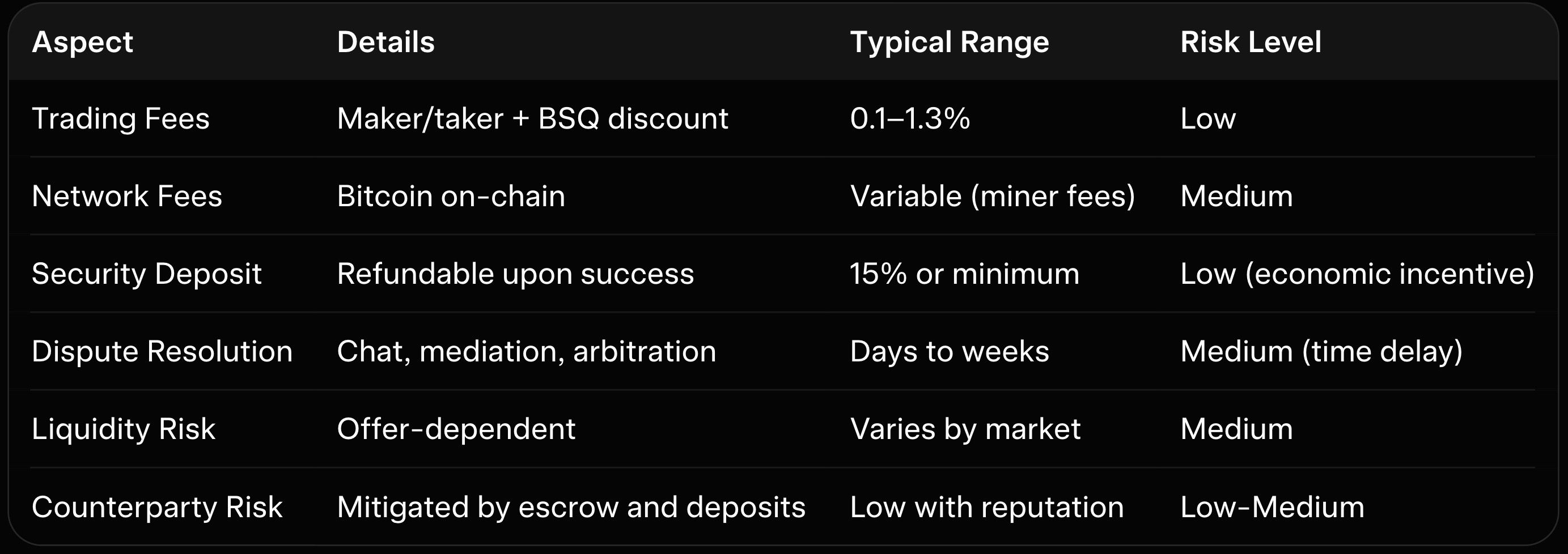
Trading fees stay low and transparent. Makers typically pay less than takers, with further discounts available when paying in BSQ tokens. Network mining fees for Bitcoin escrow transactions add to the total cost.
Security deposits return fully upon successful completion. These temporary locks encourage timely trade finalization. Overall costs remain competitive for privacy-conscious users despite occasional on-chain expenses.
Dispute Resolution Process
Bisq uses a three-tier system for resolving conflicts. Traders first communicate directly through encrypted in-app chat. Unresolved issues move to community mediators who facilitate agreements without controlling funds.
Arbitration serves as the final step with designated arbitrators reviewing evidence. This decentralized approach maintains trust while avoiding centralized authority. Most disputes resolve at earlier stages through clear communication.
Features Comparison Table
Fees and Risks Table
Real-World Trade Execution
A typical fiat-to-XMR trade begins with browsing active offers. After selecting a suitable match, both parties confirm terms and lock security deposits. The buyer sends fiat through the agreed method while the seller waits for confirmation.
Once payment clears, the seller releases XMR or BTC from escrow. The process usually completes within hours for digital payments or days for traditional banks. Clear communication prevents most issues from escalating.
Experienced users build reputation scores over time. Higher reputation unlocks better offers and larger limits. This organic trust system rewards consistent honest trading.
Comparison with Other P2P and Swap Solutions
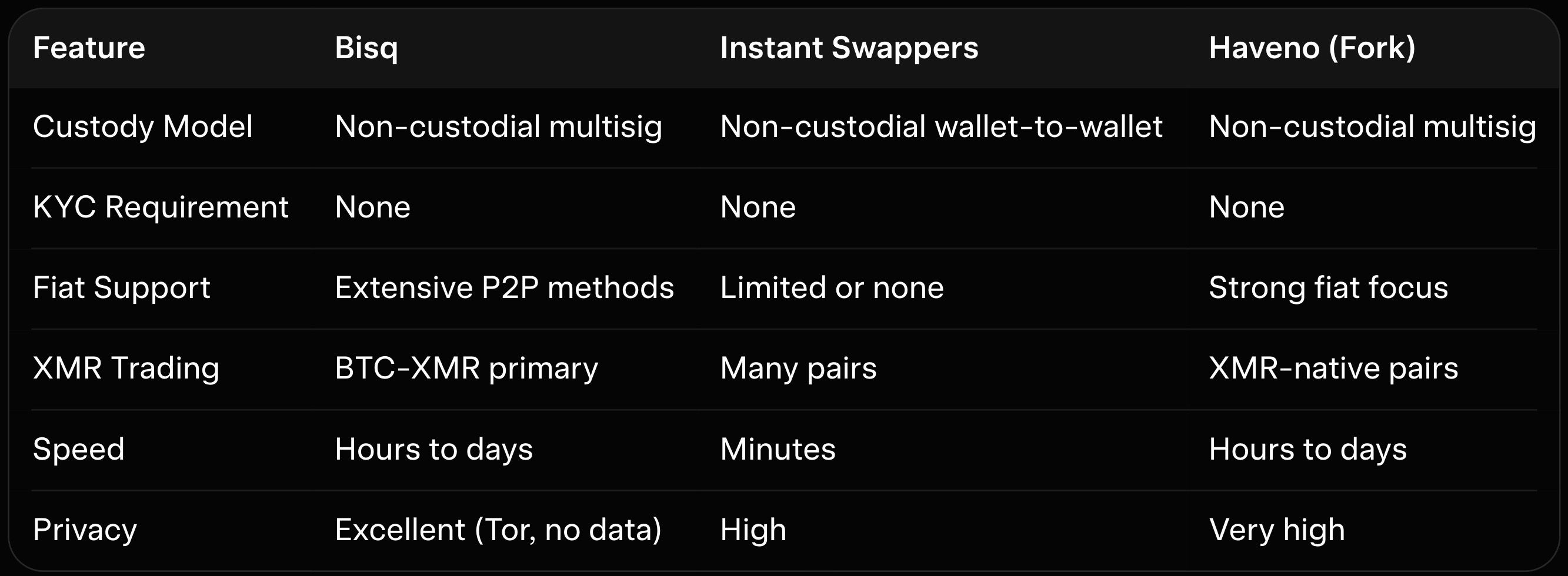
Bisq stands out against instant exchangers like GhostSwap or GODEX for its full decentralization. While swappers offer speed, Bisq provides stronger sovereignty and fiat depth. Many users combine both for optimal workflows.
Haveno, a Bisq fork optimized for Monero, competes directly in the XMR space. It offers native Monero multisig advantages and potentially lower fees. Bisq retains broader liquidity and established user base for BTC-XMR routes.
Centralized P2P alternatives often require accounts or impose limits. Bisq avoids these entirely at the cost of a desktop-only interface and slower pace. The trade-off favors users prioritizing long-term privacy over convenience.
Usability and Learning Curve
New users need time to master Bisq’s interface and rules. The desktop application feels different from web-based exchanges but includes helpful guides. Initial setup involves wallet configuration and payment account creation.
Once familiar, the offer book and trade dashboard become intuitive. Community forums and documentation support troubleshooting. Patience pays off with unmatched control and privacy.
Risks and Mitigation Strategies
Counterparty risk exists despite escrow protections. Malicious actors may attempt chargebacks on reversible payments. Strong offer filtering and reputation checks reduce exposure significantly.
Time delays during disputes can lock funds temporarily. Users should only trade amounts they can afford to have unavailable briefly. Diversifying across multiple platforms spreads overall risk.
Regulatory uncertainty affects all P2P venues. Bisq’s decentralized nature makes it highly resilient, yet users must stay informed about local laws. Operating through Tor enhances operational security.
Best Practices for Safe Fiat-to-XMR Trading on Bisq
Always start with small test trades to verify processes and counterparties. Use fresh addresses and subaddresses for Monero receipts. Enable all available security features within the app.
Maintain detailed trade records privately for potential disputes. Respond promptly to communications to avoid unfavorable resolutions. Combine Bisq with strong operational security habits like dedicated devices or VPNs.
How Baltex.io Complements or Improves P2P Swap Workflows
Baltex.io serves as an ideal follow-up tool after completing fiat-to-XMR trades on Bisq. Users acquire XMR privately through P2P then route portions through Baltex for cross-chain needs or further privacy enhancement. The non-custodial platform adds shielded hops that break any remaining links without new KYC exposure.
Many workflows integrate both platforms naturally. After Bisq delivers native XMR, traders swap small amounts via Baltex to other assets while preserving unlinkability. This combination delivers Bisq’s fiat strength plus optimized multi-chain execution.
Private routing on Baltex enhances overall anonymity beyond pure P2P. It scans liquidity across sources for best rates with Monero-shielded segments. Users benefit from unlimited no-KYC flows and transparent previews before confirmation.
Practical examples include rebalancing holdings post-Bisq trade or moving value to DeFi without exposing trails. Baltex handles the heavy lifting while Bisq secures the initial private entry. Explore related strategies in our best P2P Monero exchanges guide.
Additional resources deepen understanding. Review Monero vs Bitcoin privacy comparisons when evaluating pairs. Wallet options feature in MyMonero web and desktop wallet guide and Monerujo Android wallet review.
Hardware protection matters after large trades. Check Ledger vs Trezor for Monero for recommendations. Instant swap alternatives appear in StealthEX anonymous XMR instant exchange review and GODEX no-KYC review.
Aggregators help compare options post-Bisq. Our Trocador privacy-focused review details rate optimization. Broader insights cover Monero vs Zcash and best decentralized exchanges for buying Monero.
Conclusion
Bisq earns its reputation as a king of decentralized P2P fiat-to-XMR swaps through uncompromising privacy, robust security, and user sovereignty. Its multisig escrow, flexible payment methods, and community-driven dispute resolution deliver real reliability for serious traders. While slower than instant alternatives, the trade-offs favor those prioritizing freedom over convenience.
Baltex.io complements Bisq workflows beautifully by handling post-trade routing with superior privacy features and optimization. Together they form a powerful stack for acquiring, moving, and securing Monero without compromising anonymity. Test small, build reputation, and layer tools thoughtfully for best results.
The decentralized exchange landscape evolves rapidly yet Bisq’s fundamentals endure. Privacy seekers benefit from its resilience and the broader ecosystem of supporting tools. By understanding its strengths and integrating complementary solutions, users maintain control and discretion in fiat-to-Monero trading throughout 2026 and beyond.
Related reading: Instant Swap Services: The Go-To for Privacy-Conscious Users.
Related reading: Instant Swap Services: The Go-To for Privacy-Conscious Users.
We cover this in more detail in XMR.to Alternatives: How to Pay Bitcoin Invoices with Monero.
Related reading: Zcash (ZEC) vs Monero (XMR): Which Privacy Coin Wins in 2026.