



 3 minutes to read
 Ecosystem
How to Mine Monero on Your PC with RandomX in 2026
TLDR Mining Monero (XMR) on a PC in 2026 is still one of the most accessible and decentralized mining opportunities thanks to the RandomX algorithm, which is deliberately CPU-friendly and resists large-scale GPU/ASIC farms. Beginners can start with a modern CPU, free software like XMRig, and a mining pool for steady payouts. Expect 5,000–25,000 H/s on typical desktops, daily earnings of $0.50–$5 after electricity costs, and very low fees (under $0.01 per transaction). Tail emission keeps miner incentives stable forever. For turning mined XMR into usable assets or cross-chain liquidity without KYC, baltex.io enables shielded swaps—see our comprehensive Monero privacy guide and top no-KYC Monero swap services. Overall, Monero mining on a PC is perfect for hobbyists and privacy advocates with cheap electricity.
Monero (XMR) mining remains unique in 2026 because its RandomX algorithm is designed to favor ordinary CPUs over specialized hardware. This keeps the network decentralized and accessible to everyday users with a decent PC. Unlike Bitcoin mining, which requires expensive ASICs and massive electricity, Monero lets beginners participate profitably with a standard desktop or laptop. The permanent tail emission of 0.6 XMR per block ensures miners always have baseline rewards, even when transaction fees are tiny. This guide shows you step-by-step how to mine Monero on your PC in 2026, covers hardware expectations, software setup, pool choices, optimization tips, electricity costs, profitability, and reward management.
Why RandomX Makes Monero Mineable on a PC
RandomX is Monero’s proof-of-work algorithm, specifically engineered to be memory-hard and resistant to GPU or ASIC acceleration. It uses random code execution and requires 2 GB of RAM per mining thread, making it inefficient for specialized hardware. This design keeps mining power distributed among thousands of home users rather than concentrated in giant farms. In 2026, RandomX still favors modern CPUs with large caches and high core counts—AMD Ryzen series dominate due to excellent per-core performance and efficiency.
Hardware Requirements and Realistic Hashrate Expectations
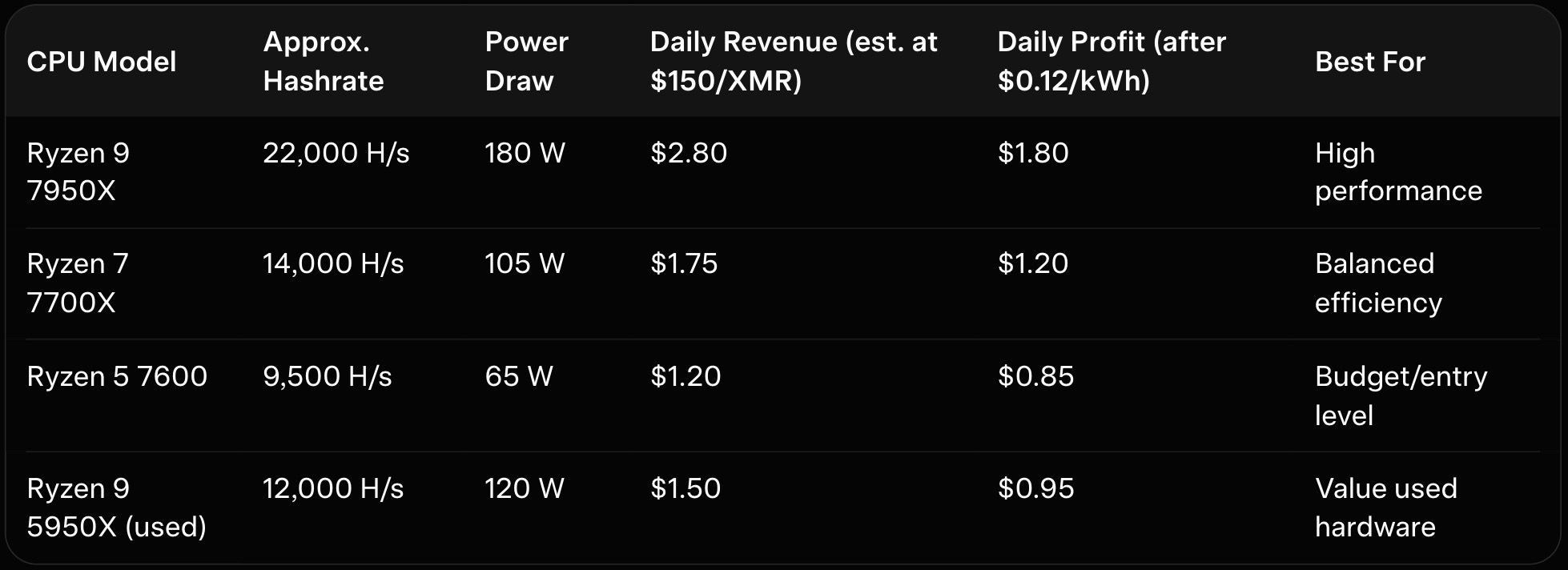
You don’t need expensive hardware to mine Monero. Any modern CPU with 6+ cores and good cache performs well. High-end options like AMD Ryzen 9 7950X or Ryzen 7 7700X deliver 15,000–25,000 H/s with moderate power draw (100–180 W). Mid-range Ryzen 5 7600 or older Ryzen 9 5900X/5950X achieve 8,000–15,000 H/s. Intel Core i7/i9 from 12th–14th gen are competitive but generally trail AMD in efficiency. Laptops can mine at reduced rates but are not recommended for 24/7 use due to heat and battery wear.
In 2026, realistic hashrate on a typical home PC is 5,000–20,000 H/s. Higher cache and core count = better results. Electricity cost is the main profitability factor—aim for $0.10–$0.15/kWh or less. As explained in our guide on how Monero privacy features work, the CPU focus keeps mining open to hobbyists.
Step-by-Step Setup: Software and Wallet
Getting started takes under 30 minutes. First, download and install a Monero wallet—use the official GUI or CLI wallet from getmonero.org for maximum security. Create a new wallet and back up your seed phrase. This gives you a private address to receive mining rewards.
Next, download XMRig, the most popular open-source miner. Get it from the official GitHub repository to avoid malware. Configure XMRig with a simple config file or the wizard: enter your wallet address, choose a mining pool URL, set thread count (usually matching your CPU cores), and enable huge pages for better performance. Run the miner in a terminal or as a background service. Monitor hashrate and temperature with tools like HWMonitor. As explained in our secure crypto wallet setup guide, a secure wallet is essential before mining.
Choosing a Mining Pool vs Solo Mining
Most beginners join a mining pool for consistent payouts. Popular pools in 2026 include SupportXMR (stable, frequent payouts), NanoPool (multi-coin flexibility), and P2Pool (fully decentralized, 0% fee). Pools charge 0–1% and pay out daily or weekly based on shares. Solo mining is possible but high-risk—you need very high hashrate to find blocks regularly, making it unsuitable for home setups. Pools are the practical choice for steady income.
Here is the CPU performance comparison table:
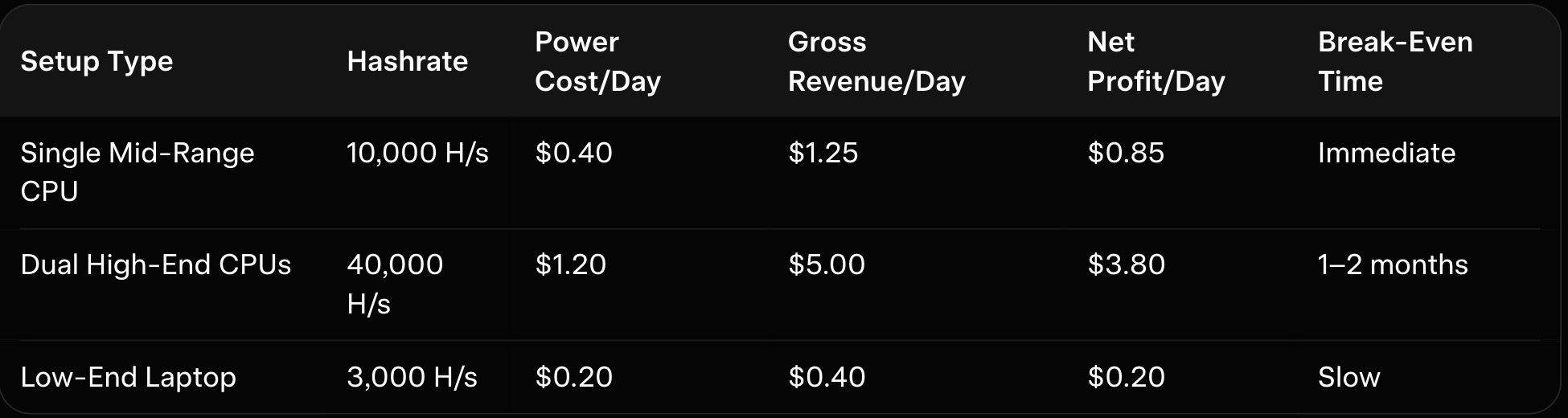
Here is a mining profitability context table (2026 averages at $150 XMR price):
Profitability Factors and Operational Tips
Profitability in 2026 depends on electricity cost, XMR price, and hashrate. At $0.10–$0.15/kWh, mid-range CPUs generate modest but positive net profit. Tail emission guarantees the block reward never drops to zero. Operational tips: keep CPU temperatures under 80°C, enable huge pages, use efficient cooling, and join a pool with low payout thresholds. Risks include hardware wear and price volatility.
How baltex.io Enables Miners to Swap XMR and Access Cross-Chain Liquidity
Mining rewards are only useful once converted into spendable assets or cash. Private Swap mode inserts shielded Monero hops that fully break on-chain links using ring signatures and stealth addresses before delivering clean assets on destination chains. Settlements complete in 8–35 minutes even for cross-chain pairs, fees stay low at ~0.4–0.8%, and there are virtually no limits. Supporting over 10,000 tokens across 200+ networks without manual bridging, baltex.io delivers true one-click optimization for miners.
Conclusion
Mining Monero on a PC in 2026 is accessible, privacy-aligned, and profitable for users with modern CPUs and cheap electricity. RandomX keeps the network decentralized, tail emission ensures steady rewards, and simple setups let beginners start earning immediately. While profitability is modest compared to GPU mining, it supports Monero’s ethos and provides a sustainable passive income stream.
Always monitor electricity costs, start small, and keep your wallet secure.
Is Monero mining profitable on a PC in 2026? 
What CPU is best for mining XMR?
Should I mine solo or join a pool?
Is baltex.io good for swapping mined XMR?
See others posts

G. Khan

Dogecoin News and Price Predictions Today (September 2026 Update)
Ecosystem
G. Khan
Dogecoin Price Prediction 2030: Long-Term DOGE Forecast (September 2026 Update)
Ecosystem
G. Khan
Dogecoin Price Prediction 2027
Ecosystem
G. Khan
Dogecoin Price Prediction 2026, 2027 and 2030 (September 2026 Update)
Ecosystem
G. Khan
Solana Price Prediction 2030 (September 2026 Update)
Ecosystem
G. Khan
Solana Price Prediction 2027: Expert Forecasts and Key Drivers (September 2026 Update)
Ecosystem