


 5 minutes to read
 Ecosystem
LTC vs BCH: Which is Better for Low-Fee Exchange Entry? (2026)
Picking the right coin for low-fee entry into crypto can save real money and time, especially when you're moving funds in for the first time. Litecoin (LTC) and Bitcoin Cash (BCH) both forked from Bitcoin with the goal of faster, cheaper transactions. In 2026 they still deliver sub-cent fees, yet differences in block times, capacity, liquidity, and real-world use make one better than the other depending on what you need.
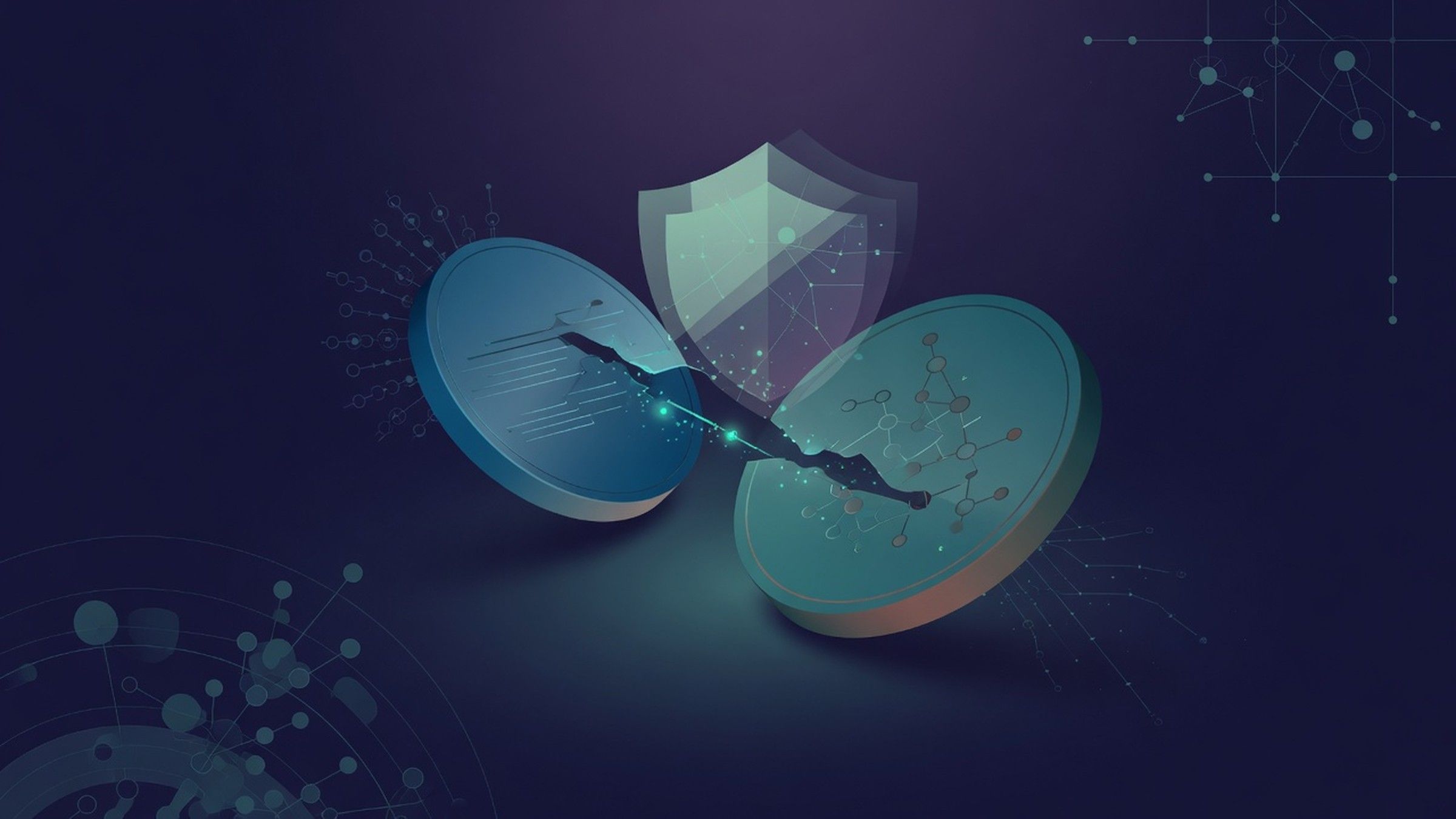
Verdict summary: Bitcoin Cash usually wins on the absolute lowest fees—often below 0.2 cents. Litecoin offers quicker confirmations and stronger liquidity on exchanges, so it edges ahead for frequent small entries or when you plan to swap further. The best choice comes down to whether you want raw minimum cost (BCH) or a balanced mix of speed and adoption (LTC). Aggregators that pull liquidity from many sources make both even easier to use without extra overhead.
Background on Litecoin (LTC)
Litecoin started in 2011 as a lighter, quicker version of Bitcoin. It switched to the Scrypt algorithm and cut block times to 2.5 minutes—about four times faster than Bitcoin. By 2026 it remains a liquid asset with steady daily volumes that support payments and peer-to-peer trades.
Average fees sit around $0.002 or lower, staying predictable even when bigger chains get congested. That stability appeals to anyone making their first moves into crypto. The network keeps Bitcoin-style tools while adding optional privacy features like Mimblewimble in some setups. Major exchanges and wallets support it, so getting started feels straightforward.
It handles high-volume, low-value transfers without losing the security model it inherited. Fees rarely spike, which helps when markets move fast. The 84-million-coin cap gives it scarcity similar to Bitcoin, and it works well for cross-border transfers where speed matters alongside cost.
Its 2.5-minute block interval delivers quicker confirmations, which helps when entering positions through exchanges that need multiple on-chain deposits. Fees stay negligible even during moderate network load, so repeated small swaps remain economical.
Background on Bitcoin Cash (BCH)
Bitcoin Cash came from the 2017 Bitcoin hard fork that raised block-size limits. The bigger blocks let the network process far more transactions while keeping fees tiny. In 2026 it positions itself as everyday electronic cash, with most transfers costing under a penny and often just fractions of a cent.
Larger blocks give it real on-chain capacity for merchants and bulk moves. It keeps Bitcoin's UTXO model and proof-of-work mining but focuses on scaling the base layer instead of leaning only on second-layer fixes. Point-of-sale integrations show off its near-zero receiving costs.
Fees stay low even as volumes change. The 21-million-coin cap matches Bitcoin. For exchange entry, the design shines when you want to move larger amounts without fees eating into the total.
The chain has undergone several upgrades since the split, adding basic smart-contract capabilities while retaining the original proof-of-work consensus. Most recently, the May 15, 2026 upgrade added pay-to-script, bounded loops, function definitions and bitwise operations.
Transaction Fees Comparison
Fees are the main reason people look at these two coins. In mid-2026, Litecoin averaged about $0.0022 per transaction, and LTC now trades near $59 (October 23, 2026). Bitcoin Cash often settles for under 0.2 cents thanks to its bigger blocks. Both rarely climb above a few cents even during busy periods.
BCH usually takes the edge on raw cost for the same transfer size. Litecoin's faster blocks help clear transactions quicker, which indirectly supports fee stability. Live network data shows both beat most alternatives for ongoing low-cost activity. Watch exchange withdrawal policies too—they can add costs beyond the base network fee.
Speed and Scalability
Litecoin's 2.5-minute blocks give practical finality in roughly that time, handy when you want to swap or move funds right after entry. Bitcoin Cash uses 10-minute blocks but packs more transactions per block, so it handles volume without fee spikes. In 2026 both networks run reliably.
BCH scales better for bulk merchant or aggregated entries. Litecoin scales through its ecosystem and occasional upgrades. Neither depends heavily on layer-two solutions for core use, keeping things simple.
Use Cases for Exchange Entry
LTC works well for fast, reliable on-ramps with good liquidity across exchanges. BCH suits cost-sensitive inflows like remittances or merchant accounts where every fraction of a cent counts. Cross-border users like both, but BCH feels closest to cash. Aggregators make either option smoother by routing liquidity efficiently.
Fee levels, wallet availability, and downstream swap options should guide the decision. Beginners focused on quick, repeated small entries usually prefer LTC. Those planning occasional larger transfers may find BCH’s block capacity advantageous. Always verify current network conditions before moving significant value.
Security and Adoption
Both inherit strong security from Bitcoin's mining model. Litecoin benefits from wide visibility and platform support. BCH has a dedicated community built around its cash-use focus. Adoption grows steadily, backed by clearer rules in many places.
In March-April 2026 Litecoin's MWEB privacy layer suffered its first major exploit: a validation flaw let an attacker create an inflated peg-out of about 85,034 LTC, most of which was returned, and a second attempt on April 25 caused a 13-block reorganization. The root bug is fixed in Litecoin Core 0.21.5.4 or later. The postmortem reports no confirmed user losses in March, but some swap services, including NEAR Intents and THORChain routes, lost funds on swaps made on the invalid chain.
How to Get Started with Low Fees
Pick a wallet that supports your coin, fund it through an exchange or direct swap, and check live fees first. Start small to test addresses and confirmations. Aggregators help optimize the route and keep total costs down.
When choosing an entry method, factor in the total cost including withdrawal fees from the exchange or aggregator. Both LTC and BCH keep these costs minimal, but LTC’s shorter confirmation window often reduces the time funds sit locked during deposit verification.
Pros and Cons of Each
LTC pros: faster blocks, solid liquidity, predictable low fees. Cons: slightly higher fees than BCH at times, less emphasis on massive throughput.
BCH pros: exceptionally low fees, high capacity. Cons: slower confirmations, sometimes thinner order books on certain pairs.
Litecoin has lower name recognition than Bitcoin or Ethereum, which can mean thinner order books on smaller exchanges. During extreme volatility, liquidity for LTC pairs can dry up faster than major assets.
Longer block times mean slower finality compared with LTC. Adoption in DeFi protocols and wallet apps remains narrower, which can complicate routing when users later want to exit into other chains.
Role of Swap Aggregators like Baltex
Non-custodial platforms such as Baltex pull liquidity from many providers across 200+ blockchains and more than 10,000 assets. They support Litecoin and Bitcoin Cash for instant cross-chain swaps without registration for most transactions. The service routes through CEX, DEX, and other sources while running AML screening on flagged activity. This keeps extra costs low and avoids custody. Monero-based privacy routing exists for users who want it, though it is never presented as guaranteed anonymity. For low-fee entry, the infrastructure simply makes moving between assets practical and efficient.
Future Outlook
Both LTC and BCH should stay relevant in 2026 and beyond as networks keep optimizing and communities stay active. Stable fees and ongoing scalability work will keep them attractive for anyone watching costs.
Litecoin's next halving is expected around July 2027 (block 3,360,000), cutting the block reward from 6.25 to 3.125 LTC.
Practical Tips for Users
Check live fee data before you move, spread entry methods, and factor in every platform charge. Wallet security basics matter no matter which coin you pick.
Use hardware wallets or reputable non-custodial interfaces for storage after the initial swap. Enable two-factor authentication on any exchange accounts. Double-check deposit addresses and network selection to avoid lost funds. When using aggregators, review the route summary before confirming to understand which liquidity sources are involved.
This article is for informational purposes only and does not constitute financial advice. Past performance does not guarantee future results. Crypto assets involve risk of loss.
We cover this in more detail in How to Swap Coins on Crypto.com: Fast Tutorial with Low Fees.
Related reading: What Is the Arbitrum Bridge and Which Assets Does It Support.
We cover this in more detail in How to Swap Coins on Crypto.com: Fast Tutorial with Low Fees.
Related reading: What Is the Arbitrum Bridge and Which Assets Does It Support.
Which has lower transaction fees, LTC or BCH?
Is LTC or BCH better for beginners entering crypto?
How do LTC and BCH compare in transaction speed?
Can I use Baltex for LTC or BCH swaps?
What are the main risks of using LTC or BCH for exchange entry?
Are LTC and BCH good for cross-chain swaps?
See others posts
G. Khan

How to Buy Bitcoin and USDT in India (INR) (October 2026)
Ecosystem
G. Khan
The 10 Best Places to Buy Crypto Online in 2026
Ecosystem
G. Khan
The Cheapest Way to Buy Crypto: Fees by Payment Method Compared (October 2026)
Ecosystem
G. Khan
How to Buy Bitcoin and Ethereum in Canada (2026)
Ecosystem
G. Khan
How to Buy Bitcoin in the UK and Australia (October 2026)
Ecosystem
G. Khan
How to Buy Solana with a Credit or Debit Card (October 2026)
Ecosystem