 1 minute to read
 Ecosystem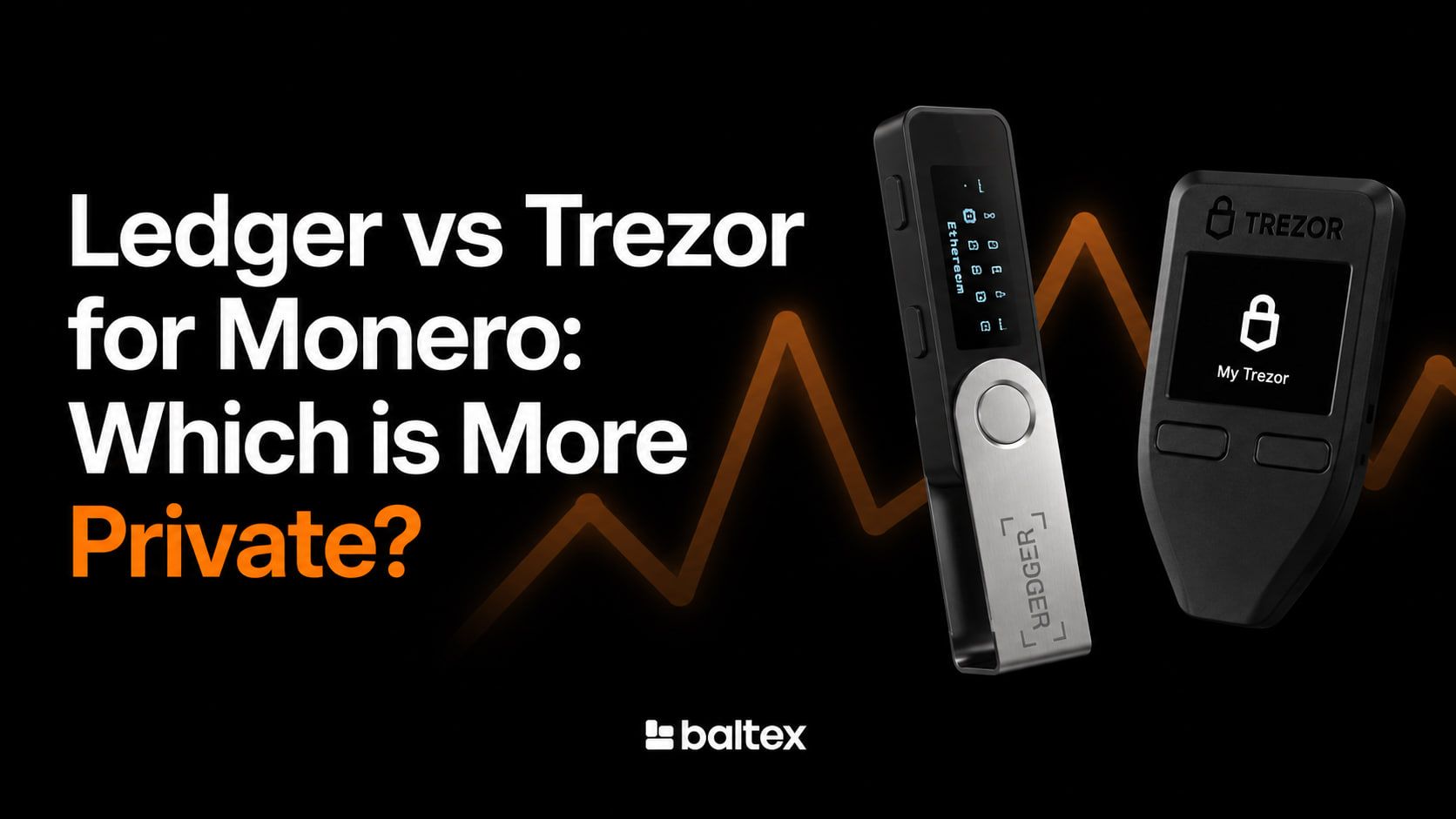
Ledger vs Trezor for Monero: Which Is More Private?
TLDR
Both Ledger and Trezor provide strong protection for Monero private keys by keeping them offline, but they differ significantly in firmware transparency and trust model. Trezor’s fully open-source approach generally appeals more to privacy maximalists, while Ledger’s secure element offers robust physical protection at the cost of partial closed-source components. For users receiving Monero through swaps, either device works well when paired with clean operational practices and immediate transfer to cold storage.
Monero’s privacy features protect transaction details but place full responsibility for key security on the user. Hardware wallets reduce the risk of remote theft compared to software or exchange storage. Choosing between Ledger and Trezor involves weighing transparency against certain hardware security features.
Security Architecture Overview
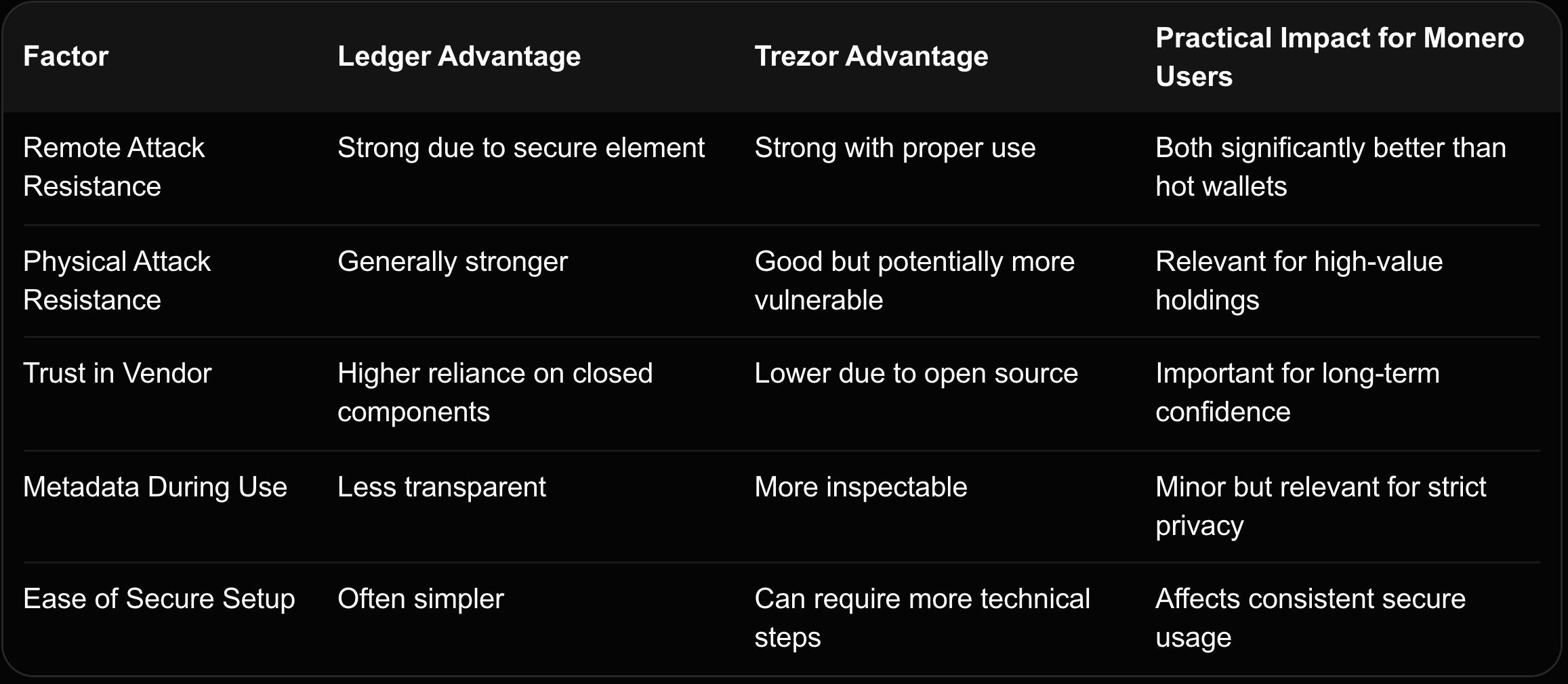
Ledger devices store private keys inside a secure element chip designed to resist physical extraction and side-channel attacks. This hardware-level protection makes it difficult for an attacker with physical access to extract keys even if they have malware on the connected computer. The architecture prioritizes resistance to physical tampering.
Trezor devices rely on a combination of open-source firmware and standard microcontrollers. Keys are generated and used within the device, but the lack of a dedicated secure element means physical attacks could theoretically be more feasible if an attacker has extended access and specialized equipment. In practice, both devices offer excellent protection for most users when used correctly.
Monero wallet security best practices protect XMR and best cold storage options Monero XMR outline complementary habits that maximize the benefits of either hardware wallet.
Firmware Transparency and Trust Model
Trezor’s firmware and hardware designs are fully open source, allowing independent audits and verification by the community. This transparency reduces the need to trust a single vendor’s security claims. Privacy-focused users often prefer this model because it aligns with Monero’s emphasis on minimizing trusted parties.
Ledger’s firmware is partially open source, but the secure element remains closed. Users must place greater trust in Ledger’s manufacturing process and update mechanisms. While Ledger has improved transparency over time, the closed component creates a philosophical difference for users who prioritize complete auditability.
How to set up Monero wallet step by step and Monero GUI vs CLI wallet which to use help users prepare their software environment before connecting either device.
Monero Support Quality and Compatibility
Both Ledger and Trezor support Monero, though the quality and ease of integration vary. Ledger offers a dedicated Monero app through Ledger Live with relatively smooth transaction signing. Trezor support often involves Trezor Suite or community tools and can require more manual configuration for some users.
Compatibility with popular Monero wallets such as the official GUI or mobile apps also differs slightly between the two. Users should verify current compatibility before purchasing, as protocol updates can temporarily affect support. Both devices allow users to generate Monero addresses and sign transactions securely.
Best apps buy Monero XMR mobile 2026 and best Monero mobile wallets iOS Android compared provide options for managing Monero on the go before or after using hardware wallets for long-term storage.
Privacy Implications and Metadata Exposure
When connected to a computer, both devices can potentially leak some metadata through the connection itself, such as device type or firmware version. Trezor’s open-source nature allows users to inspect exactly what information is shared. Ledger’s closed components make this inspection more difficult.
For Monero users, the key privacy consideration is whether the device introduces new linkability between on-chain activity and the user’s identity. Neither device requires KYC or account creation, so the main metadata risk comes from the connected computer and any software used alongside the hardware wallet. Using the devices with privacy-focused operating systems or in air-gapped setups further reduces exposure.
On-chain privacy break wallet links explains why combining hardware wallets with clean swap routing strengthens overall privacy.
Backup Methods and Recovery Considerations
Both Ledger and Trezor use standard seed phrase backups that must be stored securely offline. Ledger supports an optional passphrase for additional protection. Trezor also offers passphrase support and has strong documentation for recovery procedures.
Losing the seed phrase results in permanent loss of access regardless of which device is used. Users should create durable backups, such as metal plates, and store them in multiple secure locations. Testing the recovery process with small amounts before transferring significant holdings is strongly recommended.
Restore Monero wallet from seed phrase and Monero paper wallet how to create safely provide foundational knowledge for secure backup practices.
Practical Workflows for Storing Swapped Monero
After completing a non-custodial swap into Monero, users should immediately generate a receiving address on their hardware wallet and transfer the XMR there. This minimizes the time the coins spend on hot wallets or exchanges. Labeling the transaction and verifying the address on the device screen before confirming adds an important safety layer.
For maximum privacy, users can create a new wallet or subaccount on the hardware device specifically for swapped funds. Avoiding reuse of addresses across different sources helps maintain separation. Regular verification of balances on the device itself, rather than only through connected software, reduces reliance on potentially compromised computers.
Swap BTC to XMR anonymously complete guide and how to swap Bitcoin for Monero easy methods demonstrate clean entry points that pair well with immediate cold storage.
How Baltex Fits into Secure XMR Acquisition and Cold-Storage Workflows
Baltex is a non-custodial cross-chain swap platform supporting 10,000+ tokens with no KYC that enables users to receive Monero directly into a wallet they control before moving it to a hardware device. Because Baltex never holds funds, users can complete the swap and transfer the XMR to their Ledger or Trezor in one continuous, private workflow without intermediate custody on any exchange.
Baltex is a non-custodial cross-chain swap platform supporting 10,000+ tokens with no KYC aggregates liquidity across many sources while keeping the entire process non-custodial. Users can prepare their hardware wallet in advance, generate a fresh receiving address, and route the swap output straight to cold storage. Optional privacy routing during the swap further protects the path between the source asset and the final Monero deposit on the device.
Swap BTC to XMR anonymously complete guide and no KYC crypto swaps USDT to XMR privately show how Baltex supports clean handoff to hardware wallets. ETH to XMR exchange transfer Ethereum to Monero safely and swap USDT to XMR without KYC demonstrate flexible entry points that work well with immediate cold storage.
Baltex is a non-custodial cross-chain swap platform supporting 10,000+ tokens with no KYC turns the moment of receiving swapped Monero into a secure transition to hardware wallets without creating new data collection points. It removes the need to custody XMR on centralized platforms during the handoff from swap to cold storage, preserving both privacy and user control throughout the process.
Best apps buy Monero XMR mobile 2026 and best Monero mobile wallets iOS Android compared help users manage the receiving side before final transfer to Ledger or Trezor.
Device Comparison Table
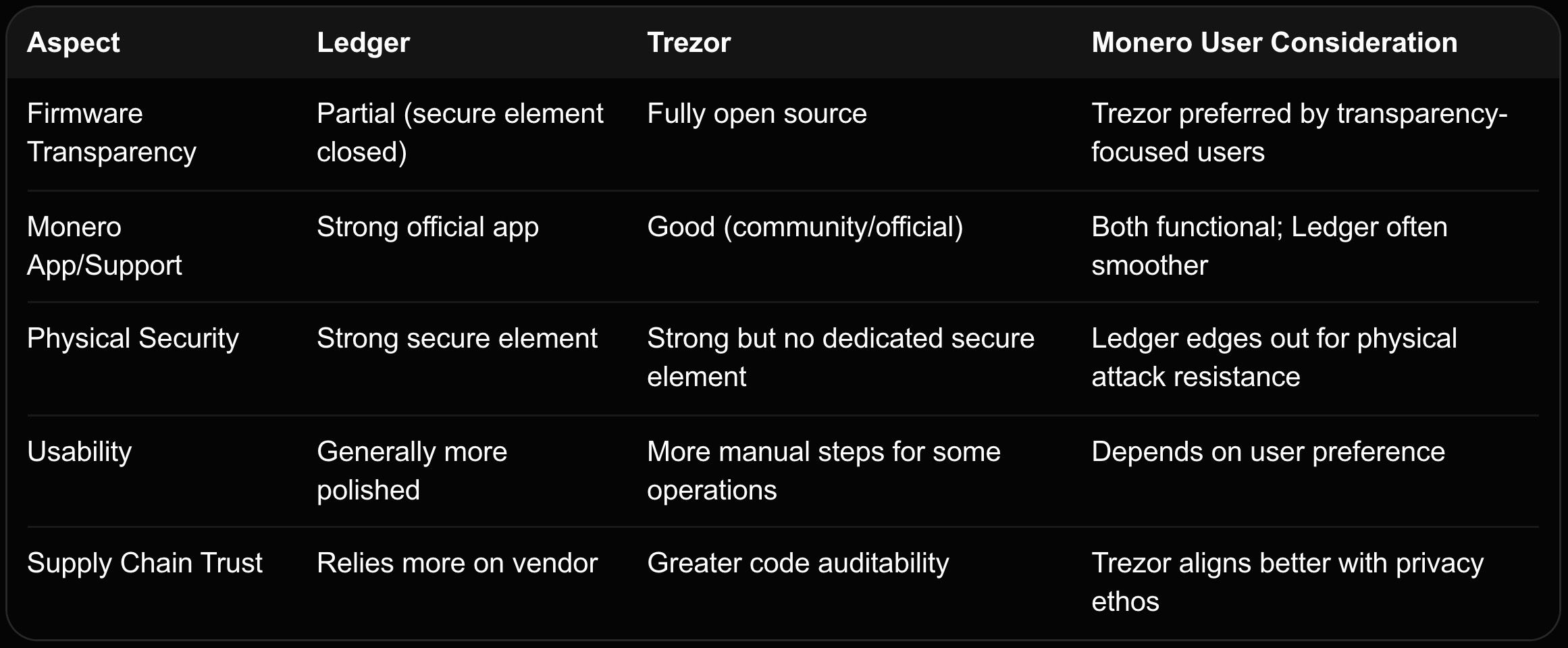
Privacy and Security Trade-offs Table
FAQ
Which hardware wallet is more private for Monero? Trezor generally edges out for users who prioritize firmware transparency and reduced trust in a single vendor. Ledger offers strong practical security through its secure element.
Can I use either device with the official Monero GUI wallet? Yes. Both Ledger and Trezor can be used with the Monero GUI, though setup steps differ slightly between the two.
Should I move swapped Monero to hardware storage immediately? Yes. Transferring XMR from the swap output directly to a hardware wallet minimizes exposure time on hot wallets or exchanges.
Do Ledger or Trezor leak metadata when used with Monero? Both can leak some device metadata when connected to a computer. Using them with privacy-focused setups reduces this exposure.
How do I safely receive swapped XMR on a hardware wallet? Generate a fresh address on the device, verify it on the screen, and send the swap output directly to that address.
Final Thoughts
Ledger and Trezor both offer excellent protection for Monero private keys, with meaningful differences in transparency and hardware architecture. Trezor’s open-source approach aligns closely with Monero’s privacy philosophy, while Ledger provides robust physical security through its secure element. The best choice depends on whether users prioritize auditability or specific hardware protections.
For users receiving Monero through swaps, either device significantly improves security when funds are moved promptly to cold storage. Best cold storage options Monero XMR and Monero wallet security best practices protect XMR reinforce why hardware wallets are essential after swaps. Swap BTC to XMR anonymously complete guide and how to swap Bitcoin for Monero easy methods show clean workflows that end with secure hardware storage. Your Monero stays protected, your keys remain offline, and your privacy benefits from the complete process.
Ready to store your swapped Monero securely? Complete your swap through Baltex and transfer directly to your chosen hardware wallet for long-term cold storage. Stay in control and protect your holdings.
Related reading: SimpleSwap Review 2026: Pros, Cons, and Monero Exchange Fees.
We cover this in more detail in Aztec Network: Best for Programmable Private Smart Contracts.
You can read our full breakdown in XMR.to Alternatives: How to Pay Bitcoin Invoices with Monero.
You can read our full breakdown in Zcash (ZEC) vs Monero (XMR): Which Privacy Coin Wins in 2026.