



 5 minutes to read
 Ecosystem
Monerujo Wallet Review (June 2026): The Best Android Monero Wallet?
Monerujo is a long-standing Android-only wallet focused exclusively on Monero (XMR). First released years ago as one of the earliest mobile options for the privacy coin, it has evolved with features tailored to Monero's unique ring-signature privacy model. In 2026 it remains popular among users who prioritize control over their keys and seamless integration with the Monero blockchain without multi-coin distractions.
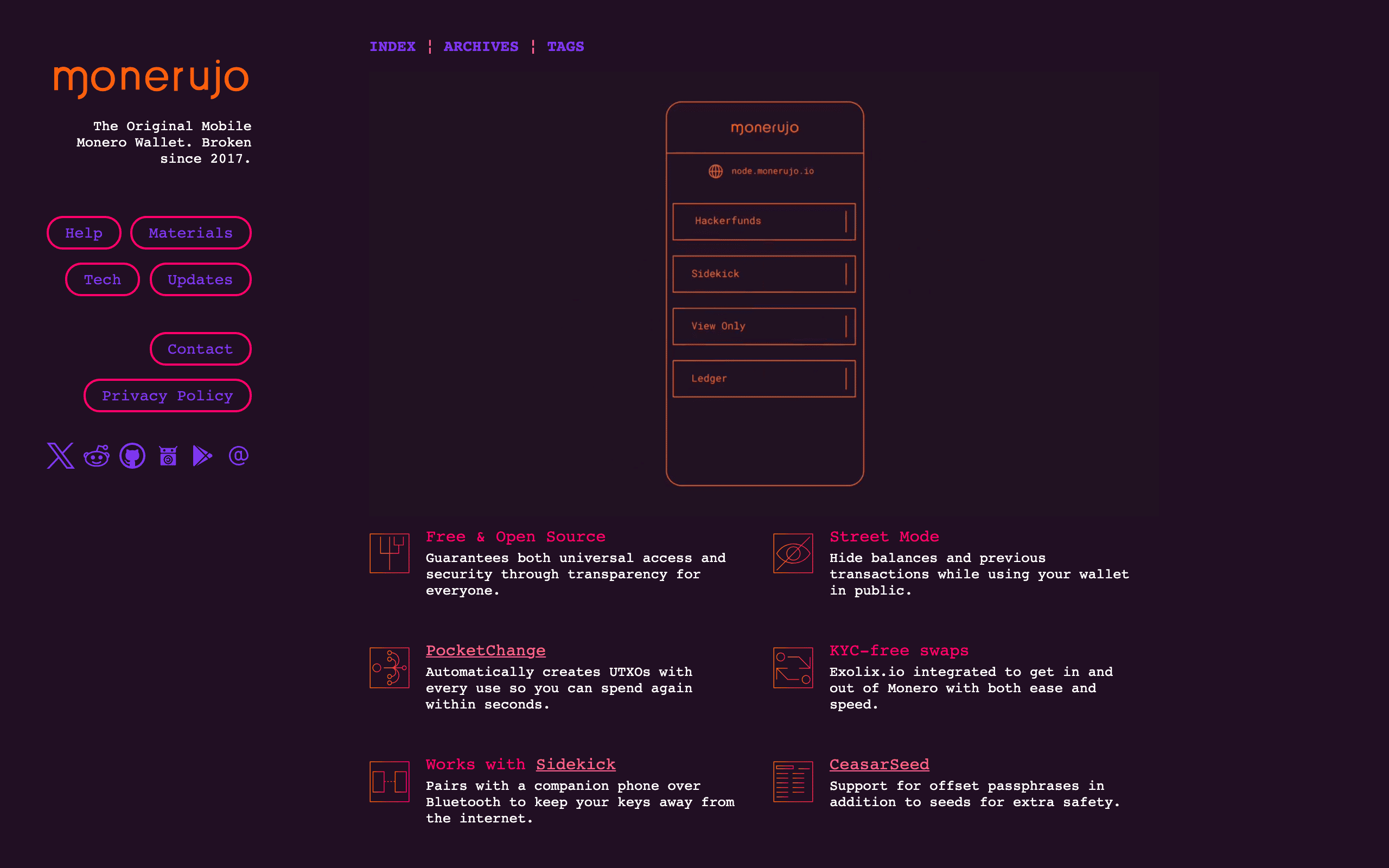
This review examines real-world performance, security practices, fees, and community sentiment based on available data from app stores, forums, and expert sources as of June 2026. Monerujo delivers a lightweight remote-node experience that keeps private keys fully on the user's device while offering specialized tools like Street Mode and PocketChange. Its main strength lies in deep Monero customization, though the interface can feel dated compared to newer multi-platform alternatives.
What is Monerujo?
Monerujo originated as a community-driven project to bring Monero functionality to Android phones at a time when few options existed. It uses remote nodes for blockchain synchronization rather than requiring a full node on the mobile device, making it practical for everyday use. The wallet supports multiple accounts and subaddresses within a single app, along with offset passphrases for additional security layers.
The project maintains an open-source codebase on GitHub, allowing transparency in how transactions are handled and how privacy features are implemented. As of 2026, it continues to receive updates focused on compatibility with the latest Monero protocol changes, including dynamic block sizes that keep fees low even for complex transactions. Users appreciate its dedication to Monero's cypherpunk ethos, including options to run personal nodes for maximum decentralization.
Unlike broader wallets that support dozens of cryptocurrencies, Monerujo stays laser-focused on XMR. This specialization allows deeper implementation of Monero-specific tools such as automatic change management via PocketChange. The app also integrates Tor via Orbot for added routing privacy when desired. Over the years it has built a reputation as a reliable choice for Android users who want to avoid custodial services entirely.
How Monerujo works
Monerujo operates as a light client that connects to remote Monero nodes for syncing wallet data. Private keys and seeds never leave the device; all signing happens locally. When a user initiates a transaction, the app constructs it using the device's resources and broadcasts it through the chosen node.
The wallet supports standard Monero operations including sending to integrated addresses, viewing balances in multiple fiat equivalents, and managing multiple wallets. Features like Street Mode can be toggled to obscure balances on the screen, useful in public settings. For advanced users, custom node selection allows connection to personally operated or trusted public nodes.
Hardware integration works by pairing with Ledger devices, where the Monerujo app acts as an interface while the hardware handles signing. Sidekick mode, an optional feature, enables air-gapped signing by using a second offline Android device via Bluetooth. This setup enhances security for larger holdings by keeping the primary signing device completely disconnected from networks.
PocketChange automatically splits change outputs across multiple addresses during spends. This creates smaller, readily spendable outputs that reduce future transaction times and fees, leveraging Monero's dynamic block size to keep costs minimal. The mechanism adds a small number of extra outputs per transaction but remains economical given current network conditions in 2026.
Key features
Monerujo includes several standout capabilities that differentiate it from generic mobile wallets. Street Mode hides balances and transaction history with a single toggle, providing immediate protection against shoulder-surfing or device theft scenarios common in mobile use.
The app supports offset passphrases in addition to the standard 25-word seed, adding a layer of plausible deniability. Users can also scan for open public nodes automatically or manually input their own for customized connectivity.
Multiple color schemes support both light and dark modes, improving usability in various lighting conditions. The interface allows viewing balances in various currencies, though some users note limitations in displaying full precision digits.
KYC-free exchange integration is built in for direct swaps within the app. For broader needs, users can combine it with external non-custodial services. Baltex, a non-custodial crypto swap aggregator supporting over 200 networks including Monero, serves as one option for routing private cross-chain swaps without account creation in most cases.
Ledger hardware support and Sidekick pairing extend usability beyond software-only security. The wallet manages multiple accounts and addresses efficiently, suiting power users who generate many subaddresses for privacy.
Fees and pricing
Monerujo itself charges nothing for installation or basic use. All costs stem from the Monero network's dynamic fee market, which in 2026 remains very low due to efficient block sizing. Typical transactions cost fractions of a cent even when PocketChange generates additional outputs.
Integrated swap services may add third-party fees depending on the provider chosen at the time of exchange. Users should check current rates within the app before confirming any swap. No subscription or premium tier exists; the full feature set remains available to all users.
Hardware wallet pairing incurs no extra wallet fees, though standard Monero network fees still apply. Overall, the cost structure favors frequent small transactions typical of privacy-focused spending.
Security
The security model keeps all keys encrypted on the Android device using local storage protections and an optional additional password. No funds are held by the app or any third party. Remote node usage means the wallet does not download the full blockchain, reducing local resource demands while still verifying transactions through node responses.
Community audits and the open-source nature allow ongoing scrutiny. No major exploits or fund losses have been widely reported in 2026. Sidekick mode further isolates signing operations, making it suitable for higher-value holdings.
Users should enable strong device-level security such as biometric locks and keep the app updated. The CrAzYpass feature adds entropy to wallet encryption. As with any mobile wallet, risks include device compromise, so backups of the seed phrase remain essential.
User reviews & reputation
On Google Play, Monerujo holds a rating around 3.6 stars from over 1,100 reviews as of mid-2026. Positive comments highlight stability, privacy features, and reliable Monero support. Users praise the ability to add custom nodes and the overall non-custodial design.
Criticisms often focus on the interface feeling outdated or clunky, with navigation issues such as needing to press back repeatedly between wallets. Some report occasional node connection problems after updates. Reddit discussions in Monero communities generally view it positively for Android-specific use, noting improvements over time and recommending it alongside other options.
Expert sources like CoinBureau have historically described it as safe and community-recommended. Recent 2026 roundups position it as a top dedicated Android Monero wallet for users seeking specialized tools rather than broad coin support. Reputation remains strong within the Monero ecosystem for delivering on privacy promises without unnecessary complexity.
Pros and cons
Pros:
- Strong Monero-specific features including PocketChange, Street Mode, and Sidekick
- Fully non-custodial with local key storage
- Free to use with low network fees
- Hardware wallet and custom node support
- Open-source codebase for transparency
- Lightweight remote-node sync suitable for mobile
Cons:
- Android-only, no iOS version
- Interface can feel dated and less polished than competitors
- Limited multi-coin support
- Occasional user reports of node connectivity issues
- Fewer updates compared to multi-platform wallets
Who is Monerujo best for?
Monerujo suits Android users deeply invested in Monero who want advanced privacy controls and do not need support for other cryptocurrencies. It appeals to those comfortable with technical options like custom nodes and air-gapped signing setups.
Daily users who frequently spend small amounts benefit from PocketChange's spendability improvements. Privacy-conscious individuals appreciate Street Mode and Tor integration for public or high-risk environments. It also works well as a companion to hardware wallets for on-the-go access.
Those seeking a single app for many coins or iOS compatibility may prefer alternatives. Beginners might find the interface less intuitive than more modern designs.
Monerujo alternatives
For context, other Monero-focused options include Cake Wallet, which offers broader coin support and iOS availability, and the official Monero GUI for desktop users. Multi-coin wallets like Edge provide more general functionality but less specialization in Monero tools.
Monerujo stands out for its depth in Android Monero features rather than competing directly on breadth.
Verdict / Is Monerujo worth it?
Monerujo delivers a capable, privacy-oriented Android experience for Monero in 2026. Its specialized features address real mobile use cases effectively, and the non-custodial model aligns with Monero principles. Drawbacks center mainly on the interface and platform limitation. For dedicated Android Monero users, it remains a strong contender worth considering alongside personal testing.
Overall it earns a solid recommendation for its target audience while highlighting the importance of DYOR.
Monerujo continues to evolve with the Monero network, maintaining relevance through focused development rather than feature bloat.
Practical usage tips
New users should start by restoring or creating a wallet and testing small transactions. Enabling PocketChange improves daily usability noticeably over time. Pairing with a Ledger adds significant security for larger balances.
For maximum privacy, combine Street Mode with Tor routing and custom nodes. Regular seed backups and device security checks help mitigate risks. Monitoring app updates ensures compatibility with protocol upgrades.
In scenarios involving cross-chain needs, integrating with aggregators expands options without compromising the core wallet's strengths.
The wallet's design encourages self-sovereignty, fitting the broader Monero philosophy of financial privacy and decentralization.
Future outlook
As Monero development progresses in 2026 and beyond, Monerujo's open-source approach positions it to adapt quickly. Continued focus on mobile-specific innovations like enhanced Sidekick capabilities could further differentiate it.
Community feedback will likely drive refinements to the interface. Its niche positioning ensures it serves a dedicated user base effectively rather than chasing mass-market appeal.
Users interested in the project can follow official channels for announcements on new releases and Monero ecosystem changes.
This concludes the in-depth examination of Monerujo's strengths and limitations based on available 2026 data.
Is Monerujo safe to use?
How much does Monerujo cost?
Does Monerujo support hardware wallets?
What networks does Monerujo support?
Is Monerujo better than Cake Wallet?
Can I swap Monero in Monerujo?
See others posts
G. Khan

Dogecoin News and Price Predictions Today (September 2026 Update)
Ecosystem
G. Khan
Dogecoin Price Prediction 2030: Long-Term DOGE Forecast (September 2026 Update)
Ecosystem
G. Khan
Dogecoin Price Prediction 2027
Ecosystem
G. Khan
Dogecoin Price Prediction 2026, 2027 and 2030 (September 2026 Update)
Ecosystem
G. Khan
Solana Price Prediction 2030 (September 2026 Update)
Ecosystem
G. Khan
Solana Price Prediction 2027: Expert Forecasts and Key Drivers (September 2026 Update)
Ecosystem