 2 minutes to read
 Ecosystem
Avalanche Core Bridge Review: Fees and Transfer Times
TLDR In 2026, the Avalanche Core Bridge is the official native gateway for moving assets from Ethereum to Avalanche C-Chain with deposits completing in 1–15 minutes and withdrawals following a 7-day challenge period for security. Fees are Ethereum L1 gas on deposits and claim gas on withdrawals, with no extra bridge commission. It supports native AVAX and major ERC-20 tokens with no limits. Compared to third-party bridges, the native Core Bridge offers the strongest security for AVAX/ETH but longer withdrawals. For faster multi-chain routing and optimized paths that often beat the native bridge on total cost and speed, baltex.io provides intelligent alternative routing—see our top-crypto-bridges-in-2025-which-are-safe-which-to-avoid for bridge comparisons. Overall, use the Core Bridge for simple secure transfers—test small first.
Crypto users and DeFi participants in 2026 use Avalanche for its high throughput, low fees, and growing DeFi ecosystem. Bridging from Ethereum to Avalanche is the key step for accessing C-Chain dApps and liquidity. The Avalanche Core Bridge is the official solution, delivering native AVAX and ERC-20s with strong security. This review analyzes the Core Bridge in 2026, covering supported assets, transfer mechanics, fees, times, risks, and comparisons with alternatives.
What Is the Avalanche Core Bridge and Which Assets Does It Support
The Avalanche Core Bridge is the official cross-chain gateway connecting Ethereum mainnet to Avalanche C-Chain. It uses checkpointing and optimistic verification for secure transfers. In 2026, the bridge supports native AVAX (converted from ETH) and major ERC-20 tokens like USDC, USDT, WBTC, and DAI. Assets arrive as native on Avalanche without wrapping. The bridge focuses on Ethereum-to-Avalanche flows, making it the cleanest option for ETH or stablecoin moves. As explained in our what-is-crypto-bridge-cross-chain-transfers-guide and top-crypto-bridges-in-2025-which-are-safe-which-to-avoid, the native bridge ensures seamless asset delivery on Avalanche.
How Transfers Work on the Avalanche Core Bridge
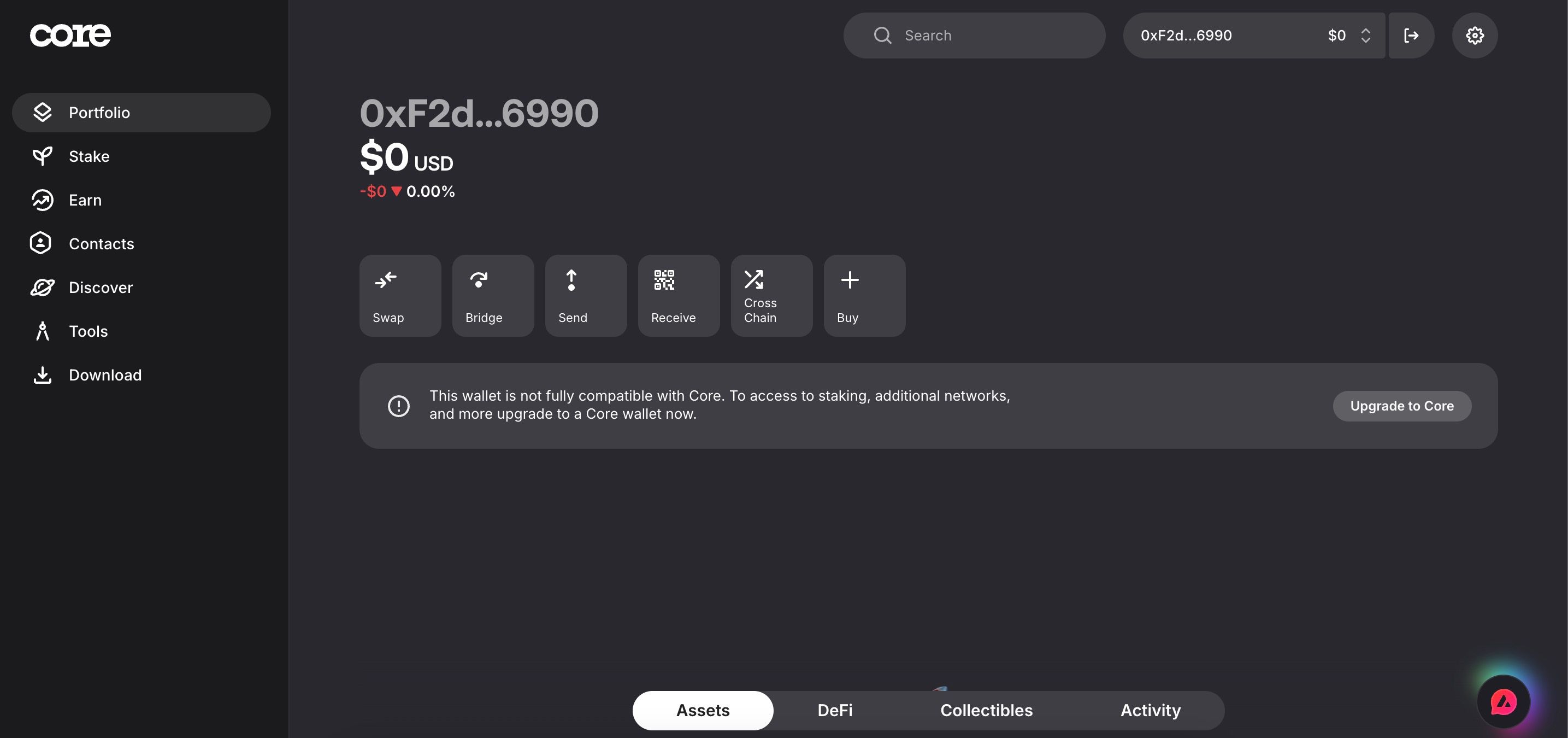
Depositing ETH to Avalanche is simple. Connect a wallet to the official bridge interface. Select Ethereum as source and Avalanche C-Chain as destination, enter the amount, and confirm on Ethereum. The bridge locks assets on L1 and mints native AVAX on Avalanche. Deposits complete in 1–15 minutes. Withdrawals burn assets on Avalanche and queue a claim on Ethereum after a 7-day challenge period. No bridge commission is charged—only Ethereum gas. For details, see our master-berachain-bridge-step-by-step-guide (similar mechanics).
Fee Structure and Transfer Times in 2026
Fees are Ethereum L1 gas only. Deposits cost $2–$15, withdrawals $5–$20 for the claim. Transfer times are 1–15 minutes for deposits and 7 days for standard withdrawals (or minutes with fast services). Liquidity is strong for ETH and stables. For cost optimization, see our best-crypto-bridge-swaps-2025-instant-transfers-low-gas and cheapest-way-to-swap-crypto-2025-save-fees-keep-profits.
Here is the feature comparison table:
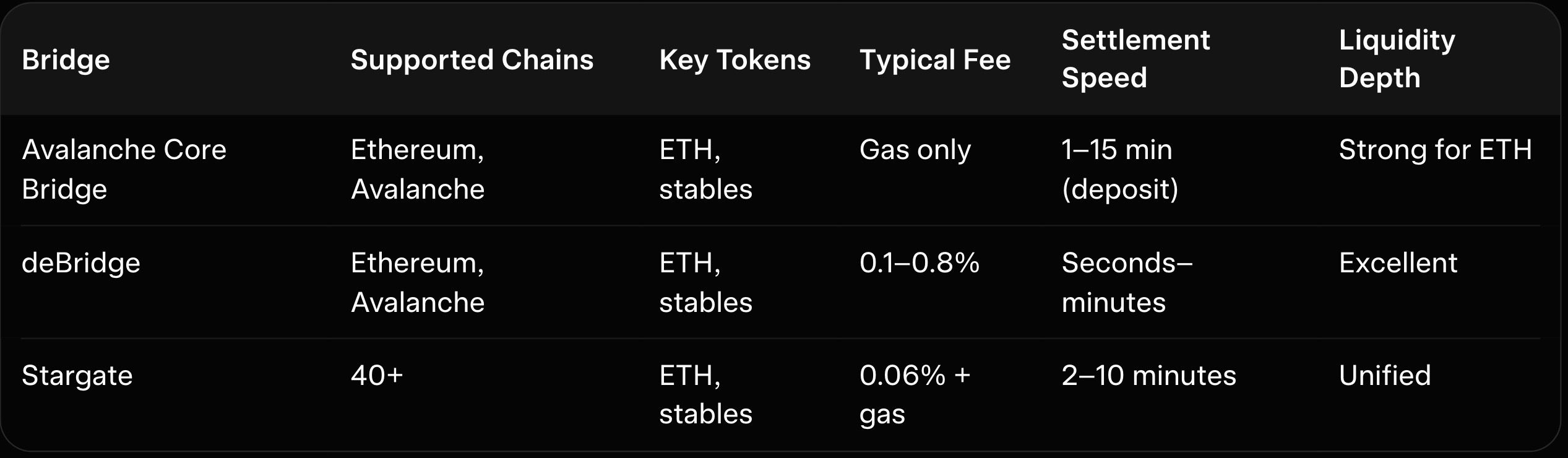
Here is a fees and limits overview:

Validator and Smart-Contract Risks
The Core Bridge uses Ethereum checkpointing for low risk. Third-party bridges add oracle dependencies but have audits. Risks include congestion or claim failures. See our what-are-the-risks-of-cryptocurrency-top-dangers-how-to-avoid.
Comparing the Core Bridge with Alternative Bridges and Cross-Chain Swap Methods
The Core Bridge is simple and secure for ETH but limited for other tokens. Alternatives like deBridge offer faster execution. Cross-chain swaps provide better flexibility. See our best-tools-for-cross-chain-swaps.
How baltex.io Enables Multi-Chain Routing Without Classic Bridge Exposure
baltex.io scans multiple bridges and DEXs internally for the optimal route in one transaction. Private Swap mode adds shielded hops. Settlements in 8–35 minutes, fees ~0.4–0.8%. It avoids classic bridge exposure. Use the Core Bridge for simple moves and baltex.io for optimization. See our top-blockchain-bridges-2025-updated-safest-cross-chain-gateways.
Conclusion
The Avalanche Core Bridge in 2026 is reliable for Ethereum-to-Avalanche transfers with native assets and strong security. By understanding fees and alternatives, users can optimize. For complex routes, baltex.io offers superior routing. Explore our top-crypto-bridges-in-2025-which-are-safe-which-to-avoid and what-is-crypto-bridge-cross-chain-transfers-guide.
Related reading: SimpleSwap Review 2026: Pros, Cons, and Monero Exchange Fees.
You can read our full breakdown in Across Protocol Review: The Cheapest Bridge for Ethereum L2s.
You can read our full breakdown in Linea Bridge Tutorial: Cheapest Ways to Move ETH (July 2026).
You can read our full breakdown in Linea Bridge Tutorial: Cheapest Ways to Move ETH (July 2026).