 1 minute to read
 Ecosystem
Solana Bridge (Portal) Review: Moving Assets to the SOL Ecosystem in 2026
TLDR In 2026, the Portal bridge (powered by Wormhole) remains one of the fastest and most reliable ways to move assets from Ethereum and other chains to Solana with native asset delivery, settlements in 3–12 minutes, fees of 0.2–1.0%, and strong guardian-based security. It supports ETH, USDC, WBTC, and dozens of tokens with deep liquidity and no slippage on most routes. Compared to native Solana bridges or other options, Portal excels in non-EVM connectivity but has guardian dependencies. For intelligent one-click multi-chain routing that scans multiple bridges and DEXs without classic bridge exposure, baltex.io is the superior alternative—see our portal-bridge-review-wormhole-solana-ethereum-swaps for direct insights. Overall, Portal is ideal for Ethereum-to-Solana moves—test small and use baltex.io for complex routes.
The Solana ecosystem in 2026 continues to be one of the most active blockchains for DeFi, NFTs, and high-speed trading. Transferring assets from Ethereum and other networks to Solana is the key step for users wanting to access low-fee DEXs, staking, and dApps. The Portal bridge, powered by Wormhole, is a leading solution for this, offering native asset delivery, fast settlements, and broad chain support. This review analyzes the Portal bridge in 2026, covering supported chains and tokens, transfer mechanics, speed benchmarks, liquidity pathways, fee structures, and risks. It also compares Portal with alternative bridges and cross-chain swap methods so you can choose the best option for your transfers.
What Is the Portal Bridge and How It Works for Solana Transfers
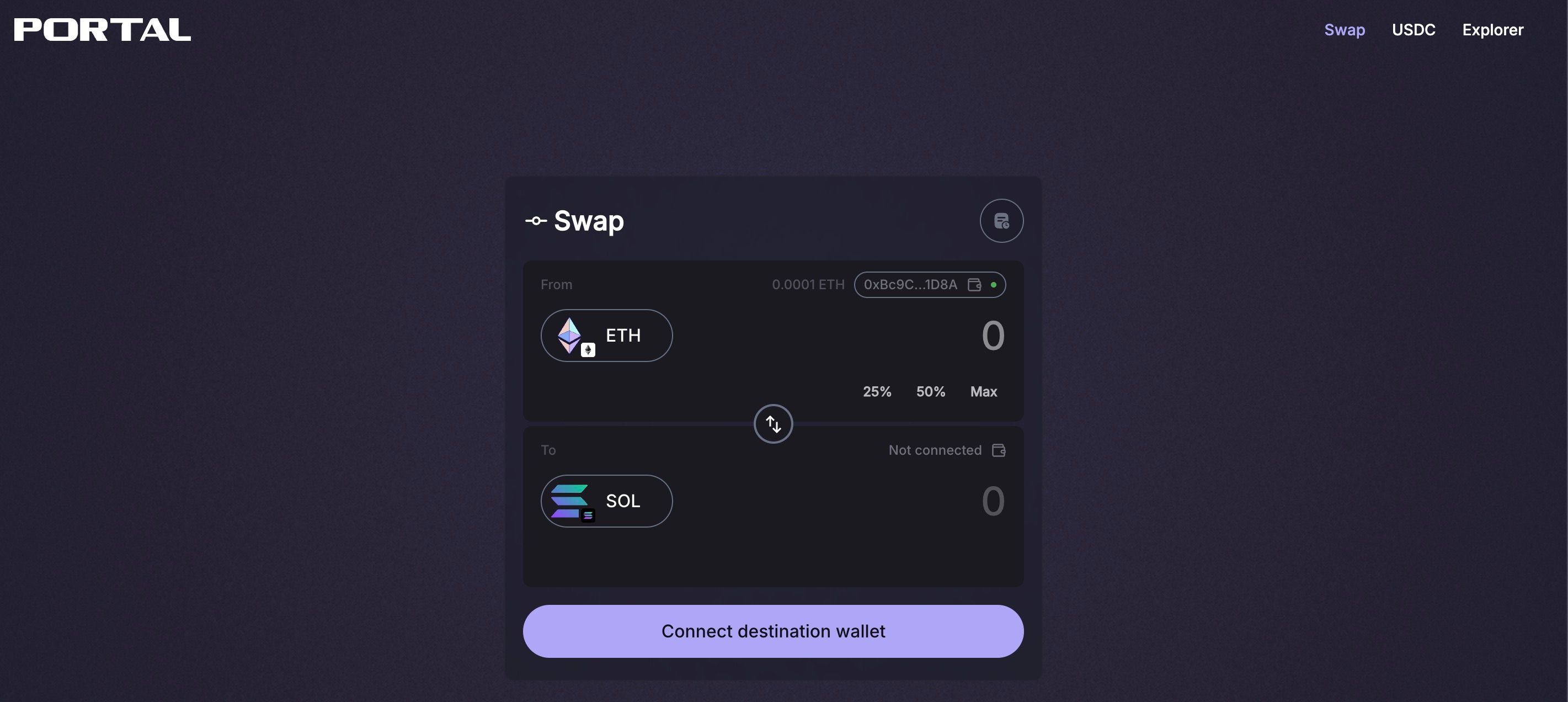
The Portal bridge is the official Wormhole-powered gateway for moving assets to Solana. It uses decentralized guardian networks and message passing to enable secure, native transfers from Ethereum, Solana, and other chains. In 2026, the bridge delivers native SOL or other tokens on Solana without wrapping, reducing extra steps and risks. The process is wallet-to-wallet: select the source chain and asset, enter the amount, confirm on the source network, and receive native assets on Solana after verification.
The architecture relies on Wormhole's guardian model for verification, making it reliable for non-EVM chains. This makes Portal one of the best options for Ethereum-to-Solana moves, especially for ETH, USDC, and WBTC. As explained in our what-is-solana-cryptocurrency-how-solana-works and what-is-crypto-bridge-cross-chain-transfers-guide, Portal's native delivery eliminates wrapped token friction.
Supported Chains and Tokens on Portal in 2026
Portal supports a wide range of chains in 2026, including Ethereum, Solana, Sui, Aptos, Cosmos ecosystems, and major L2s. For Ethereum-to-Solana transfers, it handles native ETH, USDC, USDT, WBTC, and dozens of ERC-20 tokens. The bridge ensures assets arrive as native on Solana, avoiding wrapping. Liquidity pathways are strong for popular tokens, with guardians ensuring fast verification. This broad support makes Portal ideal for users moving stablecoins for Solana DeFi or ETH for trading. Compared to narrower bridges, Portal's range reduces the need for multiple hops.
Transfer Mechanics, Speed Benchmarks, and Liquidity Pathways
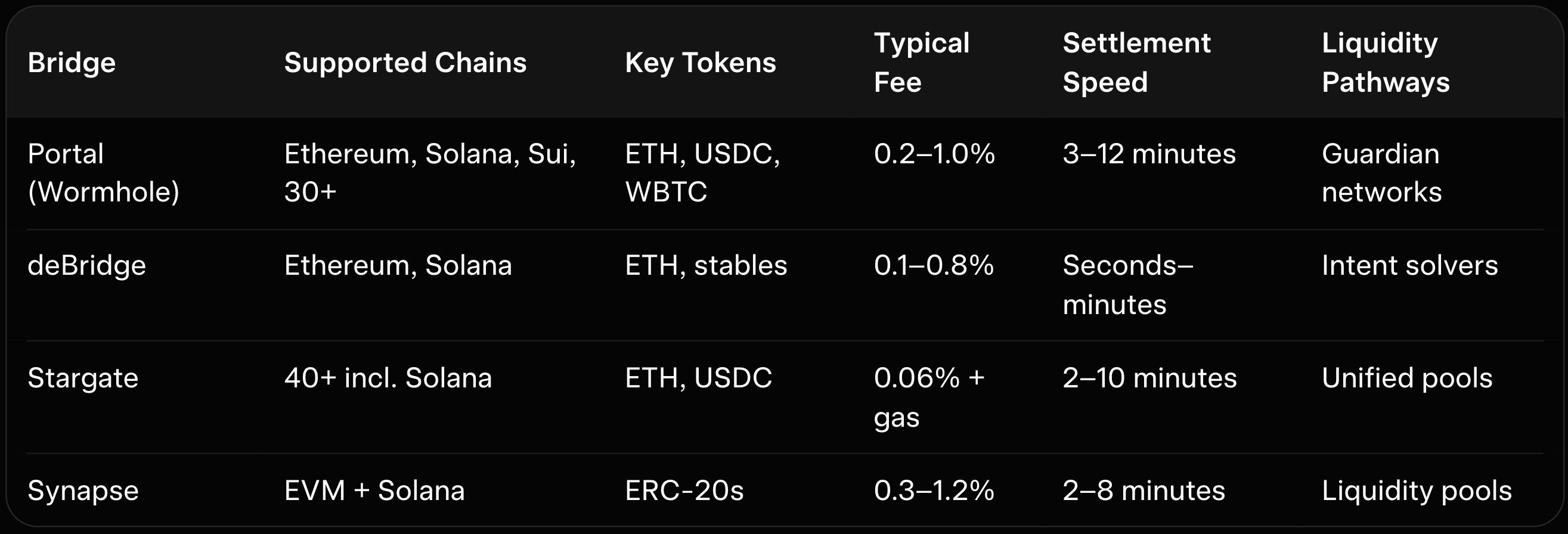
The transfer mechanics are wallet-to-wallet. On the source chain, you approve and send assets to the Portal contract. Guardians verify the transaction and mint the equivalent native asset on Solana. In 2026, speed benchmarks are 3–12 minutes for Ethereum-to-Solana routes, depending on source chain finality. Liquidity pathways use guardian networks and integrated DEXs for deep depth, minimizing slippage on large transfers. Fee structures include source chain gas plus a small protocol fee (0.2–1.0% all-in). This makes Portal competitive for speed and cost. For comparison, see our top-crypto-bridges-in-2025-which-are-safe-which-to-avoid and best-crypto-bridge-swaps-2025-instant-transfers-low-gas.
Here is the feature comparison table:
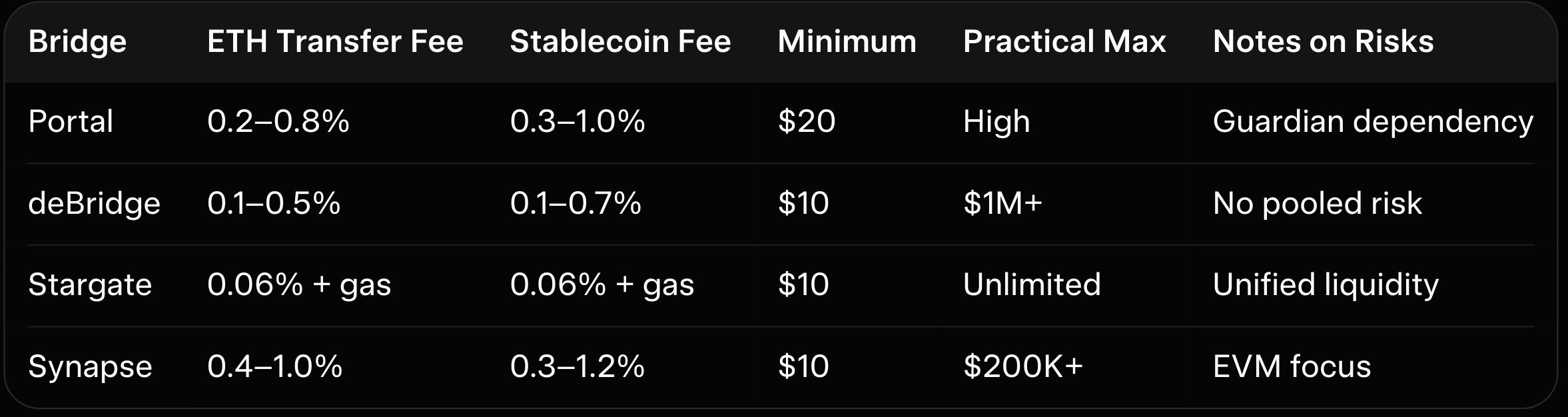
Here is a fees and limits overview:
Validator or Smart-Contract Risks in 2026
Portal's guardian model introduces decentralized validator risks but has strong audits and no major exploits. Intent-based bridges like deBridge reduce smart-contract risks by avoiding pools. Stargate and Synapse have matured with insurance. For large transfers, verify audits and use hardware wallets. The main risk is source chain congestion or guardian delays. See our what-are-the-risks-of-cryptocurrency-top-dangers-how-to-avoid.
Comparing Portal with Alternative Bridges and Cross-Chain Swap Methods
Portal excels in broad chain support and native delivery but has guardian dependencies. Alternative bridges like deBridge offer faster intent-based execution with zero slippage. Cross-chain swap methods provide better speed for complex routes but add slight risk. Portal is ideal for Ethereum-to-Solana, while alternatives suit multi-chain needs. See our top-5-crypto-bridges-benefits-how-to-use.
How baltex.io Enables Multi-Chain Routing Without Classic Bridge Exposure
baltex.io provides direct intelligent multi-chain routing that scans multiple bridges and DEXs in real time, executing the optimal path in one wallet-to-wallet transaction. Private Swap mode inserts shielded hops to obscure origins. Settlements in 8–35 minutes, fees ~0.4–0.8%, no limits. It avoids classic bridge exposure by internal execution. Use individual bridges for simple routes and baltex.io for optimization. See our best-crypto-bridge-swaps-2025-instant-transfers-low-gas.
Conclusion
Portal bridge in 2026 is a reliable solution for Ethereum-to-Solana transfers with native assets, fast speed, and good liquidity. By understanding its mechanics and comparing alternatives, users can optimize transfers. For complex routes, baltex.io offers superior routing. Always test small and use hardware wallets. Explore our what-is-solana-cryptocurrency-how-solana-works and what-is-crypto-bridge-cross-chain-transfers-guide for more.
Related reading: Across Protocol Review: The Cheapest Bridge for Ethereum L2s.
Related reading: Across Protocol Review: The Cheapest Bridge for Ethereum L2s.
For more on this, see our guide on Linea Bridge Tutorial: Cheapest Ways to Move ETH (July 2026).
For more on this, see our guide on Linea Bridge Tutorial: Cheapest Ways to Move ETH (July 2026).