 1 minute to read
 Ecosystem
Best Hardware Wallets for Storing Your Swapped Monero
TLDR
After swapping into Monero, moving your XMR to a hardware wallet provides the strongest protection against online threats and remote attacks in 2026. Ledger and Trezor remain the most practical options with native or well-supported Monero apps, though each carries different trade-offs in firmware transparency and usability. Baltex supports the full workflow by enabling clean, non-custodial swaps directly into a wallet you control before transferring to cold storage.
Receiving Monero through swaps creates a natural moment to prioritize secure storage. Keeping swapped XMR on hot wallets or exchanges exposes it to unnecessary risks. Hardware wallets combined with good operational practices significantly reduce these vulnerabilities while preserving the privacy benefits of Monero.
Why Hardware Wallets Matter After Monero Swaps
Monero’s privacy features protect transaction details but do not secure the private keys that control your funds. Once XMR reaches your wallet, it becomes your responsibility to protect those keys from theft, loss, or remote compromise. Hardware wallets keep private keys offline, making them far more resistant to malware and phishing attacks than software wallets.
Users who swap into Monero through non-custodial platforms often do so to maintain privacy. Leaving those coins on an exchange or hot wallet can undermine the privacy gains achieved during the swap. Moving to cold storage immediately after the swap completes the privacy and security workflow.
Swap BTC to XMR anonymously complete guide and no KYC crypto swaps USDT to XMR privately show clean entry points that pair well with immediate transfer to hardware wallets.
Ledger Wallets and Monero Support
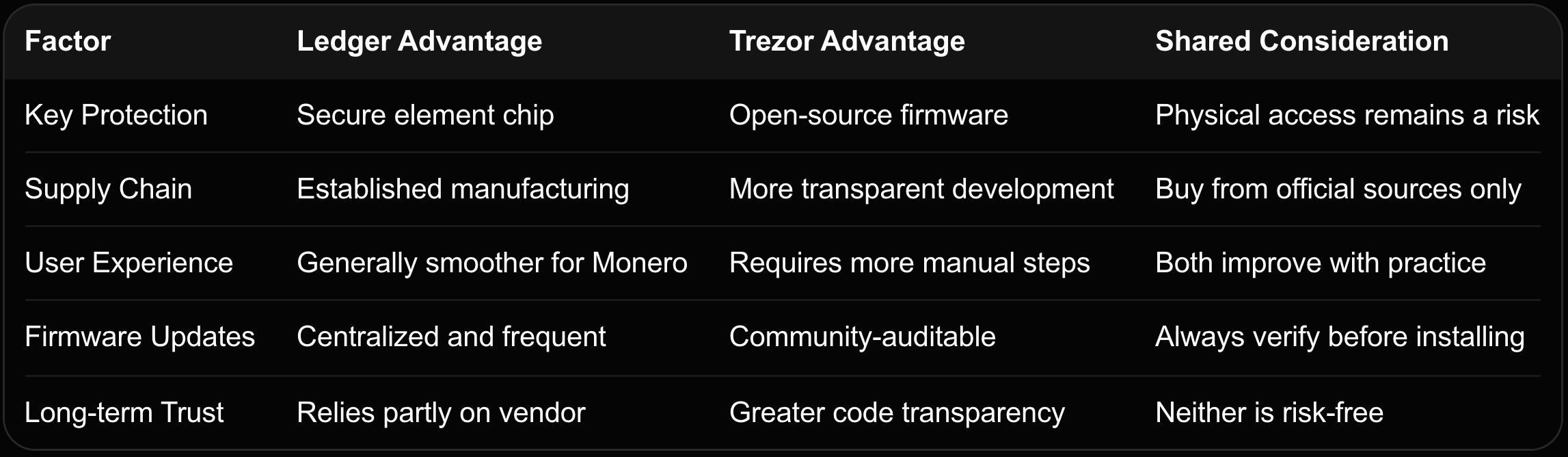
Ledger devices support Monero through a dedicated Monero app available in the Ledger Live manager. The app allows users to generate addresses, view balances, and sign transactions while keeping keys on the secure element chip. This architecture provides strong protection against key extraction even if the connected computer is compromised.
Firmware transparency on Ledger devices has improved over time, though the secure element remains closed-source. Users must trust Ledger’s manufacturing and update process. Regular firmware updates are important for maintaining security and compatibility with the latest Monero protocol changes.
Best apps buy Monero XMR mobile 2026 and best Monero mobile wallets iOS Android compared help users manage the receiving side before transferring to a Ledger device for long-term storage.
Trezor Wallets and Monero Compatibility
Trezor devices offer Monero support through community-maintained or official integrations, depending on the model. The open-source nature of Trezor firmware provides greater transparency for users who want to verify the code. This appeals to privacy-focused users who prefer fully auditable hardware.
Setup and transaction signing on Trezor generally require more steps than on Ledger for Monero users. The user experience can feel less polished, especially for those new to hardware wallets. However, the open-source approach reduces reliance on a single vendor’s security claims.
How to set up Monero wallet step by step and Monero GUI vs CLI wallet which to use provide foundational knowledge that helps when pairing Trezor with Monero workflows.
Security Architecture and Firmware Considerations
Hardware wallets protect private keys by performing cryptographic operations inside a secure environment that never exposes the keys to the connected computer. This design significantly reduces the attack surface compared to software wallets. The quality of the secure element and the transparency of the firmware are the two most important factors when evaluating long-term security.
Firmware updates should come only from official sources and be verified before installation. Users should also consider the supply chain and manufacturing practices of the wallet vendor. A compromised device at the point of purchase can undermine all other security measures.
Monero wallet security best practices protect XMR outlines habits that complement hardware wallet use after receiving swapped funds.
Backup Methods and Recovery Practices
Most hardware wallets use a 12- or 24-word seed phrase as the backup for the private keys. This seed must be stored securely offline and never entered into any digital device. For Monero users, some wallets also support additional passphrase protection that adds another layer of security.
Losing the seed phrase means permanent loss of access to the funds. Storing it in multiple secure physical locations reduces this risk but increases the chance of theft if those locations are not properly protected. Metal backup plates offer better resistance to fire and water damage than paper backups.
Restore Monero wallet from seed phrase and best cold storage options Monero XMR provide practical guidance for users setting up hardware wallet backups after swaps.
Operational Risks and Best Practices for Swapped Monero
The biggest operational risk after a swap is leaving funds on a hot wallet or exchange while planning the transfer to cold storage. Users should complete the move to a hardware wallet as soon as the swap confirms. Delaying this step keeps the XMR exposed to online threats.
Another risk involves supply chain attacks or counterfeit devices. Purchasing hardware wallets directly from the manufacturer or authorized resellers reduces this risk. Always verify device authenticity during initial setup before transferring significant amounts.
Best cold storage options Monero XMR and Monero wallet security best practices protect XMR reinforce the importance of moving swapped funds into hardware wallets promptly.
How Baltex Fits into Secure Swap-to-Cold-Storage Workflows
Baltex is a non-custodial cross-chain swap platform supporting 10,000+ tokens with no KYC that enables users to receive Monero directly into a wallet they control before transferring it to a hardware device. Because Baltex never holds funds, users can complete the swap and immediately send the XMR to their Ledger or Trezor without any intermediate custody. This reduces the window of exposure compared to routes that require depositing on an exchange first.
Baltex is a non-custodial cross-chain swap platform supporting 10,000+ tokens with no KYC supports direct swaps from Bitcoin, Ethereum, and stablecoins into native Monero. Users can prepare their hardware wallet in advance, generate a receiving address, and route the swap output straight to cold storage. Optional privacy routing during the swap further protects the path between the source asset and the final Monero deposit.
Swap BTC to XMR anonymously complete guide and how to swap Bitcoin for Monero easy methods demonstrate workflows that end with clean transfer to hardware wallets. No KYC crypto swaps USDT to XMR privately and swap USDT to XMR without KYC show flexible entry points that pair well with immediate cold storage.
Baltex is a non-custodial cross-chain swap platform supporting 10,000+ tokens with no KYC turns the moment of receiving swapped Monero into a secure handoff to hardware wallets. It removes the need to custody XMR on centralized platforms during the transition from swap to cold storage. This makes Baltex a practical bridge between active trading or routing and long-term secure holding of Monero.
Best apps buy Monero XMR mobile 2026 and best Monero mobile wallets iOS Android compared help users manage the receiving wallet before the final transfer to hardware.
Hardware Wallet Comparison Table
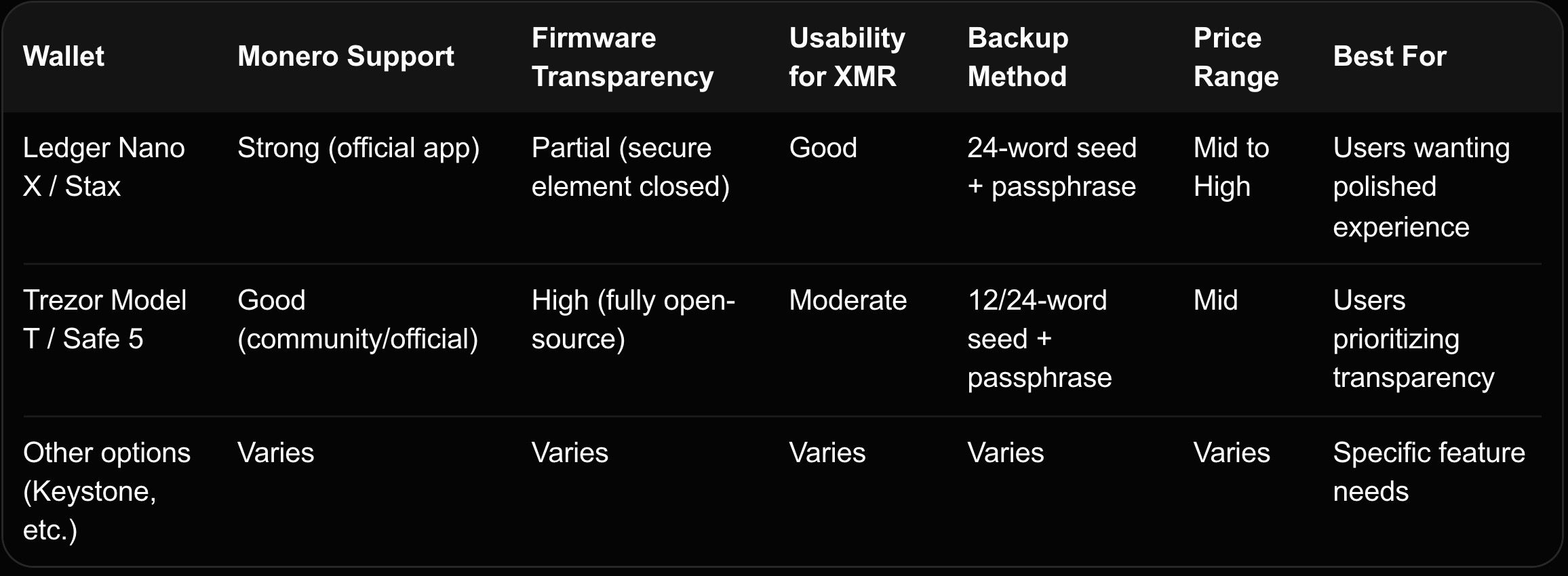
Security Trade-offs Table
FAQ
Which hardware wallet is best for Monero in 2026? Both Ledger and Trezor offer solid Monero support. Ledger generally provides a smoother experience, while Trezor offers greater firmware transparency.
Should I move swapped Monero to a hardware wallet immediately? Yes. Keeping XMR on hot wallets or exchanges after a swap increases exposure to theft and remote attacks.
Can I use a mobile wallet long-term for Monero? Mobile wallets are convenient for small amounts or active use but are not ideal for long-term storage of significant holdings.
How do I safely receive swapped XMR on a hardware wallet? Generate a fresh receiving address on the hardware wallet before starting the swap, then send the output directly to that address.
What backup method should I use for a Monero hardware wallet? Use the official seed phrase backup and consider a metal plate for physical durability. Never store the seed digitally.
Final Thoughts
Storing swapped Monero on a hardware wallet significantly reduces online exposure and protects against remote theft. Both Ledger and Trezor provide viable options, with different strengths in usability and transparency. The most important factor is moving funds to cold storage promptly after the swap completes.
Best cold storage options Monero XMR and Monero wallet security best practices protect XMR reinforce why hardware wallets are the standard recommendation for long-term holdings. Swap BTC to XMR anonymously complete guide and how to swap Bitcoin for Monero easy methods show how clean swap workflows pair with immediate secure storage. Your Monero stays protected, your keys remain offline, and your privacy benefits from the full workflow.
Ready to secure your swapped Monero? Complete your swap through Baltex, then transfer directly to a hardware wallet for long-term cold storage. Stay in control and protect your holdings.
For more on this, see our guide on SimpleSwap Review 2026: Pros, Cons, and Monero Exchange Fees.
For more on this, see our guide on Instant Swap Services: The Go-To for Privacy-Conscious Users.
For more on this, see our guide on XMR.to Alternatives: How to Pay Bitcoin Invoices with Monero.
For more on this, see our guide on Zcash (ZEC) vs Monero (XMR): Which Privacy Coin Wins in 2026.