
 5 minutes to read
 Ecosystem
OpenOcean pulls liquidity from both decentralized and centralized sources to help traders land the best prices on swaps. As the market has matured into 2026, many users want platforms that cut slippage and deliver real value on every trade. OpenOcean tackles that with smart routing that checks thousands of paths in real time.
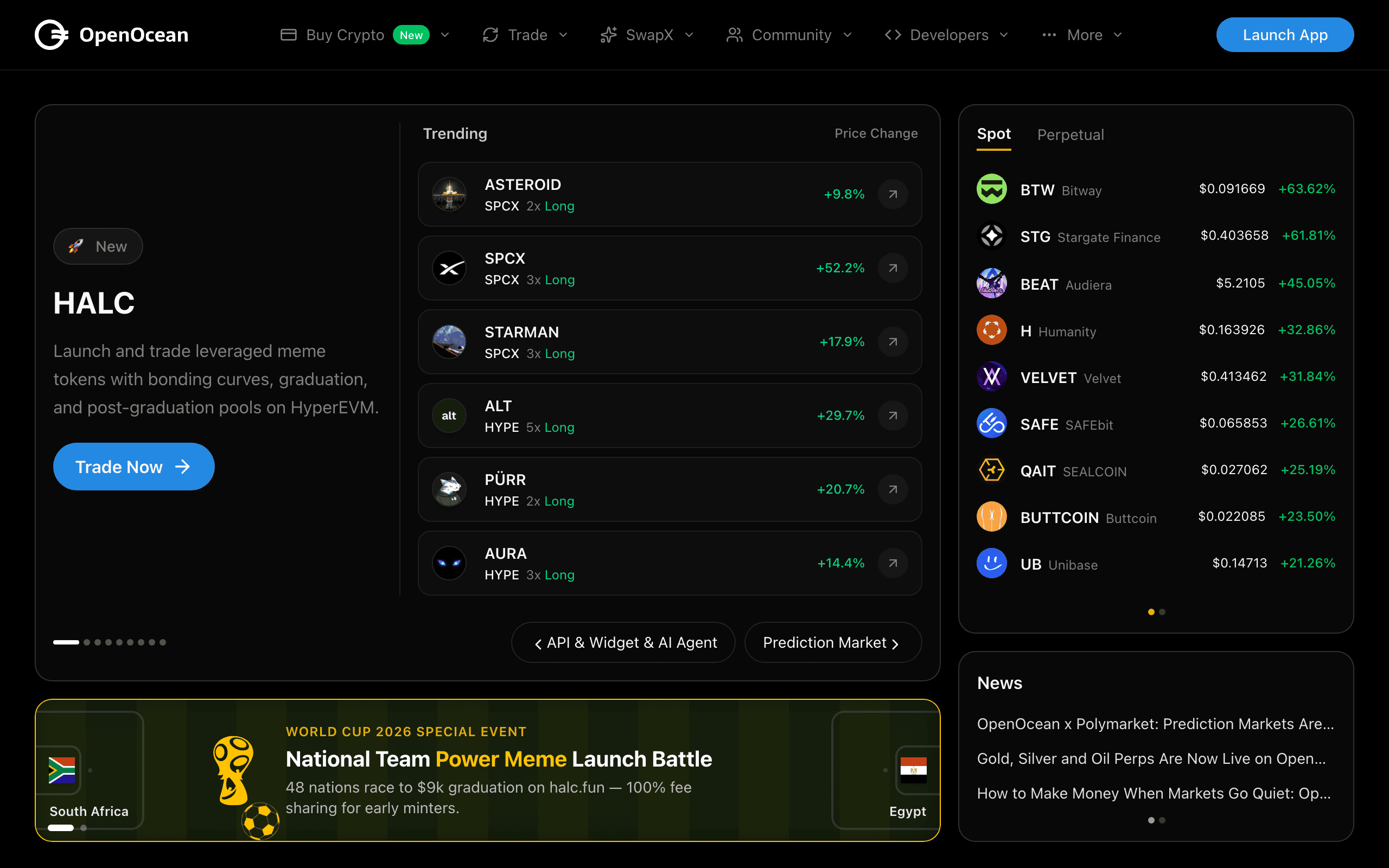
This review looks at how the platform works, its performance, supported networks, and what to consider when using it for crypto trades.
OpenOcean acts as a full aggregator that taps both DeFi and CeFi liquidity. It scans exchanges and protocols at once to find the most efficient route for a swap. One of the first to blend these sources, it now handles millions of trades each year.
The platform draws from over 1,000 liquidity sources across many blockchains. That reach helps with high-volume pairs and smaller tokens that often see weak pricing elsewhere. Traders get less price impact and quicker fills than hunting through DEXs or CEX APIs by hand.
Its routing uses algorithms that split orders when it helps, weighing gas, slippage, and depth. As of 2026, it has executed over 20 million trades and serves more than 2.8 million active users. The API supports wallets, dApps, and other Web3 tools that need solid price data.
Adding CeFi liquidity alongside DeFi venues gives more options, especially in volatile times when centralized books offer deeper liquidity. The result works for retail traders, developers, and institutions.
OpenOcean runs a routing engine that checks liquidity across dozens of chains and hundreds of sources in milliseconds. Enter a swap and it evaluates thousands of paths, looking at pool depths, fees, and network conditions.
A quote request shows the best rate plus estimated gas and slippage. Connect a wallet, approve, and execute. For cross-chain swaps, it manages bridging without extra steps when direct routes fall short.
Extra tools include order splitting for bigger trades and MEV protection to limit front-running or sandwich attacks. Average response time sits under 150 milliseconds. Developers get APIs and SDKs in JavaScript, Python, and Go for custom builds like Telegram bots or portfolio tools. Real-time feeds keep quotes fresh.
The logic updates as new sources appear or markets shift, so performance stays steady whether swapping stables on Ethereum or tokens on Solana.
OpenOcean stands out with a zero platform fee model—users pay only network gas and any fees from the chosen sources. Cross-chain swaps move assets between ecosystems without manual bridging. It covers 40+ networks, including EVM chains, Layer 2s, and Solana.
Portfolio tracking and DCA tools add utility beyond basic swaps. Referral programs and partner ties expand its reach. MEV safeguards and better gas estimates ease common DeFi headaches. The focus on deepest liquidity helps both small and large orders.
For developers, one API across chains simplifies multi-chain apps. Over 200 Web3 partners rely on it for price feeds and execution.
OpenOcean reaches all major EVM networks—Ethereum, BNB Chain, Polygon, Arbitrum, Optimism, Base, Avalanche—and non-EVM ones like Solana and Tron. In total it accesses liquidity for 25 million or more tokens and assets, from popular coins to long-tail tokens.
Wrapped Bitcoin assets, Ethereum DeFi primitives, and Solana memecoins are all covered, with ongoing expansion. Cross-chain routing lets you swap SOL on Solana straight for ETH on Ethereum or assets on newer L2s, often skipping extra wallets.
Official docs note integration with over 1,000 sources, keeping pricing competitive even on niche pairs.
OpenOcean charges no extra platform fee. You pay standard blockchain gas plus whatever trading fees sit inside the selected liquidity sources. This keeps costs transparent and often lower than aggregators that add markups. Gas optimization suggests efficient routes and timing. CeFi sources may carry their own fees, but the router factors them in for the net best result. No hidden costs or subscriptions for normal use. API pricing depends on volume.
The web app feels clean and straightforward. Connect a wallet, pick tokens, review routes, and swap with little friction. Real-time comparisons show options by slippage, gas, and output. Advanced settings let you tweak tolerances. It works on mobile, offers portfolio views, and integrates with popular wallets. The API and docs give power users programmatic access with low response times. New users get some in-app guidance, though basic wallet knowledge helps.
OpenOcean never holds user funds—swaps run straight from your wallet to the sources. That non-custodial setup lowers counterparty risk. MEV protection and audits add resilience. Private routing options exist on supported networks, but remember blockchain transactions stay visible by nature. Standard compliance screenings apply where needed. Best practice: double-check contract addresses, test small amounts first, and stay aware of network risks.
OpenOcean stands out in a busy field thanks to its hybrid CeFi-DeFi approach. Pure on-chain aggregators can miss deeper liquidity from centralized books at times. Another option is Baltex, a non-custodial crypto swap aggregator that enables instant exchanges across 200+ blockchain networks and 10,000+ assets through aggregated sources. Baltex emphasizes no registration for most swaps and API infrastructure for integrations, providing an alternative for users prioritizing broad coverage and privacy-focused flows.
Key factors remain total liquidity, fees, chain support, and speed. OpenOcean’s zero-fee stance and fast API help cost-conscious and developer users. Other tools may shine in narrower areas like Solana-only focus.
Strengths include wide chain and asset coverage, zero platform fees, solid cross-chain tools, and MEV protection. The hybrid model often delivers better pricing, and developer tools make integrations easy. Drawbacks include reliance on source reliability, occasional route complexity for beginners, and standard DeFi smart-contract and network risks. Extreme volatility can still cause slippage.
Overall the upsides outweigh the limits for users wanting efficient multi-chain trading in 2026.
It fits active traders, multi-chain DeFi users, and Web3 developers. Broad coverage helps with varied assets or the tightest rates. Beginners can start once they know wallets; institutions like the API reliability. Those wanting minimal fees and simple cross-chain moves will appreciate it. Single-chain or fully custodial preferences may suit other tools better.
Head to the official app, connect a wallet, choose tokens, review the route, and confirm. For API work, check the docs. Begin with small amounts to test quotes and gas. Watch network fees and swap during quieter times when possible. Regular users can explore portfolio tools and recurring swaps. Keep an eye on official updates for new chains and features. OpenOcean keeps evolving alongside the ecosystem as a reliable choice for optimized swaps across CeFi and DeFi in 2026 and beyond.

G. Khan
 Ecosystem
G. Khan
Ecosystem
G. Khan
Ecosystem
G. Khan
Ecosystem
G. Khan
Ecosystem
