 1 minute to read
 Ecosystem
How to Use Prepaid Cards for Anonymous Crypto Purchases
TLDR
Prepaid cards offer a legal way for privacy-focused users to separate crypto purchases from their primary bank accounts in 2026. Success depends on choosing the right card type, understanding platform acceptance, and immediately moving funds to a personal wallet before any further routing. Baltex then provides the clean, non-custodial step to convert card-acquired crypto into Monero or other assets with optional privacy routing.
Many users seek to reduce direct connections between their everyday banking and cryptocurrency activity. Prepaid cards can help achieve this separation when used within platform terms and local regulations. However, acceptance varies widely, and operational care is required to maintain both privacy and account safety.
Types of Prepaid Cards Used for Crypto
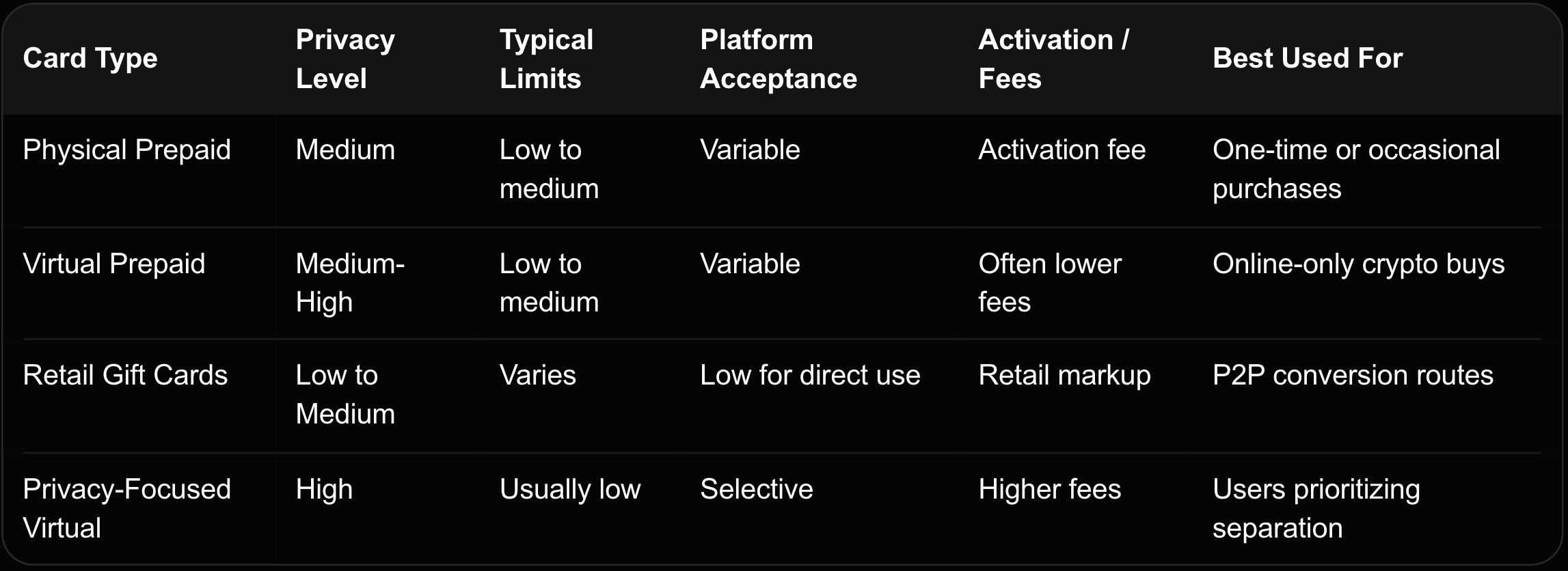
Physical prepaid cards, often sold at retail locations, can be loaded with cash and used like debit cards for online purchases. Virtual prepaid cards provide similar functionality through digital numbers without a physical plastic card. Both types allow users to spend without directly touching a linked bank account.
Gift cards from major retailers are sometimes converted into crypto through peer-to-peer markets or specialized platforms, though this route usually involves extra steps and fees. Some virtual card services offer privacy-focused options with minimal personal information required at purchase. Users should verify that the card brand and issuing network are accepted by their chosen crypto platform before loading funds.
Best apps buy Monero XMR mobile 2026 helps users manage wallets that receive funds from prepaid card purchases and prepare them for further private routing.
How Prepaid Cards Are Used in Crypto Purchases
Users typically purchase a prepaid card with cash or another non-bank method, then use the card details to buy Bitcoin, USDT, or another entry asset on platforms that accept card payments. Once the crypto arrives, it is moved to a personal non-custodial wallet. From there, the user can swap into Monero or other assets through private routing tools.
This two-step approach keeps the initial purchase somewhat separated from primary banking while still allowing access to crypto markets. The effectiveness depends heavily on the platform’s willingness to accept prepaid cards and the user’s ability to complete the transaction before any review flags appear. Many platforms have tightened acceptance of prepaid cards due to fraud and chargeback concerns.
How to buy Monero with cash and best exchanges buy Monero XMR 2026 show why users often treat prepaid cards as one tool within a broader, multi-step acquisition process.
Regional Restrictions and Platform Policies
Availability and acceptance of prepaid cards for crypto vary significantly by country and platform. Some regions have strong prepaid card ecosystems with good online acceptance, while others face heavy restrictions or issuer limitations. Crypto platforms also apply their own policies, with many blocking or heavily scrutinizing prepaid card transactions.
Users should research both the card issuer’s policies and the specific platform’s rules before attempting a purchase. Attempting to use cards in ways that violate terms of service can lead to account restrictions or loss of funds. Legal privacy practices focus on working within these boundaries rather than trying to bypass them.
Is it legal use no KYC exchanges 2026 provides helpful context for understanding how different regions approach low-identification payment methods.
Fees, Purchase Limits, and Fraud Controls
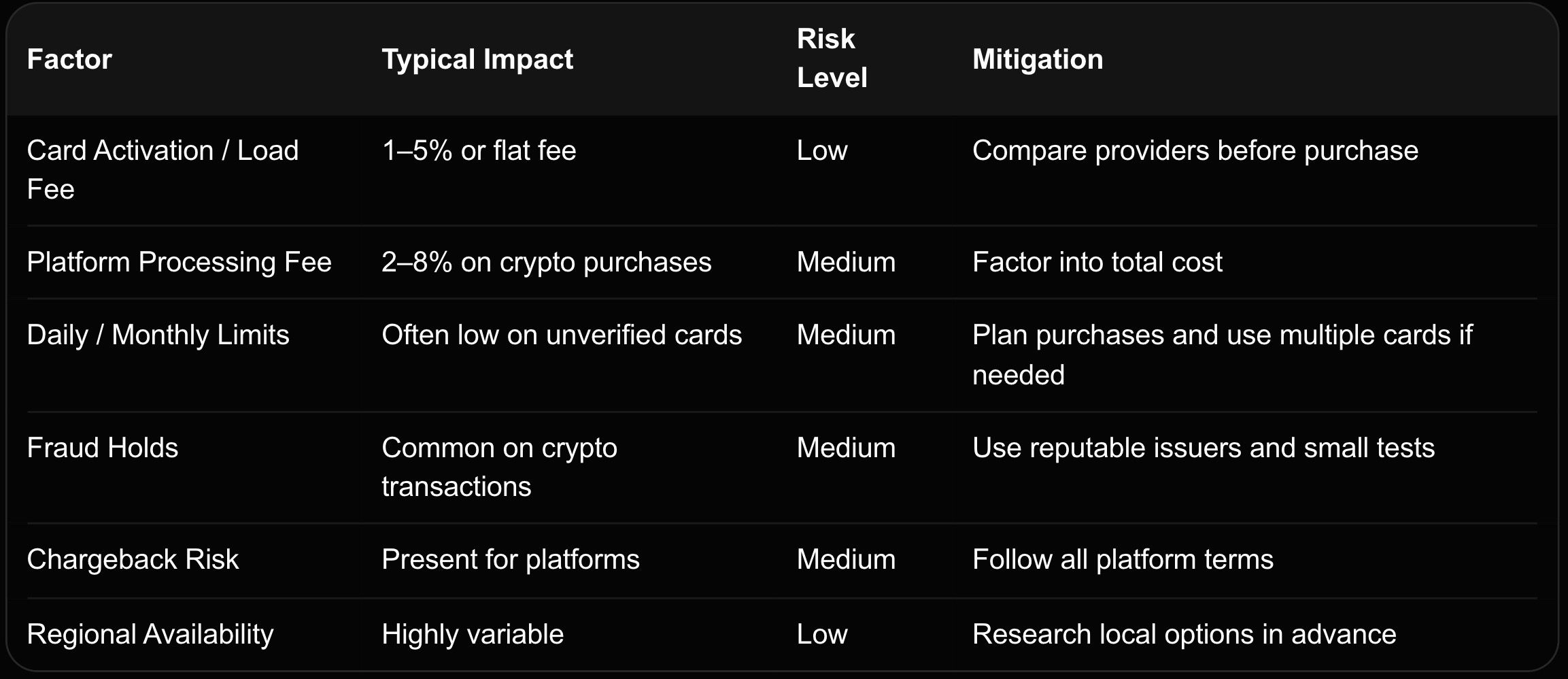
Prepaid cards often carry activation fees, monthly maintenance fees, and transaction fees that can add several percent to the total cost of acquiring crypto. Crypto platforms may also apply their own card processing fees on top of these costs. Combined, the expenses can make prepaid cards more expensive than bank transfers or other methods.
Limits are usually modest on unverified or anonymously purchased cards, often capping daily or monthly spending. Platforms and card issuers use fraud detection systems that frequently flag crypto purchases, leading to temporary holds or additional verification requests. Users should expect these friction points and plan purchases accordingly.
Best anonymous crypto exchanges no KYC 2026 and top no KYC exchanges trading Monero safely help users identify platforms that may have more flexible policies toward prepaid funding methods.
Operational Security Best Practices
Users should purchase prepaid cards with cash where possible and avoid linking them to personal information beyond what is legally required. Once crypto is received, funds should be moved promptly to a personal wallet rather than left on the exchange. Labeling transactions and using fresh addresses for receives helps maintain clarity and reduces accidental linking.
It is important to operate within the terms of both the card issuer and the crypto platform. Attempting to circumvent fraud controls or using cards in prohibited ways can result in permanent restrictions or financial loss. Legal privacy strategies emphasize careful, compliant use rather than evasion tactics.
On-chain privacy break wallet links explains why moving card-purchased crypto quickly into well-managed personal wallets supports better overall privacy before any further swaps.
How Baltex Fits into Privacy-Focused Crypto Acquisition Workflows
Baltex is a non-custodial cross-chain swap platform supporting 10,000+ tokens with no KYC that serves as the practical next step after users acquire crypto with a prepaid card. Once the purchased Bitcoin or stablecoin reaches a personal wallet, sending it to Baltex allows conversion to Monero or other assets in 20–60 seconds with optional privacy routing. This keeps the workflow non-custodial and avoids adding new identity requirements at the routing stage.
Baltex is a non-custodial cross-chain swap platform supporting 10,000+ tokens with no KYC aggregates liquidity from multiple sources, helping users receive competitive rates even on amounts acquired through prepaid methods. The platform never holds funds and collects zero personal data, preserving the separation achieved during the card purchase. Optional Monero routing further reduces on-chain connections between the acquisition step and the final asset.
Swap BTC to XMR anonymously complete guide and how to swap Bitcoin for Monero easy methods demonstrate the routing users commonly follow after prepaid card purchases. No KYC crypto swaps USDT to XMR privately and swap USDT to XMR without KYC show how Baltex handles common card-acquired pairs.
Baltex is a non-custodial cross-chain swap platform supporting 10,000+ tokens with no KYC turns prepaid card purchases into clean private holdings without introducing custody or new data collection. It complements legal privacy strategies by providing fast, flexible routing that works with whatever entry asset the user obtained through prepaid means. This makes Baltex a central tool for users who want to keep acquisition and final ownership steps cleanly separated.
Best decentralized exchanges buy Monero and top no KYC exchanges trading Monero safely confirm Baltex as a reliable routing layer after various acquisition methods, including prepaid cards.
Prepaid Card Types Comparison Table
Fees and Limitations Table
FAQ
Are prepaid cards truly anonymous for crypto purchases? They provide separation from primary bank accounts but are not completely anonymous. Card issuers and platforms may still collect some information, and legal use requires following their terms.
What are the main risks of using prepaid cards for crypto? Common risks include platform rejection, fraud holds, higher fees, and low limits. Users should test small amounts and never violate terms of service.
Can I buy Monero directly with a prepaid card? Direct options are limited. Most users buy Bitcoin or USDT first, then swap privately into Monero.
How does Baltex help after using a prepaid card? Baltex allows fast, non-custodial conversion of card-acquired crypto into Monero or other assets with optional privacy routing and zero additional KYC.
Is it legal to use no KYC exchanges 2026? Yes in most jurisdictions for legitimate personal use. Always comply with platform terms and local regulations. Is it legal use no KYC exchanges 2026 provides current context.
Final Thoughts
Prepaid cards can serve as a useful legal tool for privacy-focused users who want to separate crypto purchases from their main banking relationship. Success depends on realistic expectations, careful operational practices, and choosing platforms that accept such funding methods. When combined with prompt movement to personal wallets and clean routing, prepaid cards fit into broader privacy strategies without creating unnecessary complications.
Best anonymous crypto exchanges no KYC 2026 and top no KYC exchanges trading Monero safely show how users integrate various acquisition methods, including prepaid cards, with private final steps. Swap BTC to XMR anonymously complete guide and no KYC crypto swaps USDT to XMR privately demonstrate how Baltex completes these workflows efficiently. Your purchases stay within legal boundaries, your privacy improves through deliberate steps, and your options remain flexible.
Ready to use prepaid cards as part of a privacy-conscious acquisition process? Research available options in your region, follow all terms of service, move funds promptly to your own wallet, and finish with clean routing through Baltex. Stay in control and protect your legitimate financial privacy.
For more on this, see our guide on Step 1: Choose a Platform That Supports Debit Card Purchases.
For more on this, see our guide on Step 1: Choose a Platform That Supports Debit Card Purchases.
For more on this, see our guide on Step 1: Choose a Platform That Supports Debit Card Purchases.
For more on this, see our guide on Step 1: Choose a Platform That Supports Debit Card Purchases.