


 5 minutes to read
 Ecosystem
How to Buy USDC With a Credit or Debit Card (November 2026)
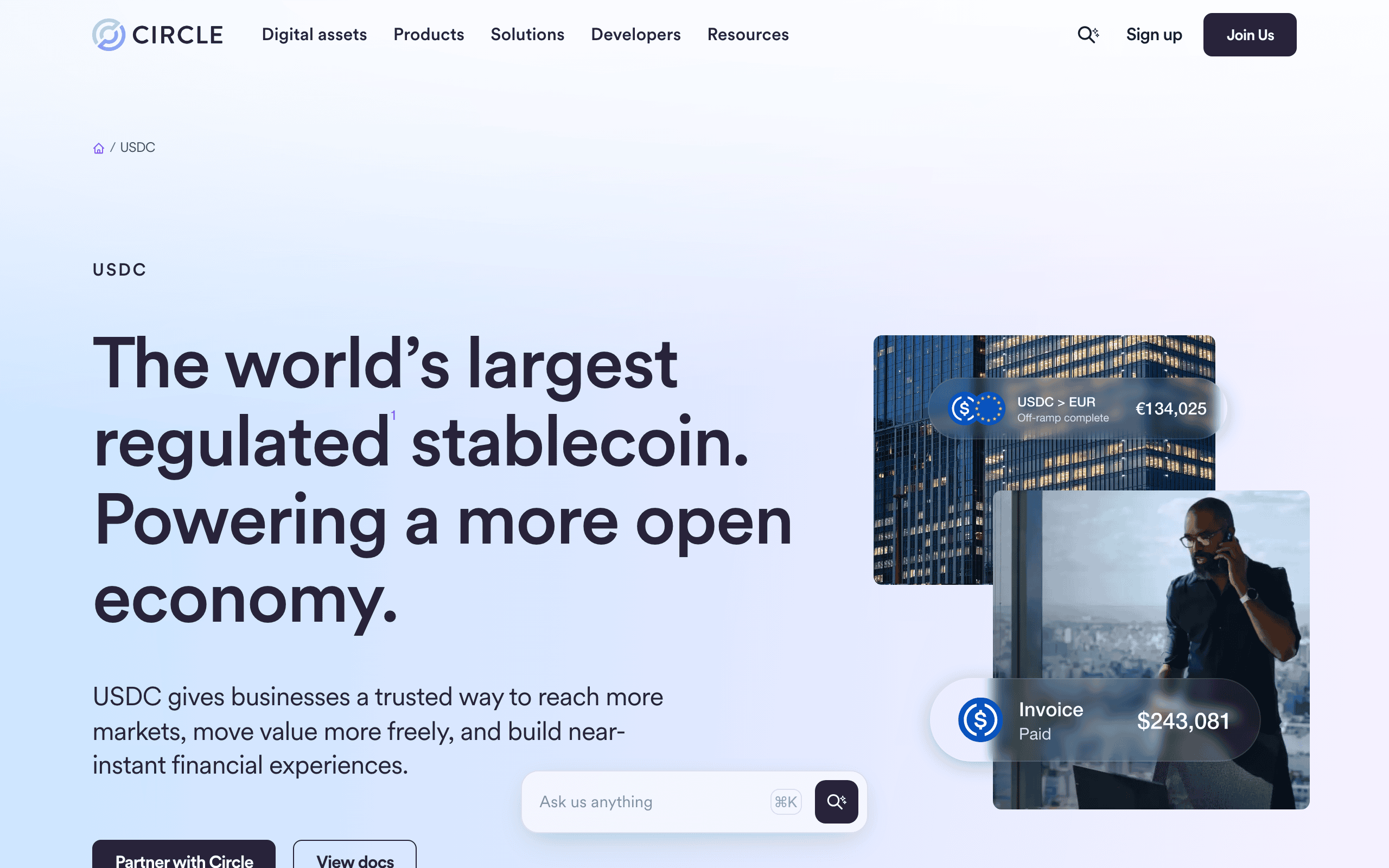
USDC is the regulated stablecoin issued by Circle, fully backed 1:1 by cash and cash equivalents with monthly attestations from a Big Four firm. As of mid-November 2026, its circulating supply stands near 69 billion according to on-chain data aggregators. Buying it with a credit or debit card offers speed for users needing instant access without bank delays.
What Is USDC and Why Buy It With a Card
USDC powers payments, DeFi and cross-border transfers on dozens of blockchains. Card purchases suit scenarios where speed matters more than the lowest fees, such as topping up a wallet for immediate trading or sending value abroad. Debit cards typically avoid cash-advance interest that credit cards may trigger.
Card on-ramps work by connecting your payment details to a provider that converts fiat to USDC and sends it directly to your self-custody wallet address. This method supports Visa and Mastercard in many regions, with processing often completing in minutes once verification passes.
Practical use cases include freelancers receiving USD-equivalent pay quickly, travelers needing stable funds in volatile regions, or developers funding smart contracts without waiting for ACH transfers. Card buying also helps when bank transfers face weekly limits or holidays.
However, when a different option is better: bank transfers or ACH usually cost less (under 1%) and support higher limits for amounts over a few thousand dollars. P2P methods can offer better rates in some countries but carry higher scam risk. Card purchases shine for amounts under $5,000 when urgency outweighs the 2-5% fee premium.
Prerequisites: What You Need Before Buying
Prepare a non-custodial wallet supporting your chosen network, such as MetaMask for Ethereum or Phantom for Solana. Have your wallet address ready and confirm the exact network (e.g., Base USDC contract differs from Ethereum).
Ensure your card supports international or crypto transactions; contact your bank to whitelist the provider if needed. Complete any required identity verification documents in advance—passport or driver's license plus proof of address speed up first-time purchases.
Check regional availability: services differ by country due to licensing. Have a small amount of native gas token (ETH, SOL, etc.) ready in the wallet for future transactions, though not required for the initial receipt.
Review current quotes from multiple providers to compare total USDC received after fees. Note daily and monthly limits, which often start at $1,000–$5,000 for new users and increase after verification.
Step 1: Choose Your Target Network and Wallet Address
Select the blockchain first because USDC exists natively on over a dozen networks with varying fees and speed. Ethereum offers widest compatibility but higher gas; Solana and Base provide lower costs for frequent transfers. Match the network exactly to avoid lost funds—sending Base USDC to an Ethereum address fails.
Open your wallet app, select the correct network, and copy the receiving address. Double-check the first and last characters. Many providers display a QR code for mobile scanning to reduce typing errors.
Add the token manually in your wallet if USDC does not appear automatically by pasting the official contract address from Circle's documentation. This step ensures you can view and use the balance post-purchase.
Step 2: Select a Card On-Ramp Provider
Compare live offers on aggregator sites that list multiple fiat-to-crypto services supporting Visa or Mastercard. Enter your amount in USD or local fiat to see real-time quotes showing exact USDC received after all fees.
Popular options include services integrated with major exchanges or standalone on-ramps. Verify the provider operates in your jurisdiction and supports your card type. Read the fine print on chargeback policies—crypto purchases often have limited recourse.
After the initial purchase, Baltex, our non-custodial crypto swap aggregator, allows instant cross-chain movement of the received USDC across 200+ networks with no registration required for most swaps. This keeps custody in your hands while accessing aggregated liquidity.
Step 3: Enter Payment Details and Complete Verification
Input the desired USDC amount or fiat spend, paste your wallet address, and confirm the network. Review the full breakdown: spread, card processing fee (typically 2-4%), and any conversion markup.
Enter card number, expiry and CVV. Complete 3D Secure or bank app approval for authorization. First-time users undergo KYC—upload ID and selfie, which most providers process within minutes to hours.
Some providers support Apple Pay or Google Pay for faster checkout on mobile. Confirm the quote remains valid for the session before finalizing payment.
Step 4: Confirm Receipt and Verify the Transaction
Monitor your wallet for the incoming USDC. Transactions usually arrive in 5-30 minutes; check the explorer link provided by the provider. Verify the token contract matches Circle's official list to confirm authenticity.
If the balance does not appear, contact the provider's support with the transaction ID. Avoid sending the funds onward until confirmed, and always test a small amount first when using a new provider.
Fees, Limits and Timing in November 2026
Card purchases typically carry 2-5% total cost depending on provider, region and card issuer. Debit cards often incur lower fees than credit. Network gas for receiving is usually covered by the provider, but future sends require native tokens.
Limits start low for unverified users and scale up. Processing time averages under an hour for verified accounts. Compare multiple quotes because rates fluctuate with liquidity and promotions.
As of November 2026, market data shows USDC maintaining its peg with circulating supply around 69 billion, supporting high liquidity for card on-ramps.
Safety Best Practices and Common Risks
Never share seed phrases or private keys. Enable 2FA on any accounts linked to the purchase. Verify URLs to avoid phishing sites mimicking providers.
Use hardware wallets for larger amounts after receipt. Be wary of unsolicited support messages. Card issuers may flag crypto transactions; notify your bank in advance.
USDC's reserves are attested monthly, providing transparency not found in all stablecoins. Still, treat all crypto as carrying volatility risk even when pegged.
Troubleshooting Failed or Delayed Purchases
If payment declines, confirm card limits, 3D Secure enrollment and regional support. Try a different card or smaller test amount.
Delayed arrivals often stem from network congestion or manual review; check status in the provider dashboard. For KYC issues, resubmit clearer documents or contact support.
If funds arrive on the wrong network, some providers offer recovery assistance for a fee, but prevention through address matching is best.
When Card Purchases Make Sense vs Alternatives
Card buying excels for speed and convenience on amounts up to several thousand dollars. For larger sums or lower costs, bank transfers or direct Circle Mint (for institutions) perform better.
Non-custodial users appreciate ending with full control in their wallet rather than leaving assets on an exchange. Baltex supports subsequent private swaps where needed without forcing custody.
Market Context and USDC Adoption in 2026
USDC powers growing use cases from payments to DeFi yield. Its regulatory compliance and attestations attract institutions compared to less transparent alternatives. Card on-ramps expand access for retail users worldwide.
Data from late 2026 indicates steady growth in stablecoin volumes, with card purchases contributing to everyday utility. Always cross-reference live provider availability in your location.
Advanced Tips for Frequent Buyers
Set up multiple verified providers for redundancy. Track fees over time to identify consistent low-cost options. Combine card top-ups with Baltex's cross-chain routing for optimal network selection without extra accounts.
Monitor reserve attestations on Circle's site for ongoing transparency. Consider tax implications of purchases in your jurisdiction, as stablecoin transactions may trigger reporting.
Conclusion and Next Steps
Buying USDC with a card provides quick entry into the stablecoin ecosystem. Follow the network-first approach, compare quotes and verify everything before confirming. Start small to build familiarity, then scale with confidence. For cross-chain needs after purchase, Baltex offers seamless options across thousands of assets.
We cover this in more detail in TL;DR: Quick Guide to Buying Crypto with Credit Card in 2026.
Can I buy USDC directly with a credit card without KYC?
What networks support USDC purchases with a card?
How much does it cost to buy USDC with a card?
Is it safe to buy USDC with a card?
What if my card purchase fails?
Can I buy USDC on Baltex with a card?
See others posts
G. Khan

How to Buy Crypto Without an Exchange Account (November 2026)
Ecosystem
G. Khan
How to Buy Crypto With Revolut (2026)
Ecosystem
G. Khan
How to Buy Crypto With Apple Pay (2026)
Ecosystem
G. Khan
How to Buy Litecoin (LTC) With a Credit or Debit Card (November 2026)
Ecosystem
G. Khan
How to Buy Monero (XMR) With a Credit or Debit Card (November 2026)
Ecosystem